TR
TR EN
EN

Immobilizer: What Is It, What Does It Do, and How Does It Work?
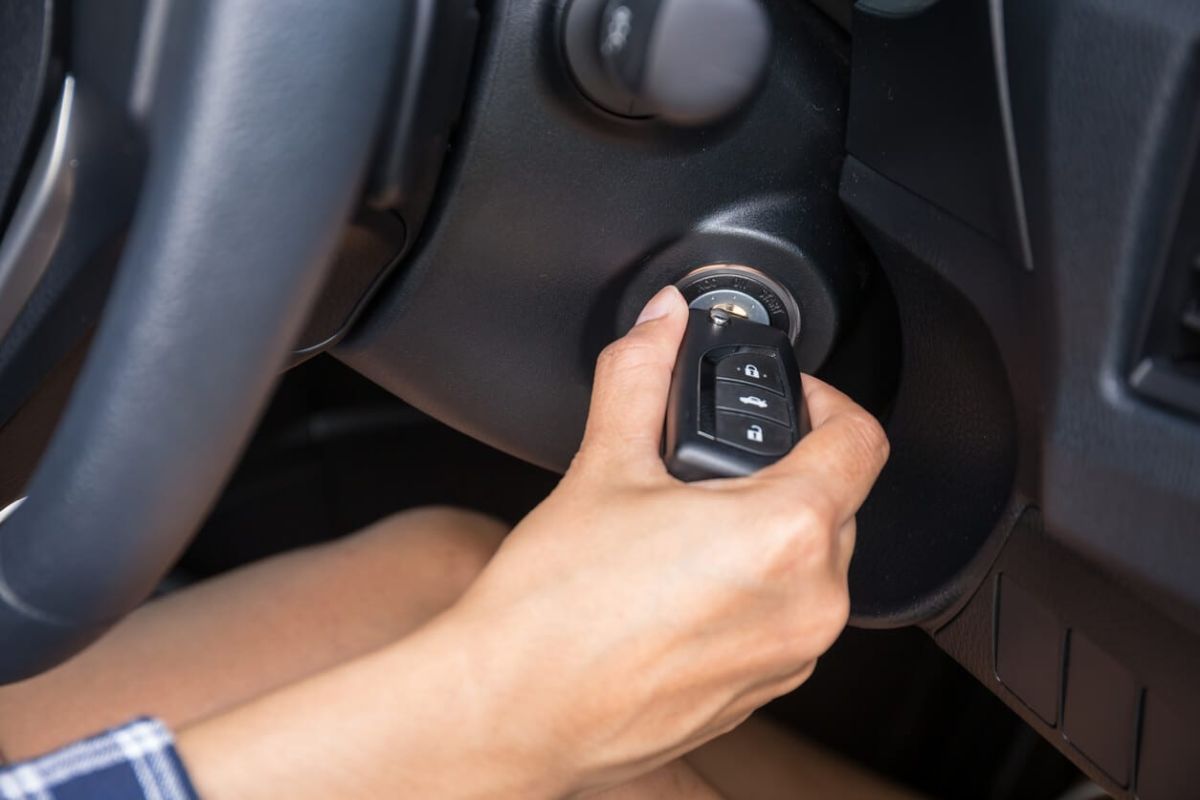
The immobilizer is one of the most important electronic security systems used in modern vehicles to help prevent unauthorized engine starting. Even if someone can physically unlock the vehicle, the immobilizer can prevent the engine from starting if the vehicle cannot verify the correct key or electronic identification.
In newer vehicles, an immobilizer is much more than a simple system that checks whether a mechanical key fits the ignition. The key, transponder chip, immobilizer system, body control module, and engine ECU can all work together as part of an electronic authorization process.
What Does an Immobilizer Do?
The primary purpose of an immobilizer is to prevent an unauthorized person from starting the vehicle.
When a conventional key is inserted into the ignition, or when a start button is pressed in a keyless vehicle, several conditions must be satisfied before the engine can run. Immobilizer authorization is one of those conditions.
If the vehicle cannot verify that the key is authorized, the engine management system may prevent the engine from starting.
An immobilizer can therefore:
-
Help prevent unauthorized engine starting.
-
Verify whether the key belongs to the vehicle.
-
Participate in the authorization process between the key and engine ECU.
-
Increase the vehicle's electronic protection against theft.
-
Work together with central locking and keyless entry/start systems on modern vehicles.
An immobilizer does not make a vehicle completely impossible to steal. Its primary purpose is to make it difficult to start the engine without the correct electronic authorization.
How Does an Immobilizer Work?
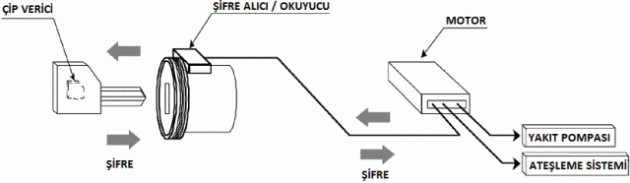
The exact operation varies between vehicle manufacturers and models, but the basic principle is similar.
An immobilizer system typically includes a transponder inside the key, an antenna or key reader, a body or immobilizer control system, and the engine ECU.
When the ignition is switched on or the start button is pressed, the system attempts to identify and authenticate the key.
If the key is recognized as valid, the relevant control units authorize the engine to start.
If the key cannot be recognized or the authentication process fails, the engine may be prevented from starting.
The basic process can be simplified as:
Key → Key identification → Immobilizer authentication → ECU authorization → Engine start authorization
In modern vehicles, however, this process can involve encrypted communication and several control modules rather than a simple identification signal.
How Does the Immobilizer Communicate With the Key?
Traditional immobilizer systems often use a small transponder located inside the vehicle key.
Some transponder systems do not require a conventional battery inside the transponder itself. The vehicle's immobilizer antenna can generate an electromagnetic field that provides the energy required for the transponder to operate and transmit its identification information.
When the key is placed near the ignition switch or reader, the vehicle can communicate with the transponder and verify its identity.
More advanced systems may use wireless communication and encrypted authentication methods between the vehicle and the key.
The Immobilizer and the Key Are Not the Same Thing
It is important to distinguish the mechanical key from the electronic immobilizer function.
The mechanical part of a key may physically operate the door lock or ignition mechanism. However, modern vehicles can also require electronic authentication before the engine is allowed to run.
This means a situation such as:
The key unlocks the vehicle, but the engine will not start
is entirely possible.
For example, the mechanical key blade may be correct, but if the transponder is damaged, incorrectly programmed, or not recognized by the vehicle, the engine may still remain disabled.
How Does an Immobilizer Prevent the Engine From Starting?
The exact method depends on the vehicle's electronic architecture.
Older systems could disable specific functions related to ignition or fuel delivery. Modern vehicles often rely on the engine ECU and other control modules to authorize or deny engine operation.
If immobilizer authentication fails, the system may:
-
Prevent fuel injection.
-
Disable or restrict ignition operation.
-
Prevent or restrict engine starting authorization.
-
Apply a security strategy that prevents normal engine operation.
Therefore, an immobilizer problem does not always mean that the starter motor will fail to turn.
In some vehicles, the engine may crank normally but fail to start. In others, the vehicle may prevent the starting sequence from progressing at all.
What Are the Symptoms of an Immobilizer Problem?
The symptoms can vary significantly depending on the vehicle.
Common signs include:
-
The engine will not start.
-
The starter motor turns, but the engine does not run.
-
An immobilizer or key symbol remains illuminated on the dashboard.
-
A "Key Not Detected" or similar warning appears.
-
The key is recognized intermittently.
-
The vehicle starts with a spare key but not with the primary key.
-
Pressing the start button produces no response.
-
Keyless entry or central locking behaves abnormally.
-
Starting problems appear after a battery replacement or electrical interruption.
However, these symptoms do not automatically prove that the immobilizer itself has failed.
A weak battery, starter problem, fuel-system problem, ignition fault, crankshaft position sensor issue, ECU problem, or communication fault can sometimes produce similar symptoms.
What Does the Immobilizer Warning Light Mean?
The immobilizer or key symbol on the dashboard provides information about the status of the security system.
On some vehicles, the light may illuminate briefly when the ignition is switched on and then turn off as part of the normal system check.
If the light remains illuminated or flashes continuously, it may indicate that the key could not be authenticated or that the immobilizer system has detected a problem.
The exact meaning depends on the vehicle, so the manufacturer's instructions should always be considered.
Why Does an Immobilizer Fail?
There are several possible causes of an immobilizer-related problem. It is not correct to assume that the immobilizer control unit itself is defective.
Key transponder
If the transponder inside the key is damaged or its electronic identity cannot be read, the vehicle may fail to recognize the key.
Key programming or synchronization problem
The key may lose its pairing with the vehicle in certain circumstances, or a replacement key may need to be programmed into the system.
Weak vehicle battery
Low battery voltage can affect multiple electronic control units. Communication between the immobilizer system, body control module, and engine ECU can also be affected by unstable or insufficient voltage.
Key battery
In keyless entry and start systems, a weak key-fob battery can cause key detection problems. Some vehicles have an emergency detection method that allows the vehicle to recognize and start with the key even when the key-fob battery is weak.
Antenna or reader failure
A problem with the antenna that reads the key can prevent authentication even when the key itself is working correctly.
Wiring and connector problems
Broken wires, short circuits, corrosion, loose connectors, or poor electrical connections can interrupt communication between immobilizer components.
BCM or immobilizer module
Depending on the vehicle, immobilizer functions may be handled by a dedicated module or integrated into the Body Control Module (BCM).
ECU communication problem
The engine ECU may refuse to start the engine if it does not receive valid authorization from the immobilizer system.
CAN communication failure
Modern vehicles commonly use CAN communication between the immobilizer, BCM, engine ECU, and other modules. A communication problem on the CAN network can sometimes appear to be an immobilizer fault.
Why Should the Vehicle Battery Be Checked First?
The battery in a modern vehicle does much more than provide power for the starter motor.
Numerous electronic control units depend on a stable electrical supply. If battery voltage drops too low, some modules may not operate correctly or may fail to communicate with each other.
For this reason, replacing the key, ECU, or immobilizer module should not be the first step when a vehicle refuses to start.
The battery, terminals, ground connections, fuses, and charging system should be checked first.
The alternator's charging voltage should also be evaluated when appropriate.
Why Is Testing With a Spare Key Useful?
If the vehicle has a spare key, testing it can be one of the simplest diagnostic steps.
If the vehicle starts normally with one key but not with another, the problem may be related to the key, its transponder, or its programming.
If neither key works, the problem may be on the vehicle side. The antenna, immobilizer system, BCM, ECU, power supply, or communication network may need to be investigated.
This simple comparison can prevent unnecessary replacement of expensive components.
How Is an Immobilizer Problem Diagnosed?
An immobilizer problem should not be diagnosed solely by looking at the warning light on the dashboard.
The first step should generally be checking battery voltage and the vehicle's basic electrical supply. The vehicle should then be scanned with a diagnostic tool capable of communicating with the relevant control modules.
Depending on the vehicle, technicians may need to inspect:
-
The immobilizer system
-
The Body Control Module (BCM)
-
The engine ECU
-
The keyless entry/start system
-
The electronic steering lock
-
CAN communication
-
The key recognition system
Fault codes are important, but live data can be even more useful in some cases.
A diagnostic tool may show whether the vehicle can detect the key, whether authentication was successful, and whether the engine ECU has received starting authorization.
Does an Immobilizer Problem Mean the ECU Must Be Replaced?
No.
An immobilizer-related problem should not automatically lead to ECU replacement.
If the problem is inside the key, replacing the ECU will not solve it. Likewise, if the problem is caused by the antenna, wiring, BCM, power supply, or CAN communication, replacing the ECU may be unnecessary.
The actual cause should be confirmed before replacing expensive control modules.
Replacing an ECU can also introduce additional procedures such as software programming, vehicle configuration, immobilizer synchronization, and key programming.
How Is a New Key Programmed?
The procedure for adding a new key varies according to the vehicle manufacturer and immobilizer system.
Some vehicles require a dedicated diagnostic tool and manufacturer-specific software. Certain systems may also require a security code or an online authorization process.
For this reason, key programming should not be attempted using an arbitrary procedure.
An incorrect programming procedure can sometimes cause existing keys to stop being recognized until the system is correctly configured again.
Is the Immobilizer the Same as Central Locking?
No. They are different systems, although modern vehicles can integrate and communicate between them.
Central locking is primarily responsible for locking and unlocking the vehicle's doors.
The immobilizer is responsible for electronic authorization of engine starting.
Therefore, a problem where the remote control does not unlock the doors does not necessarily mean that the immobilizer is defective.
In keyless systems, however, key detection, entry authorization, immobilizer functions, and engine starting can be more closely integrated.
How Effective Is an Immobilizer Against Vehicle Theft?
An immobilizer provides an important additional layer of protection against vehicle theft. By requiring valid electronic authentication before allowing the engine to start, it makes unauthorized starting considerably more difficult.
However, no security system makes a vehicle completely theft-proof.
Modern vehicles can combine immobilizers with alarms, central locking, electronic steering locks, keyless systems, and other security technologies.
The effectiveness of the overall system therefore depends on all of these components working correctly.
What Should You Do If the Immobilizer Stops Working?
If the vehicle does not recognize the key or the engine will not start, several basic checks can be performed before replacing components.
Check the vehicle battery and battery connections. If available, try the spare key. Pay attention to any immobilizer, key, or "Key Not Detected" warning on the dashboard.
If the problem continues, the vehicle should be scanned with a diagnostic tool that can access the immobilizer, BCM, and engine ECU.
On modern vehicles, an immobilizer-related starting problem should not automatically be described as a "bad key." The key, transponder, antenna, BCM, ECU, power supplies, and communication network may all be involved.
Although the basic purpose of an immobilizer is straightforward, the system behind it can be highly sophisticated. By electronically verifying the correct key and coordinating authorization between multiple control units, the immobilizer provides an important layer of protection against unauthorized engine starting.