TR
TR EN
EN

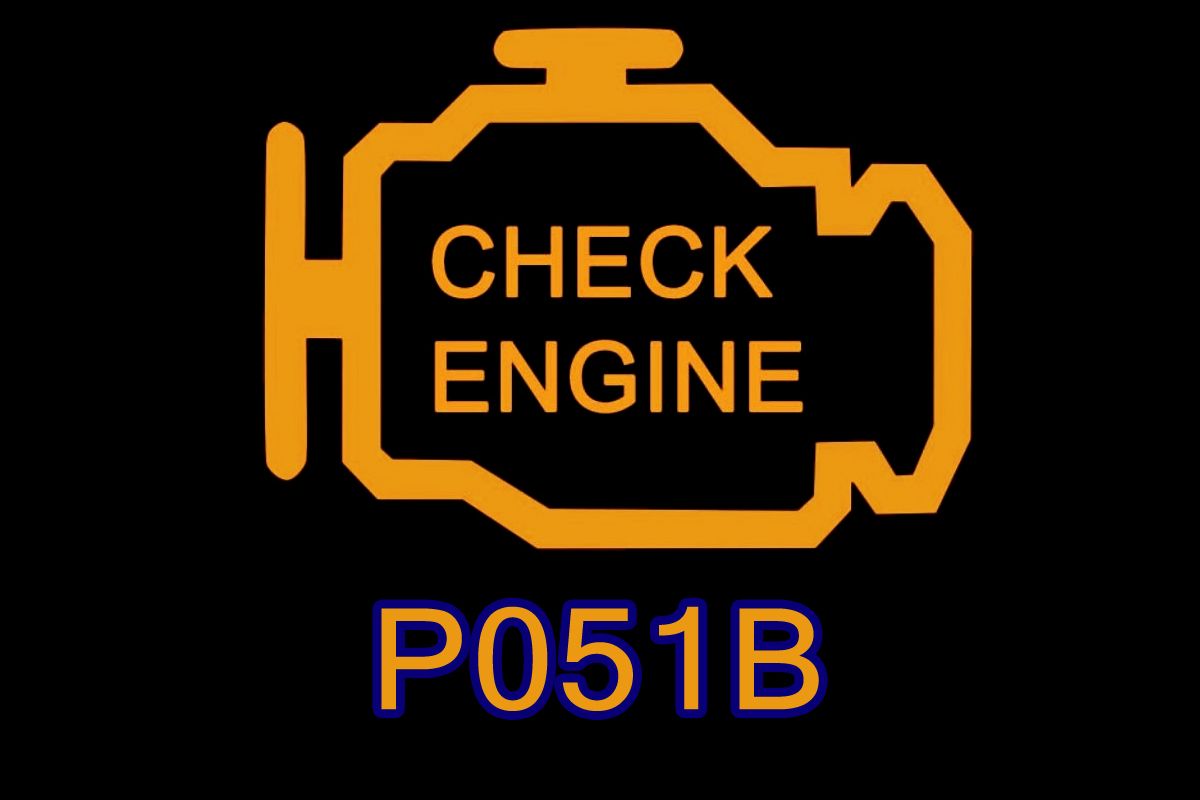
P051B Crankcase Pressure Sensor Circuit Range/Performance
P051B is an OBD-II diagnostic trouble code indicating that the ECM/PCM has detected a problem with the crankcase pressure sensor signal or its operating range/performance.
The important phrase is “Range/Performance.” This means the ECM is receiving a signal from the crankcase pressure monitoring system, but the signal does not behave as expected under the current engine operating conditions.
P051B does not automatically mean that the crankcase pressure sensor itself is defective.
The problem can be caused by the sensor, wiring, connector, crankcase ventilation system, excessive crankcase pressure, a restriction, a vacuum leak, or another engine condition affecting crankcase pressure.
What Does P051B Mean?
The crankcase is the lower internal area of the engine surrounding the crankshaft and containing engine oil.
During normal engine operation, some combustion gases pass the piston rings and enter the crankcase. This is known as blow-by.
The crankcase ventilation system removes these gases and routes them back into the intake system so they can be burned by the engine.
Modern engines can monitor crankcase pressure using a pressure sensor.
The ECM uses the sensor information to determine whether crankcase pressure is behaving normally.
When the reported pressure is outside the expected range or does not respond correctly to changing engine conditions, the ECM can store:
P051B – Crankcase Pressure Sensor Circuit Range/Performance
In simple terms:
The ECM is receiving a crankcase-pressure signal, but the signal does not make sense for the engine's current operating conditions.
What Is Crankcase Pressure?
Crankcase pressure is the pressure condition inside the engine crankcase relative to the reference pressure used by the system.
A healthy engine does not simply produce unlimited positive pressure inside the crankcase.
The crankcase ventilation system is designed to control these gases and maintain the appropriate pressure balance.
Depending on the engine design, the crankcase may operate under:
-
Slight vacuum
-
Near-atmospheric pressure
-
Controlled pressure conditions
The exact target varies by engine.
This is why there is no universal crankcase-pressure value that can be applied to every vehicle.
How the Crankcase Pressure Sensor Works
The sensor measures pressure in the crankcase ventilation system and sends an electrical signal to the ECM.
Depending on the vehicle, the sensor may be:
-
A dedicated three-wire pressure sensor
-
Integrated into the crankcase ventilation assembly
-
Located in or near the valve cover
-
Installed in a breather hose
-
Integrated into another ventilation component
A typical electronic sensor may have:
-
Reference voltage
-
Ground
-
Signal
But the exact configuration is manufacturer-specific.
The ECM then evaluates the signal against expected operating conditions.
For example, crankcase pressure can change with:
-
Engine RPM
-
Engine load
-
Throttle position
-
Blow-by quantity
-
Crankcase ventilation flow
-
Engine temperature
If the signal does not respond as expected, P051B may be stored.
What Does "Range/Performance" Mean?
P051B is different from a simple high-voltage or low-voltage code.
The ECM is not necessarily saying:
“The sensor signal is electrically too high.”
or:
“The sensor signal is electrically too low.”
Instead, it is saying:
“The signal I am receiving is not behaving correctly.”
For example, the sensor could produce a voltage that is electrically valid but represent an implausible crankcase-pressure condition.
The signal might:
-
Remain fixed
-
Change too slowly
-
Change too quickly
-
Not respond to RPM
-
Not respond to engine load
-
Be outside the expected pressure range
-
Suddenly fluctuate
-
Disagree with expected ventilation-system behavior
This makes P051B a diagnostic plausibility problem, not simply a wiring fault.
Common Symptoms of P051B
Symptoms can vary significantly depending on the cause.
Possible symptoms include:
-
Check Engine Light
-
Rough idle
-
Unstable idle
-
Engine oil leaks
-
Oil seepage around seals
-
Increased oil consumption
-
Whistling or hissing from the engine
-
Abnormal crankcase ventilation noise
-
Poor engine performance
-
Reduced engine power
-
Increased emissions
-
Difficult starting
-
Turbocharger-related symptoms on turbocharged engines
-
Additional crankcase ventilation codes
Some vehicles may show only the Check Engine Light without noticeable drivability problems.
Common Causes of P051B
Faulty crankcase pressure sensor
The sensor may become inaccurate or develop an internal fault.
It can continue producing a signal while reporting an incorrect pressure.
This is one of the reasons a range/performance code can be more difficult to diagnose than a simple circuit-high or circuit-low code.
Blocked crankcase ventilation system
A restriction in the PCV or breather system can prevent crankcase gases from being evacuated correctly.
Possible sources include:
-
Blocked PCV valve
-
Restricted breather passage
-
Sludge
-
Carbon deposits
-
Collapsed hose
-
Frozen moisture in cold climates
-
Contaminated ventilation components
A restriction can create genuine abnormal crankcase pressure.
Faulty PCV valve
The positive crankcase ventilation system regulates the flow of crankcase gases.
If the valve is stuck, restricted or otherwise malfunctioning, crankcase pressure can move outside its intended range.
Damaged crankcase ventilation hose
A cracked, disconnected or collapsed hose can change the pressure and airflow characteristics of the system.
A leak can be particularly important because the sensor may detect a pressure condition that no longer corresponds to the expected ventilation flow.
Sensor signal wiring problem
The sensor may be functioning correctly while the ECM receives an incorrect signal because of:
-
Broken wire
-
High resistance
-
Corrosion
-
Short circuit
-
Damaged insulation
-
Poor terminal contact
Poor connector
A loose or contaminated connector can create an unstable sensor signal.
Inspect for:
-
Oil contamination
-
Corrosion
-
Bent pins
-
Loose terminals
-
Water intrusion
-
Damaged locking mechanism
Reference-voltage problem
If the sensor uses a regulated reference voltage, an unstable or incorrect reference can affect the sensor output.
If multiple sensors are reporting unusual values, investigate the shared reference circuit.
Sensor ground problem
A poor ground can distort the sensor's output.
A ground problem should be checked with voltage-drop testing rather than relying exclusively on a basic continuity measurement.
Excessive engine blow-by
This is an important mechanical possibility.
If combustion gases are passing the piston rings in excessive quantities, the crankcase ventilation system may not be able to maintain the expected pressure.
Possible causes include:
-
Worn piston rings
-
Cylinder wear
-
Damaged pistons
-
Excessive cylinder pressure leakage
In such a case, replacing the crankcase pressure sensor would not solve the underlying problem.
P051B Can Be Caused by a Real Crankcase Pressure Problem
Unlike some circuit-specific codes, P051B can involve an actual physical pressure condition.
This is because the code concerns range/performance, not merely an electrical high or low signal.
For example:
Blocked PCV system → crankcase pressure increases → sensor reports abnormal pressure → ECM detects implausible range → P051B
Or:
Excessive blow-by → ventilation system overwhelmed → crankcase pressure changes abnormally → P051B
Therefore, both the electrical sensor circuit and the physical crankcase ventilation system should be considered.
How Crankcase Ventilation Normally Works
The engine produces blow-by gases during combustion.
These gases enter the crankcase and contain:
-
Combustion gases
-
Fuel vapors
-
Water vapor
-
Oil vapor
The crankcase ventilation system removes these gases.
Depending on the engine, the gases may pass through a PCV valve, oil separator or integrated breather system before being routed into the intake.
The system must control the flow carefully.
Too little ventilation can produce excessive crankcase pressure.
Too much uncontrolled airflow can produce excessive crankcase vacuum and potentially affect engine operation.
This is why the pressure sensor provides useful information to the ECM.
Diagnosing P051B Correctly
The best diagnosis should determine whether the abnormal reading is caused by:
The sensor/circuit
or
A genuine crankcase ventilation/engine condition.
1. Scan All Control Modules
Start with a complete scan.
Look for related codes involving:
-
Crankcase ventilation
-
PCV system
-
Airflow
-
Intake pressure
-
MAP sensor
-
MAF sensor
-
Fuel mixture
-
Turbocharger
-
Oil pressure
-
Engine misfire
-
System voltage
Related codes can provide important clues.
2. Check Freeze-Frame Data
Find out when P051B was stored.
Useful parameters include:
-
Engine RPM
-
Engine load
-
Engine coolant temperature
-
Intake pressure
-
MAF airflow
-
Throttle position
-
Vehicle speed
-
Reported crankcase pressure
If the fault appears only at idle, the PCV system may behave differently than when the engine is under heavy load.
If it appears during acceleration or high RPM, blow-by and ventilation capacity may deserve greater attention.
3. Check Live Crankcase Pressure Data
If the scan tool provides crankcase pressure data, monitor it under different operating conditions.
Observe:
-
Engine off
-
Idle
-
Light acceleration
-
Higher RPM
-
Engine deceleration
The exact expected values must come from the manufacturer.
What matters is whether the sensor reading responds plausibly and consistently.
A signal that remains fixed despite significant changes in engine operating conditions can indicate a sensor or circuit problem.
Inspect the PCV System
Inspect the entire crankcase ventilation system.
Look for:
-
Cracked hoses
-
Disconnected hoses
-
Blockages
-
Collapsed hoses
-
Damaged valves
-
Oil sludge
-
Contaminated passages
-
Damaged oil separators
Do not inspect only the sensor.
The sensor may be accurately reporting a problem caused elsewhere in the ventilation system.
Check the Sensor Connector
Inspect the sensor connector for:
-
Corrosion
-
Oil
-
Moisture
-
Loose terminals
-
Bent pins
-
Poor terminal tension
-
Damaged wiring
Because crankcase ventilation components are exposed to oil vapor, contamination around the sensor and connector can be particularly relevant.
Check Reference Voltage and Ground
If the sensor uses a three-wire circuit, identify each circuit using the manufacturer's wiring diagram.
Check:
-
Reference voltage
-
Ground
-
Signal
The correct reference voltage and signal range are vehicle-specific.
Do not apply generic sensor specifications to a different engine.
Test the Signal
Monitor the sensor signal while changing engine operating conditions.
A healthy system should normally demonstrate a plausible relationship between engine operating conditions and crankcase pressure.
If the signal is stuck, erratic or outside the manufacturer's specified range, determine whether the cause is:
-
Sensor
-
Wiring
-
Connector
-
Reference
-
Ground
-
Actual pressure
Perform a Physical Crankcase Pressure Test
If the electrical circuit appears correct, an independent pressure measurement can help determine whether the engine genuinely has abnormal crankcase pressure.
The appropriate test equipment and measurement point depend on the engine.
A physical measurement can help distinguish:
Sensor reports abnormal pressure + actual pressure normal
from:
Sensor reports abnormal pressure + actual pressure abnormal
The first situation points toward the sensing circuit.
The second requires investigation of the PCV system or engine itself.
Check for Excessive Blow-By
If actual crankcase pressure is abnormal, the engine's internal condition may need to be investigated.
Excessive blow-by can overwhelm the ventilation system.
Possible causes include:
-
Worn piston rings
-
Cylinder wear
-
Damaged piston
-
Excessive combustion-gas leakage past the rings
Additional tests may include:
-
Compression testing
-
Leak-down testing
-
Crankcase pressure measurement
-
Inspection of oil consumption
-
Inspection for excessive smoke
The exact diagnostic path depends on the engine.
P051B and Oil Leaks
Abnormal crankcase pressure can contribute to oil leakage.
If crankcase pressure becomes excessive, it can place additional pressure on seals and gaskets.
Possible symptoms include oil seepage around:
-
Valve cover
-
Crankshaft seals
-
Camshaft seals
-
Oil pan
-
Other engine seals
However, an oil leak does not automatically mean that P051B is the cause.
Old or damaged seals can leak independently.
P051B and Turbocharged Engines
Turbocharged engines can make crankcase ventilation diagnosis more complicated.
The intake system, turbocharger and PCV system interact under different engine operating conditions.
A ventilation problem can contribute to:
-
Oil entering the intake
-
Increased oil consumption
-
Intake contamination
-
Abnormal boost-related behavior
Turbocharged engines also experience changing pressure conditions between vacuum and boost.
Therefore, crankcase pressure should be evaluated according to the manufacturer's operating strategy rather than using a simple universal pressure target.
Can P051B Cause Oil Consumption?
It can, depending on the underlying cause.
A malfunctioning PCV system can allow excessive oil vapor to enter the intake.
A damaged or restricted ventilation system can also contribute to abnormal crankcase pressure.
However, excessive oil consumption can have many other causes, including:
-
Worn piston rings
-
Valve stem seals
-
Turbocharger problems
-
External oil leaks
P051B alone does not prove that the PCV system is responsible.
Can P051B Cause Rough Idle?
Yes, particularly when the crankcase ventilation system has an uncontrolled air leak.
For example, a damaged PCV hose or valve can introduce air into the intake system that the ECM does not account for correctly.
This can contribute to:
-
Lean mixture
-
Rough idle
-
Stalling
-
Unstable RPM
In such a situation, the crankcase pressure code may appear together with fuel-trim or airflow-related codes.
Can You Drive With P051B?
It depends on the underlying problem.
If the vehicle runs normally and there are no signs of excessive crankcase pressure, oil leakage or serious engine problems, short-term driving may be possible.
However, P051B should not be ignored for an extended period.
If the vehicle has:
-
Heavy oil leakage
-
Severe oil consumption
-
Strong crankcase pressure
-
Excessive smoke
-
Rough running
-
Turbocharger symptoms
-
Engine performance problems
the vehicle should be diagnosed promptly.
P051B vs. Other Crankcase Pressure Codes
P051B should be distinguished from other possible sensor-circuit faults.
P051B – Crankcase Pressure Sensor Circuit Range/Performance
The crankcase pressure sensor signal is outside the expected range or does not behave correctly.
Other manufacturer-specific or related codes may identify:
-
Crankcase pressure sensor circuit high
-
Crankcase pressure sensor circuit low
-
Crankcase pressure sensor circuit malfunction
-
Crankcase ventilation performance
-
PCV system problems
The exact code definitions and diagnostic strategy can vary between manufacturers.
Final Diagnostic Summary
P051B – Crankcase Pressure Sensor Circuit Range/Performance indicates that the ECM/PCM has detected an implausible or abnormal crankcase-pressure sensor signal.
The fault can be electrical, such as a defective sensor, damaged wiring, poor connector contact, incorrect reference voltage or sensor-ground problem.
But unlike a simple circuit-high or circuit-low code, P051B can also involve a genuine crankcase pressure or ventilation problem.
A restricted PCV system, damaged breather hose, faulty PCV valve, contaminated oil separator or excessive engine blow-by can all potentially produce abnormal crankcase pressure and trigger the code.
The most effective diagnostic approach is to check the oil and ventilation system, scan all modules, examine freeze-frame and live data, inspect the sensor and wiring, verify the reference and ground circuits, and compare the sensor reading with an independent physical pressure measurement when necessary.
The key diagnostic question is:
Is the crankcase pressure sensor reporting an abnormal condition because the sensor/circuit is faulty, or is the engine actually experiencing abnormal crankcase pressure?
That distinction is essential because replacing the pressure sensor will not correct a blocked PCV system, and cleaning or replacing the PCV system will not correct an electrically defective sensor.