TR
TR EN
EN

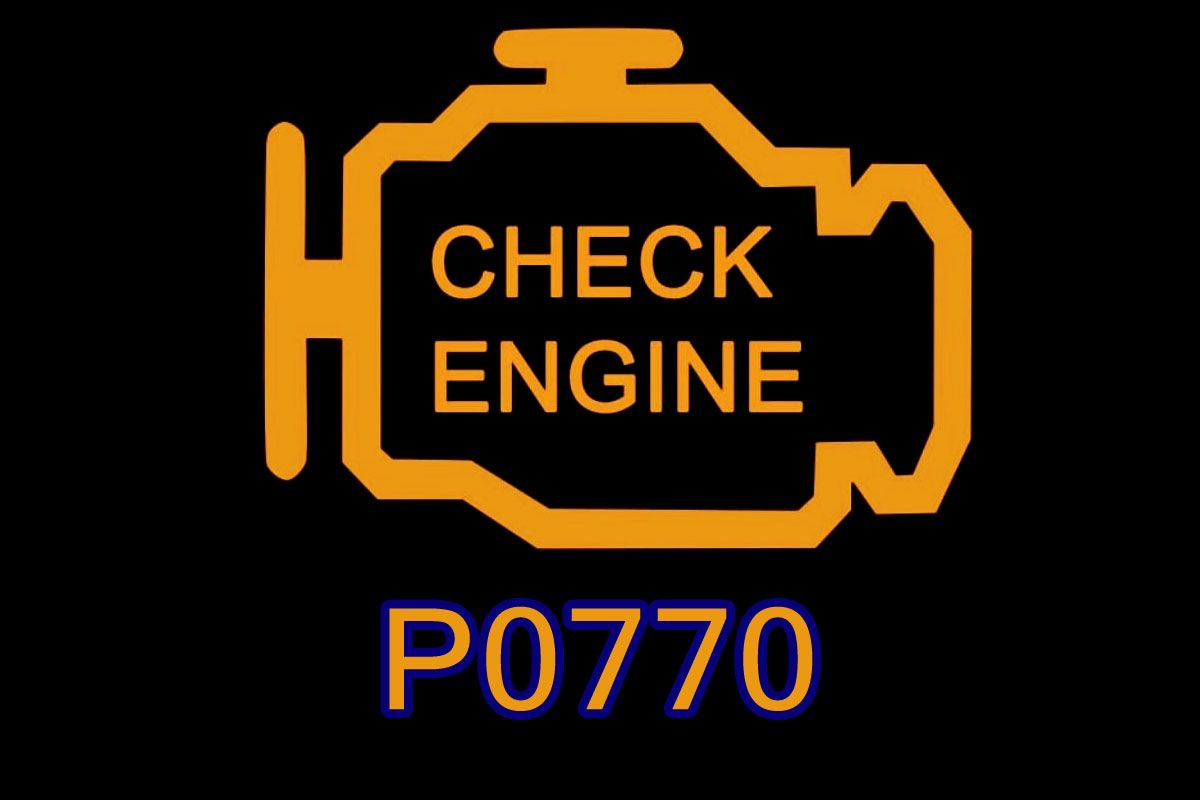
P0770 Shift Solenoid "E" Malfunction
The P0770 – Shift Solenoid "E" Malfunction diagnostic trouble code (DTC) is set when the transmission control module (TCM) detects a problem with the operation or control of Shift Solenoid "E".
Shift solenoids are electrically controlled valves that regulate transmission fluid flow through the hydraulic circuits inside an automatic transmission. By controlling this fluid flow, the transmission can apply and release different clutch elements and produce the required gear ratios.
P0770 is a relatively broad solenoid code. It does not necessarily mean that Solenoid "E" itself has failed. The underlying problem may be electrical, hydraulic, or mechanical.
Possible causes include a defective solenoid, damaged wiring, poor connector contact, contaminated transmission fluid, a sticking valve, valve-body problems, or an internal transmission fault.
What Does P0770 Mean?
In simple terms, P0770 means that the TCM has detected a malfunction involving Shift Solenoid "E".
The TCM expects the solenoid and its associated hydraulic circuit to respond in a specific way. If the expected operation is not detected, P0770 may be stored.
The exact function of Solenoid "E" depends on the transmission.
This is important because there is no universal location or function for Solenoid "E" across all vehicles. One transmission may use it for a particular clutch circuit, while another may use it as part of a different shift-control strategy.
What Is Shift Solenoid "E"?
Inside an electronically controlled automatic transmission are several solenoids that control transmission fluid.
The TCM can switch these solenoids on and off, or regulate them in a controlled manner, depending on the transmission design.
The resulting hydraulic pressure is used to control:
-
Clutch packs
-
Brake elements
-
Shift valves
-
Gear changes
-
Pressure regulation
When Shift Solenoid "E" does not operate correctly, the transmission may have difficulty producing one or more of its normal gear changes.
What Is the Difference Between P0770 and P0771?
These two codes are closely related but should not be treated as identical.
P0770 – Shift Solenoid "E" Malfunction
This is a more general malfunction code associated with Solenoid "E".
P0771 – Shift Solenoid "E" Performance / Stuck Off
This indicates that the TCM has detected a performance problem or believes the solenoid is remaining in the OFF state when it should be operating.
Therefore, P0770 does not necessarily tell you whether the problem is an electrical failure, a sticking solenoid, or a hydraulic issue.
Symptoms of P0770
The symptoms can range from almost unnoticeable to severe.
Possible symptoms include:
Harsh gear changes
The transmission may shift harder than normal.
Delayed shifting
There may be a noticeable pause before the next gear engages.
Erratic shifting
Gear changes may occur at unexpected times.
Failure to shift
One or more gears may become unavailable.
Transmission slipping
Engine RPM can increase without a proportional increase in vehicle speed.
Shift flare
RPM may rise temporarily during a gear change.
Limp mode
The TCM may restrict transmission operation to protect the transmission.
Reduced acceleration
The vehicle may feel weak because the transmission cannot use all of its normal gear ratios.
Check Engine Light
The malfunction indicator lamp may illuminate.
Why Does P0770 Occur?
P0770 can be caused by several different problems.
Faulty Shift Solenoid "E"
The solenoid may have an internal electrical or mechanical failure.
Damaged wiring
A broken or damaged wire can prevent proper communication between the TCM and solenoid.
Corroded connector
Corrosion can increase resistance and interfere with the solenoid signal.
Loose terminal
Poor terminal contact can cause intermittent operation.
Contaminated transmission fluid
Debris can interfere with solenoid movement.
Low transmission fluid
Low fluid can disrupt hydraulic operation.
Valve-body problem
A sticking valve or worn valve bore can prevent the solenoid-controlled circuit from functioning correctly.
Hydraulic pressure problem
Incorrect pressure can prevent the transmission from responding properly.
Internal transmission wear
Worn clutches, seals, or other internal components can affect the hydraulic response.
TCM problem
A control-module fault is possible, although it should generally be investigated after the solenoid and circuit have been tested.
Can a Bad Solenoid Cause P0770?
Yes.
Shift Solenoid "E" itself is one of the first components that should be investigated.
A solenoid can fail because of:
-
Open internal coil
-
Short circuit
-
Mechanical sticking
-
Contamination
-
Internal wear
-
Heat-related failure
However, the code alone does not prove that the solenoid needs replacement.
Can Wiring Cause P0770?
Yes.
The wiring between the TCM and transmission solenoids can be exposed to heat, vibration, transmission fluid, and moisture.
Inspect for:
-
Broken wires
-
Chafed insulation
-
Short circuits
-
Open circuits
-
Corrosion
-
Loose terminals
-
Water intrusion
-
High resistance
A wiring problem can make a good solenoid appear defective.
Can Low Transmission Fluid Cause P0770?
It can contribute to transmission problems, but it should not be assumed to be the direct cause.
P0770 is related to a solenoid malfunction, while fluid level is a separate issue.
Nevertheless, low fluid can affect hydraulic pressure and cause abnormal shifting.
The fluid level should be checked using the correct procedure for the particular transmission.
Can Dirty Transmission Fluid Cause P0770?
Yes.
Contaminated fluid can interfere with the operation of small hydraulic components.
Debris may cause Solenoid "E" or an associated valve to move incorrectly.
Dirty fluid can also contribute to valve-body problems.
If the fluid is heavily contaminated or contains metallic particles, the possibility of internal transmission wear should be investigated.
Can the Valve Body Cause P0770?
Yes.
The valve body and shift solenoids work together.
Even if Solenoid "E" is electrically functional, a hydraulic valve controlled by that solenoid may be sticking or unable to maintain the required pressure.
Possible valve-body problems include:
-
Sticking valves
-
Worn valve bores
-
Restricted passages
-
Internal leakage
-
Contamination
These problems can cause the TCM to detect an abnormal shift response.
Can P0770 Be Caused by Internal Transmission Damage?
Yes, but this should not be the first assumption.
If the electrical circuit and solenoid are working correctly, the problem may be deeper inside the transmission.
Possible internal causes include:
-
Worn clutch packs
-
Damaged seals
-
Hydraulic leakage
-
Worn pistons
-
Internal transmission wear
If a clutch controlled by the affected hydraulic circuit cannot hold properly, the TCM may detect abnormal transmission behavior and store P0770.
Does P0770 Mean the Transmission Needs to Be Replaced?
No.
P0770 does not automatically mean that the transmission needs to be rebuilt or replaced.
The fault could be limited to:
-
A solenoid
-
Wiring
-
A connector
-
Fluid contamination
-
A valve-body problem
Only after these possibilities have been investigated should major internal transmission repairs be considered.
How Is P0770 Diagnosed?
Because P0770 is not a highly specific code, a systematic diagnosis is important.
Start by scanning for other transmission codes.
Additional codes can provide valuable information about the actual problem.
Check for:
-
Other shift solenoid codes
-
Pressure-control codes
-
Gear-ratio codes
-
Speed sensor codes
-
Transmission communication codes
-
Voltage-related codes
Next, inspect the transmission fluid.
Check the level, condition, smell, and contamination.
Then inspect the electrical circuit.
The wiring and connectors associated with Solenoid "E" should be examined carefully.
Test the solenoid itself.
Measure resistance according to the manufacturer's specifications.
Check the control signal.
Verify that the TCM is providing the appropriate command to the solenoid.
Use live transmission data.
Monitor commanded gear, shaft speeds, and other available parameters.
Evaluate hydraulic operation.
If the electrical system appears normal, hydraulic pressure may need to be tested.
Inspect the valve body when necessary.
If hydraulic behavior is abnormal, the valve body may be contributing to the problem.
Investigate internal components last.
Internal transmission repair should be considered when the available evidence points toward mechanical wear.
What If P0770 Is Intermittent?
An intermittent P0770 can be more difficult to locate.
Possible causes include:
-
Loose electrical connections
-
Corroded terminals
-
Damaged wire strands
-
Heat-sensitive solenoid problems
-
Harness movement
-
Internal connector problems
A simple visual inspection may not be enough.
The circuit may need to be tested while the transmission is hot or while the wiring harness is moved to reproduce the fault.
What If P0770 Appears When the Transmission Is Hot?
A fault that appears only at operating temperature can provide a useful clue.
Possible causes include:
-
Heat-sensitive solenoid failure
-
Internal solenoid sticking
-
Hydraulic leakage
-
Valve-body wear
-
Fluid degradation
The vehicle should be tested under the same temperature conditions in which the code normally appears.
Can P0770 Cause Harsh Shifting?
Yes.
If Solenoid "E" is responsible for controlling hydraulic pressure for a particular shift circuit, incorrect operation can cause the clutch to engage too quickly or with incorrect pressure.
This may produce a noticeable bump or harsh engagement.
Can P0770 Cause Transmission Slipping?
Yes, potentially.
If the affected hydraulic circuit cannot produce sufficient pressure, the relevant clutch may fail to hold firmly.
This can cause:
-
RPM flare
-
Poor acceleration
-
Delayed engagement
-
Slipping
-
Excessive transmission heat
Persistent slipping can eventually cause internal damage.
Can P0770 Cause Limp Mode?
Yes.
The TCM may enter a protective mode when it determines that normal transmission control is unreliable.
Depending on the vehicle, this can result in:
-
Limited gear selection
-
Fixed-gear operation
-
Higher line pressure
-
Disabled manual shifting
-
Reduced transmission performance
The exact behavior varies between manufacturers and transmission designs.
Is P0770 a Serious Problem?
It can be.
If the transmission continues to shift normally and the code appears only intermittently, the issue may initially be relatively minor.
However, if P0770 is accompanied by:
-
Slipping
-
Severe shift shock
-
Loss of gears
-
Overheating
-
Burning transmission-fluid smell
-
Limp mode
the problem should be investigated promptly.
Can You Drive With P0770?
A short drive to a repair facility may be possible if the transmission is operating normally.
However, continued driving is not advisable if the vehicle is:
-
Slipping
-
Losing gears
-
Shifting violently
-
Overheating
-
Producing a burning smell
-
Entering limp mode
If the affected clutch is slipping, continued driving can turn a solenoid or hydraulic problem into a much more expensive internal transmission repair.
How Is P0770 Repaired?
The repair depends on the confirmed cause.
Possible repairs include:
-
Repairing damaged wiring
-
Repairing electrical connectors
-
Replacing damaged terminals
-
Replacing Shift Solenoid "E"
-
Correcting the transmission-fluid level
-
Repairing fluid leaks
-
Servicing contaminated transmission fluid when appropriate
-
Repairing the valve body
-
Correcting hydraulic pressure problems
-
Repairing worn internal components
-
Performing transmission adaptation or relearn procedures
-
Repairing or replacing the TCM when confirmed defective
The exact repair procedure varies according to the transmission.
Should You Replace Shift Solenoid "E"?
Not simply because P0770 is stored.
The solenoid should first be tested for:
-
Electrical resistance
-
Power supply
-
Control signal
-
Mechanical operation
The wiring and connector should also be checked.
If the solenoid passes the electrical tests but does not respond correctly hydraulically, further investigation may be necessary.
Does P0770 Require a Transmission Rebuild?
Not by itself.
A rebuild should only be considered when testing provides evidence of internal damage.
A sensible diagnostic sequence is:
Fluid → Wiring → Connectors → Solenoid → Control signal → Hydraulic pressure → Valve body → Internal components
This approach helps prevent an unnecessary transmission rebuild when the actual problem is a relatively localized solenoid or electrical fault.
Common Diagnostic Mistakes
Replacing Solenoid "E" without testing
The wiring or valve body may actually be responsible.
Assuming the transmission is mechanically destroyed
P0770 does not prove internal transmission failure.
Ignoring fluid contamination
Dirty fluid can contribute to solenoid and valve-body problems.
Replacing the TCM too quickly
The TCM should not be blamed before the circuit has been properly tested.
Ignoring other fault codes
Additional DTCs can reveal the underlying problem.
Clearing the code and returning the vehicle
If the cause has not been repaired, P0770 will likely return.
How Do You Clear P0770?
Once the underlying fault has been repaired, the code can be cleared with a suitable diagnostic scanner.
Some vehicles may require a transmission relearn or adaptation procedure afterward.
The recommended sequence is:
Diagnose → Repair → Clear DTC → Perform required adaptation/relearn → Road test → Rescan
The vehicle should be tested through the shift conditions that originally triggered the fault.
Final Thoughts on P0770
P0770 – Shift Solenoid "E" Malfunction indicates that the TCM has detected an abnormality involving the operation or control of Shift Solenoid "E".
The code does not automatically mean that the solenoid itself is defective, nor does it automatically indicate a failed transmission.
A proper diagnosis should consider the entire system:
Solenoid → Wiring → Connector → Transmission fluid → Hydraulic circuit → Valve body → Internal components
If the problem is caused by a damaged wire, poor connection, or defective solenoid, the repair may be relatively straightforward. If testing reveals hydraulic leakage, valve-body wear, or damaged clutch components, the repair can be more extensive.
The most important step is therefore to diagnose the actual cause before replacing expensive transmission components.
If P0770 is accompanied by slipping, severe shifting, loss of gears, overheating, or limp mode, the vehicle should be inspected as soon as possible to prevent additional transmission damage.