TR
TR EN
EN

Why Do LPG Injectors Fail?
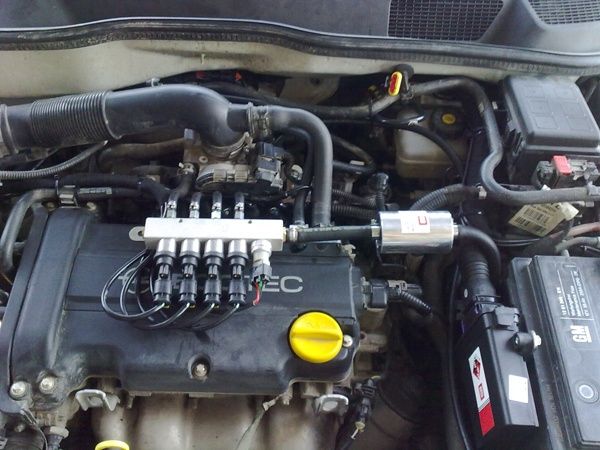
LPG injectors are among the most important components in a sequential LPG system. Their job is to meter the correct amount of LPG and deliver it to the engine according to commands from the LPG ECU.
Over time, LPG injectors can become contaminated, mechanically worn, or electrically faulty. When this happens, the engine may run poorly on LPG, fuel consumption may increase, acceleration may become weaker, and misfires may occur.
But what actually causes LPG injectors to fail?
The Most Common Causes of LPG Injector Failure
1. LPG Filter Not Replaced on Time
One of the most common causes of LPG injector problems is neglected filter maintenance.
LPG filters help prevent particles and oily contaminants from reaching the injectors. As a filter becomes saturated, its ability to protect the injectors can decrease.
Contaminants that reach the injectors can interfere with the movement of their internal components. In the early stages, the injector may not fail completely but may begin to open or close inconsistently.
For this reason, the condition of the LPG filters should always be checked when diagnosing an injector problem.
2. Oily Deposits and Contamination in LPG
LPG should not be considered a perfectly clean and contaminant-free fuel. Fuel quality, storage conditions, and the condition of the LPG system can all affect what reaches the injectors.
Oily residues can accumulate inside an injector and interfere with the movement of its internal mechanism.
This may cause the injector to:
-
Open more slowly
-
Close more slowly
-
Stick intermittently
-
Deliver an inconsistent amount of LPG
-
Respond differently from the other injectors
Even a relatively small amount of contamination can become noticeable at idle because injector opening times are short and precise.
3. Contamination Coming From the LPG Regulator
The LPG regulator, also called a reducer or vaporizer, converts liquid LPG into gas and supplies it to the injection system at the required pressure.
As the regulator ages, internal components can deteriorate and oily residues may accumulate inside the system. Under certain conditions, contaminants can travel downstream toward the LPG filters and injectors.
If injectors become dirty again shortly after being cleaned, simply cleaning the injectors may not solve the underlying problem.
In such cases, the regulator and filtration system should also be inspected.
4. Normal Mechanical Wear
LPG injectors are electromagnetic mechanical components that open and close repeatedly while the engine is running.
Over a long period of use, their internal components can wear.
Wear may cause an injector to:
-
Open more slowly
-
Close incompletely
-
Stick intermittently
-
Deliver an incorrect amount of fuel
-
React differently from the other injectors
This can become especially noticeable at idle, during acceleration, or under changing engine loads.
5. Electrical Failure Inside the Injector
An LPG injector is not only a mechanical component. It also contains an electromagnetic coil that is controlled by the LPG ECU.
The coil can develop an electrical problem, such as:
-
Open circuit
-
Short circuit
-
Abnormal resistance
-
Internal electrical damage
In such cases, cleaning the injector will not solve the problem because the fault is electrical rather than contamination-related.
This is why an injector should be electrically tested before being replaced.
6. Wiring and Connector Problems
Sometimes the injector itself is not faulty.
A loose connector, corroded terminal, damaged wire, poor electrical connection, or wiring damaged by engine-bay heat and vibration can cause an injector to operate intermittently.
This can create symptoms that look exactly like a defective injector.
Before replacing an injector, its connector, power supply, wiring, and control circuit should therefore be checked.
7. Incorrect LPG Calibration
Incorrect LPG calibration can also contribute to injector-related problems.
If the system is incorrectly calibrated, the injectors may operate with excessively short or excessively long opening times under certain conditions.
Incorrect calibration does not automatically mean that the injectors will physically fail. However, it can cause improper fuel delivery and make the LPG system operate outside its ideal range.
A proper calibration should be checked at different engine speeds and loads rather than only at idle.
8. Unstable LPG Pressure
LPG injectors depend on appropriate and stable gas pressure to meter fuel correctly.
If regulator pressure fluctuates significantly, the injector may not deliver the same amount of LPG every time it receives the same command.
This can make an injector appear to be faulty even when the real problem is the regulator or pressure-control system.
For this reason, LPG pressure should be monitored during diagnosis, preferably under different operating conditions.
9. Incorrect Injector Selection
Not every LPG injector is suitable for every engine.
Injector selection should take into account factors such as:
-
Engine power
-
Number of cylinders
-
LPG system design
-
Operating pressure
-
Injector flow capacity
-
LPG ECU compatibility
-
Required calibration range
An injector with insufficient capacity may struggle to supply enough LPG at high engine load.
On the other hand, an injector with unsuitable flow characteristics can make accurate calibration more difficult.
Physical compatibility alone is therefore not enough when selecting LPG injectors.
What Are the Symptoms of a Bad LPG Injector?
Injector problems can often be noticed when the vehicle behaves differently on LPG compared with gasoline.
Common symptoms include:
-
Rough idle on LPG
-
Engine shaking or hesitation
-
Misfires
-
Poor acceleration
-
Weak throttle response
-
Jerking during acceleration
-
Engine stalling
-
Increased LPG consumption
-
Uneven cylinder operation
-
Noticeable difference between gasoline and LPG performance
-
Check Engine Light
-
Misfire-related fault codes
-
Poor engine operation shortly after switching to LPG
However, none of these symptoms automatically proves that the LPG injectors are defective.
The same symptoms can be caused by LPG pressure problems, a contaminated filter, regulator problems, MAP/pressure sensor issues, ignition problems, vacuum leaks, or incorrect LPG calibration.
Are the LPG Injectors Dirty or Actually Faulty?
This distinction is very important.
If contamination is the problem, professional cleaning may restore normal injector operation.
However, an injector with excessive mechanical wear, internal damage, or an electrical fault may not be repaired by cleaning.
The injector should therefore be tested before replacement whenever possible.
Depending on the injector type, a professional test can evaluate:
-
Electrical resistance
-
Opening and closing behavior
-
Flow rate
-
Response consistency
-
Leakage
-
Differences between individual injectors
Comparing all injectors is particularly useful because one injector may perform significantly differently from the others.
Can LPG Injectors Be Cleaned?
Yes, some LPG injectors can be cleaned.
However, the correct cleaning method depends on the injector design and manufacturer.
Not every injector should be treated with the same solvent or cleaning procedure. Some internal seals, plastics, and precision components can be damaged by inappropriate chemicals.
For this reason, brake cleaner, aggressive solvents, or products such as WD-40 should not be considered general-purpose LPG injector cleaning solutions.
Professional injector cleaning may involve removing the injectors, testing them, cleaning them with suitable equipment, and then measuring their flow again.
Ultrasonic cleaning may also be appropriate for some injector designs, but it should only be used when compatible with the specific injector and its construction.
Should All LPG Injectors Be Replaced if One Fails?
Not necessarily.
If one injector fails, it does not automatically mean that all injectors need to be replaced.
The individual injector should first be identified and tested. The remaining injectors should also be compared to determine whether they are still operating within an acceptable range.
Replacing only the faulty injector can be reasonable when the other injectors are in good condition.
However, if the vehicle has high mileage and several injectors show similar wear or inconsistent flow, replacing the complete set may make more sense.
The decision should be based on test results rather than mileage alone.
How Long Do LPG Injectors Last?
There is no universal replacement mileage that applies to every LPG injector.
Injector lifespan depends on:
-
Injector quality
-
LPG filter maintenance
-
LPG fuel quality
-
Regulator condition
-
Operating pressure
-
LPG calibration
-
Engine operating conditions
-
Driving style
-
Total operating time
Some injectors can operate reliably for a long time, while others can develop problems much earlier when exposed to contamination, poor maintenance, or unsuitable operating conditions.
Therefore, a statement such as “LPG injectors must be replaced every 100,000 km” should not be treated as a universal rule.
How Can LPG Injector Life Be Extended?
Proper maintenance of the entire LPG system is more important than periodically cleaning the injectors alone.
Several practices can help:
Replace LPG filters at the recommended intervals.
Clean filters reduce the amount of contamination reaching the injectors.
Keep the regulator in good condition.
A regulator with excessive contamination, unstable pressure, or internal wear can create problems downstream.
Maintain correct LPG pressure.
Pressure should remain within the range specified for the particular LPG system.
Keep the LPG calibration correct.
Incorrect calibration can cause improper fuel delivery and poor engine operation.
Check electrical connections.
Injector connectors and wiring should be inspected for corrosion, looseness, heat damage, and broken wires.
Maintain the ignition system.
Worn spark plugs, ignition coils, or other ignition problems can create symptoms that are easily mistaken for LPG injector failure.
Do not ignore the gasoline system.
The engine should run properly on gasoline before an LPG-specific problem is diagnosed. A gasoline-side problem can also affect LPG operation because modern LPG systems often rely on the engine's existing fuel-management strategy.
How Is an LPG Injector Problem Properly Diagnosed?
A systematic diagnosis is much more reliable than immediately replacing the injectors.
First, the engine should be tested on gasoline.
If the engine operates normally on gasoline but develops problems after switching to LPG, attention can then be focused more heavily on the LPG system.
The technician can then check LPG pressure, filter condition, injector operation, injector opening times, LPG ECU data, fuel trims, and other relevant parameters.
If necessary, individual injectors can be tested and their flow rates compared.
For example, if one injector has a significantly different flow rate from the others, the possibility of an injector problem becomes much stronger.
On the other hand, if injector flow is consistent but LPG pressure fluctuates significantly, the regulator or pressure-control system should be investigated instead.
Why Cleaning an Injector May Not Solve the Problem
One of the most common mistakes in LPG diagnosis is cleaning or replacing an injector without identifying why it failed.
Imagine that an injector becomes contaminated because the LPG filter is saturated or because excessive oily residue is entering the system from another component.
If only the injector is cleaned, the original contamination source remains.
The injector may then become dirty again after a relatively short period.
The same principle applies to electrical faults. If a wiring problem causes an injector to operate incorrectly, replacing the injector without repairing the wiring may result in the new injector showing the same symptoms.
This is why the underlying cause should always be investigated.
Can a Bad LPG Injector Increase Fuel Consumption?
Yes.
If an injector delivers more LPG than the ECU expects, the mixture can become excessively rich. If an injector does not deliver enough fuel, the mixture can become lean.
Both conditions can affect engine operation and fuel economy.
However, high LPG consumption alone does not prove that the injectors are faulty.
Incorrect calibration, excessive LPG pressure, a faulty regulator, inaccurate pressure/MAP readings, oxygen sensor problems, intake leaks, ignition faults, or engine operating problems can also increase consumption.
The injector should therefore be tested rather than blamed based solely on fuel consumption.
What Should You Check Before Replacing LPG Injectors?
Before replacing an LPG injector, a proper diagnostic sequence should ideally include:
-
LPG filter condition
-
LPG pressure
-
Regulator condition
-
Injector electrical resistance
-
Injector connectors and wiring
-
Injector flow and response
-
LPG ECU parameters
-
Fuel trims
-
Engine misfire data
-
Spark plugs and ignition coils
-
Vacuum/intake leaks
-
Gasoline operation
-
LPG calibration
This approach helps prevent unnecessary parts replacement and makes it much easier to identify the actual cause.
The Main Reason LPG Injectors Fail
LPG injectors do not fail for one single reason. Contamination, neglected filters, oily residues from the LPG system, mechanical wear, electrical faults, damaged wiring, unstable pressure, incorrect injector selection, and poor calibration can all contribute to injector problems.
The most important point is that an LPG injector should not automatically be replaced just because the engine runs poorly on LPG.
The injector itself should be tested, while the filter, regulator, LPG pressure, wiring, ignition system, and calibration are checked at the same time. If contamination is confirmed, proper cleaning may restore the injector. If the injector is mechanically or electrically defective, replacement may be necessary.
A correct diagnosis not only prevents unnecessary injector replacement but also helps prevent the same problem from damaging or contaminating the replacement injector again.