TR
TR EN
EN

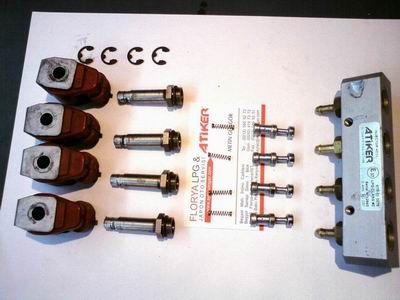
How Is LPG Injector Cleaning Done?
LPG injectors are important components of an LPG system because they deliver the correct amount of gas to the engine. Over time, contamination, oily residues, or mechanical wear can affect injector operation and cause problems such as rough idling, misfires, hesitation, poor acceleration, and increased fuel consumption.
However, not every LPG injector problem can be solved by cleaning. If an injector has mechanical wear, an electrical fault, or a damaged internal component, replacement or repair may be necessary.
For this reason, the injector should be properly diagnosed before cleaning.
Why Do LPG Injectors Get Dirty?
LPG is supplied to modern sequential systems in the gas phase, but this does not mean that the fuel system is completely free from contaminants.
Depending on fuel quality and system condition, oily residues and other contaminants can accumulate in the LPG system. If the filters are not replaced regularly, more contaminants may reach the regulator and injectors.
Common causes include:
-
LPG filter neglect
-
Poor fuel quality
-
Oily residues coming from the regulator
-
Long-term use
-
Deposits inside the injector
-
Incorrect installation
-
Poor-quality hoses or connections
-
Lack of regular LPG-system maintenance
This is why the condition of the LPG filters should always be considered when investigating injector problems.
What Are the Symptoms of Dirty LPG Injectors?
Dirty or poorly functioning LPG injectors can cause several symptoms.
Common signs include:
-
Rough idle
-
Engine vibration
-
Misfire while running on LPG
-
Hesitation during acceleration
-
Poor throttle response
-
Engine stalling
-
Uneven cylinder operation
-
Increased LPG consumption
-
Noticeable performance difference between gasoline and LPG
-
Check Engine light
-
Misfire-related fault codes
-
Jerking when switching to LPG
If the engine runs smoothly on gasoline but starts to misfire or run roughly after switching to LPG, the LPG injectors should be among the components investigated.
However, these symptoms are not exclusive to the injectors. LPG pressure, the regulator, filters, ignition components, vacuum leaks, sensors, and calibration can produce very similar symptoms.
What Should Be Checked Before Cleaning LPG Injectors?
Removing and cleaning the injectors should not always be the first step.
Several basic checks should be performed first.
Check the LPG filters.
If the filters are clogged or contaminated, cleaning the injectors without addressing the filter problem may only provide a temporary improvement.
Check LPG pressure.
If the regulator cannot maintain stable pressure, the engine may run poorly even if the injectors are perfectly clean.
Check injector operation.
Injector opening times and differences between cylinders can provide useful diagnostic information.
Compare gasoline and LPG operation.
If the engine has the same problem on gasoline, the cause may not be related to the LPG injectors at all.
How Is LPG Injector Cleaning Done?
The cleaning method depends on the injector design and the manufacturer's recommended procedure.
In general, there are two approaches:
-
Cleaning the injectors while they remain installed in the vehicle
-
Removing the injectors and cleaning them using specialized equipment
Professional injector cleaning usually involves removing the injectors from the vehicle and connecting them to suitable test and cleaning equipment.
The cleaning process is designed to remove deposits and residues from the internal mechanism.
After cleaning, the injectors should be tested again to determine whether their operating characteristics have improved.
Can LPG Injectors Be Cleaned Without Removing Them?
Some LPG services use specially formulated cleaning products while the injectors remain installed.
The advantage is that the injectors do not have to be completely removed from the vehicle.
However, this method is not suitable for every injector and every LPG system.
A cleaning product should only be used if it is compatible with the specific LPG system and injector.
Using the wrong chemical can damage seals, internal components, or other parts of the fuel system.
An on-car cleaning product also cannot repair mechanical wear or an electrical fault inside an injector.
Cleaning LPG Injectors After Removing Them
When a more thorough cleaning is required, the injectors can be removed from the vehicle.
The general process involves:
1. The LPG system is made safe.
The engine is switched off and the LPG system is handled according to the appropriate safety procedure. LPG lines should never be opened carelessly while they are under pressure.
2. The injector connections are removed.
Electrical connectors and gas hoses are disconnected carefully.
The position of each injector and hose should be identified so that everything can be reinstalled correctly.
3. The injectors are connected to suitable cleaning equipment.
The correct equipment and cleaning solution should be used according to the injector manufacturer's specifications.
4. The internal mechanism is cleaned.
Deposits and oily residues are removed from the components that affect injector operation.
5. The injectors are tested.
After cleaning, the injectors should ideally be tested to determine whether their opening, closing, and flow characteristics are consistent.
6. The injectors are reinstalled.
Electrical connections, hoses, and mounting points must be installed correctly.
7. The system is checked for leaks.
All connections that were disturbed during the repair should be checked carefully after the system is pressurized.
8. LPG operation is checked again.
LPG pressure, injector operation, fuel trims, and engine behavior should be evaluated after the cleaning process.
Can LPG Injectors Be Cleaned With Ultrasonic Equipment?
Ultrasonic cleaning is widely used for some types of fuel injectors, but LPG injectors may have different designs and operating principles.
For this reason, an LPG injector should not simply be placed into any ultrasonic cleaning machine without considering its construction.
The injector manufacturer's cleaning procedure and the correct testing equipment should be used.
Particular attention should be paid to the injector's electrical characteristics, internal mechanism, seals, and construction.
Is Brake Cleaner Safe for LPG Injector Cleaning?
Generally, it is not recommended.
Brake cleaner or an arbitrary solvent should not be sprayed into an LPG injector as a general cleaning method.
Such chemicals can potentially:
-
Damage seals
-
Affect plastic components
-
Remove or alter internal lubrication
-
Damage sensitive internal components
-
Change the operating characteristics of the injector
Simply spraying brake cleaner into an injector because it appears dirty is therefore not a proper repair procedure.
The cleaning chemical should be compatible with the specific injector and the manufacturer's recommended procedure.
Can WD-40 Be Used to Clean an LPG Injector?
No.
WD-40 and similar general-purpose products should not be used as LPG injector cleaning fluids.
These products are not designed to clean LPG injector mechanisms. Their oily residue may actually interfere with the operation of sensitive components.
Using an inappropriate chemical can turn a minor contamination problem into a more serious injector problem.
Does an LPG Injector Need Calibration After Cleaning?
It depends on the system and the work performed.
If the injector was only cleaned and its operating characteristics remain unchanged, a complete recalibration may not always be necessary.
However, the LPG system should still be checked after cleaning.
If injector characteristics have changed, injectors have been replaced, or the LPG ECU is no longer operating with the expected injector parameters, calibration may be required.
The technician may check:
-
LPG pressure
-
LPG temperature
-
Injector opening times
-
Gasoline injection times
-
Fuel trims
-
Idle quality
-
Medium-load operation
-
High-load operation
Does LPG Injector Cleaning Reduce Fuel Consumption?
It can, but only if injector contamination was actually causing incorrect fuel delivery.
If dirty injectors are not delivering fuel consistently, cleaning them may restore proper operation and improve fuel economy.
However, cleaning a properly functioning injector will not automatically reduce fuel consumption.
LPG consumption is affected by many other factors, including:
-
LPG calibration
-
Regulator pressure
-
Injector sizing
-
Engine operating temperature
-
Oxygen sensor operation
-
MAF/MAP sensor readings
-
Ignition system
-
Air filter condition
-
Tire pressure
-
Driving style
Therefore, injector cleaning should not be promoted as a universal fuel-saving procedure.
Can LPG Injector Cleaning Improve Performance?
If injector contamination is preventing proper fuel delivery, cleaning can improve engine operation.
Possible improvements include:
-
Smoother idle
-
Reduced hesitation
-
More consistent acceleration
-
Reduced misfire
-
Better throttle response
-
More balanced cylinder operation
However, a clean and properly functioning injector will not provide additional engine power simply because it has been cleaned.
Cleaning restores proper operation; it does not upgrade the injector.
What If the Problem Continues After Cleaning?
If the symptoms remain after cleaning, repeatedly cleaning the injectors is usually not the right approach.
The entire LPG system should be investigated.
Important areas include:
LPG regulator
Is the gas pressure correct and stable?
LPG filters
Are they restricting gas flow or allowing excessive contaminants to reach the injectors?
LPG MAP/pressure sensor
Is the sensor reporting the actual gas pressure correctly?
LPG injectors
Is one injector operating differently from the others?
LPG ECU calibration
Is the fuel map correctly calibrated for the engine and injector characteristics?
Ignition system
Are the spark plugs and ignition coils capable of providing reliable ignition under LPG operating conditions?
Vacuum and intake leaks
Is unmetered air entering the intake system?
Gasoline operation
Does the vehicle operate normally on gasoline?
These checks can prevent unnecessary injector replacement.
Should All LPG Injectors Be Replaced If One Fails?
Not necessarily.
If one injector has an electrical or mechanical fault, it does not automatically mean that all other injectors have failed.
However, if the injectors have high mileage and their operating characteristics have become significantly different from each other, replacing them as a set may sometimes be appropriate.
The decision should be based on injector test results and the specifications of the particular LPG system.
Replacing the complete set solely because one injector has failed can create unnecessary expense.
Can LPG Injectors Be Repaired?
It depends on the injector model.
Some LPG injectors may have replaceable components or may be suitable for refurbishment.
Other designs are intended to be replaced as complete units.
If the injector has:
-
Coil failure
-
Severe mechanical wear
-
Internal damage
-
Damaged seals
-
Excessive leakage
cleaning will not restore it to proper working condition.
In such cases, replacement with a suitable injector may be the correct solution.
How Long Do LPG Injectors Last?
There is no universal mileage figure that applies to every LPG injector.
Service life depends on:
-
Injector brand and model
-
LPG fuel quality
-
Filter maintenance
-
Regulator condition
-
LPG pressure
-
Engine operating conditions
-
Calibration
-
Engine temperature
-
Driving style
Some injectors can operate reliably for a long time, while others may develop problems earlier.
For this reason, injector condition and operating performance are more useful indicators than mileage alone.
When Should LPG Injectors Be Cleaned?
LPG injector cleaning should not be treated as a mandatory procedure at one specific mileage.
Cleaning may be worth considering when:
-
Misfire begins while running on LPG
-
Idle quality deteriorates
-
LPG consumption increases
-
Acceleration becomes inconsistent
-
One cylinder appears to operate differently
-
Injector operating times become abnormal
-
The LPG system has been used for a long period without proper filter maintenance
Even in these situations, the injectors should ideally be tested before cleaning.
Is LPG Injector Cleaning Safe?
Professional cleaning using the correct equipment and procedure can be performed safely.
However, LPG is a pressurized and flammable fuel, so removing fuel-system components without proper knowledge can be dangerous.
Particular care is required when:
-
Opening LPG lines
-
Releasing system pressure
-
Disconnecting injectors
-
Checking for leaks
-
Working around electrical equipment
-
Using cleaning chemicals
There should be no open flames, cigarettes, sparks, or unsuitable equipment near the vehicle during LPG-system work.
If you are not experienced with LPG systems, injector cleaning is better left to a qualified LPG technician.
The Importance of LPG Filters
Cleaning the injectors while leaving an old or contaminated LPG filter in place can allow the same problem to return.
The filter should therefore be inspected and replaced when necessary.
A clogged filter can restrict gas flow, while an ineffective filter can allow contaminants to reach the regulator and injectors.
The system should therefore be considered as a whole:
LPG filter → regulator → pressure sensor → injector → LPG ECU
A problem in one part can affect the operation of the others.
LPG Injector Cleaning: What Is the Most Important Point?
LPG injector cleaning is not simply a matter of spraying a chemical into the injector.
A proper procedure starts by determining whether the injector is actually contaminated.
The technician should then use a cleaning method and chemical suitable for the specific injector. After cleaning, the injector should be tested to confirm that its operation has improved.
A contaminated injector may return to normal after cleaning. However, an injector with mechanical wear, electrical failure, internal damage, or severely degraded performance may need to be repaired or replaced.
Therefore, if a vehicle develops LPG misfires, rough idle, increased fuel consumption, hesitation, or performance loss, the best approach is not to immediately clean or replace the injectors.
The LPG pressure, regulator, filters, injectors, sensors, calibration, ignition system, and gasoline operation should be evaluated together.
If the injectors are confirmed to be contaminated, proper cleaning can restore consistent fuel delivery and improve engine operation. If the problem remains after cleaning, the injectors should be tested for mechanical and electrical faults rather than repeatedly cleaned.