TR
TR EN
EN

Connecting Rod Bearing: Causes and Failure Symptoms
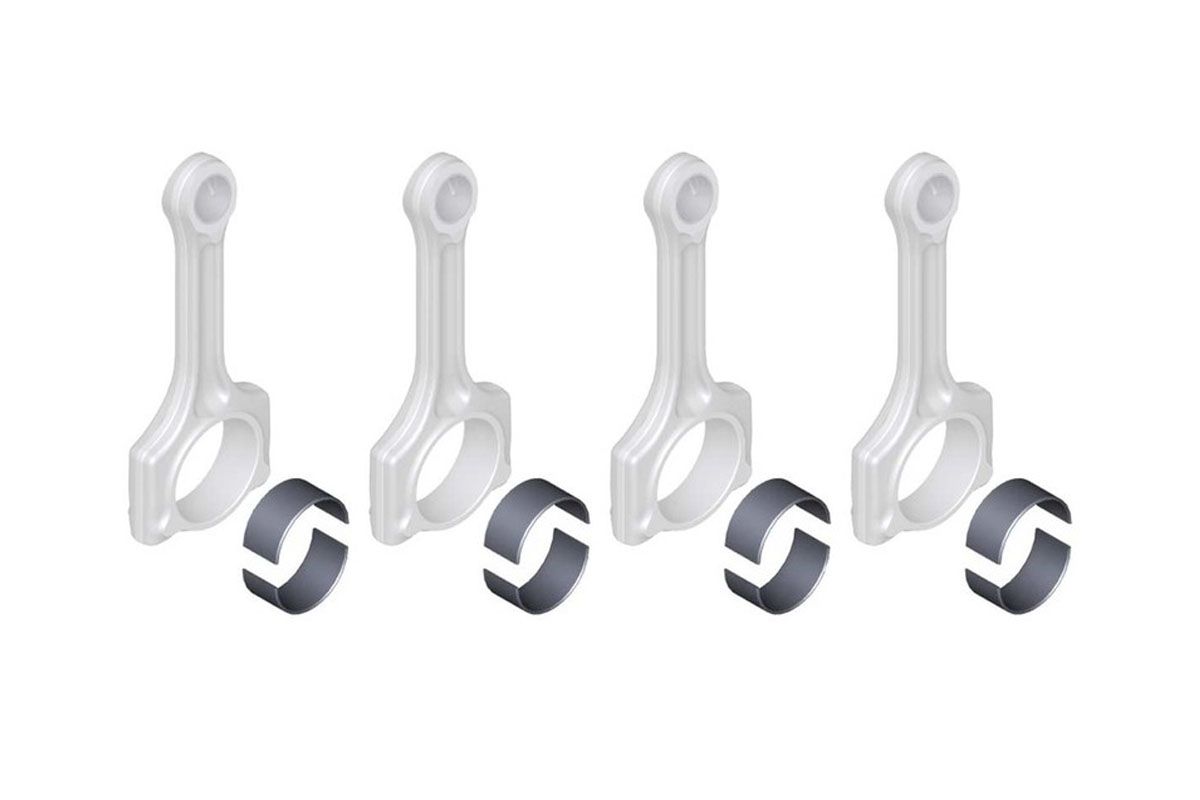
A connecting rod bearing, commonly called a rod bearing, is a critical engine component located between the connecting rod and the crankshaft journal. Although it is relatively small compared with the rest of the engine, it plays a major role in allowing the crankshaft and connecting rods to move smoothly under extremely high loads.
The connecting rod bearing does not simply act as a piece of metal between two moving components. It creates a controlled bearing surface and maintains a very small oil clearance through which pressurized engine oil flows.
When this oil film is maintained correctly, the crankshaft journal can rotate without significant metal-to-metal contact.
When lubrication is inadequate or the bearing clearance becomes excessive, the bearing can wear rapidly. In severe cases, the bearing may spin inside the connecting rod, damage the crankshaft journal, seize, or cause catastrophic engine failure.
For this reason, connecting rod bearing problems should never be ignored, especially when an engine develops a deep knocking sound that changes with engine speed or load.
Where Is the Connecting Rod Bearing Located?

The connecting rod connects the piston to the crankshaft.
At the bottom of the connecting rod, where it attaches to the crankshaft, there is a connecting rod bearing assembly.
The bearing is usually made from two semicircular shells:
-
Upper bearing shell
-
Lower bearing shell
These shells fit inside the connecting rod and its bearing cap.
The crankshaft has specially machined rod journals, and the bearing shells surround these journals.
The bearing does not normally rotate with the crankshaft. Instead, the crankshaft journal rotates against an extremely thin film of pressurized engine oil.
What Is the Purpose of a Connecting Rod Bearing?
The main purpose of the connecting rod bearing is to provide a smooth, controlled interface between the connecting rod and crankshaft.
Its functions include:
-
Supporting the crankshaft rod journal
-
Reducing friction
-
Maintaining an oil film
-
Allowing the connecting rod to rotate around the crankshaft journal
-
Absorbing extremely high combustion loads
-
Protecting the crankshaft from direct metal-to-metal contact
-
Helping control crankshaft-to-rod clearance
The bearing material is specifically engineered to withstand high pressure, temperature, and repeated loading.
How Does a Connecting Rod Bearing Work?
The operation depends heavily on engine oil.
When the engine is running, the oil pump sends pressurized oil through internal passages in the engine and crankshaft.
Oil reaches the connecting rod bearing area through a drilled passage in the crankshaft.
A very thin oil film forms between the crankshaft journal and bearing surface.
Under normal conditions, the crankshaft is effectively supported by this pressurized oil film rather than directly rubbing against the bearing material.
This is known as hydrodynamic lubrication.
The oil film is extremely important because the crankshaft can rotate thousands of times per minute while the connecting rod experiences rapidly changing loads.
Why Is Oil Pressure So Important?
A connecting rod bearing depends on adequate lubrication.
If engine oil pressure becomes too low, the oil film can become insufficient to separate the bearing surface from the crankshaft journal.
This can result in:
-
Increased friction
-
Increased bearing temperature
-
Bearing material damage
-
Crankshaft scoring
-
Bearing wear
-
Connecting rod knock
-
Bearing seizure
Low oil pressure is therefore not just an electrical warning-light issue. It can become a major mechanical threat to the engine.
What Are the Symptoms of a Bad Connecting Rod Bearing?
Connecting rod bearing failure can produce several symptoms.
Common signs include:
-
Deep knocking noise from the engine
-
Knocking that increases with engine speed
-
Noise that becomes more noticeable under load
-
Low engine oil pressure
-
Oil warning light
-
Metal particles in the engine oil
-
Copper-colored or metallic material in the oil
-
Excessive bearing clearance
-
Crankshaft damage
-
Engine vibration
-
Reduced engine performance in severe cases
-
Engine seizure in advanced failure
The most recognizable symptom is often a deep metallic knocking sound, but not every bearing failure produces an obvious noise in its early stages.
What Does Connecting Rod Bearing Knock Sound Like?
Rod bearing knock is often described as a deep, dull metallic knocking sound coming from the lower portion of the engine.
The noise may become more noticeable when:
-
Engine speed increases
-
The engine is under load
-
The accelerator is applied
-
The engine transitions between acceleration and deceleration
The sound may be easier to hear when the engine is warm because engine oil becomes thinner as temperature increases.
However, sound alone is not enough to diagnose a rod bearing.
Other engine components can produce similar noises.
Does Rod Bearing Noise Increase With RPM?
It often can.
As engine speed increases, the crankshaft rotates faster and the frequency of the knocking can increase.
The noise may therefore follow engine RPM.
However, this characteristic is not exclusive to connecting rod bearings.
Possible alternative sources include:
-
Main bearings
-
Piston slap
-
Piston pin
-
Valvetrain components
-
Variable valve timing components
-
Timing chain components
-
Accessory components
A mechanic should locate the source of the noise before concluding that the connecting rod bearings are defective.
Can a Bad Connecting Rod Bearing Cause Low Oil Pressure?
Yes.
As connecting rod bearings wear, the clearance between the bearing and crankshaft journal increases.
This can allow more oil to escape through the bearing clearance.
If enough bearings have excessive clearance, overall engine oil pressure can decrease.
This may lead to:
-
Oil pressure warning light
-
Low measured oil pressure
-
Increased engine noise
-
Greater wear throughout the engine
However, low oil pressure does not automatically mean that connecting rod bearings are worn.
Other possible causes include:
-
Low engine oil level
-
Incorrect oil viscosity
-
Worn oil pump
-
Clogged oil pickup
-
Restricted oil passages
-
Faulty pressure relief valve
-
Excessive main-bearing clearance
-
Internal engine wear
Actual oil pressure should be measured rather than relying only on the dashboard warning.
Can a Connecting Rod Bearing Fail Without Making Noise?
Yes.
Early bearing wear may not produce an obvious knocking sound.
A bearing can gradually lose its intended clearance while the engine continues to run relatively normally.
This is one reason why oil pressure measurements, oil inspections, and maintenance history are important.
A bearing problem may become noticeable only after significant wear has already occurred.
What Causes Connecting Rod Bearing Failure?
There are several possible causes.
Insufficient lubrication
This is one of the most common and serious causes.
If the bearing does not receive enough oil, the protective oil film can break down.
Low engine oil level
Driving with insufficient oil can reduce lubrication, particularly during cornering, acceleration, braking, or high engine speeds.
Low oil pressure
A failing oil pump, clogged pickup, or excessive internal clearance can reduce oil pressure.
Dirty or contaminated engine oil
Dirt and metal particles can damage bearing surfaces.
Incorrect oil
Using an oil that does not meet the engine manufacturer's required specification can affect lubrication performance.
Extended oil-change intervals
Old oil can lose some of its protective properties and may contribute to sludge or deposits.
Engine overheating
Excessive temperature can reduce oil viscosity and weaken the ability of the oil film to protect the bearing.
Incorrect bearing clearance
If a bearing is installed with incorrect clearance, lubrication can be compromised.
Incorrect installation
Improper torque, incorrect bearing positioning, or contamination during assembly can cause premature failure.
Crankshaft damage
A damaged or improperly machined crankshaft journal can rapidly wear a new bearing.
Low Oil Level Is Extremely Dangerous for Rod Bearings
An engine does not need to be completely empty of oil to suffer lubrication damage.
If the oil level falls significantly below the manufacturer's recommended range, the oil pump may occasionally draw air instead of a continuous supply of oil.
This can cause temporary drops in oil pressure.
Repeated oil starvation can damage connecting rod bearings, main bearings, camshaft components, and other lubricated parts.
This is why an oil warning light should never be ignored.
Can Old Engine Oil Cause Rod Bearing Failure?
It can contribute to bearing wear.
Engine oil gradually becomes contaminated with:
-
Combustion by-products
-
Fuel
-
Carbon deposits
-
Metal particles
-
Moisture
-
Oxidation products
Over time, the oil can lose some of its protective properties.
If oil changes are repeatedly postponed, lubrication quality can deteriorate and deposits may develop.
However, a bearing failure should not automatically be blamed on old oil. The entire lubrication system and engine condition should be evaluated.
Can an Oil Filter Problem Damage Connecting Rod Bearings?
Yes.
The oil filter removes contaminants from the engine oil.
If the filter is severely restricted, damaged, incorrectly installed, or equipped with an unsuitable bypass valve, oil circulation can be affected.
A poor-quality or incorrect filter can therefore contribute to lubrication problems.
This is another reason why the correct oil filter specification matters.
Can a Clogged Oil Pickup Cause Rod Bearing Failure?
Yes.
The oil pickup is located inside or near the bottom of the engine and draws oil toward the oil pump.
Sludge, sealant debris, carbon deposits, or other contamination can partially block the pickup.
This restricts the amount of oil available to the pump.
The result can be reduced oil pressure and oil starvation.
In some engines, a partially blocked pickup can cause intermittent oil pressure problems that become worse under specific driving conditions.
Can a Faulty Oil Pump Damage the Bearings?
Absolutely.
The oil pump is responsible for circulating engine oil through the lubrication system.
If the pump is worn or damaged, it may not produce adequate pressure or flow.
Possible causes include:
-
Worn pump gears
-
Damaged pump housing
-
Pressure relief valve problems
-
Drive mechanism problems
-
Internal leakage
A faulty oil pump can therefore cause widespread lubrication damage, including connecting rod bearing failure.
What Happens When a Connecting Rod Bearing Wears Out?
As the bearing wears, the clearance between the bearing and crankshaft journal increases.
More oil can escape through this enlarged clearance.
The bearing may then lose its ability to maintain a stable oil film.
The progression can look like this:
Normal clearance → increased clearance → oil pressure loss → bearing surface damage → knocking → severe wear → bearing failure.
If the bearing material begins to deteriorate, debris can circulate through the engine oil.
This can damage other components as well.
What Is a Spun Bearing?
A spun bearing is a severe type of bearing failure.
Normally, the bearing shell is held securely in its position inside the connecting rod.
If lubrication fails and the bearing overheats or becomes severely damaged, it can lose its proper fit and rotate with the crankshaft.
The bearing can then move inside the connecting rod.
This can damage:
-
Connecting rod
-
Crankshaft journal
-
Bearing cap
-
Engine block in severe cases
A spun bearing often requires major engine repair.
Can a Rod Bearing Seize?
Yes.
If lubrication is completely lost, the bearing and crankshaft journal can experience extreme friction and heat.
The bearing material can become damaged and eventually seize against the crankshaft.
In severe cases, the engine can lock up.
This is an advanced and catastrophic form of bearing failure.
Can a Bad Rod Bearing Cause Engine Vibration?
It can, particularly when the damage becomes severe.
A damaged connecting rod bearing can alter the smooth movement of the connecting rod and crankshaft assembly.
However, engine vibration has many possible causes.
These include:
-
Misfires
-
Engine mounts
-
Flywheel or flexplate problems
-
Crankshaft issues
-
Injector problems
-
Uneven compression
-
Internal engine damage
Therefore, vibration alone is not enough to diagnose a rod bearing.
Can Rod Bearings Cause Metal in the Engine Oil?
Yes.
A worn or damaged bearing can release material into the engine oil.
During an oil change, a mechanic may find:
-
Fine metallic particles
-
Copper-colored material
-
Bearing material
-
Shiny particles in the oil
-
Metal debris in the oil filter
The exact appearance depends on the bearing construction and severity of the failure.
Finding significant metallic debris in engine oil is a serious warning sign and should not be ignored.
Can You Diagnose Rod Bearings Without Removing the Engine?
In many cases, the engine does not need to be removed for an initial diagnosis.
A technician can begin with external tests such as:
-
Checking oil level
-
Measuring oil pressure
-
Listening for abnormal engine noise
-
Inspecting drained oil
-
Cutting open the oil filter for inspection
-
Checking engine data
-
Performing compression or leak-down tests when appropriate
In some engines, the oil pan can be removed and the connecting rod bearings inspected from underneath.
However, access varies considerably between engine designs.
Can a Connecting Rod Bearing Be Checked Through the Oil Pan?
Sometimes.
If the engine design allows access to the connecting rod caps after removing the oil pan, a technician may inspect the bearing shells directly.
This can reveal:
-
Excessive wear
-
Scoring
-
Discoloration
-
Bearing material loss
-
Embedded debris
-
Incorrect clearance
-
Crankshaft journal damage
However, simply seeing a bearing does not always provide the complete diagnosis.
Clearance may need to be measured using the manufacturer's specified procedure and tools.
Should You Replace Only the Rod Bearings?
Not necessarily.
If a bearing is worn, the cause must first be identified.
Replacing the bearing shells without addressing the reason for the failure can result in another failure.
The crankshaft journal may also be damaged.
Depending on the condition, the repair may require:
-
New bearing shells
-
Crankshaft inspection
-
Crankshaft polishing
-
Crankshaft machining
-
Connecting rod inspection
-
New connecting rod bolts
-
Oil pump inspection
-
Oil pickup cleaning
-
Complete engine cleaning
-
Replacement of other damaged components
The correct repair depends on the extent of the damage.
Can New Rod Bearings Be Installed on a Damaged Crankshaft?
Installing new bearings on a severely damaged crankshaft is not a proper repair.
The crankshaft journals must be within the manufacturer's specified dimensions and surface condition.
If a journal is scored, worn, tapered, or out of specification, it may need to be machined or the crankshaft may need replacement.
A new bearing cannot compensate for a severely damaged crankshaft journal.
Connecting Rod Bearing vs Main Bearing
Connecting rod bearings and main bearings are both crankshaft bearings, but they perform different functions.
Connecting rod bearings support the connection between the connecting rods and crankshaft rod journals.
Main bearings support the crankshaft itself inside the engine block.
Both depend on engine oil pressure and correct clearance.
Both can produce low oil pressure and internal engine noise when severely worn.
Determining which bearing is responsible for a noise can require professional diagnosis.
Can a Bad Rod Bearing Cause an Oil Warning Light?
Yes.
If bearing clearance becomes excessive, engine oil pressure may decrease enough to trigger the oil pressure warning light.
However, the oil warning light should never be interpreted as proof of rod bearing failure.
A failing oil pump, low oil level, blocked pickup, faulty pressure sensor, wiring problem, or excessive main-bearing clearance can also trigger the warning.
The actual oil pressure should be measured with a suitable mechanical gauge when appropriate.
Is It Safe to Drive With a Bad Connecting Rod Bearing?
Generally, no.
If a connecting rod bearing is genuinely failing, continued driving can dramatically increase the damage.
A relatively limited bearing problem can progress into:
-
Crankshaft damage
-
Spun bearing
-
Connecting rod damage
-
Oil-pressure loss
-
Engine seizure
-
Complete engine failure
If a deep knocking sound is accompanied by an oil pressure warning, low measured oil pressure, or significant metallic debris in the oil, the safest option is to stop operating the engine and have it inspected.
Continuing to drive in the hope that the noise will disappear can turn a repairable problem into a complete engine rebuild or replacement.
How Can Connecting Rod Bearing Failure Be Prevented?
Good maintenance can significantly reduce the risk.
Important practices include:
-
Maintain the correct engine oil level.
-
Use the correct oil specification.
-
Change engine oil at the recommended intervals.
-
Replace the oil filter with the correct specification.
-
Investigate oil pressure warnings immediately.
-
Repair oil leaks promptly.
-
Avoid prolonged operation with overheating.
-
Use the correct engine components during repairs.
-
Follow correct bearing installation procedures.
-
Use the manufacturer's specified torque for connecting rod bolts.
-
Keep dirt and debris away from internal engine components during assembly.
-
Inspect the crankshaft whenever bearing damage is discovered.
Regular oil maintenance is particularly important because the connecting rod bearing depends directly on a clean and adequately pressurized oil supply.
The Most Important Point
A connecting rod bearing is a small but extremely important component of the engine's rotating assembly. It allows the crankshaft and connecting rod to operate under enormous loads while being separated by a very thin film of engine oil.
The most common warning signs of serious bearing problems include deep engine knocking, low oil pressure, metallic debris in the oil, and increasing mechanical noise under load.
However, engine knocking does not automatically mean that the connecting rod bearings are defective. Main bearings, pistons, piston pins, timing components, valvetrain parts, and other mechanical components can produce similar sounds.
Likewise, an oil pressure warning does not automatically mean a rod bearing has failed.
The correct diagnosis should consider oil level, oil pressure, engine oil condition, lubrication-system operation, engine noise, crankshaft condition, bearing clearance, and the physical condition of the bearings.
If a genuine connecting rod bearing problem is suspected, continuing to operate the engine can cause rapidly escalating damage. Early diagnosis can make the difference between replacing a limited number of components and facing a complete engine rebuild.