TR
TR EN
EN

What Is a Timing Chain Tensioner? What Are the Symptoms of Failure?
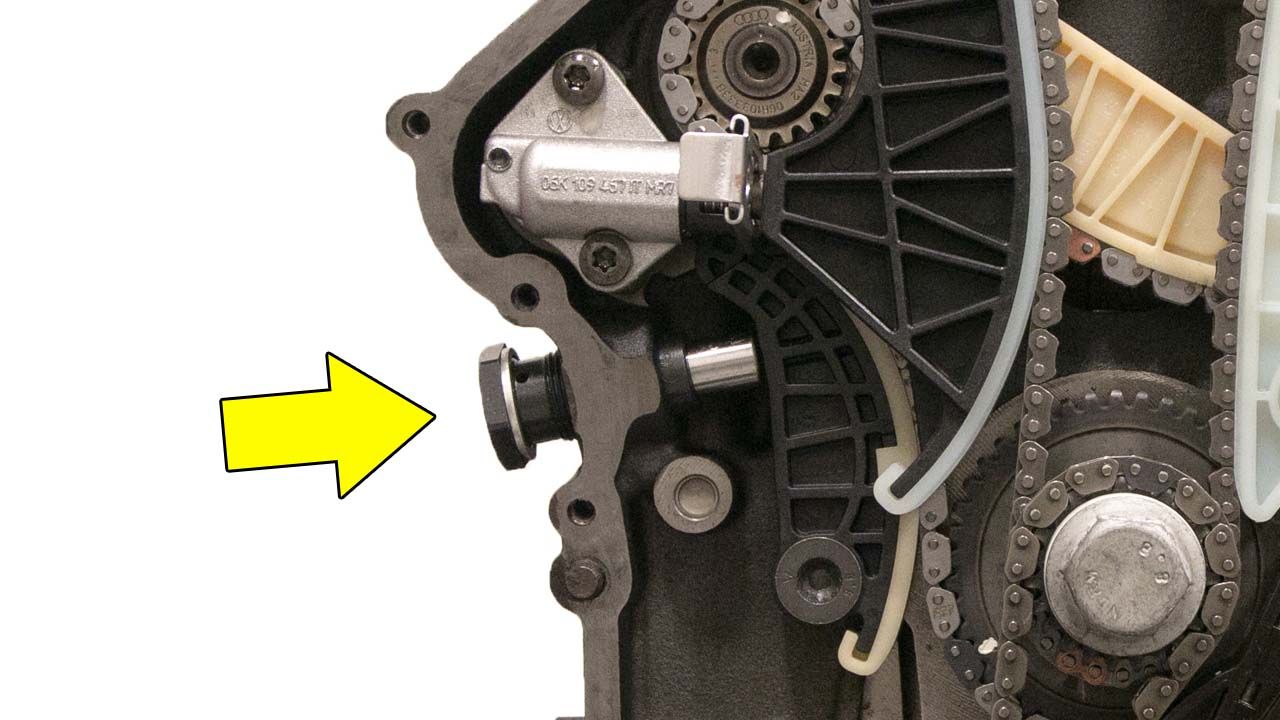
The timing chain tensioner is one of the most important components in an engine's timing system. Its primary job is to keep the timing chain properly tensioned while the engine is running.
The timing chain connects the crankshaft to the camshaft or camshafts and ensures that the valves open and close at the correct time in relation to piston movement. Because the chain must maintain precise synchronization, excessive slack can cause serious timing problems.
The tensioner compensates for chain movement, wear, thermal expansion, and changes in operating conditions. If the tensioner becomes weak, stuck, worn, or unable to maintain oil pressure, the timing chain can become loose.
A faulty timing chain tensioner can produce anything from a brief rattling noise during startup to severe engine damage if the chain jumps over the camshaft sprocket.
What Does a Timing Chain Tensioner Do?
The timing chain constantly moves while the engine is running.
Even though the chain is made from durable metal components, it is not perfectly rigid. Normal operation produces small amounts of movement, vibration, and slack.
The tensioner keeps this slack under control.
Its main functions include:
-
Maintaining correct timing chain tension
-
Reducing chain vibration
-
Preventing excessive chain movement
-
Compensating for normal chain wear
-
Helping maintain accurate valve timing
-
Reducing timing-chain noise
-
Preventing the chain from jumping over the sprockets
Without sufficient tension, the chain can move excessively and potentially lose synchronization between the crankshaft and camshaft.
How Does a Timing Chain Tensioner Work?

Most modern timing chain tensioners use engine oil pressure, a spring, or a combination of both.
A hydraulic tensioner generally contains an internal piston.
When the engine is running, pressurized engine oil enters the tensioner and helps push the piston against a timing-chain guide.
The spring provides initial tension, while engine oil pressure helps maintain tension during operation.
The general operating sequence is:
-
The engine starts.
-
The crankshaft begins turning.
-
The timing chain moves the camshaft.
-
The tensioner applies pressure to the chain guide.
-
Oil pressure supports the tensioner's position.
-
The chain remains properly tensioned.
Some tensioners are designed with a locking or ratcheting mechanism to prevent the piston from retracting too easily when the engine is stopped.
This feature is particularly important during engine startup.
Why Is the Timing Chain Tensioner So Important?
The engine's crankshaft and camshaft must remain synchronized.
The pistons and valves operate extremely close to one another in many modern engines.
If the timing chain becomes loose and jumps one or more teeth, valve timing can change significantly.
Depending on the engine design, this can result in:
-
Rough running
-
Misfires
-
Loss of power
-
Hard starting
-
Engine stalling
-
Check Engine Light
-
Poor fuel economy
-
Valve-to-piston contact
-
Bent valves
-
Piston damage
-
Severe engine damage
For this reason, a timing chain tensioner should not be treated as an insignificant component.
What Are the Symptoms of a Bad Timing Chain Tensioner?
A failing tensioner can produce several symptoms.
Common signs include:
-
Timing chain rattling
-
Noise during cold startup
-
Rattling from the timing-chain area
-
Engine misfires
-
Rough idle
-
Difficult starting
-
Reduced engine performance
-
Poor fuel economy
-
Check Engine Light
-
Camshaft/crankshaft correlation faults
-
Engine stalling
-
Irregular engine operation
-
Timing chain jumping
-
Severe engine damage in advanced cases
The exact symptoms depend on whether the tensioner is weak, stuck, leaking internally, mechanically damaged, or completely failed.
Timing Chain Rattle at Cold Start
One of the most recognizable symptoms is a brief rattling noise immediately after starting the engine.
This can happen because a hydraulic tensioner loses some of its oil pressure while the engine is switched off.
During the next startup, the tensioner may take a short time to build sufficient pressure.
If the chain becomes loose during this period, it can produce a rattling sound.
A brief startup noise does not automatically prove that the tensioner is defective.
Possible causes include:
-
Weak tensioner
-
Worn timing chain
-
Damaged chain guide
-
Low engine oil level
-
Incorrect engine oil viscosity
-
Dirty oil
-
Restricted oil passages
-
Oil pressure problems
-
Worn internal engine components
However, repeated or increasingly loud startup rattling should be investigated.
Can a Bad Tensioner Cause a Timing Chain Noise?
Yes.
A worn tensioner may not maintain sufficient pressure against the timing-chain guide.
The chain can then vibrate or slap against the guide.
Depending on the engine, the noise may sound like:
-
Metallic rattling
-
Slapping
-
Ticking
-
Clicking
-
Grinding
-
Rapid mechanical chatter
The location of the noise is important, but sound alone cannot identify the exact failed component.
A worn timing chain, chain guide, sprocket, or variable valve timing component can produce similar sounds.
Can a Timing Chain Tensioner Cause Misfires?
Yes.
If the tensioner allows the timing chain to become excessively loose, camshaft timing can change.
Even a small change in valve timing can affect combustion.
If the chain jumps, the timing can become significantly incorrect.
The engine may then develop:
-
Misfires
-
Rough idle
-
Poor acceleration
-
Hard starting
-
Reduced power
-
Stalling
Diagnostic trouble codes such as cylinder misfire codes or camshaft/crankshaft correlation codes may appear.
However, a misfire code does not automatically mean that the timing chain tensioner is faulty.
Ignition, fuel injection, compression, and other engine-control problems can produce the same symptom.
Can a Bad Tensioner Cause Hard Starting?
Yes.
If the timing chain does not maintain correct tension, the camshaft may not remain perfectly synchronized with the crankshaft.
If timing changes enough, the engine may require longer cranking before starting.
Possible symptoms include:
-
Extended cranking
-
Starting and immediately stalling
-
Difficult cold starting
-
Intermittent no-start
-
Rough startup
-
Engine misfires immediately after starting
However, hard starting has many possible causes, including low battery voltage, fuel-pressure problems, ignition faults, sensor problems, and low compression.
The timing system should be tested rather than assumed to be the cause.
Can a Bad Tensioner Cause a Check Engine Light?
Yes.
Modern engines continuously monitor camshaft and crankshaft position.
If the ECU detects that the relationship between the crankshaft and camshaft is outside the expected range, it may store a diagnostic trouble code.
Possible codes vary by manufacturer, but they can include camshaft/crankshaft correlation or timing-related faults.
Examples from generic OBD-II systems can include codes in the P0016–P0019 range.
These codes may relate to:
-
Crankshaft position
-
Camshaft position
-
Timing correlation
-
Variable valve timing
-
Mechanical timing problems
A correlation code does not automatically prove that the timing chain tensioner is bad.
The problem could instead involve a stretched chain, worn sprocket, incorrect camshaft timing, variable valve timing components, sensors, wiring, oil pressure, or another mechanical issue.
Low Engine Oil Can Affect the Tensioner
Hydraulic timing-chain tensioners depend heavily on engine oil.
If the engine oil level is too low, the tensioner may not receive adequate oil pressure.
This can cause the chain to become temporarily loose.
Low oil pressure can also create similar symptoms.
Possible causes of low oil pressure include:
-
Low engine oil level
-
Incorrect oil viscosity
-
Severely degraded oil
-
Restricted oil pickup
-
Clogged oil passages
-
Worn oil pump
-
Excessive internal engine wear
-
Oil filter problems
Therefore, if a timing-chain tensioner is suspected, engine oil condition and oil pressure should also be evaluated.
Can the Wrong Engine Oil Cause Timing Chain Tensioner Problems?
Yes.
The oil viscosity specified by the engine manufacturer is important.
A hydraulic tensioner relies on oil pressure and internal oil passages to operate correctly.
If an incorrect oil viscosity is used, especially one that is significantly thicker or thinner than specified, tensioner operation can be affected under certain conditions.
Using oil that does not meet the required manufacturer specification can also affect variable valve timing systems.
For this reason, the correct oil specification is more important than simply choosing an oil based on viscosity alone.
Can a Worn Timing Chain Cause the Same Symptoms?
Absolutely.
The timing chain and tensioner work together.
A chain can gradually elongate or develop excessive wear.
The tensioner may compensate for some chain wear, but it has a limited operating range.
Once the chain becomes excessively worn, the tensioner may reach the end of its adjustment range.
The result can be:
-
Chain noise
-
Incorrect camshaft timing
-
Timing correlation faults
-
Poor engine performance
-
Difficult starting
-
Increased chain vibration
Replacing only the tensioner may not solve the problem if the chain and guides are already worn.
What Happens If the Timing Chain Tensioner Completely Fails?
A complete tensioner failure can be serious.
If the tensioner loses the ability to control chain movement, the chain can become very loose.
In some engines, the chain may jump over one or more teeth on the camshaft sprocket.
This changes valve timing.
If the engine is an interference design, the valves and pistons may collide.
Possible consequences include:
-
Bent valves
-
Damaged pistons
-
Damaged cylinder head
-
Broken valve components
-
Severe compression loss
-
Engine failure
This is one reason why persistent timing-chain noise should not be ignored.
Can a Timing Chain Jump Without Breaking?
Yes.
A timing chain does not have to break completely to cause a major problem.
If the chain becomes sufficiently loose, it can jump over the teeth of a sprocket.
The chain may still physically be present and moving, but the crankshaft and camshaft are no longer correctly synchronized.
The engine may then run very poorly or fail to start.
A jumped timing chain can therefore be just as serious as a broken chain.
What Causes a Timing Chain Tensioner to Fail?
Several factors can contribute to tensioner failure.
Normal wear
Internal components gradually wear as the engine accumulates mileage.
Poor lubrication
Dirty or contaminated engine oil can interfere with the tensioner's hydraulic mechanism.
Low oil pressure
Insufficient oil pressure can prevent a hydraulic tensioner from maintaining the required force.
Incorrect oil
Using oil that does not meet the engine manufacturer's requirements can affect hydraulic operation.
Internal leakage
A hydraulic tensioner can lose pressure through worn internal components.
Spring failure
The internal spring can weaken or break.
Mechanical damage
The tensioner body, piston, locking mechanism, or mounting components can become damaged.
Timing-chain guide wear
A damaged guide can place abnormal loads on the tensioner.
Extended oil-change intervals
Severely degraded oil can contribute to sludge and restricted oil passages.
Does Cold Weather Make Timing Chain Rattle Worse?
It can.
Cold engine oil is thicker than oil at normal operating temperature.
At startup, oil may take slightly longer to reach certain components.
A marginal hydraulic tensioner may therefore produce more noticeable noise during cold starts.
If the chain rattles for several seconds after every cold start, the condition should be investigated.
Cold-start noise can also be caused by other components, so the sound should not automatically be attributed to the tensioner.
Can a Bad Tensioner Increase Fuel Consumption?
Potentially.
If the timing chain tensioner causes the camshaft timing to deviate from its intended position, combustion efficiency can be affected.
This may result in:
-
Increased fuel consumption
-
Reduced engine efficiency
-
Poor acceleration
-
Rough running
-
Increased emissions
However, increased fuel consumption alone is not a reliable indication of a bad tensioner.
Fuel-system, ignition, sensor, tire, transmission, and other engine problems can produce the same symptom.
How Is a Timing Chain Tensioner Diagnosed?
Proper diagnosis usually requires more than listening to the engine.
A technician may perform several checks.
Engine oil inspection
Check the oil level, condition, specification, and service history.
Noise inspection
Listen carefully to the timing-chain area during cold and warm starts.
OBD scanning
Look for timing, camshaft, crankshaft, misfire, and variable valve timing faults.
Live data
Compare actual and commanded camshaft positions where the vehicle supports this function.
Oil pressure testing
Measure actual engine oil pressure when hydraulic tensioner operation is suspected.
Mechanical timing inspection
If necessary, verify crankshaft and camshaft timing using the manufacturer's specified procedure.
Physical inspection
The timing chain, guides, sprockets, and tensioner may need to be inspected directly.
The correct diagnostic procedure depends heavily on the engine design.
Can You Test a Timing Chain Tensioner Without Removing the Engine?
In many vehicles, yes.
The engine usually does not need to be removed.
However, access to the timing system can vary considerably.
Some engines allow the timing cover to be removed relatively easily, while others require extensive disassembly.
Depending on the design, inspection may require removing:
-
Engine covers
-
Auxiliary components
-
Valve cover
-
Timing cover
-
Other components that obstruct access
A workshop should follow the manufacturer's timing-system procedure because incorrect disassembly or reassembly can itself cause timing problems.
Should the Timing Chain and Tensioner Be Replaced Together?
Not always, but often it makes sense to inspect the entire timing system.
If the chain has significant wear, replacing only the tensioner may leave an already stretched chain in place.
A complete timing-chain service may include:
-
Timing chain
-
Chain tensioner
-
Chain guides
-
Sprockets
-
Related seals
-
Other timing components specified by the manufacturer
The correct replacement strategy depends on the engine's condition and manufacturer recommendations.
Replacing only one component when several are worn can result in the problem returning.
Is It Safe to Drive With a Bad Timing Chain Tensioner?
This depends on the severity of the symptoms, but continued driving can be risky.
A minor noise does not necessarily mean immediate engine failure.
However, if the tensioner is losing control of the chain, continued operation can allow the chain to jump.
Warning signs that should not be ignored include:
-
Loud timing-chain rattling
-
Sudden engine misfires
-
Severe loss of power
-
Difficult starting
-
Engine stalling
-
Timing-related fault codes
-
Sudden changes in engine noise
If the engine is showing severe timing-system symptoms, driving it may turn a relatively manageable repair into major engine damage.
Can a Timing Chain Tensioner Be Cleaned?
Generally, a defective tensioner is replaced rather than repaired or cleaned.
Cleaning the engine oil system may help if contamination is contributing to a hydraulic problem, but it will not repair a mechanically worn tensioner.
If the tensioner's internal spring, piston, locking mechanism, or sealing components are damaged, replacement is normally the appropriate solution.
The timing-chain guides and chain should also be inspected at the same time.
Timing Chain Tensioner vs Timing Chain Guide
These components perform different functions.
The timing chain tensioner applies force to maintain chain tension.
The timing chain guide controls the path and movement of the chain.
Both components can wear and produce similar rattling noises.
A damaged guide can also place additional stress on the tensioner.
Therefore, hearing timing-chain noise does not automatically identify the tensioner as the failed part.
Timing Chain Tensioner vs Timing Belt Tensioner
These components should not be confused.
A timing chain uses a chain tensioner and guides to control the chain.
A timing belt uses a belt tensioner and usually one or more pulleys.
The operating principles are different because the materials and drive systems are different.
A timing belt system may also use an automatic hydraulic or spring-loaded tensioner, but it should be diagnosed according to the specific engine design.
The Most Important Point
A timing chain tensioner is a relatively small component, but it plays a critical role in maintaining engine timing.
A weak or damaged tensioner can cause chain noise, rough running, misfires, difficult starting, timing correlation faults, and in severe cases, catastrophic engine damage.
However, a timing-chain rattle does not automatically mean that the tensioner itself is defective.
A worn timing chain, damaged guide, low engine oil level, incorrect oil, low oil pressure, worn sprocket, variable valve timing problem, or another mechanical fault can produce similar symptoms.
The correct diagnosis should therefore consider the entire timing system, including the chain, tensioner, guides, sprockets, engine oil, oil pressure, camshaft position, crankshaft position, and actual mechanical timing.
If the engine is repeatedly making a metallic rattling noise at startup or timing-related fault codes are being stored, postponing diagnosis can increase the risk of expensive engine damage.