TR
TR EN
EN

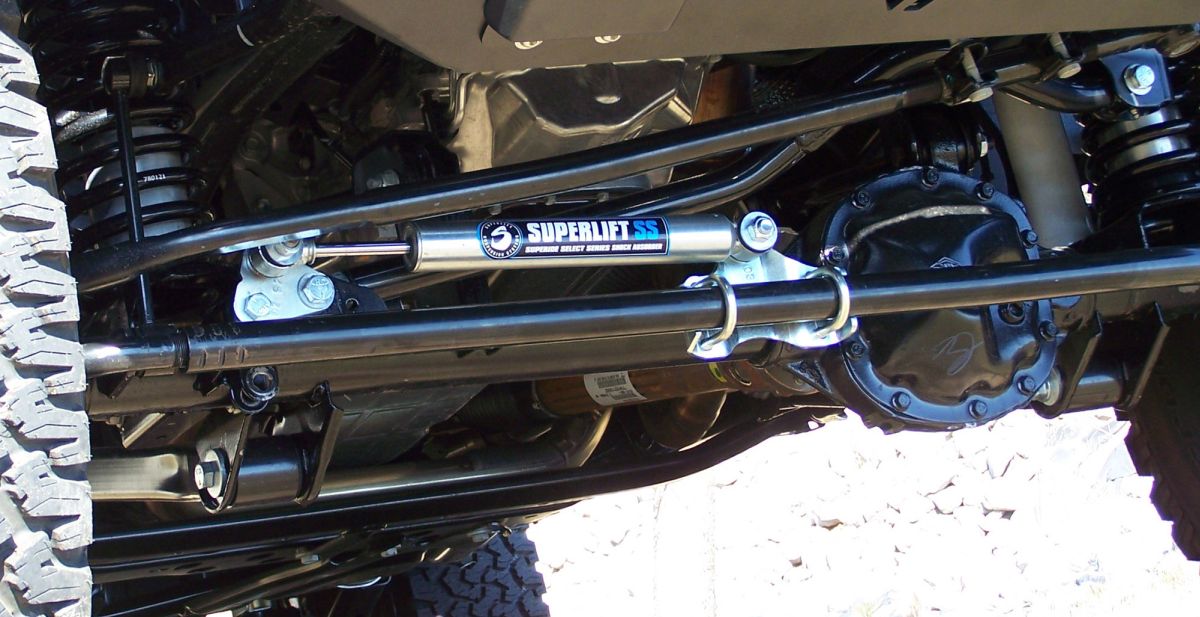
What Is a Steering Damper? What Are the Symptoms of Failure?
A steering damper is a component used primarily on off-road vehicles, commercial vehicles, trucks, and some older vehicles to help absorb sudden steering movements and vibrations.
It is commonly known as a steering damper or steering stabilizer.
The steering damper does not prevent the steering system from moving. Instead, it uses damping resistance to slow down sudden and uncontrolled movements of the steering system, helping the driver maintain better control and a more stable steering feel.
Steering dampers are particularly useful on vehicles with large tires, heavy front axles, modified suspension systems, or vehicles that regularly operate on rough terrain.
What Does a Steering Damper Do?
The main purpose of a steering damper is to reduce sudden steering movements and vibrations.
When a vehicle hits a pothole, rock, rut, or other hard surface, forces generated at the front wheels can travel through the steering linkage and reach the steering wheel.
The steering damper helps control these movements by adding resistance to rapid steering motion.
It can help:
-
Reduce steering-wheel vibration
-
Reduce sudden steering kickback
-
Control rapid steering movements caused by road impacts
-
Make steering behavior more predictable on rough terrain
-
Reduce the amount of force transmitted through the steering linkage
-
Improve steering stability on vehicles with large or heavy tires
However, a steering damper is not a repair for worn steering or suspension components.
If a vehicle has excessive play in a tie rod, ball joint, steering rack, wheel bearing, or other steering component, installing a new steering damper will not correct the underlying problem.
How Does a Steering Damper Work?
A steering damper looks similar to a small shock absorber.
Inside the damper are components such as a piston, piston rod, seals, and hydraulic fluid.
When the steering linkage moves, the piston rod moves inside the damper. The piston forces hydraulic fluid through internal passages, creating resistance to rapid movement.
This resistance slows down sudden steering movements without completely preventing normal steering operation.
The steering damper is usually mounted between the vehicle's frame or chassis and a steering linkage component, axle, or tie-rod assembly.
The exact mounting arrangement varies between vehicles.
What Are the Symptoms of a Bad Steering Damper?
A failing steering damper can produce several symptoms, particularly when driving on rough roads.
Common signs include:
-
Excessive steering-wheel movement over bumps
-
Increased steering vibration
-
Stronger steering kickback
-
Steering wheel being pulled suddenly after hitting a pothole
-
Increased steering instability on rough surfaces
-
Greater impact forces felt through the steering wheel
-
Oil leaking from the steering damper
-
Damaged or bent damper body
-
Excessive play at the mounting points
-
Worn mounting bushings
-
Abnormal steering movement during off-road driving
However, these symptoms do not automatically prove that the steering damper is defective.
Worn steering or suspension components can create very similar symptoms and should be inspected before replacing the damper.
Excessive Steering Wheel Movement on Rough Roads
One of the most noticeable symptoms of a weak steering damper is increased steering-wheel movement when driving over uneven surfaces.
A healthy steering damper helps control rapid steering movements generated by road impacts.
If the damper has lost its damping ability, the steering wheel may move more aggressively when the vehicle encounters:
-
Potholes
-
Rocks
-
Ruts
-
Uneven roads
-
Off-road terrain
-
Large bumps
The effect can be especially noticeable on vehicles equipped with oversized tires.
However, excessive steering movement can also be caused by worn steering components, incorrect alignment, tire problems, or excessive play in the front suspension.
Steering Pulls Suddenly After Hitting a Pothole
A vehicle may suddenly pull or jerk to one side when one of the front wheels hits a pothole or other obstacle.
The steering damper is designed to reduce the speed and intensity of these sudden movements.
A weak or damaged damper may allow more of the impact force to reach the steering wheel.
However, repeated or severe steering pull after road impacts should not automatically be blamed on the damper.
The following components should also be inspected:
-
Tie rods
-
Tie-rod ends
-
Ball joints
-
Steering linkage
-
Steering rack or gearbox
-
Suspension bushings
-
Wheel bearings
-
Front axle components
-
Wheel alignment
Steering Damper Oil Leakage
Most conventional steering dampers use hydraulic fluid for damping.
If the seals or internal components deteriorate, fluid may leak from the damper.
Signs of leakage can include:
-
Wetness around the piston rod
-
Oil around the damper body
-
Fluid dripping from the damper
-
Accumulated dirt stuck to oily areas
A significant fluid leak usually indicates that the damper has lost part of its damping ability.
A leaking damper should generally be replaced rather than treated as a component that can simply be cleaned.
What Happens If the Steering Damper Completely Fails?
A completely failed steering damper does not normally prevent the steering system from turning the wheels.
This is an important distinction.
The steering damper is a damping component, not the primary component responsible for steering the vehicle.
The steering system can therefore remain mechanically functional even if the damper has lost most or all of its damping ability.
However, steering movement caused by road impacts may become faster and more pronounced.
The driver may notice more kickback, vibration, and instability, especially on rough roads.
Steering Damper vs. Suspension Shock Absorber
These two components have similar names and appearances, but they perform different jobs.
A steering damper controls movement within the steering system.
A suspension shock absorber controls suspension movement between the wheels and vehicle body.
The suspension shock absorber helps control:
-
Spring movement
-
Body movement
-
Wheel bounce
-
Suspension compression and rebound
The steering damper primarily controls rapid movements and vibrations within the steering linkage.
Replacing a steering damper cannot compensate for worn suspension shock absorbers.
Likewise, replacing suspension shock absorbers does not automatically solve a defective steering damper.
Steering Damper vs. Steering Rack
The steering rack or steering gearbox is one of the main components responsible for converting steering-wheel input into movement that turns the wheels.
The steering damper has a different purpose.
In simple terms:
Steering rack/gearbox = directs the wheels
Steering damper = controls sudden steering movement
If the steering rack has excessive mechanical play, a new steering damper will not eliminate that play.
Common Causes of Steering Damper Failure
A steering damper can deteriorate for several reasons.
Common causes include:
-
Normal wear
-
Seal deterioration
-
Hydraulic fluid leakage
-
Internal piston wear
-
Bent piston rod
-
Damaged damper body
-
Severe road impacts
-
Heavy off-road use
-
Corrosion
-
Worn mounting bushings
-
Loose mounting hardware
-
Incorrect installation
-
Physical damage from rocks or debris
Off-road vehicles may be exposed to mud, rocks, water, and impacts that can accelerate external damage to the damper.
How Is a Steering Damper Checked?
Inspection should begin with a visual examination.
The technician should check for:
-
Hydraulic fluid leakage
-
Damaged or bent piston rod
-
Dents in the damper body
-
Corrosion
-
Damaged mounting brackets
-
Loose mounting hardware
-
Worn mounting bushings
-
Excessive movement at the mounting points
The damper can also be evaluated for abnormal resistance during movement when appropriate.
However, simply moving a steering damper by hand does not always provide a definitive diagnosis.
The damper should be evaluated together with the steering and suspension system.
What Should Be Checked Before Replacing a Steering Damper?
If a vehicle has excessive steering movement, replacing the steering damper should not be the first and only diagnostic step.
The following components should also be inspected:
-
Tie rods
-
Tie-rod ends
-
Ball joints
-
Steering rack or gearbox
-
Steering linkage
-
Wheel bearings
-
Suspension bushings
-
Front axle components
-
Tires
-
Wheels
-
Wheel alignment
This is especially important if the vehicle has developed a condition such as death wobble or severe front-end oscillation.
A steering damper may reduce the symptom in some cases, but it does not repair the mechanical cause of severe steering oscillation.
Does a Steering Damper Cause Death Wobble?
A worn steering damper can contribute to poor steering control and may make existing steering oscillations feel worse.
However, a steering damper is generally not the root cause of death wobble.
Severe front-end oscillation can be associated with problems such as:
-
Loose steering components
-
Worn tie-rod ends
-
Ball joint wear
-
Incorrect wheel alignment
-
Worn suspension bushings
-
Wheel or tire problems
-
Wheel bearing play
-
Incorrect steering geometry
-
Loose mounting hardware
Replacing the steering damper without finding the underlying cause may only temporarily reduce the symptom.
If severe oscillation occurs, the vehicle should be inspected thoroughly before being driven normally.
What Should Be Considered When Replacing a Steering Damper?
The replacement damper should be compatible with the vehicle's steering geometry and intended use.
This is particularly important on modified off-road vehicles equipped with:
-
Larger tires
-
Different wheels
-
Lift kits
-
Modified suspension geometry
-
Heavy-duty steering components
-
Increased front-axle loads
A heavier or stiffer steering damper is not automatically better.
An excessively stiff damper can alter steering feel and may interfere with the natural movement of the steering system.
The correct component should be selected according to the vehicle manufacturer's specifications or the requirements of the modified steering system.
Does a Steering Damper Fault Appear on an OBD Scanner?
A conventional hydraulic steering damper is a mechanical component and normally has no electronic sensor.
Therefore, a traditional steering damper failure generally does not generate an OBD diagnostic trouble code.
If a vehicle has steering-related diagnostic codes, the problem may instead involve:
-
Electric power steering
-
Steering angle sensor
-
Steering torque sensor
-
Steering control module
-
CAN Bus communication
-
Electronic steering system
These electronic faults should not automatically be attributed to the steering damper.
When Should a Steering Damper Be Replaced?
There is no universal mileage interval for replacing a steering damper.
Replacement is normally based on its physical and functional condition.
It should be considered for replacement when:
-
Hydraulic fluid is leaking
-
The piston rod is bent or damaged
-
Damping performance has significantly deteriorated
-
The damper body is damaged
-
Mounting bushings are worn
-
Mounting points are damaged
-
The component has suffered severe physical impact
The mounting hardware and surrounding steering components should also be inspected during replacement.
Can You Drive With a Bad Steering Damper?
A steering damper that has lost some damping ability does not necessarily cause an immediate total loss of steering control.
However, the vehicle should not be treated as safe simply because the steering wheel still turns normally.
Driving should be avoided if there is:
-
Severe steering vibration
-
Excessive steering play
-
Strong steering kickback
-
Severe front-end oscillation
-
Loose steering components
-
Damaged mounting hardware
-
A damaged steering linkage
-
Significant instability after hitting bumps
If severe steering oscillation or uncontrolled steering movement occurs, the vehicle should be inspected before continued driving.
Final Thoughts
The steering damper is designed to control sudden steering movements, vibrations, and kickback transmitted through the steering system. It is particularly useful on off-road vehicles, trucks, commercial vehicles, and vehicles equipped with large or heavy tires.
Common symptoms of a failing steering damper include increased steering vibration, stronger kickback, excessive steering movement over bumps, instability on rough surfaces, and hydraulic fluid leakage.
However, a steering damper should never be used to mask a worn or loose steering system. Problems involving the tie rods, ball joints, steering rack, wheel bearings, suspension bushings, tires, wheels, alignment, and steering linkage must be ruled out first.
A new steering damper can improve steering control when the damper itself is worn, but it cannot repair mechanical play or correct the underlying cause of serious steering instability.