TR
TR EN
EN

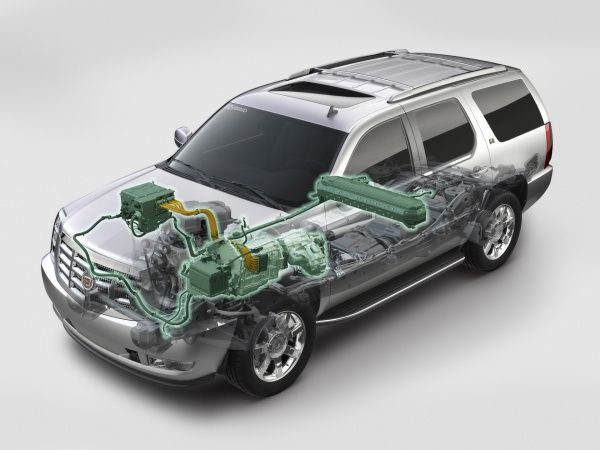
What Is a Hybrid Engine? What Are the Advantages and Disadvantages of Hybrid Vehicles?
A hybrid engine, more accurately called a hybrid powertrain, is a vehicle propulsion system that combines an internal combustion engine with one or more electric motors.
The internal combustion engine may run on gasoline or diesel, while the electric motor receives energy from a high-voltage battery. Depending on the hybrid system, the vehicle can use the gasoline engine, the electric motor, or both at the same time.
The main purpose of hybrid technology is to use each power source where it is most efficient. The electric motor can handle low-speed driving and acceleration, while the combustion engine can provide sustained power during higher-speed or longer-distance driving.
Hybrid technology is therefore not simply a gasoline engine with a battery added to it. It is an integrated system in which the engine, electric motor, battery, power electronics, transmission, and control software work together.
How Does a Hybrid Powertrain Work?
A hybrid vehicle continuously decides how to distribute the required driving power.
For example, when the vehicle is stopped, the combustion engine may remain off. When the driver starts moving gently, the electric motor can provide the initial propulsion.
During stronger acceleration, the gasoline engine can start and work together with the electric motor.
At cruising speeds, the combustion engine may become the primary power source because it can operate efficiently under a relatively steady load.
When the driver releases the accelerator or applies the brake, the electric motor can operate as a generator. Instead of wasting all of the vehicle's kinetic energy as heat through the brakes, part of that energy can be converted into electrical energy and stored in the battery.
This process is called regenerative braking.
What Are the Main Components of a Hybrid System?
A typical hybrid vehicle contains several major components that are not found in a conventional combustion-only vehicle.
Internal combustion engine
This is usually a gasoline engine, although diesel-hybrid systems also exist.
Electric motor
The electric motor can provide propulsion, assist the combustion engine, or act as a generator depending on the operating conditions.
High-voltage battery
The hybrid battery stores electrical energy used by the electric motor. It is different from the small 12-volt battery used for conventional vehicle electrical equipment.
Inverter and power electronics
The inverter controls the flow of electrical energy between the battery and electric motor. It converts electrical energy between the forms required by the system.
Hybrid transmission or power-split system
Depending on the design, the hybrid system may use a conventional automatic transmission, e-CVT, power-split transmission, or another specialized arrangement.
Regenerative braking system
The electric motor can recover some kinetic energy during deceleration and convert it into electrical energy.
Hybrid control unit
Electronic control systems constantly determine when the engine and electric motor should operate and how much power each should provide.
What Are the Different Types of Hybrid Vehicles?
Not every hybrid vehicle operates in the same way.
Mild Hybrid
A mild-hybrid system normally cannot propel the vehicle using electric power alone for normal driving.
Instead, a small electric motor assists the combustion engine during acceleration and allows functions such as smoother engine restarting and regenerative braking.
Mild hybrids generally use smaller batteries and simpler electrical systems than full hybrids.
Full Hybrid
A full hybrid can usually drive using the electric motor alone for short periods and under suitable conditions.
The combustion engine can also operate independently or together with the electric motor.
This type of system can provide significant fuel savings, particularly in urban driving.
Plug-in Hybrid (PHEV)
A plug-in hybrid has a larger battery that can be charged externally.
It can therefore travel a considerably longer distance using electric power alone before the combustion engine becomes necessary.
A PHEV can be particularly efficient when the battery is charged regularly and most daily trips fall within its electric range.
Series Hybrid
In a series-hybrid configuration, the electric motor is primarily responsible for driving the wheels. The combustion engine mainly operates as a generator to produce electricity.
This architecture is sometimes described as an extended-range electric vehicle when the engine is used mainly to extend the driving range.
Parallel Hybrid
In a parallel hybrid, both the combustion engine and electric motor can contribute mechanical power to the wheels.
Many modern hybrid systems combine characteristics of different architectures, so real-world systems do not always fit neatly into a single category.
Hybrid Vehicle Advantages
One of the biggest reasons manufacturers use hybrid technology is improved efficiency.
Lower fuel consumption
Hybrid systems can reduce fuel consumption by allowing the engine to remain off during certain conditions and by recovering energy during deceleration.
The benefit is especially noticeable in city traffic, where conventional vehicles frequently waste energy through braking and idling.
Excellent efficiency in stop-and-go traffic
A conventional combustion engine is not particularly efficient when repeatedly accelerating, idling, and braking.
A hybrid can recover some of the energy normally lost during braking and can use the electric motor for low-speed operation.
This makes hybrid technology particularly suitable for urban driving.
Regenerative braking
In a conventional vehicle, much of the kinetic energy during braking is converted into heat through the brake discs and pads.
A hybrid vehicle can use the electric motor as a generator during deceleration.
Some of that energy is then stored in the high-voltage battery.
This does not recover all braking energy, but it can significantly improve overall efficiency.
Reduced engine idling
A hybrid vehicle can switch off its combustion engine when it is not needed.
For example, the engine may shut down when the vehicle stops at a traffic light.
The engine can restart automatically when additional power is required.
Strong low-speed acceleration
Electric motors can produce substantial torque from very low speeds.
As a result, a hybrid vehicle can feel responsive when pulling away from a stop.
The electric motor can also compensate for some of the weaknesses of a small combustion engine during initial acceleration.
Lower emissions
Because less fuel may be consumed, a hybrid can produce lower CO₂ emissions than a comparable conventional vehicle.
The reduction depends heavily on the vehicle type and driving conditions.
A plug-in hybrid can achieve particularly low fuel consumption when it is regularly charged and driven primarily within its electric range.
Quieter operation
When operating electrically, a hybrid vehicle can be significantly quieter than a conventional vehicle.
This is particularly noticeable during low-speed urban driving.
Reduced brake wear
Because regenerative braking handles part of the deceleration process, friction brakes may be used less aggressively.
As a result, brake pads and discs can sometimes last longer than they would in an equivalent conventional vehicle.
Hybrid Vehicle Disadvantages
Hybrid technology also introduces additional complexity and cost.
Higher purchase price
Hybrid vehicles generally contain more expensive components, including a high-voltage battery, electric motor, inverter, and specialized transmission or control systems.
This can increase the initial purchase price compared with a similar combustion-only vehicle.
Battery aging
The high-voltage battery is one of the most important components of a hybrid system.
Like other rechargeable batteries, it gradually loses capacity with age and usage.
Modern hybrid batteries are designed to last many years, but their condition can still become an important factor when buying a high-mileage used hybrid.
Battery degradation does not necessarily mean the vehicle suddenly stops working. It can instead reduce electric assistance, efficiency, or the amount of energy the system can store.
More complex repairs
A hybrid vehicle combines conventional automotive systems with high-voltage electrical systems.
A problem may involve:
-
The combustion engine
-
Electric motor
-
High-voltage battery
-
Inverter
-
Hybrid transmission
-
Battery cooling
-
High-voltage wiring
-
Sensors
-
Control modules
-
Charging system on a plug-in hybrid
Diagnosis therefore requires appropriate equipment and technicians who understand hybrid systems.
Specialized maintenance and repair
Not every repair shop is equipped to work safely on high-voltage hybrid systems.
Technicians need appropriate training and safety equipment before working on the high-voltage components.
This can make some repairs more expensive or limit the number of qualified repair facilities available in certain areas.
Additional weight
The battery, electric motor, power electronics, and associated components add weight to the vehicle.
Manufacturers design the entire vehicle around this additional mass, but a hybrid can still be heavier than a comparable conventional vehicle.
Battery replacement can be expensive
If a high-voltage battery eventually requires replacement, the repair can be expensive.
However, battery failure should not automatically be assumed simply because a hybrid is old or has high mileage. Proper diagnosis is important because cooling-system problems, wiring, sensors, battery-management faults, and individual battery modules can sometimes produce symptoms that resemble battery failure.
Are Hybrid Vehicles More Reliable?
A hybrid vehicle can be very reliable, but reliability depends on the specific system and how it is maintained.
There is an important misconception that adding electric components automatically makes a vehicle unreliable.
In reality, hybrid technology can reduce stress on some components.
For example, regenerative braking can reduce friction-brake wear, while the electric motor can assist the combustion engine during acceleration.
At the same time, the vehicle has additional components that can potentially fail.
Therefore, hybrid reliability should be evaluated based on the particular vehicle, powertrain design, battery technology, maintenance history, and operating conditions rather than simply assuming that all hybrids are either more or less reliable than conventional cars.
What Happens When the Hybrid Battery Is Low?
A hybrid vehicle does not normally allow the high-voltage battery to become completely empty during normal operation.
The hybrid control system maintains the battery within a specific operating range.
When the battery state of charge becomes low, the combustion engine can run to provide power and, depending on the system, recharge the battery.
The vehicle may therefore continue operating even when the battery indicator appears low.
A plug-in hybrid is different because it has a much larger battery and a dedicated external charging system. When its usable electric range is exhausted, the vehicle can generally continue operating using its combustion engine and hybrid system.
Do Hybrid Vehicles Need Special Engine Oil?
The combustion engine in a hybrid vehicle still requires appropriate engine oil.
However, the operating conditions can differ significantly from those of a conventional vehicle.
A hybrid engine may:
-
Start and stop frequently
-
Spend more time operating at efficient load conditions
-
Remain off for long periods
-
Experience repeated cold starts
-
Operate for shorter periods at a time
For this reason, the manufacturer-specified oil viscosity and specification should be followed carefully.
The fact that a vehicle is a hybrid does not mean that any modern engine oil is automatically suitable.
What Happens to the Hybrid Battery in Cold Weather?
Temperature has a significant effect on battery performance.
Very cold conditions can temporarily reduce battery efficiency and available electric power.
Hybrid vehicles therefore use battery-management and thermal-control strategies to keep the battery within a suitable operating temperature range.
Depending on the vehicle, the battery may have air cooling, liquid cooling, heating, or another thermal-management system.
This is one reason why battery cooling and ventilation should not be ignored during maintenance.
What Happens to a Hybrid Battery in Hot Weather?
High temperatures can also accelerate battery aging if thermal management is inadequate.
Many hybrid vehicles therefore include dedicated battery cooling systems.
Some systems use cabin air to cool the battery, which means that battery ventilation openings should not be blocked.
Dust and debris can also reduce airflow through battery cooling components.
If the vehicle provides a dedicated battery cooling intake, keeping it clean is an important part of hybrid maintenance.
Are Hybrid Vehicles Good for City Driving?
Hybrid vehicles are particularly well suited to urban environments.
Frequent stopping and starting gives the vehicle many opportunities to:
-
Regenerate energy
-
Shut down the combustion engine
-
Use electric propulsion
-
Reduce idling
-
Take advantage of electric motor torque
A conventional gasoline vehicle may lose considerable efficiency in heavy traffic, while a full hybrid can use its electric system to reduce these losses.
Are Hybrids Good for Highway Driving?
Hybrids can also be efficient on highways, but the advantage may be smaller than in city driving.
At steady high speeds, there is less opportunity for regenerative braking, and aerodynamic drag becomes a major factor.
The combustion engine may therefore operate for long periods.
A hybrid can still benefit from its electric motor and efficient engine operation, but the fuel-economy difference compared with a highly efficient conventional vehicle may be smaller.
Hybrid vs. Electric Vehicle
A hybrid vehicle is not the same as a fully electric vehicle.
A hybrid has both a combustion engine and an electric motor.
A battery-electric vehicle (BEV) uses electric motors as its propulsion system and does not have a conventional combustion engine.
A plug-in hybrid sits somewhere between the two concepts because it can travel significant distances electrically while retaining a combustion engine for longer journeys.
Hybrid vs. Conventional Gasoline Vehicle
The main difference is how energy is managed.
A conventional gasoline vehicle relies primarily on the combustion engine and friction brakes.
A hybrid vehicle can combine:
-
Combustion power
-
Electric power
-
Regenerative braking
-
Engine stop/start
-
Intelligent energy management
This allows the hybrid system to recover and reuse energy that would otherwise be lost.
What Should Be Checked When Buying a Used Hybrid?
The condition of the high-voltage battery is important, but it should not be the only thing checked.
A used hybrid should ideally be inspected for:
-
High-voltage battery condition
-
Battery state-of-health data
-
Battery cooling system
-
Hybrid-system fault codes
-
Engine condition
-
Transmission operation
-
Inverter operation
-
Charging system on PHEVs
-
12-volt battery condition
-
Cooling system
-
Brake system
-
Service history
-
Previous accident or flood damage
A hybrid diagnostic scan can provide considerably more information than simply checking whether the dashboard currently shows a warning light.
Is a Hybrid Vehicle Worth Buying?
The answer depends largely on how the vehicle will be used.
A hybrid can make a lot of sense for drivers who spend significant time in city traffic, frequently stop and start, and want lower fuel consumption without depending entirely on charging infrastructure.
A plug-in hybrid can be particularly attractive for drivers who can charge at home or work and regularly make trips that fit within the vehicle's electric range.
For drivers who mainly travel long highway distances at steady speed, the efficiency advantage may be less dramatic.
The most important factor is not simply whether a vehicle has a hybrid badge. The real advantage comes from how effectively the entire powertrain uses and recovers energy.
The Main Advantage and Disadvantage of Hybrid Technology
The biggest advantage of hybrid technology is energy efficiency. Instead of allowing all braking energy to disappear as heat and running the combustion engine continuously, the vehicle can recover energy, shut the engine down when appropriate, and use electric power where it is most efficient.
The biggest disadvantage is system complexity and cost. A hybrid vehicle contains everything required for conventional propulsion plus high-voltage electrical components, battery management, power electronics, and additional control systems.
When properly designed and maintained, however, a hybrid powertrain can offer a very effective combination of low fuel consumption, smooth driving, strong low-speed response, and reduced emissions.