TR
TR EN
EN

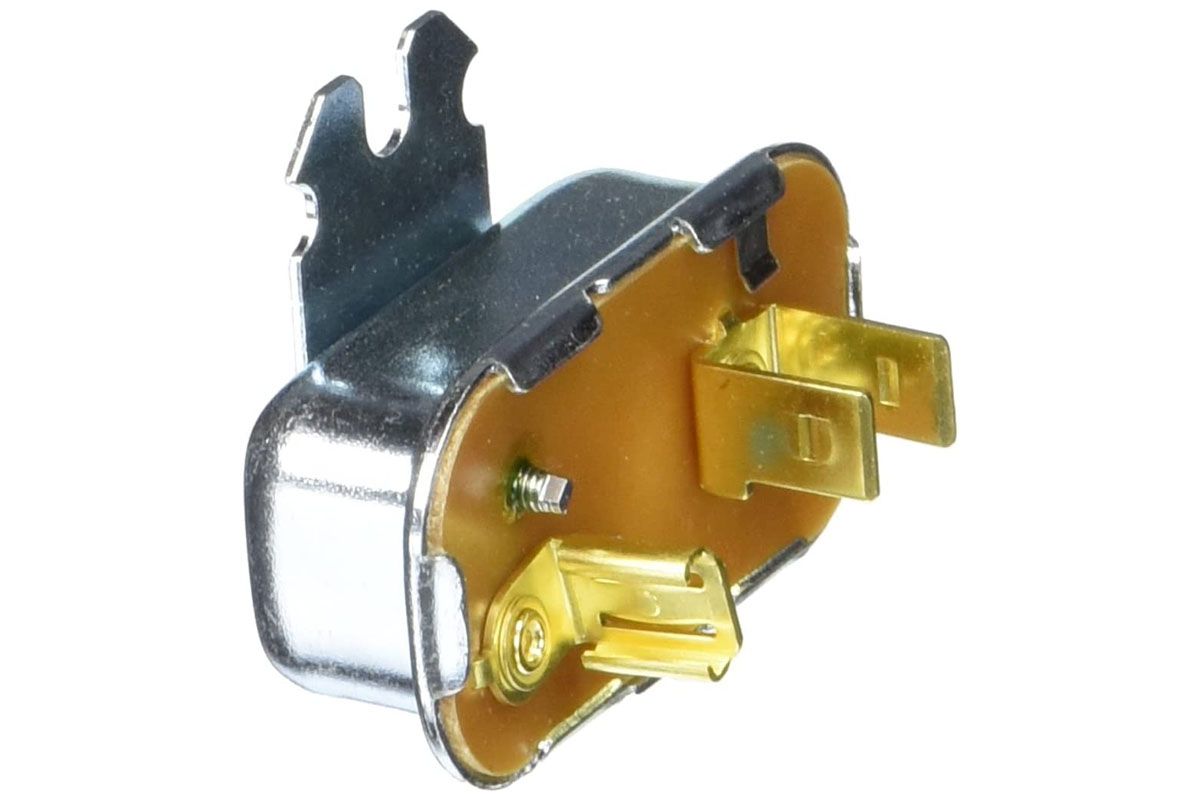
What Is the Instrument Cluster Voltage Regulator? What Are the Symptoms of Failure?
The instrument cluster voltage regulator is an electrical or electronic component designed to keep the voltage supplied to certain circuits inside the vehicle’s instrument cluster at a stable level.
The instrument cluster voltage regulator is an electrical or electronic component designed to keep the voltage supplied to certain circuits inside the vehicle’s instrument cluster at a stable level.
This component is particularly important in older vehicles that use conventional analog gauges. Fuel gauges, coolant temperature gauges, and some other analog instruments may require a stable supply voltage to operate correctly.
The vehicle’s electrical system does not always provide a perfectly constant voltage. With the engine running, the alternator normally raises system voltage above battery voltage, and electrical loads can also cause small voltage fluctuations.
The instrument cluster voltage regulator helps prevent these variations from causing inaccurate gauge readings.
What Does an Instrument Cluster Voltage Regulator Do?
The main function of the voltage regulator is to provide a controlled and relatively stable voltage to the circuits that operate the instrument gauges.
For example, the fuel level sender changes its electrical resistance according to the amount of fuel in the tank. The fuel gauge interprets this changing signal and moves the needle accordingly.
The coolant temperature sender works in a similar way. Its electrical characteristics change as engine temperature changes, allowing the temperature gauge to display the approximate engine temperature.
If the supply voltage going to these gauges changes excessively, the readings can also change even though the actual fuel level or engine temperature has not changed.
The voltage regulator helps prevent this problem.
Does Every Vehicle Have a Separate Instrument Cluster Voltage Regulator?
No.
This is an important distinction when diagnosing instrument cluster problems.
Older vehicles may have a separate voltage regulator installed on or inside the instrument cluster. Some classic vehicles used mechanical or thermal-type voltage regulators for their gauges.
Modern vehicles generally use much more sophisticated electronic instrument clusters. The voltage regulation function may be integrated into the cluster’s circuit board rather than being provided by a separate replaceable component.
In some vehicles, the cluster is effectively a computer module that receives information electronically and controls the gauges using digital signals.
Therefore, not finding a separate voltage regulator on a modern instrument cluster does not necessarily indicate a problem.
How Does an Instrument Cluster Voltage Regulator Work?
The exact operating principle depends on the vehicle and the type of regulator used.
Older instrument clusters may use a thermal or mechanical regulator. These devices can regulate the average voltage by switching the electrical supply on and off at controlled intervals.
Electronic regulators work differently. They monitor the input voltage and regulate the output to keep it within a predetermined range.
The basic principle can be summarized as:
Vehicle electrical system → cluster voltage regulation → gauge circuits
The purpose is not necessarily to provide exactly the same voltage under every possible condition, but to prevent normal vehicle voltage fluctuations from significantly affecting the operation of the gauges.
What Are the Symptoms of a Bad Instrument Cluster Voltage Regulator?
A faulty instrument cluster voltage regulator can produce several different symptoms depending on whether it is producing too much voltage, too little voltage, an unstable voltage, or no output at all.
Common symptoms include:
-
Incorrect fuel gauge readings
-
Incorrect coolant temperature readings
-
Fuel and temperature gauges behaving incorrectly at the same time
-
Gauges reading higher than normal
-
Gauges reading lower than normal
-
Gauges remaining at maximum
-
Gauges remaining at minimum
-
Gauge needles fluctuating
-
Slow or unstable gauge movement
-
Gauge readings changing when electrical loads are switched on
-
Several analog gauges showing abnormal readings simultaneously
One of the most useful diagnostic clues is when more than one gauge develops a similar problem at the same time.
Can a Bad Voltage Regulator Cause the Fuel Gauge to Read Full?
Yes, depending on the design of the instrument cluster.
If the regulator supplies an incorrect voltage to the fuel gauge circuit, the gauge may interpret the signal incorrectly and show a higher fuel level than the actual level.
However, a fuel gauge that always reads full does not automatically mean the voltage regulator has failed.
Other possible causes include:
-
Faulty fuel level sender
-
Stuck float
-
Damaged wiring
-
Poor ground connection
-
Corroded connector
-
Faulty gauge
-
Instrument cluster circuit failure
The regulator should therefore be tested rather than replaced based solely on the gauge reading.
Can a Bad Voltage Regulator Cause the Fuel Gauge to Read Empty?
Yes.
If the regulated supply voltage is too low or missing completely, the fuel gauge may show an abnormally low reading or remain at empty.
However, the fuel level sender and its wiring should also be checked.
A broken signal wire, poor ground, defective sender, or internal gauge failure can produce a very similar symptom.
Can the Temperature Gauge Be Affected?
Yes.
The coolant temperature gauge may also depend on a regulated voltage supply in older instrument cluster designs.
If the regulator output becomes abnormal, the temperature gauge can display an incorrect reading.
However, there is an important safety issue here.
An unusually high temperature reading should never automatically be blamed on the instrument cluster.
The engine may actually be overheating.
Before diagnosing the cluster, the real engine temperature should be verified. The cooling system, coolant level, thermostat, radiator, cooling fan, water pump, and temperature sensor may all need to be checked.
Can a Voltage Regulator Make the Temperature Gauge Show Overheating?
It can, depending on the vehicle’s gauge design.
An excessive regulator output voltage may cause the gauge to move higher than it should.
But this should only be considered after confirming that the engine itself is not overheating.
If the temperature gauge suddenly reaches the red zone, the vehicle should be treated as potentially overheating until the actual coolant temperature is verified.
A faulty instrument cluster should never be used as an assumption to ignore a possible cooling system problem.
Why Do the Fuel and Temperature Gauges Fail Together?
This is one of the most useful clues when diagnosing older instrument clusters.
The fuel gauge and coolant temperature gauge use different sensors, but they may share a common regulated supply.
Therefore, if both gauges suddenly begin reading incorrectly at the same time, a shared electrical supply problem becomes more likely.
Possible causes include:
-
Instrument cluster voltage regulator
-
Common ground problem
-
Cluster power supply problem
-
Damaged circuit board
-
Connector problem
-
Wiring fault
If only the fuel gauge is affected, the fuel level sender and its wiring may be more likely suspects.
If several gauges are affected simultaneously, the common power and ground circuits should be investigated.
Why Do Instrument Cluster Needles Fluctuate?
A fluctuating needle can be caused by an unstable voltage supply.
For example, if the gauge moves noticeably when engine speed changes, the headlights are switched on, or other electrical loads are activated, the charging system and instrument cluster power supply should be checked.
Possible causes include:
-
Faulty cluster voltage regulator
-
Alternator voltage problems
-
Poor ground connection
-
Battery connection problems
-
Corroded terminals
-
Wiring problems
-
Faulty instrument cluster circuit
This is why it is important to distinguish an instrument cluster voltage problem from a vehicle-wide charging system problem.
Is the Instrument Cluster Voltage Regulator the Same as the Alternator Voltage Regulator?
No.
These are two different components with different functions.
The instrument cluster voltage regulator controls or stabilizes voltage used by specific instrument cluster circuits.
The alternator voltage regulator controls the charging system and helps maintain the vehicle’s overall electrical system voltage within the appropriate range.
A problem with the alternator voltage regulator can affect the entire vehicle.
A problem with the instrument cluster voltage regulator may be limited mainly to the gauges and related cluster circuits.
Confusing these two components can lead to unnecessary parts replacement.
What Causes an Instrument Cluster Voltage Regulator to Fail?
Several factors can contribute to regulator failure.
Age and electronic component deterioration
Older electronic components can gradually deteriorate after many years of heat cycles and electrical operation.
Excessive voltage
If the vehicle’s charging system produces excessive voltage, sensitive instrument cluster electronics can be damaged.
Poor grounding
A weak, corroded, or high-resistance ground connection can cause abnormal instrument cluster operation.
Corroded connectors
Moisture and corrosion can increase resistance in the electrical circuit and interfere with the regulator or gauge circuits.
Heat
Instrument clusters operate in an environment that can experience significant temperature changes. Long-term exposure to heat can contribute to electronic component failure.
Mechanical regulator wear
Some older vehicles use thermal or mechanical regulators. Their contacts and internal components can deteriorate over time.
How Do You Test an Instrument Cluster Voltage Regulator?
The correct testing procedure depends on the vehicle.
The first step is to identify the regulator’s specified input and output voltage using the vehicle’s service documentation.
The following should then be checked:
-
Regulator input voltage
-
Regulator output voltage
-
Ground connection
-
Power supply
-
Connector terminals
-
Wiring continuity
Measurements may need to be taken with the ignition on and with the engine running.
It can also be useful to observe what happens when electrical loads such as headlights, blower motors, or other accessories are switched on.
A stable input with an incorrect or unstable regulated output can point toward a cluster voltage regulation problem.
Is Measuring Battery Voltage Enough?
No.
A normal battery voltage does not prove that the instrument cluster is receiving the correct voltage.
For example, the battery may have a normal voltage while the cluster has:
-
A poor ground
-
A damaged power wire
-
A corroded connector
-
A faulty voltage regulator
-
A damaged circuit board
The voltage should therefore be checked at the relevant points in the instrument cluster circuit rather than only at the battery.
Can a Multimeter Diagnose the Problem?
A multimeter is very useful for basic electrical diagnosis.
Depending on the vehicle, you can use it to check:
-
Battery voltage
-
Cluster supply voltage
-
Regulator input voltage
-
Regulator output voltage
-
Ground quality
-
Continuity
-
Wiring resistance
-
Short circuits
-
Connector voltage
However, the exact expected voltage must come from the vehicle’s technical documentation.
A reading that looks reasonable on one vehicle may be incorrect on another.
Will a Bad Instrument Cluster Voltage Regulator Affect the Entire Instrument Panel?
Not necessarily.
It depends on which circuits are supplied by the regulator.
On some older vehicles, the regulator primarily supplies the fuel and coolant temperature gauges. Other parts of the instrument cluster may continue operating normally.
For example, the following situation is possible:
Speedometer works + odometer works + warning lights work + fuel and temperature gauges are incorrect
In such a case, a shared gauge supply or voltage regulator becomes a reasonable area to investigate.
However, the cluster’s internal circuit board and wiring must also be considered.
Will an OBD Scanner Detect a Bad Instrument Cluster Voltage Regulator?
Usually, not directly—especially on older vehicles.
Traditional instrument cluster voltage regulators are generally simple electrical components and do not have their own diagnostic communication system.
Modern instrument clusters can be electronic control modules and may communicate with other modules through the vehicle network.
In those vehicles, communication faults, power supply problems, or internal module faults may generate diagnostic trouble codes.
However, not every instrument cluster electrical fault will produce an OBD code.
A lack of a fault code does not automatically mean that the cluster is functioning correctly.
Can an Instrument Cluster Voltage Regulator Cause Incorrect Fuel Consumption Information?
In some modern vehicles, the displayed fuel consumption information is calculated electronically by the engine control system rather than directly by a traditional analog gauge.
Therefore, a conventional instrument cluster voltage regulator usually does not directly change calculated fuel consumption.
However, if the cluster has a broader electrical or communication problem, the displayed information may become unreliable.
This is another reason why the design of the specific vehicle must be considered before diagnosing the problem.
Should the Voltage Regulator Be Replaced?
The voltage regulator should be replaced only after testing confirms that it is defective.
Incorrect gauge readings alone are not enough to prove that the regulator has failed.
Before replacing it, check:
-
Fuel level sender
-
Coolant temperature sender
-
Wiring
-
Connectors
-
Grounds
-
Fuses
-
Instrument cluster power supply
-
Regulator input voltage
-
Regulator output voltage
-
Alternator charging voltage
-
Instrument cluster circuit board
This approach prevents unnecessary replacement of the regulator when the actual problem is somewhere else.
How Can You Tell if the Voltage Regulator Is Really the Problem?
One of the strongest clues is a common failure affecting multiple gauges that depend on the same regulated supply.
For example, if the fuel and temperature gauges both start reading unusually high or low at approximately the same time, the common supply circuit deserves attention.
On the other hand, if only the fuel gauge has stopped working, the fuel sender, float, wiring, or gauge itself may be a more likely cause.
The pattern of the failure is therefore extremely important.
Instrument Cluster Voltage Regulator vs. Gauge Sensor Problems
It is useful to understand the difference between a supply problem and a sensor problem.
A sensor or sender provides information to the gauge.
The voltage regulator provides a stable electrical supply to the gauge circuit.
For example:
Fuel level sender problem → fuel gauge affected
Coolant temperature sender problem → temperature gauge affected
Shared gauge supply/regulator problem → multiple gauges may be affected
This is not an absolute rule for every vehicle, but it provides a useful starting point during diagnosis.
Can a Faulty Alternator Cause Similar Symptoms?
Yes.
This is another important diagnostic distinction.
If the alternator or its voltage regulator produces unstable charging voltage, the instrument cluster may behave abnormally even if the cluster itself is perfectly healthy.
Symptoms can include:
-
Flickering gauges
-
Changing gauge readings
-
Flickering dashboard lights
-
Unstable electrical accessories
-
Battery warning light
-
Unusual lighting brightness
-
Multiple electronic problems
Therefore, charging voltage should be checked before condemning the instrument cluster.
Can a Bad Ground Cause the Same Problem?
Yes.
A poor ground connection can create symptoms that look very similar to a failed voltage regulator.
A high-resistance ground can alter the voltage seen by the instrument cluster and its gauges.
Corrosion, loose terminals, damaged ground straps, and poor connections should therefore be inspected carefully.
Sometimes the solution to an apparent gauge problem is not an expensive electronic component but a simple electrical connection problem.
Is It Safe to Drive With a Faulty Instrument Cluster Voltage Regulator?
The answer depends on which gauges are affected.
If the fuel gauge is inaccurate, you may not know how much fuel remains.
If the temperature gauge is inaccurate, the situation can be more serious because you may not be able to recognize an actual overheating condition.
If multiple warning systems or critical displays are also malfunctioning, the vehicle should be inspected as soon as possible.
In particular, an inaccurate temperature gauge should not be ignored.
Conclusion
The instrument cluster voltage regulator is an important part of many older vehicle instrument systems. Its primary purpose is to keep the electrical supply to certain gauges stable so that changes in the vehicle’s overall electrical voltage do not produce misleading readings.
A faulty regulator can cause fuel and temperature gauges to read too high, too low, or fluctuate. In some cases, several gauges may develop problems simultaneously.
However, these symptoms do not automatically mean that the voltage regulator is defective.
Fuel level senders, coolant temperature sensors, wiring, connectors, grounds, the instrument cluster circuit board, and the vehicle’s charging system can all produce similar symptoms.
One of the most useful diagnostic clues is when multiple gauges that share a common regulated supply begin behaving incorrectly at the same time.
Finally, remember that the instrument cluster voltage regulator and alternator voltage regulator are not the same component. The first is associated with the instrument cluster’s gauge circuits, while the second regulates the vehicle’s charging system.
A proper diagnosis should therefore begin with voltage and ground measurements and a comparison of the measured values with the manufacturer’s specifications before replacing any parts.