TR
TR EN
EN

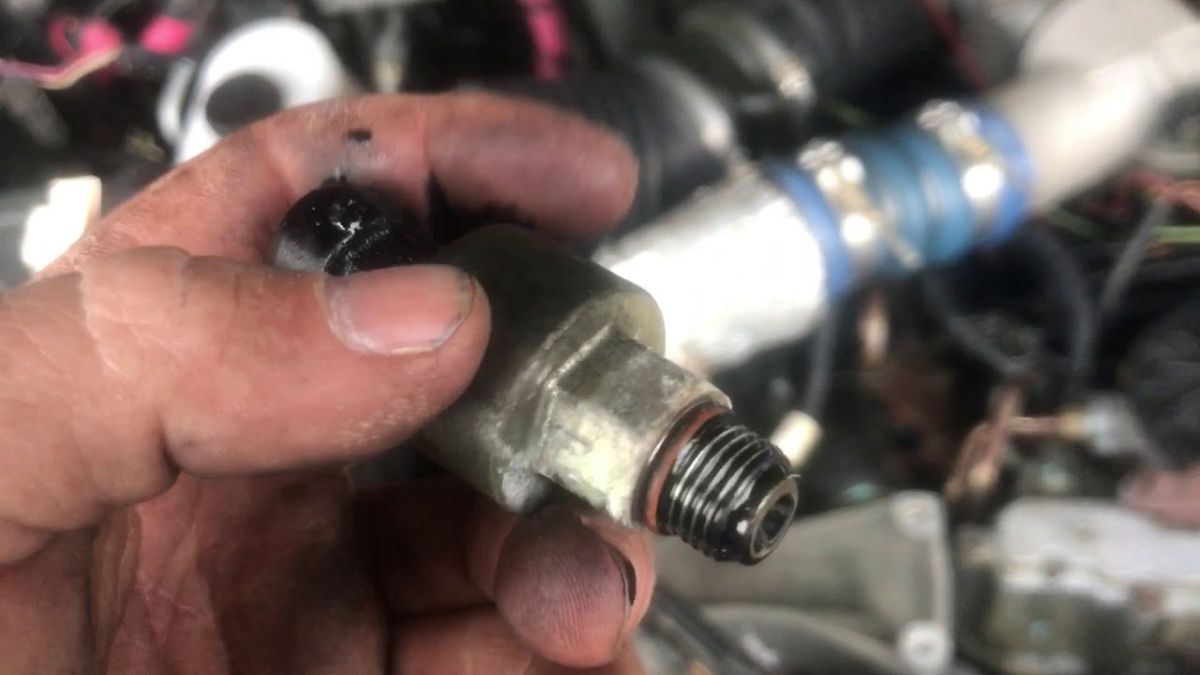
What Is the Injector Control Pressure (ICP) Sensor? What Are the Symptoms of Failure?
The Injector Control Pressure (ICP) Sensor is an important component in certain diesel fuel injection systems, particularly engines that use hydraulically actuated electronically controlled unit injectors. Its primary function is to measure the control pressure used to operate the fuel injectors and send this information to the engine control module (ECM).
The ECM uses the pressure information from the ICP sensor to determine whether the injection system has reached the pressure required for proper engine operation.
When the ICP sensor provides an incorrect signal, the ECM may calculate the wrong injection pressure. This can result in hard starting, poor engine performance, rough running, stalling, reduced power, or a failure to start.
It is important to note that ICP does not refer to the fuel pressure inside a conventional fuel rail. In systems such as Ford Power Stroke HEUI applications, ICP specifically refers to Injection Control Pressure.
What Does the ICP Sensor Do?
The ICP sensor continuously monitors injection control pressure and converts that pressure into an electrical signal.
The ECM uses this signal together with information from other engine sensors to control the injection system.
Depending on the engine design, the ICP system can influence:
-
Fuel injection timing
-
Injection quantity
-
Injector operation
-
Engine starting
-
Engine idle quality
-
Engine load response
-
Engine protection strategies
If the ECM detects that the actual injection control pressure does not match the expected pressure, it may modify engine operation or prevent normal injection.
How Does an ICP Sensor Work?
An ICP sensor is generally a pressure transducer.
It is installed in a location where it can accurately measure injection control pressure. The exact location varies according to the engine design.
The sensor typically receives:
-
A reference voltage from the ECM
-
A ground connection
-
A pressure-dependent signal
As pressure changes, the sensor's output signal changes accordingly.
The ECM interprets this signal and calculates the injection control pressure.
A problem with any of these circuits can create symptoms that look like a pressure problem even when the mechanical pressure system is functioning correctly.
Which Engines Use an ICP Sensor?
The term ICP sensor is most strongly associated with HEUI (Hydraulically Actuated Electronically Controlled Unit Injector) systems.
One well-known example is certain Ford Power Stroke diesel engines.
In a HEUI system, high-pressure engine oil is used to hydraulically actuate the injectors. The injection control system therefore depends on hydraulic pressure rather than relying solely on conventional fuel pressure to operate the injector mechanism.
This is different from common-rail diesel systems.
A common-rail diesel engine normally uses a high-pressure fuel rail and rail pressure sensor. That sensor should not automatically be called an ICP sensor.
Therefore, the exact terminology depends on the injection system used by the engine.
Symptoms of a Bad ICP Sensor
A failing ICP sensor can produce several different symptoms.
Common symptoms include:
-
Hard starting
-
Extended cranking
-
Engine fails to start
-
Rough idle
-
Engine stalling
-
Poor acceleration
-
Reduced engine power
-
Hesitation
-
Unstable engine operation
-
Poor throttle response
-
Intermittent starting problems
-
Increased smoke in some situations
-
Check Engine Light
-
Diagnostic trouble codes related to injection pressure
-
Engine performance that changes as temperature changes
The symptoms can vary considerably depending on whether the sensor has failed completely or is producing an intermittent or inaccurate signal.
Hard Starting or Long Cranking
One of the most important symptoms of an ICP-related problem is difficult starting.
The engine may crank for an unusually long time before starting, particularly when the engine is hot or cold.
If the ICP sensor is sending an incorrect pressure signal, the ECM may incorrectly determine that the injection system has not reached the required pressure.
As a result, the engine may crank without establishing proper injection conditions.
However, a long-cranking problem does not automatically mean that the ICP sensor is defective.
Low control pressure can also be caused by:
-
A worn high-pressure oil pump
-
Internal oil leakage
-
Injector O-ring problems
-
Oil pressure problems
-
Faulty pressure control components
-
Low engine oil level
-
Incorrect engine oil
-
Wiring problems
The actual pressure should therefore be verified before replacing the sensor.
Engine Cranks but Does Not Start
In severe cases, an ICP sensor problem can contribute to a crank-no-start condition.
If the sensor signal is missing, implausible, or outside the expected range, the ECM may not be able to properly control injection.
However, a crank-no-start condition has many possible causes.
The diagnostic process should also consider:
-
Battery voltage
-
Starter speed
-
Engine oil level and condition
-
High-pressure oil system
-
Fuel supply
-
Injector operation
-
Crankshaft position sensor
-
Camshaft position sensor
-
Wiring
-
ECM power and grounds
-
Immobilizer system
Replacing the ICP sensor without checking these systems can lead to unnecessary repairs.
Rough Idle
A faulty ICP signal can cause unstable engine operation at idle.
The ECM continuously adjusts injection control based on operating conditions. If the pressure signal is inaccurate or fluctuates unexpectedly, injection control may become unstable.
The driver may notice:
-
Engine vibration
-
Uneven idle speed
-
Occasional misfire-like behavior
-
RPM fluctuations
-
Rough running after starting
Again, these symptoms can also be caused by injector problems, air entering the fuel system, fuel delivery problems, compression issues, or other sensors.
Poor Acceleration and Reduced Power
If the ECM cannot accurately determine injection control pressure, it may not be able to control the injectors as intended.
This can result in:
-
Slow acceleration
-
Reduced torque
-
Poor response under load
-
Hesitation
-
Limited engine speed
-
Reduced fuel efficiency
Some vehicles may also enter a reduced-power strategy if the ECM determines that injection pressure control is unreliable.
Engine Stalling
An unstable ICP signal can sometimes cause an engine to stall.
This may happen when the signal suddenly becomes implausible or disappears.
The engine may:
-
Stall immediately after starting
-
Stall at idle
-
Stall during acceleration
-
Stall when coming to a stop
-
Restart after sitting for a short period
Intermittent wiring or connector problems can be particularly difficult to diagnose because the sensor may work normally during one test and fail during another.
Check Engine Light and ICP-Related Fault Codes
A faulty ICP sensor or its circuit may cause diagnostic trouble codes.
Depending on the manufacturer and engine, codes may indicate:
-
ICP circuit malfunction
-
ICP signal too high
-
ICP signal too low
-
ICP signal out of range
-
ICP pressure higher than expected
-
ICP pressure lower than expected
-
Injection control pressure performance problems
The exact code definitions vary between manufacturers.
A diagnostic code should therefore be interpreted together with the actual sensor signal and system pressure rather than treated as proof that the sensor itself must be replaced.
ICP Sensor vs. Fuel Pressure Sensor
These two components are often confused.
An ICP sensor measures Injection Control Pressure in systems designed around that type of pressure control.
A fuel pressure sensor measures the pressure of the fuel itself.
They can be completely different sensors located in different parts of the engine.
For example, a common-rail diesel engine may have a fuel rail pressure sensor that measures extremely high fuel pressure. That sensor is not necessarily an ICP sensor.
Understanding the injection system is therefore essential before diagnosing a pressure sensor.
ICP Sensor vs. Injection Pressure Regulator
The ICP sensor and the pressure regulator perform different functions.
The ICP sensor measures pressure.
The pressure control component regulates pressure.
In HEUI systems, the injection pressure regulator is commonly referred to as the Injection Pressure Regulator (IPR).
The ECM can use the ICP sensor's feedback to control the IPR and maintain the desired injection control pressure.
This creates a feedback loop:
Desired pressure → ECM control → IPR operation → actual pressure → ICP sensor feedback → ECM correction
A faulty sensor can therefore cause pressure control problems even when the pressure-producing components themselves are functioning correctly.
Conversely, a genuine hydraulic pressure problem can cause the ICP sensor to report a low pressure because the pressure really is low.
Common Causes of ICP Sensor Failure
ICP sensor problems can be caused by several factors.
Sensor internal failure
The pressure-sensing element can deteriorate with age, heat, vibration, or contamination.
Oil contamination
In HEUI applications, the sensor is exposed to the engine oil or hydraulic control-pressure environment. Contamination can affect sensor operation.
Electrical connector problems
Loose terminals, corrosion, moisture, or damaged connector pins can interrupt the signal.
Damaged wiring
Wiring near the engine is exposed to heat, vibration, oil, and mechanical movement.
Poor electrical ground
A sensor can produce incorrect readings if its electrical reference or ground circuit is compromised.
Oil pressure problems
Low-quality, contaminated, or incorrect engine oil can affect hydraulic injection systems.
High-pressure system leakage
Internal leakage can prevent the system from building the required injection control pressure.
How Is an ICP Sensor Diagnosed?
A proper diagnosis should begin with an OBD scan and live-data inspection.
The technician should compare:
-
ICP pressure
-
ICP sensor voltage
-
Desired injection control pressure
-
Actual injection control pressure
-
IPR command or duty cycle
-
Engine RPM
-
Engine coolant temperature
-
Battery voltage
One of the most useful approaches is comparing commanded pressure with actual pressure.
If the ECM commands a significant increase in injection control pressure but the actual pressure does not rise as expected, the problem may be mechanical or hydraulic rather than simply a sensor fault.
If the pressure is physically normal but the sensor reports an implausible value, the sensor or its electrical circuit becomes more suspicious.
Why Live Data Is Important
A diagnostic scanner can provide much more information than simply reading fault codes.
For example, an ICP sensor may produce a normal reading at idle but become unstable under acceleration.
Alternatively, it may show an implausible pressure value immediately when the ignition is switched on.
Comparing sensor behavior under different operating conditions can help identify intermittent failures.
A technician should also inspect the sensor wiring while monitoring live data because vibration and engine movement can reveal an intermittent electrical problem.
Can You Test the ICP Sensor With a Multimeter?
Basic electrical checks can be performed with a multimeter, but a voltage measurement alone cannot prove that the sensor is mechanically accurate.
Depending on the system, technicians may check:
-
Reference voltage
-
Ground quality
-
Signal voltage
-
Continuity
-
Short circuits
-
Open circuits
-
Connector condition
The exact expected voltage values vary by manufacturer and sensor design.
A pressure reading from a suitable diagnostic tool or mechanical test method can be more informative than checking voltage alone.
The vehicle manufacturer's specifications should always be used for exact electrical values.
Can a Bad ICP Sensor Cause Poor Fuel Economy?
It can contribute to poor fuel economy, but this is not usually the first symptom associated with an ICP sensor fault.
If the sensor sends inaccurate information to the ECM, injection control may not operate optimally.
However, poor fuel economy can have many other causes, including:
-
Dirty injectors
-
Fuel system problems
-
Turbocharger problems
-
Air intake restrictions
-
EGR problems
-
Incorrect injection control
-
Low compression
-
Faulty temperature sensors
-
Excessive idling
-
DPF regeneration issues on applicable diesel engines
Therefore, fuel consumption alone is not sufficient to diagnose an ICP sensor.
Can a Bad ICP Sensor Damage the Injectors?
A faulty ICP sensor does not normally damage injectors simply because the sensor has failed.
However, incorrect injection control can cause improper engine operation and may place the injection system outside its intended operating conditions.
More importantly, if the real problem is excessive pressure, inadequate lubrication, internal leakage, or another hydraulic fault, continuing to operate the engine without diagnosis can allow the underlying problem to become more serious.
The root cause should therefore be identified rather than simply replacing the sensor.
Can an ICP Sensor Be Cleaned?
Cleaning is generally not a reliable repair for an internally defective pressure sensor.
If the sensor itself has failed electronically or mechanically, cleaning will not restore its calibration.
However, the sensor connector and surrounding area should be inspected for contamination, oil intrusion, corrosion, or damaged terminals.
If contamination is present, the source of that contamination should also be identified.
Should You Replace the ICP Sensor Immediately?
Not necessarily.
An ICP-related fault code does not automatically mean that the sensor is defective.
Before replacement, it is better to determine whether:
-
The sensor receives the correct reference voltage.
-
The sensor has a good ground.
-
The signal changes correctly.
-
The wiring is intact.
-
The connector is secure.
-
The actual injection control pressure is correct.
-
The pressure control system is functioning.
-
The engine oil level and condition are appropriate.
This approach prevents a good sensor from being replaced when the real problem is a hydraulic pressure leak, wiring fault, pressure regulator problem, or high-pressure pump problem.
Is It Safe to Drive With a Bad ICP Sensor?
Driving with a suspected ICP sensor problem is not recommended if the engine is experiencing severe symptoms.
Particularly concerning symptoms include:
-
Engine stalling
-
Crank-no-start conditions
-
Severe power loss
-
Extremely rough operation
-
Abnormal engine behavior
-
Oil pressure or engine warning lights
An intermittent sensor fault can also leave you stranded if the engine suddenly stalls and refuses to restart.
A vehicle with mild symptoms should still be diagnosed as soon as possible rather than continuing to operate indefinitely with an unresolved injection-control problem.
Final Thoughts
The Injector Control Pressure (ICP) Sensor is an important component in injection systems that use injection control pressure to operate the injectors, especially HEUI-type diesel systems.
Its job is to measure injection control pressure and provide the ECM with feedback so that the engine computer can regulate injector operation correctly.
A faulty ICP sensor can cause:
-
Hard starting
-
Long cranking
-
Crank-no-start conditions
-
Rough idle
-
Stalling
-
Poor acceleration
-
Reduced engine power
-
Hesitation
-
Check Engine Light
-
Injection-control-pressure-related fault codes
However, these symptoms do not automatically prove that the ICP sensor itself is defective.
A similar problem can be caused by the Injection Pressure Regulator (IPR), high-pressure oil pump, internal hydraulic leakage, engine oil problems, wiring, connectors, or other engine sensors.
The most reliable diagnosis involves comparing desired and actual injection control pressure, checking the ICP sensor signal, inspecting its wiring and connector, and evaluating the complete injection control system.
Correctly identifying whether the problem is the sensor or the pressure system is essential to avoid unnecessary parts replacement and restore proper engine operation.