TR
TR EN
EN

What Is a Headlight Switch? Headlight Switch Failure and Symptoms
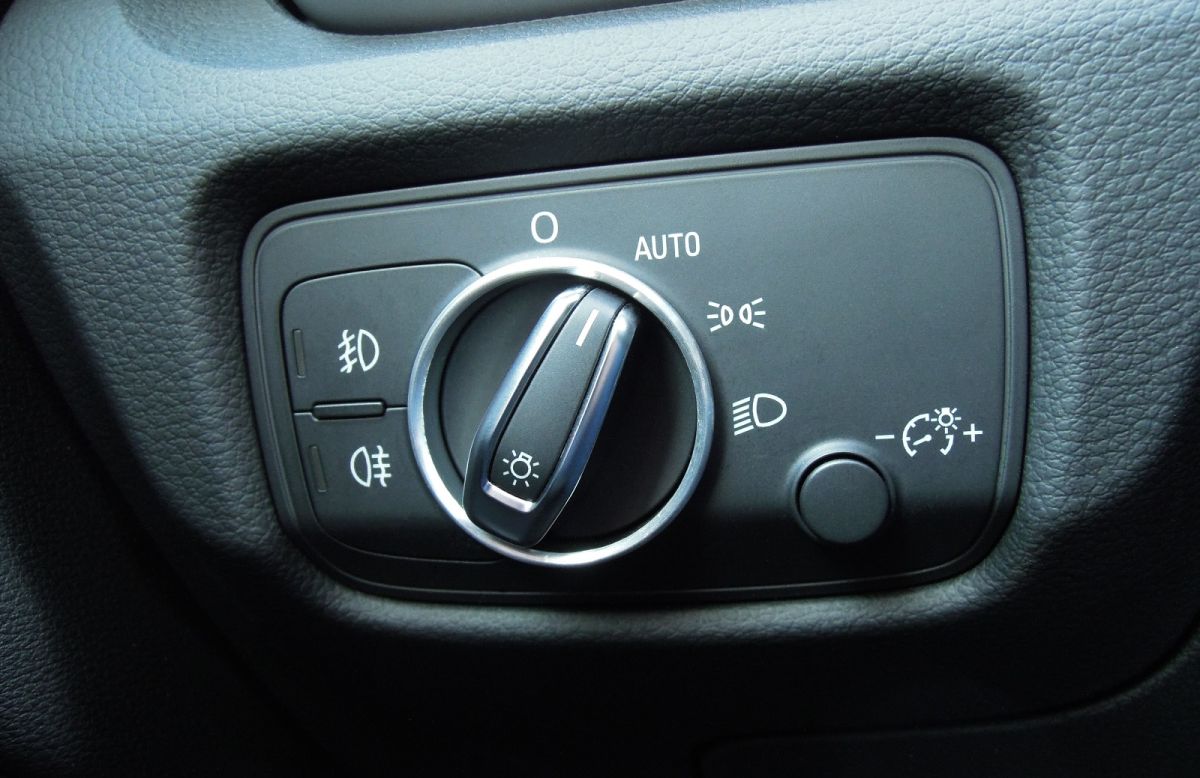
The headlight switch is one of the basic controls used to operate a vehicle’s exterior lighting system. Depending on the vehicle, it can control the headlights, parking lights, fog lights, rear fog light, and sometimes automatic lighting functions.
In older vehicles, the headlight switch may directly control the electrical circuit that supplies the lights. In modern vehicles, however, the switch often sends a command to the Body Control Module (BCM) or another electronic control unit. The control module then activates the appropriate lighting circuits electronically.
Because of this, a headlight switch problem does not always mean that the headlights simply stop working. The headlights may flicker, remain on, turn on by themselves, or certain lighting positions may stop responding.
What Does the Headlight Switch Do?
The primary purpose of the headlight switch is to allow the driver to select the vehicle’s lighting mode.
Depending on the vehicle, the switch may have positions such as:
-
Off
-
Parking lights
-
Low beams
-
Automatic headlights
-
Front fog lights
-
Rear fog light
Some vehicles also include additional lighting functions.
When the driver changes the switch position, the electrical system receives a corresponding command.
In a conventional system, the switch may directly control a relay or lighting circuit.
In a modern vehicle, the process can look more like:
Headlight switch → BCM → Lighting control output → Headlights
This means a fault anywhere along this chain can produce symptoms that appear to be caused by the headlight switch.
How Does a Headlight Switch Work?
The exact operating principle depends on the vehicle’s electrical architecture.
In a traditional lighting system, electrical power passes through the switch according to its selected position. Different contacts inside the switch activate different circuits for parking lights, low beams, or other lighting functions.
Modern vehicles can use more sophisticated systems. The headlight switch may send a voltage signal, resistance value, digital signal, or communication message to the BCM.
The BCM interprets the selected position and controls the lighting system accordingly.
For this reason, testing a modern headlight switch is not always as simple as checking whether two terminals have continuity.
Common Symptoms of a Faulty Headlight Switch
A defective headlight switch can produce several different symptoms.
Common signs include:
-
Low-beam headlights do not work
-
Parking lights do not work
-
Headlights work intermittently
-
Headlights turn on by themselves
-
Headlights remain on after switching them off
-
High beams do not operate
-
Fog lights do not work
-
Rear fog light does not work
-
Dashboard illumination is affected
-
Some switch positions do not work
-
No response when the switch is turned
-
Headlights flicker
-
Automatic headlights do not operate correctly
-
Lighting-related warning messages appear
-
The battery becomes discharged because the lights remain on
The exact symptoms depend on which internal circuit or electrical component has failed.
Do Headlights Not Working Mean the Headlight Switch Is Bad?
Not necessarily.
If the headlights do not work, several other components should be considered before replacing the switch.
Possible causes include:
-
Blown fuses
-
Faulty headlight relay
-
Failed bulbs
-
LED driver failure
-
Damaged headlight module
-
Loose connectors
-
Corroded terminals
-
Broken wiring
-
Poor ground connection
-
Low battery voltage
-
Charging-system problems
-
BCM failure
-
Headlight switch failure
If both headlights stop working at the same time, it is particularly important to check the shared power supply and control circuit rather than immediately replacing both bulbs.
Headlights Turning On by Themselves
Headlights that turn on without driver input can be a sign of an electrical or electronic problem.
A faulty headlight switch can internally make unintended contact, causing the lighting circuit to remain active.
However, other possibilities include:
-
BCM malfunction
-
Stuck relay contacts
-
Short circuit
-
Water or moisture entering a connector
-
Damaged wiring
-
Automatic headlight sensor problems
-
Daytime running light system
-
Aftermarket alarm or lighting equipment
-
Incorrect electrical modifications
Therefore, headlights turning on by themselves do not automatically prove that the headlight switch is defective.
Headlights Won’t Turn Off
If the headlights remain on even after the switch is moved to the OFF position, the cause should be investigated.
In conventional systems, a relay with stuck contacts can keep the lights powered.
In electronically controlled systems, the BCM may continue commanding the headlights on because of an incorrect input, software issue, internal fault, or another system condition.
Some vehicles intentionally keep the headlights on for a short period after the engine is switched off as part of a follow-me-home or delayed-lighting function.
Therefore, it is important to determine whether the behavior is normal for that particular vehicle before diagnosing a fault.
Nothing Happens When the Headlight Switch Is Turned
If turning the headlight switch produces no response, the switch becomes one of the possible causes.
For example:
-
Parking lights do not turn on
-
Low beams do not turn on
-
Dashboard illumination does not change
-
Other switch-controlled lighting functions do not respond
The switch should then be tested electrically.
The technician should determine whether the switch is receiving the correct power supply and whether it produces the expected output signal in each position.
On modern vehicles, a diagnostic scan may also be necessary to determine whether the BCM is actually seeing the selected switch position.
Only Some Headlight Switch Positions Work
This can be a strong indication of a problem within the switch itself.
For example, the parking lights may work while the low beams do not.
Alternatively, the low beams may work while the fog-light function does not.
This can happen because the switch contains multiple electrical contacts and circuits. One section can become worn or contaminated while the remaining functions continue to operate normally.
A switch can therefore look perfectly normal from the outside while having an internal electrical failure.
Can a Bad Headlight Switch Cause Flickering?
Yes, but it is not the only possible cause.
If the headlights repeatedly turn off and on or flicker while driving, a poor electrical connection should be investigated.
Possible causes include:
-
Worn switch contacts
-
Loose switch connector
-
Corroded terminals
-
Damaged wiring
-
Poor ground
-
Loose battery connection
-
Alternator voltage problems
-
Faulty relay
-
BCM output problems
-
Headlight module problems
Headlight flickering should not automatically be blamed on the switch.
A voltage and electrical connection check is especially important because unstable power can affect several vehicle systems.
Why Are the Headlight Switch Connector and Wiring Important?
The switch itself can be completely functional while its connector or wiring has a problem.
Common issues include:
-
Loose terminals
-
Corrosion
-
Burned terminals
-
Broken wires
-
Heat damage
-
Melted connector housing
-
Water intrusion
-
Poor-quality previous electrical repairs
In conventional headlight systems, high current can pass through the switch or its wiring. A poor connection creates resistance and can generate heat.
A darkened, melted, or discolored connector is therefore an important diagnostic clue.
Can a Faulty Headlight Switch Drain the Battery?
Yes, in some situations.
If a defective switch or related control system keeps the headlights or parking lights switched on after the vehicle is parked, the battery can become discharged.
However, a battery drain should not automatically be attributed to the headlight switch.
Other possible causes include:
-
BCM not entering sleep mode
-
Interior lights remaining on
-
Trunk or door switch problems
-
Aftermarket alarm systems
-
Multimedia equipment
-
Stuck relays
-
Parasitic electrical loads
-
Other control modules remaining awake
A parasitic-current test can help identify the actual source of the battery drain.
How Is a Headlight Switch Diagnosed?
A proper diagnosis should begin by determining exactly which lighting functions are affected.
The following checks may then be performed.
Check the fuses
Blown fuses should be inspected, but simply replacing a blown fuse is not a complete repair. The reason the fuse failed should also be investigated.
Check the bulbs or LED system
If only one headlight is affected, the bulb, LED module, connector, or local wiring may be more likely than the switch.
Check switch power supply
The technician should verify that the headlight switch is receiving the correct electrical supply.
Check switch output
On a conventional system, the electrical output from the switch can be measured in each position.
Inspect the connector and wiring
The connector should be checked for corrosion, loose terminals, overheating, water damage, and broken wires.
Scan the vehicle
On modern vehicles, a diagnostic scanner can sometimes display the headlight switch position or lighting commands as live data.
This can be particularly useful when the switch communicates with the BCM electronically.
Can an OBD Scanner Detect a Headlight Switch Problem?
Sometimes.
A basic OBD scan does not necessarily produce a specific fault code for a defective headlight switch.
However, modern vehicles may store lighting-related faults in the BCM or another body-control module.
Depending on the vehicle, live data may show information such as:
-
Headlight switch position
-
Parking light command
-
Low-beam command
-
High-beam command
-
Fog-light command
For example, if the switch is physically moved to the low-beam position but the BCM does not recognize that command, the switch, connector, wiring, or communication circuit may need further investigation.
Is the Headlight Switch the Same as the High-Beam Lever?
Not always.
The headlight switch generally selects the main exterior lighting mode.
The steering-column lighting stalk may control:
-
High beams
-
High-beam flash
-
Turn signals
Some vehicles combine several of these functions into one multifunction switch assembly.
Therefore, when diagnosing a "headlight switch" problem, it is important to identify the exact control component used by the vehicle.
Can Automatic Headlights Be Confused with a Headlight Switch Failure?
Yes.
Vehicles equipped with automatic headlights may use several components together, including:
-
Light sensor
-
Rain/light sensor
-
BCM
-
Headlight control module
-
Headlight switch
-
Vehicle software
If the headlights work correctly in manual mode but not in AUTO mode, the light sensor or automatic-lighting system may be responsible.
If the headlights do not work even in manual low-beam mode, the switch and the rest of the lighting circuit should be investigated.
Can a Headlight Switch Be Cleaned Instead of Replaced?
Sometimes cleaning can temporarily restore a switch with dirty or oxidized contacts.
However, disassembling a modern headlight switch and spraying contact cleaner into it is not always appropriate.
Some switches contain electronic circuits, resistor networks, or sensitive contacts.
If the internal contacts are burned, badly worn, mechanically damaged, or unreliable, replacement is usually the better solution.
The correct repair procedure depends on the specific switch design.
What Should You Check When Replacing a Headlight Switch?
The replacement switch must be compatible with the vehicle's:
-
Make
-
Model
-
Model year
-
Trim level
-
Lighting configuration
This is especially important on vehicles equipped with:
-
Automatic headlights
-
Fog lights
-
LED headlights
-
Adaptive lighting
-
Different lighting packages
Two switches can look almost identical but have different electrical functions.
On some modern vehicles, a replacement component may also require coding or configuration after installation.
Is the Headlight Switch or BCM Faulty?
This distinction is important.
A headlight switch problem generally affects the commands generated by the switch.
A BCM problem may affect several systems controlled by the same module.
For example, if the vehicle simultaneously develops problems with:
-
Headlights
-
Parking lights
-
Interior lighting
-
Central locking
-
Wipers
-
Turn signals
the BCM or its power, ground, or communication circuits may deserve closer attention.
However, low battery voltage, poor grounds, CAN communication faults, or water intrusion can also cause multiple unrelated symptoms.
Therefore, a BCM should not be replaced simply because several electrical functions have stopped working.
Can a Headlight Switch Problem Be Dangerous?
Yes.
Lighting problems should always be taken seriously because headlights are a major safety system.
Particular attention is required if:
-
Low beams stop working
-
High beams cannot be activated
-
Headlights switch off while driving
-
Headlights flicker
-
Headlights work intermittently
-
The lighting system behaves unpredictably
Driving at night or in poor visibility with unreliable headlights can be dangerous.
An intermittent fault can be especially concerning because the problem may disappear temporarily and then return while driving.
Conclusion
The headlight switch is an important part of the vehicle's lighting control system. In older vehicles, it may directly control lighting circuits, while modern vehicles often use the switch as an input to the BCM or another electronic control module.
Common symptoms of headlight switch failure include headlights not working, certain switch positions not responding, headlights turning on by themselves, headlights remaining on, flickering, and problems with automatic lighting functions.
However, these symptoms do not prove that the switch itself is defective.
Fuses, relays, bulbs, LED modules, connectors, wiring, grounds, battery voltage, the charging system, BCM, and other lighting-control components should also be checked.
On modern vehicles in particular, checking the switch command with a diagnostic scanner before replacing parts can prevent unnecessary replacement of the headlight switch or BCM.