TR
TR EN
EN

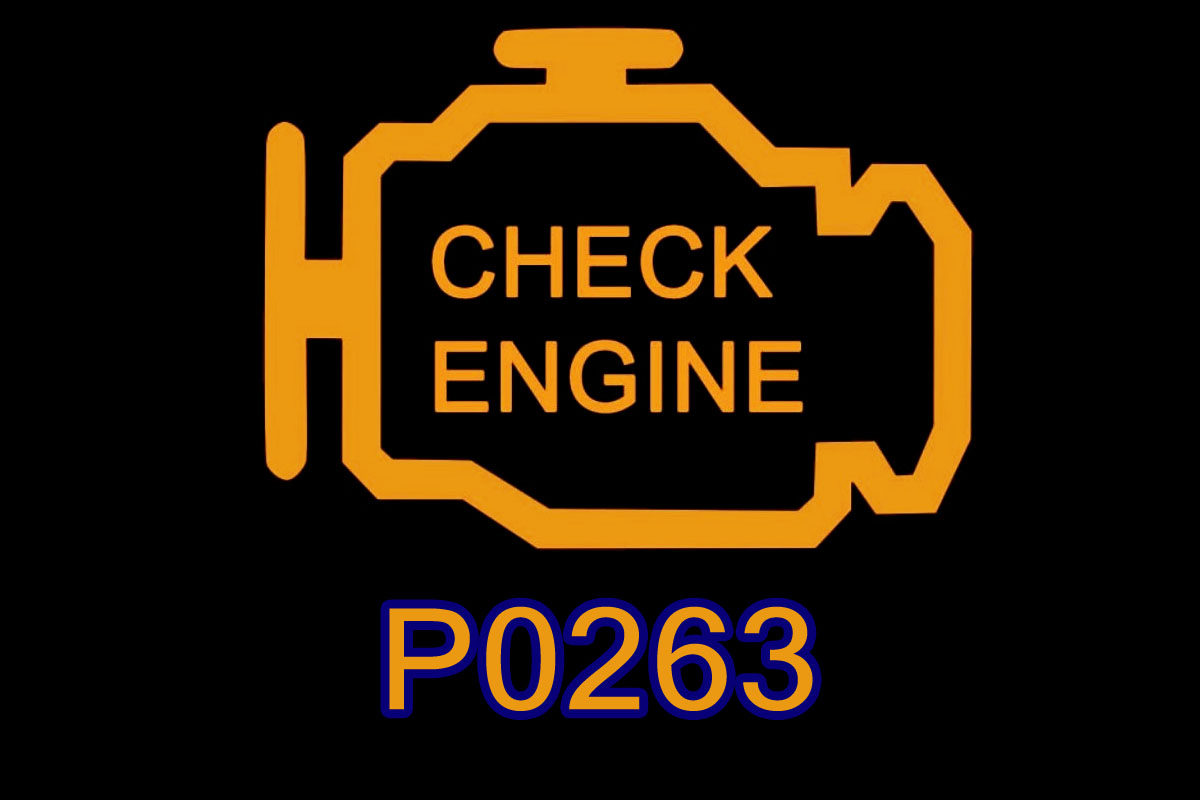
P0263 Cylinder 1 Contribution / Balance Fault
P0263 is an OBD-II diagnostic trouble code that means the engine control module (ECM/PCM) has detected that cylinder #1 is not contributing the expected amount of power compared with the other cylinders.
In practical terms, the engine computer has detected an imbalance in the way cylinder #1 is participating in combustion. The cylinder may be producing less torque than expected, or its combustion behavior may be significantly different from the other cylinders.
P0263 does not automatically mean that the cylinder #1 fuel injector is faulty. An injector problem is certainly one possibility, but ignition, fuel pressure, compression, valve operation, engine timing, wiring, or other combustion-related problems can produce the same code.
What Does “Contribution / Balance Fault” Mean?
During normal engine operation, every cylinder should contribute a relatively similar amount of torque to the crankshaft.
The ECM monitors changes in engine speed and other available parameters to determine whether individual cylinders are contributing as expected.
If cylinder #1 produces noticeably less power than the ECM expects, the control module can identify a cylinder contribution or balance problem and store P0263.
The cylinder does not necessarily have to stop firing completely. It may still be operating, but its contribution can be weaker than that of the other cylinders.
This is why P0263 should not immediately be interpreted as a complete cylinder failure.
Is P0263 an Injector Fault?
Not necessarily.
The injector is an important suspect, particularly on diesel engines, but P0263 identifies an abnormal cylinder contribution rather than a specific failed component.
Possible injector-related causes include:
-
Dirty or restricted injector
-
Worn injector
-
Poor injector spray pattern
-
Incorrect fuel delivery
-
Internal injector fault
-
Injector coding or calibration problem
-
Injector wiring problem
-
Poor injector connector contact
However, cylinder #1 can also lose power for reasons that have nothing to do with the injector.
Common Causes of P0263
Fuel injector problems
A cylinder #1 injector that is worn, contaminated, restricted, or mechanically defective may not deliver fuel correctly.
On modern diesel engines, injector correction values and coding can also be important. If an injector has been replaced, the required calibration or coding procedure should be performed according to the vehicle manufacturer's instructions.
Injector wiring or connector problems
The injector may be functioning correctly while its electrical connection is not.
Possible problems include:
-
Damaged wiring
-
High resistance
-
Broken wire strands
-
Loose terminals
-
Corrosion
-
Poor connector contact
-
Intermittent connection
-
Short circuit
An electrical injector problem may also generate a separate injector circuit DTC.
Low fuel pressure
Insufficient fuel pressure can prevent cylinder #1 from producing normal combustion.
Possible causes include:
-
Weak fuel pump
-
Restricted fuel filter
-
Fuel pressure regulator problem
-
Fuel pressure sensor problem
-
Fuel contamination
-
Fuel system restriction
If fuel pressure is low for the entire engine, several cylinders may be affected.
Ignition problems on gasoline engines
Gasoline engines can develop a cylinder contribution problem because of weak or missing ignition.
Possible causes include:
-
Worn spark plug
-
Fouled spark plug
-
Defective ignition coil
-
Coil connector problem
-
Ignition wiring fault
-
Weak spark
An ignition component may work adequately at idle but fail under load when the required ignition voltage increases.
Low compression
Cylinder #1 must have adequate compression to produce normal combustion.
Low compression can result from:
-
Worn piston rings
-
Damaged piston
-
Burned valve
-
Valve sealing problem
-
Head gasket failure
-
Excessive cylinder wear
A compression test can determine whether cylinder #1 is mechanically weaker than the other cylinders.
Valve and valvetrain problems
A valve that does not open or close correctly can affect both cylinder filling and compression.
Possible causes include:
-
Damaged valve
-
Worn rocker arm
-
Lifter problem
-
Camshaft problem
-
Valve spring failure
-
Other valvetrain damage
Incorrect engine timing
Incorrect camshaft timing can alter combustion and cylinder contribution.
Possible causes include:
-
Timing chain problems
-
Timing belt installation error
-
Chain stretch
-
Camshaft timing problems
-
Variable valve timing malfunction
If engine timing is incorrect, other cylinders may also show abnormal behavior.
Intake or EGR problems
Airflow problems can also influence cylinder combustion.
Depending on the engine design, an intake restriction, excessive carbon deposits, EGR malfunction, or air-distribution problem can cause abnormal combustion and cylinder imbalance.
Symptoms of P0263
The symptoms depend on the severity and underlying cause.
Possible symptoms include:
-
Check Engine Light
-
Rough idle
-
Engine vibration
-
Uneven engine operation
-
Hesitation
-
Poor acceleration
-
Reduced engine power
-
Increased fuel consumption
-
Misfire
-
Hard starting
-
Engine stalling
-
Increased exhaust emissions
-
Abnormal exhaust smoke on some diesel engines
In a mild case, the driver may notice only the Check Engine Light.
In a more serious case, the engine can feel as though one cylinder is significantly weaker than the others.
P0263 and Misfire
P0263 and a misfire code can occur together, but they describe different conditions.
A misfire means combustion in a cylinder is not occurring correctly.
A contribution/balance fault means the ECM has detected that the cylinder's contribution to engine operation is different from what it expects.
Therefore, P0263 does not necessarily mean that the cylinder is completely misfiring.
If P0301 – Cylinder 1 Misfire Detected is also stored, both codes should be diagnosed together.
The misfire may be caused by the injector, ignition system, compression, valve operation, timing, or another problem.
How Is P0263 Diagnosed?
A proper diagnosis should compare cylinder #1 with the other cylinders rather than replacing parts based solely on the DTC.
1. Scan all diagnostic codes
Begin by checking all active, pending, and stored DTCs.
Pay particular attention to codes related to:
-
Fuel injectors
-
Misfires
-
Fuel pressure
-
Camshaft position
-
Crankshaft position
-
Engine timing
-
EGR
-
Air/fuel mixture
-
Ignition
Additional codes can significantly narrow the diagnosis.
2. Check freeze-frame data
Freeze-frame information shows the conditions present when the ECM recorded P0263.
Depending on the vehicle, useful information may include:
-
Engine RPM
-
Engine load
-
Coolant temperature
-
Fuel pressure
-
Battery voltage
-
Throttle position
-
Vehicle speed
This can help determine whether the problem occurs at idle, during acceleration, under heavy load, or only when the engine is cold or hot.
3. Check cylinder contribution data
If the scan tool supports cylinder balance, contribution, or smooth-running measurements, compare cylinder #1 with the other cylinders.
The acceptable values are manufacturer-specific.
There is no universal cylinder contribution value that applies to every engine.
4. Inspect the cylinder #1 injector
The injector should be examined for electrical and mechanical problems.
Depending on the engine, testing may include:
-
Injector resistance
-
Current draw
-
Injector activation
-
Fuel delivery
-
Correction values
-
Return-flow testing
-
Spray pattern testing
Diesel injectors may require specialized equipment for proper testing.
5. Inspect injector wiring and connector
Check the cylinder #1 injector connector and wiring harness.
Look for:
-
Corrosion
-
Loose terminals
-
Damaged pins
-
Broken wires
-
Chafed insulation
-
Oil contamination
-
Water intrusion
-
Previous wiring repairs
An intermittent wiring problem can be especially difficult to identify because the fault may disappear when the vehicle is stationary.
6. Check fuel pressure
Fuel pressure should be measured under the conditions specified by the manufacturer.
If fuel pressure is below specification, the injector may not be able to deliver fuel correctly even if the injector itself is functioning normally.
7. Check ignition on gasoline engines
Inspect the spark plug and ignition coil for cylinder #1.
When appropriate, technicians can swap a coil or plug with another cylinder and monitor whether the problem moves with the component.
This can help distinguish an ignition fault from a cylinder-specific mechanical problem.
8. Perform a compression test
If fuel and ignition systems appear normal, compression should be compared between cylinders.
A significantly lower compression reading on cylinder #1 can indicate a mechanical problem.
A leak-down test can provide additional information about where compression is being lost.
9. Check valve operation and engine timing
If compression or cylinder operation is abnormal, the valve train and engine timing should be inspected.
Camshaft timing, variable valve timing, and cam/crank synchronization may need to be evaluated depending on the engine.
10. Consider the ECM only after other tests
The ECM can potentially contribute to injector-control problems, but it should not be the first component blamed.
The injector, wiring, connectors, fuel system, ignition system, mechanical condition, and timing should be properly tested before condemning the ECM.
Can an Injector Swap Help?
In some engines, swapping the cylinder #1 injector with another cylinder can be a useful diagnostic technique.
If the problem moves to the cylinder containing the suspected injector, the injector becomes a much stronger suspect.
However, this procedure is not appropriate for every engine or injector system.
Some modern injectors require individual coding or calibration, and certain high-pressure diesel systems require specific procedures and equipment.
P0263 vs Injector Circuit Codes
P0263 should not be confused with a cylinder #1 injector circuit code.
An injector circuit code indicates that the ECM has detected an abnormal electrical condition in the injector circuit.
P0263 indicates an abnormal cylinder contribution or balance condition.
This means P0263 can occur even when the injector's electrical circuit is functioning correctly.
For example, low compression or a valve problem can reduce cylinder #1's power contribution without causing an injector circuit fault.
Can You Drive With P0263?
Driving with P0263 depends on the severity of the symptoms.
If the engine runs smoothly and the code is stored without noticeable performance problems, a short trip to a repair facility may be possible.
However, driving should be minimized if the engine has:
-
Severe vibration
-
Strong misfire
-
Significant power loss
-
Frequent stalling
-
Heavy smoke
-
Unusual mechanical noise
-
Flashing Check Engine Light
A severe misfire can cause additional damage. On gasoline engines, unburned fuel entering the catalytic converter can cause excessive temperatures and potentially damage the converter.
The Correct Way to Repair P0263
There is no single repair for P0263 – Cylinder 1 Contribution / Balance Fault.
The repair depends entirely on what is causing cylinder #1 to produce abnormal power.
Possible repairs can include:
-
Replacing a defective injector
-
Repairing injector wiring
-
Repairing injector connectors
-
Correcting injector coding
-
Replacing a spark plug
-
Replacing an ignition coil
-
Repairing a fuel-pressure problem
-
Cleaning or repairing an intake/EGR system
-
Correcting valve or valvetrain problems
-
Repairing low compression
-
Correcting engine timing
The important diagnostic principle is that P0263 identifies an abnormal cylinder contribution, not a failed part.
Cylinder #1 should be compared with the other cylinders, and the injector, electrical circuit, fuel supply, ignition system where applicable, compression, valve operation, and engine timing should be evaluated systematically.
Once the underlying cause is identified, the appropriate component or system can be repaired instead of simply replacing the injector and hoping the code disappears.