TR
TR EN
EN

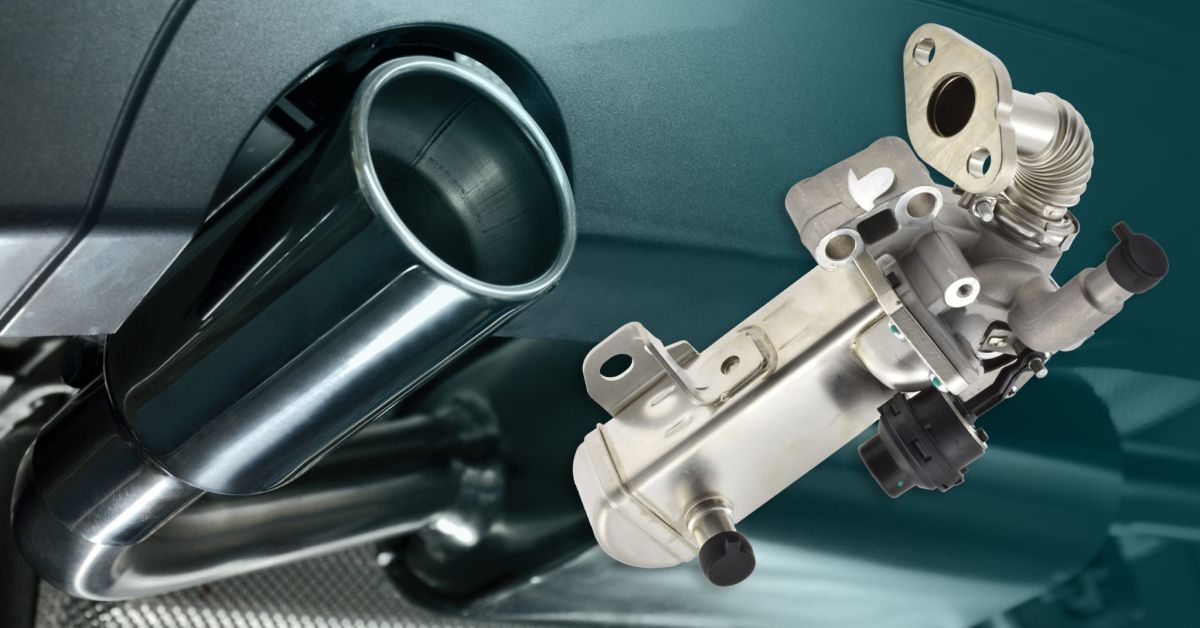
What Is an EGR Cooler? Failure Symptoms and Causes
The EGR cooler is an important component of the exhaust gas recirculation system, particularly on modern diesel engines. Its primary purpose is to reduce the temperature of exhaust gases before they are sent back into the intake system.
At first glance, the EGR cooler may look like a relatively simple heat exchanger. However, it plays an important role in emissions control and engine thermal management. When it develops an internal leak, becomes restricted, or cannot transfer heat properly, it can cause symptoms ranging from increased emissions and poor engine performance to coolant loss and, in severe cases, serious engine damage.
What Does an EGR Cooler Do?
EGR stands for Exhaust Gas Recirculation.
The EGR system takes a controlled amount of exhaust gas and sends it back into the engine's intake. Because exhaust gas contains less oxygen than fresh air, introducing it into the combustion process reduces the amount of oxygen available for combustion and helps lower peak combustion temperatures.
Lower combustion temperatures help reduce the formation of nitrogen oxides (NOx).
The problem is that exhaust gases can be extremely hot.
This is where the EGR cooler becomes important.
The cooler uses the engine's cooling system, or in some designs another cooling circuit, to transfer heat away from the exhaust gases before they enter the intake.
The basic process is:
Exhaust gas → EGR cooler → cooled exhaust gas → EGR valve → intake manifold
The exact arrangement varies between engines.
How Does an EGR Cooler Work?
An EGR cooler is essentially a heat exchanger.
Hot exhaust gas flows through internal passages while engine coolant flows through separate passages around them. The two fluids do not normally mix. Heat moves from the exhaust gas through the cooler's metal surfaces into the coolant.
The exhaust gas therefore leaves the cooler at a lower temperature.
Depending on the engine design, the EGR cooler may include:
-
Internal exhaust passages
-
Coolant passages
-
Heat-exchange surfaces
-
Coolant connections
-
Exhaust connections
-
Bypass passages or an EGR cooler bypass valve
Some modern systems use a bypass mechanism that allows exhaust gas to bypass the cooler under certain operating conditions.
This is particularly useful during cold starts because cooling the exhaust gas too much can slow engine warm-up.
Where Is the EGR Cooler Located?
The EGR cooler is normally installed between the exhaust side of the engine and the EGR system.
Its exact location depends heavily on the engine design.
It may be found:
-
Near the exhaust manifold
-
Close to the turbocharger
-
Between the exhaust manifold and EGR valve
-
Near the intake side of the engine
-
Integrated into a larger EGR module
Because the EGR cooler carries both hot exhaust gas and engine coolant, it is exposed to considerable thermal stress.
What Happens When an EGR Cooler Fails?
There are several different ways an EGR cooler can fail.
The most important distinction is whether the problem is caused by:
An internal coolant leak
or
An exhaust-side restriction or heat-transfer problem.
An internal leak is particularly serious because coolant can enter the exhaust stream or, depending on the design and operating conditions, eventually reach the intake system.
A damaged cooler can therefore create symptoms that initially appear to be caused by the EGR valve, head gasket, turbocharger or another component.
EGR Cooler Failure Symptoms
Unexplained coolant loss
One of the most important warning signs is coolant disappearing without an obvious external leak.
If the coolant level continues to fall and there are no visible leaks from hoses, the radiator, water pump or other components, an internal EGR cooler leak should be considered on engines equipped with a liquid-cooled EGR cooler.
The coolant may be entering the exhaust system rather than leaking onto the ground.
White smoke from the exhaust
A leaking EGR cooler can allow coolant to enter the exhaust gas path.
When coolant reaches the hot exhaust system, it can produce white or steam-like exhaust smoke.
Persistent white smoke, particularly when accompanied by coolant loss, should not be dismissed as a normal condensation effect.
Sweet smell from the exhaust
Engine coolant contains additives that can produce a distinctive sweet odor.
If coolant is entering the exhaust system through a failed EGR cooler, a sweet smell may sometimes be noticed from the exhaust.
This symptom is not exclusive to an EGR cooler, however. Other cooling-system or engine problems can produce similar signs.
Coolant level drops without an obvious external leak
This combination is particularly important:
-
Coolant level repeatedly decreases
-
No obvious external leak is found
-
Exhaust smoke or steam is present
-
The engine otherwise appears to operate normally
In a vehicle equipped with an EGR cooler, an internal cooler leak should be investigated.
Engine overheating
An EGR cooler itself is not normally responsible for the engine's primary cooling, but a significant internal coolant leak can reduce coolant quantity.
If enough coolant is lost, engine temperature can rise.
Overheating should always be treated seriously because continued operation can result in cylinder-head, gasket or other engine damage.
Rough engine operation
A severe EGR cooler problem can affect the amount and condition of gas entering the intake.
If coolant reaches the intake side, engine combustion can also be affected.
Rough running therefore may occur, although it is not a specific EGR cooler symptom.
Poor engine performance
An EGR system that is not operating correctly can affect combustion and airflow.
Depending on the engine and failure mode, the driver may notice:
-
Reduced acceleration
-
Poor throttle response
-
Reduced power
-
Uneven operation
-
Increased fuel consumption
-
Limp mode
However, these symptoms can also be caused by the EGR valve, MAF sensor, boost system, turbocharger or other components.
Check Engine Light
The engine control module monitors EGR operation using different sensors and operating parameters.
A problem with the cooler may therefore trigger a diagnostic trouble code, although the code does not necessarily say "EGR cooler failed."
The ECU may instead detect an abnormal EGR flow, temperature, pressure or related operating condition.
What Causes an EGR Cooler to Fail?
Thermal stress
The EGR cooler is repeatedly exposed to very high exhaust temperatures.
Repeated heating and cooling cycles can eventually cause fatigue, cracking or deformation of the internal structure.
Coolant contamination or poor maintenance
Old or contaminated coolant can contribute to corrosion and deterioration of cooling-system components.
Using the wrong coolant or mixing incompatible coolant types can also create problems within the cooling system.
Carbon and soot accumulation
Exhaust gas contains soot and other combustion byproducts.
Over time, deposits can accumulate inside EGR passages and reduce the effective flow area.
A restricted cooler may have difficulty transferring heat correctly and can increase EGR system resistance.
Internal corrosion
Corrosion can damage the thin metal surfaces separating the exhaust and coolant passages.
Once these surfaces become compromised, coolant can begin entering the exhaust side.
Coolant freezing
If the cooling system contains inadequate antifreeze protection, freezing coolant can expand and potentially damage components.
This is another reason why the correct coolant mixture is important.
Manufacturing or material defects
In some cases, an EGR cooler may fail because of a material or manufacturing problem.
This can occur even when maintenance has been performed correctly.
Can an EGR Cooler Cause Coolant to Disappear?
Yes.
This is one of the most important EGR cooler failure scenarios.
If an internal wall inside the cooler develops a crack or leak, coolant can enter the exhaust gas passage.
Because the coolant may leave through the exhaust system, there may be no visible puddle under the vehicle.
This can make the problem difficult to identify.
A vehicle with unexplained coolant loss should therefore be investigated for all possible internal and external leaks rather than assuming that the coolant is simply evaporating.
Can an EGR Cooler Cause White Smoke?
Yes.
If coolant leaks into the exhaust gas passage, it can be vaporized by the hot exhaust system and produce white smoke or steam.
However, white smoke does not automatically mean the EGR cooler is defective.
Other possible causes include:
-
Head gasket failure
-
Cylinder-head damage
-
Cracked cylinder head
-
Cracked engine block
-
Coolant entering a combustion chamber
-
Normal condensation during cold weather
The diagnostic process must determine where the coolant is actually going.
EGR Cooler vs EGR Valve
The EGR cooler and EGR valve perform completely different jobs.
The EGR cooler controls exhaust gas temperature.
The EGR valve controls the amount of exhaust gas entering the intake system.
A dirty or stuck EGR valve can cause poor acceleration, rough running and EGR-related fault codes.
A leaking EGR cooler, on the other hand, can cause coolant loss and potentially white exhaust smoke.
The two components can therefore produce overlapping symptoms, which is why simply replacing the EGR valve is not always the correct repair.
Can an EGR Cooler Become Blocked?
Yes.
Soot and carbon deposits can accumulate inside the exhaust passages.
A heavily restricted cooler can reduce EGR flow and increase pressure through the EGR system.
The ECU may detect that the actual EGR flow does not match the expected value.
However, a restricted EGR cooler is only one possible cause of an EGR flow problem. The EGR valve, intake passages, differential pressure sensors, MAF readings and other components may also be involved.
How Is an EGR Cooler Diagnosed?
Diagnosis should begin by determining what symptom is actually present.
If coolant is disappearing, the cooling system should first be checked for external leaks.
A technician may then inspect:
-
Coolant level and condition
-
Cooling-system pressure
-
EGR cooler connections
-
EGR passages
-
Exhaust smoke
-
EGR-related sensor readings
-
EGR valve operation
-
Intake and exhaust passages
If an internal cooler leak is suspected, the cooler may need to be isolated and tested according to the manufacturer's service procedure.
A cooling-system pressure test can be useful, but the exact test procedure varies by vehicle.
On some engines, additional diagnostic methods may be necessary to distinguish an EGR cooler leak from a head-gasket or cylinder-head problem.
Can an EGR Cooler Be Cleaned?
Sometimes an EGR cooler with carbon deposits can be cleaned, depending on its construction and the manufacturer's repair procedure.
Cleaning may restore flow if the primary problem is deposit buildup.
However, cleaning cannot repair a cracked heat exchanger or a damaged internal wall.
If the cooler is leaking coolant internally, replacement is normally required.
Aggressive cleaning methods can also damage delicate internal passages, so the manufacturer's recommendations should be followed.
Can You Drive With a Bad EGR Cooler?
This depends on the type and severity of the failure.
If there is evidence of coolant loss, white smoke, overheating or an internal coolant leak, continued driving can be risky.
A serious coolant leak can eventually cause engine overheating.
In severe cases, coolant entering the engine through the intake can create additional mechanical problems.
If the only symptom is an EGR-related fault code with no coolant loss or overheating, the vehicle may still be driveable, but the cause should be diagnosed rather than simply clearing the code.
Does an EGR Cooler Failure Mean the Engine Is Damaged?
No.
A failed EGR cooler does not automatically mean that the engine itself is damaged.
If the problem is identified early, replacing the cooler may resolve the issue without internal engine repair.
The situation becomes more serious when the vehicle has been driven for an extended period with substantial coolant loss or overheating.
That is why unexplained coolant loss should never be ignored.
The Most Important EGR Cooler Warning Signs
When several of these symptoms appear together, an EGR cooler deserves particular attention:
-
Unexplained coolant loss
-
No obvious external coolant leak
-
Persistent white exhaust smoke
-
Sweet smell from the exhaust
-
EGR-related fault codes
-
Rough running
-
Reduced engine performance
-
Increasing engine temperature
-
Coolant contamination or abnormal pressure
No single symptom proves that the EGR cooler has failed. The same symptoms can be produced by other engine and emissions-system problems.
The correct approach is to identify whether the problem is related to EGR flow, exhaust temperature, coolant leakage, electrical control, or an underlying engine fault before replacing components.
An EGR cooler is a relatively specialized component, but its failure can have consequences far beyond the emissions system. In particular, coolant loss combined with white exhaust smoke is a warning sign that should be investigated promptly, because continuing to drive while the engine is losing coolant can turn a manageable repair into a much more expensive engine problem.