TR
TR EN
EN

Why Does the Automatic Transmission Warning Light Come On? What Does It Mean?
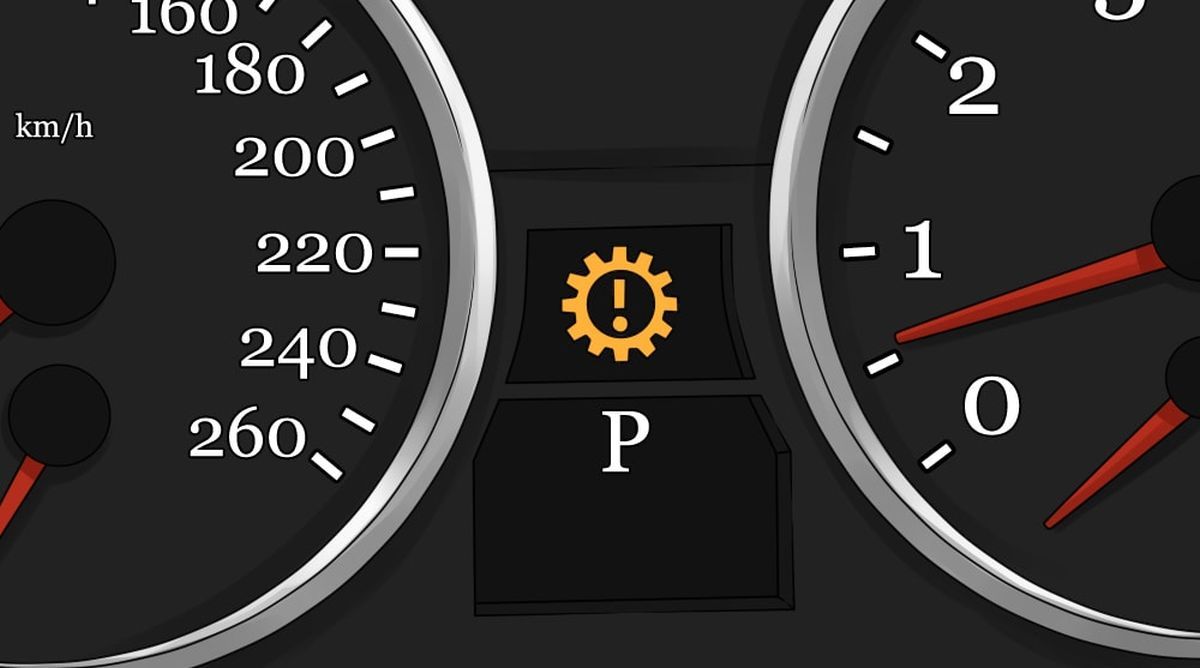
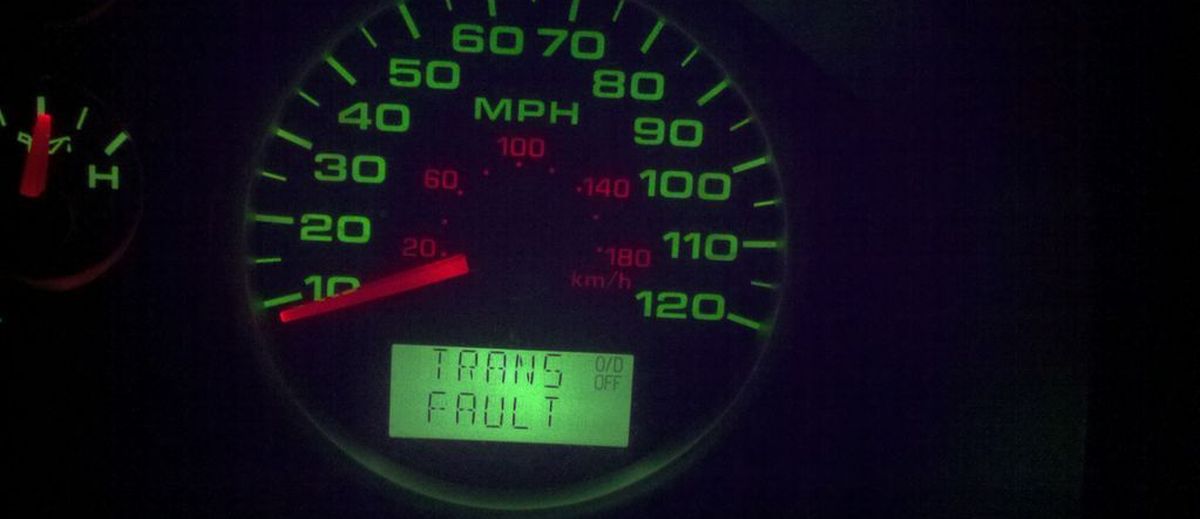
An automatic transmission warning light is one of the dashboard warnings that should not be ignored. Depending on the vehicle, it may appear as a gear symbol, transmission symbol, AT warning, transmission temperature warning, or a gear-shaped icon with an exclamation mark.
The warning does not always mean that the transmission itself has suffered a major mechanical failure. It can be triggered by a relatively simple electrical problem, an incorrect transmission fluid level, excessive temperature, a faulty sensor, a solenoid problem, or a communication fault between the transmission control module and other vehicle systems.
The important point is that the warning light is an indication that the transmission system has detected something outside its expected operating range.
What Does the Automatic Transmission Warning Light Mean?
The warning light generally means that the vehicle's transmission control system has detected a fault or abnormal operating condition.
Modern automatic transmissions are electronically controlled. The transmission control module or the engine control module continuously monitors parameters such as:
-
Transmission fluid temperature
-
Hydraulic pressure
-
Input and output shaft speed
-
Gear position
-
Solenoid operation
-
Clutch operation
-
Torque converter operation
-
Shift timing
-
Gear ratio
-
Communication between control modules
If the measured values do not correspond to the expected values, the system can store a diagnostic trouble code and illuminate the warning light.
In some vehicles, the transmission may then enter limp mode to protect itself.
What Does the Transmission Warning Light Look Like?
There is no single universal transmission warning symbol.
Depending on the manufacturer, you may see:
-
A gear-shaped symbol
-
A gear with an exclamation mark
-
The letters AT or A/T
-
A transmission-shaped warning symbol
-
A transmission temperature symbol
-
A flashing gear indicator
-
A Check Engine Light together with transmission-related warnings
Because manufacturers use different dashboard designs, the meaning of a particular symbol should always be interpreted according to the vehicle's owner's manual.
The Most Common Reasons for the Warning Light
There are many possible causes, and the severity can vary considerably.
Low or incorrect transmission fluid level
Transmission fluid is essential for lubrication, cooling, and hydraulic pressure.
If the fluid level is too low, the transmission may not be able to maintain the hydraulic pressure required for normal operation.
This can result in:
-
Delayed engagement
-
Harsh shifting
-
Slipping
-
Gear selection problems
-
Transmission overheating
-
Warning light activation
A low fluid level can also indicate a leak, so simply adding fluid without finding the source may only provide a temporary solution.

Transmission fluid deterioration
Transmission fluid does not remain in perfect condition indefinitely.
Heat, friction, contamination, and age can gradually alter its properties.
Degraded fluid may affect hydraulic pressure and clutch operation and can contribute to poor shifting.
However, transmission fluid should not be replaced based solely on its color. The correct fluid specification, service history, mileage, and manufacturer's maintenance procedure should all be considered.
Transmission overheating
Excessive transmission temperature is another important reason for a warning light.
Automatic transmissions generate considerable heat, especially during:
-
Heavy traffic
-
Long uphill driving
-
Towing
-
Aggressive acceleration
-
High ambient temperatures
-
Repeated stop-and-go operation
If the transmission becomes excessively hot, the vehicle may activate a warning and modify transmission operation to reduce the risk of damage.
Faulty transmission temperature sensor
The transmission control system needs accurate temperature information.
If the temperature sensor sends an incorrect signal, the control module may believe that the transmission is overheating or operating at an abnormal temperature.
This can trigger a warning even when the actual transmission temperature is normal.
Faulty Shift Solenoids
Automatic transmissions use electrically controlled solenoids to manage hydraulic fluid flow.
The control module activates these solenoids to control gear changes and clutch operation.
A faulty or stuck solenoid can cause:
-
Hard shifting
-
Delayed shifting
-
Missing gears
-
Gear selection problems
-
Transmission slipping
-
Limp mode
-
Warning light activation
A solenoid-related fault does not necessarily mean that the entire transmission needs to be replaced.
Electrical and Wiring Problems
Not every transmission warning is caused by a mechanical transmission problem.
Electrical faults can be particularly deceptive.
Possible causes include:
-
Damaged wiring
-
Corroded connectors
-
Loose terminals
-
Poor ground connections
-
Water intrusion
-
Blown fuses
-
Voltage problems
-
Communication faults
A damaged wire can intermittently interrupt communication with a sensor or solenoid and cause the transmission warning to appear and disappear.
Weak Battery or Charging System Problems
Automatic transmissions depend heavily on stable electrical voltage.
A weak battery, faulty alternator, poor battery connection, or voltage drop can cause control modules to behave abnormally.
In some vehicles, low system voltage can generate several seemingly unrelated transmission codes.
Therefore, if transmission warnings appear together with multiple electrical or communication-related warnings, the vehicle's battery and charging voltage should also be checked.
Faulty Transmission Speed Sensor
Transmission speed sensors provide information about shaft speed to the control module.
The system uses this information to determine whether the transmission is actually achieving the expected gear ratio.
If a speed sensor fails or sends an implausible signal, the transmission may shift incorrectly or enter a protective mode.
Possible symptoms include:
-
Erratic shifting
-
Delayed gear changes
-
Incorrect speed-related behavior
-
Transmission warning light
-
Limp mode
-
Gear ratio fault codes
Problems With the Transmission Control Module
The transmission control module, often called the TCM, manages many aspects of automatic transmission operation.
A problem with the module itself is possible, but it should not be assumed simply because a transmission warning appears.
Before condemning the TCM, technicians should check:
-
Power supply
-
Grounds
-
Communication lines
-
Wiring
-
Connectors
-
Sensor signals
-
Solenoid circuits
-
Software/calibration
-
Stored diagnostic codes
Replacing a control module without identifying the original cause can be an unnecessarily expensive repair.
Mechanical Transmission Problems
A warning light can also indicate a genuine mechanical problem.
Depending on the transmission design, possible causes include:
-
Worn clutch packs
-
Valve body problems
-
Hydraulic pressure problems
-
Damaged bearings
-
Torque converter faults
-
Internal gear damage
-
Excessive internal wear
-
Damaged transmission components
Mechanical faults are more likely when the warning light is accompanied by obvious drivability symptoms such as severe slipping, grinding, strong impacts during shifting, or loss of certain gears.
What Does Limp Mode Mean?
One of the most concerning symptoms associated with a transmission warning is limp mode.
When the transmission control system detects a potentially damaging fault, it may intentionally restrict transmission operation.
The vehicle may:
-
Remain in one gear
-
Start in a higher gear
-
Refuse to shift normally
-
Have limited acceleration
-
Respond slowly to throttle input
-
Display a transmission warning
Limp mode is not necessarily proof that the transmission is mechanically destroyed.
It is often a protective strategy designed to allow the vehicle to reach a safe location or workshop while reducing further stress on the transmission.
Why Does the Warning Light Sometimes Go Away After Restarting?
This is a common source of confusion.
A fault may occur only under specific conditions, such as high temperature, high load, or a particular gear change.
After the engine is switched off and restarted, the condition may temporarily disappear.
The warning may therefore go out even though the underlying problem has not been repaired.
The diagnostic code may remain stored in the vehicle's memory.
For this reason, a warning that disappears after restarting should not automatically be considered unimportant.
Can You Drive With the Transmission Warning Light On?
The answer depends on the warning and the vehicle's behavior.
If the transmission is shifting normally and the warning appears without any other symptoms, it may be possible to drive a short distance to a repair facility.
However, continued normal use should not be assumed to be safe.
Driving should be stopped as soon as safely possible if you experience:
-
Severe slipping
-
Loud grinding or knocking
-
Strong burning smell
-
Major fluid leakage
-
Complete loss of drive
-
Severe impact during gear changes
-
Repeated loss of gears
-
Very high transmission temperature
-
Severe limp mode
Continuing to drive with a serious transmission fault can turn a relatively manageable repair into a much more expensive one.
Does the Warning Light Always Mean the Transmission Needs Rebuilding?
No.
This is one of the most important points.
A transmission warning light can be caused by something as simple as:
-
A sensor
-
A solenoid
-
Wiring
-
A connector
-
Low fluid
-
Incorrect fluid
-
Excessive temperature
-
Battery voltage
At the other end of the spectrum, it can indicate internal mechanical damage.
Therefore, the warning light itself does not determine the repair.
The stored fault codes, live data, transmission behavior, fluid condition, hydraulic pressure, and electrical tests are needed to establish the actual cause.
How Is an Automatic Transmission Warning Diagnosed?
The first step should be a proper diagnostic scan.
A basic engine-code scanner may not be enough. The technician should be able to communicate with the transmission control system and read transmission-specific fault codes.
The diagnosis may then include:
Reading stored and pending codes
The exact code can indicate whether the problem concerns a sensor, solenoid, pressure circuit, gear ratio, temperature, communication network, or another system.
Checking transmission live data
Live data can reveal abnormal values from:
-
Input speed sensors
-
Output speed sensors
-
Temperature sensors
-
Gear position sensors
-
Solenoid commands
-
Actual versus requested gear
-
Transmission pressure parameters
Checking fluid level and condition
The correct procedure depends on the transmission. Some transmissions require a specific temperature range and procedure for checking fluid level.
Simply opening a filler plug or measuring fluid when the transmission is cold may give an incorrect result on certain designs.
Inspecting the wiring
The transmission harness and connectors should be checked for corrosion, damage, loose terminals, oil contamination, and broken wires.
Checking electrical voltage
Battery and charging-system voltage should be verified, especially when multiple electronic systems are reporting faults.
Checking hydraulic pressure
If a pressure-related problem is suspected, pressure testing can help determine whether the transmission is producing the required hydraulic pressure.
Can a Transmission Warning Light Be Caused by an Engine Problem?
Yes.
Modern vehicles share information between the engine, transmission, ABS, body control, and other modules.
A problem in one system can sometimes influence another.
For example, an engine torque-management problem or communication failure can affect transmission control.
This is why diagnosing only the transmission module without considering other stored codes can sometimes lead to the wrong conclusion.
Automatic Transmission Warning Light vs Check Engine Light
These warnings are not necessarily interchangeable.
The Check Engine Light can be triggered by many engine and emissions-related problems, but it can also illuminate because of a transmission-related fault.
A dedicated transmission warning light is generally more directly associated with the transmission or its control system.
Some vehicles use only the Check Engine Light for transmission faults, while others have a dedicated transmission warning.
What Should You Do When the Warning Light Comes On?
If the vehicle still drives normally, avoid aggressive acceleration, towing, or unnecessarily heavy transmission loads until the cause is identified.
Then have the vehicle scanned with equipment capable of accessing the transmission control module.
Do not immediately approve an expensive transmission replacement based solely on the warning light.
The correct diagnostic sequence is more important than the warning itself:
Warning light → diagnostic codes → live data → electrical/fluid checks → mechanical testing → repair
Final Thoughts
An automatic transmission warning light means that the vehicle has detected an abnormal condition in the transmission system or its control system. It does not automatically mean that the transmission is completely failed.
Low or incorrect fluid, overheating, faulty sensors, shift solenoids, wiring problems, voltage issues, control-module faults, and genuine internal transmission damage can all produce warnings.
The symptoms accompanying the warning are extremely important. A vehicle that simply stores a sensor-related code is very different from one that is slipping, grinding, overheating, or losing gears.
The safest approach is therefore to diagnose the transmission systematically and determine why the warning was triggered before replacing any major transmission component.