TR
TR EN
EN

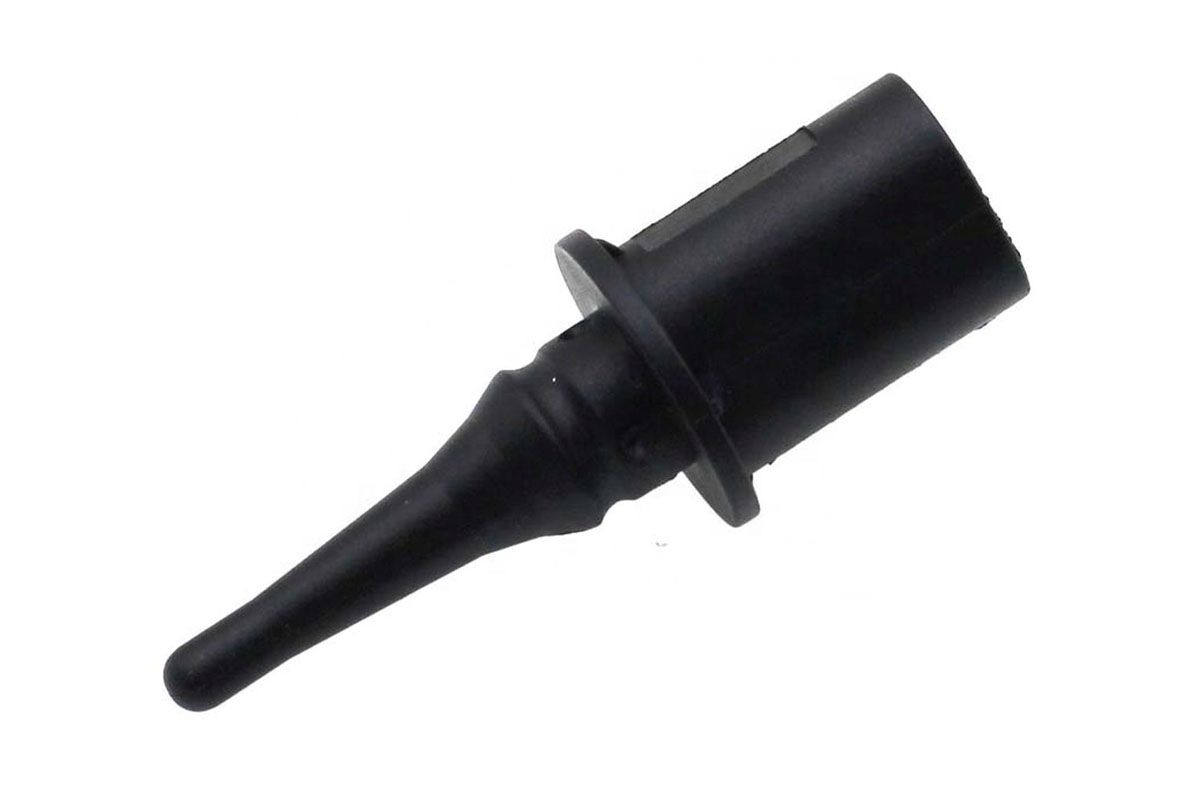
What Is the Ambient Air Temperature Sensor? AAT Sensor Failure Symptoms and Causes
The Ambient Air Temperature (AAT) Sensor is a sensor that measures the temperature of the air surrounding the vehicle and sends this information to the vehicle's electronic control systems.
It is commonly referred to as the Ambient Air Temperature Sensor, Outside Air Temperature Sensor, or simply AAT Sensor.
Unlike the engine coolant temperature sensor or intake air temperature sensor, the AAT sensor measures the temperature of the air outside the vehicle.
The information from this sensor can be used by several systems, including the engine control module, climate control system and instrument cluster. Depending on the vehicle, it may also contribute to calculations related to fuel management, air density, emissions and other operating conditions.
A faulty AAT sensor can therefore cause an incorrect outside-temperature display, unusual climate-control behavior and, on some vehicles, diagnostic trouble codes.
How Does the AAT Sensor Work?
Most ambient air temperature sensors use an NTC thermistor (Negative Temperature Coefficient).
Its electrical resistance changes according to temperature.
As the surrounding air becomes warmer, the resistance of the sensor generally decreases.
As the air becomes colder, the resistance generally increases.
The vehicle's control module monitors this change in electrical resistance or voltage and converts it into a temperature value.
For example, if the vehicle has been parked outside for several hours, the AAT sensor reading should normally be reasonably close to the actual outdoor temperature.
When the vehicle starts moving, however, the sensor reading may change gradually because the sensor is affected by airflow, engine heat and its mounting location.
Where Is the Ambient Air Temperature Sensor Located?
The AAT sensor is normally positioned where it can measure outside air without being excessively affected by engine heat.
Common locations include:
-
Behind the front grille
-
Inside the front bumper
-
Near the radiator support
-
Behind the front bumper cover
-
Near the front air intake
-
Under the front section of the vehicle
The exact position depends on the vehicle manufacturer.
The sensor is usually placed away from direct engine heat because the purpose is to measure ambient air temperature, not engine-compartment temperature.
What Is the AAT Sensor Used For?
The AAT sensor can have different functions depending on the vehicle.
One of its most obvious functions is providing the outside-temperature information displayed on the instrument cluster.
The sensor can also be used by the climate-control system to determine how the heating and air-conditioning system should operate.
On some vehicles, the engine control module may also use ambient temperature information as one of several inputs for calculating air density and adjusting engine operation.
Possible applications include:
-
Outside temperature display
-
Automatic climate control
-
Air-conditioning strategy
-
Engine-management calculations
-
Fuel-control adjustments
-
Emissions strategies
-
Cold-weather operating strategies
-
Air-density calculations
Not every vehicle uses the AAT signal for all of these functions.
AAT Sensor Failure Symptoms
A faulty ambient air temperature sensor can produce symptoms ranging from an incorrect temperature display to engine-management-related problems.
The symptoms depend on whether the sensor is reading incorrectly, has an intermittent connection or has completely lost its signal.
Incorrect Outside Temperature Display
This is often the most noticeable symptom.
The dashboard may display a temperature that is clearly different from the actual outdoor temperature.
For example, the vehicle may display a very low temperature on a warm day or an unusually high temperature during cold weather.
The displayed value may also suddenly jump from one temperature to another.
Outside Temperature Stuck at One Value
If the AAT sensor signal is lost or becomes implausible, the vehicle may display a fixed or default temperature value.
Some vehicles may show a very low or very high temperature as a fallback value.
Others may display warning dashes or another indication that the temperature signal is unavailable.
The exact behavior is manufacturer-dependent.
Air Conditioning Problems
The AAT sensor can be important to automatic climate-control systems.
If the vehicle believes that the outside temperature is significantly different from reality, the climate-control system may alter its operation.
Depending on the vehicle, this can result in:
-
Incorrect cabin temperature regulation
-
Unusual compressor operation
-
Incorrect blower behavior
-
Delayed cooling
-
Excessive cooling
-
Reduced automatic climate-control performance
A faulty AAT sensor does not necessarily mean that the air-conditioning system itself is defective.
Check Engine Light
On some vehicles, an AAT sensor or circuit fault can trigger the Check Engine Light.
This is more likely when the ambient temperature signal is used by the engine control module and the value becomes electrically invalid or implausible.
Other vehicles may store the fault in the climate-control or body-control system instead.
Therefore, if the outside temperature display is wrong but no engine DTC is present, the AAT-related fault may still be stored in another control module.
Incorrect Engine Operating Calculations
On vehicles where the ECU uses ambient temperature as an engine-management input, an incorrect AAT signal can affect calculations involving air density and operating conditions.
Cold air is denser than warm air.
Because temperature influences air density, the ECU can use temperature information together with other sensor signals when determining engine operating conditions.
However, the AAT sensor is normally only one input among many. A faulty AAT sensor does not automatically cause major engine-performance problems on every vehicle.
Fuel Economy Changes
In some vehicles, an incorrect ambient temperature signal can influence engine-management calculations and potentially affect fuel consumption.
However, poor fuel economy should never be attributed to the AAT sensor without further testing.
Many other systems can cause increased fuel consumption, including:
-
MAF sensor problems
-
MAP sensor problems
-
Oxygen sensor problems
-
Fuel-pressure problems
-
Injector problems
-
Thermostat problems
-
Ignition problems
AAT Sensor Failure Causes
Several different problems can cause an AAT sensor to produce an incorrect signal.
The sensor itself is only one possible cause.
Defective AAT Sensor
The internal thermistor can deteriorate over time.
As the sensor ages, its resistance may no longer correspond correctly to the actual temperature.
The sensor may then report a temperature that is consistently too high, too low or unstable.
Damaged Wiring
The wiring to the AAT sensor is usually located near the front of the vehicle, where it can be exposed to:
-
Water
-
Road salt
-
Dirt
-
Stones
-
Vibration
-
Accidental damage
-
Previous bodywork repairs
A damaged wire can create an open circuit, short circuit or intermittent connection.
Corroded Connector
Water and road contamination can enter the sensor connector.
Corrosion on the terminals can increase electrical resistance or interrupt the signal completely.
This can produce a temperature reading that jumps around or suddenly becomes unrealistic.
Sensor Disconnected
A disconnected AAT sensor can cause the control module to see an open circuit.
The system may then use a default temperature value.
A disconnected connector can occur after bumper, grille or front-end repairs if the sensor was removed and not properly reconnected.
Incorrect Sensor Installation
The sensor needs to be positioned correctly so that it can measure outside air.
If it is installed in an incorrect location, it may be exposed to heat from the engine, radiator or another component.
The sensor itself may then be electrically functional but still provide a temperature reading that does not accurately represent ambient conditions.
Heat From the Engine or Radiator
The location of the AAT sensor is particularly important.
If the sensor is positioned too close to a heat source, it may temporarily report a higher temperature than the actual outside air.
This can be more noticeable when the vehicle is stationary after driving.
When the vehicle begins moving, increased airflow can cause the displayed temperature to gradually return toward the actual ambient temperature.
This does not necessarily indicate a defective sensor.
Front-End Damage
Because the AAT sensor is often mounted near the front bumper or grille, collision damage can affect:
-
Sensor position
-
Wiring
-
Connector
-
Mounting bracket
-
Airflow around the sensor
Even a minor front-end repair can result in an AAT sensor being relocated or incorrectly mounted.
AAT Sensor Circuit High and Low
Diagnostic trouble codes may describe the AAT circuit as High or Low.
These terms should be interpreted as electrical signal descriptions unless the specific diagnostic procedure says otherwise.
An AAT circuit high condition generally means that the control module is detecting a signal voltage higher than the expected range.
An AAT circuit low condition means that the detected electrical signal is lower than expected.
These descriptions do not necessarily mean that the outside temperature is physically too high or too low.
For example, a wiring problem can cause a circuit-high or circuit-low code even when the actual outdoor temperature is completely normal.
AAT Sensor Range/Performance Fault
A Range/Performance fault is different from a simple circuit-high or circuit-low condition.
In this situation, the control module may be receiving a signal, but the reported temperature does not make sense compared with expected conditions.
For example, if the vehicle has been parked overnight and the AAT sensor reports an extremely high temperature while the coolant and other temperature-related values indicate cold conditions, the ECU may recognize the signal as implausible.
The module can compare the AAT reading with other available information to identify inconsistencies.
How Is an AAT Sensor Diagnosed?
A proper diagnosis should begin by reading the vehicle's diagnostic trouble codes.
If an AAT-related DTC is stored, the freeze-frame information and live data should be examined.
One of the simplest diagnostic checks is to compare the AAT reading with the actual outdoor temperature when the vehicle has been sitting long enough to reach ambient conditions.
The reading does not have to be perfectly identical to a thermometer, but a significant difference can indicate a problem.
The technician should then inspect:
-
AAT sensor
-
Sensor connector
-
Wiring
-
Reference voltage
-
Ground
-
Signal circuit
-
Sensor mounting location
-
Signs of water intrusion
-
Signs of front-end damage
The sensor can also be tested according to the manufacturer's resistance-versus-temperature specifications.
Comparing AAT With Other Temperature Sensors
Live data can make diagnosis much easier.
If the vehicle has been parked for several hours with the engine cold, the following values may be compared:
-
Ambient Air Temperature
-
Engine Coolant Temperature
-
Intake Air Temperature
These values should generally be within a reasonable range of one another after a sufficiently long cold soak, although they do not have to be identical.
If the AAT sensor reports an extreme temperature while the other readings are consistent with the actual environment, the AAT circuit becomes a strong suspect.
Why the AAT Reading Can Be Higher After Driving
This can confuse vehicle owners.
Suppose the outside temperature is 25°C. After driving for a long time, the vehicle stops in traffic and the dashboard temporarily displays 32°C.
This does not necessarily mean the sensor has failed.
The front of the vehicle can be exposed to heat from the radiator, engine compartment and hot road surface.
When the vehicle starts moving again, fresh airflow can cool the sensor and the displayed temperature may gradually decrease.
The sensor's location and the manufacturer's display strategy determine how quickly this happens.
Can a Bad AAT Sensor Cause Overheating?
Normally, the AAT sensor does not directly measure engine coolant or engine temperature.
Therefore, an incorrect AAT reading should not automatically be blamed for an overheating engine.
Engine overheating is generally investigated through systems such as:
-
Coolant temperature sensor
-
Thermostat
-
Cooling fan
-
Water pump
-
Radiator
-
Coolant level
-
Cooling system pressure
Some vehicles may use ambient temperature as an additional input for cooling strategies, but the AAT sensor should not be confused with the engine coolant temperature sensor.
Can You Drive With a Faulty AAT Sensor?
In many cases, yes.
A faulty AAT sensor usually does not immediately prevent the vehicle from driving.
If the only symptom is an incorrect outside-temperature display, the problem may be relatively minor from a drivability perspective.
However, the issue should still be repaired if the sensor is used by the engine or climate-control systems.
If the vehicle has additional symptoms such as poor engine performance, overheating, air-conditioning failure or multiple warning lights, the entire system should be diagnosed rather than assuming the AAT sensor is the only problem.
AAT Sensor vs. IAT Sensor
The AAT sensor and IAT sensor are often confused because both measure air temperature.
The difference is where they measure it.
AAT — Ambient Air Temperature
Measures the temperature of the air surrounding the vehicle.
IAT — Intake Air Temperature
Measures the temperature of the air entering the engine.
The IAT sensor is particularly important for engine-management calculations because intake-air temperature affects air density.
The AAT sensor primarily provides information about outside environmental conditions, although some vehicles also use that information in engine-management calculations.
Some modern vehicles may integrate multiple temperature measurements into a single sensor assembly or use different sensor arrangements.
AAT Sensor Replacement
If testing confirms that the sensor is defective, replacement is generally straightforward.
However, the correct sensor must be used for the specific vehicle.
After replacement, the technician should verify:
-
Correct sensor installation
-
Proper connector connection
-
Correct wiring position
-
Plausible live-data temperature
-
Correct outside-temperature display
-
Absence of related DTCs
On some vehicles, the system may require a short period of driving before the displayed ambient temperature stabilizes.
Conclusion
The Ambient Air Temperature (AAT) Sensor measures the temperature of the air outside the vehicle and provides this information to the vehicle's electronic systems.
A failure can cause an incorrect outside-temperature display, climate-control problems, Check Engine Light illumination on some vehicles, and potentially incorrect engine-management calculations.
However, a wrong temperature reading does not automatically mean that the sensor itself is defective. Wiring problems, corroded connectors, incorrect installation, front-end damage and heat affecting the sensor's location can all create similar symptoms.
The most reliable diagnosis is to compare the AAT live-data reading with actual ambient conditions, inspect the sensor and its wiring, verify the electrical circuit and determine whether the sensor response changes logically with temperature.
A sensor that reports an implausible temperature is a clue, not by itself a complete diagnosis.