TR
TR EN
EN

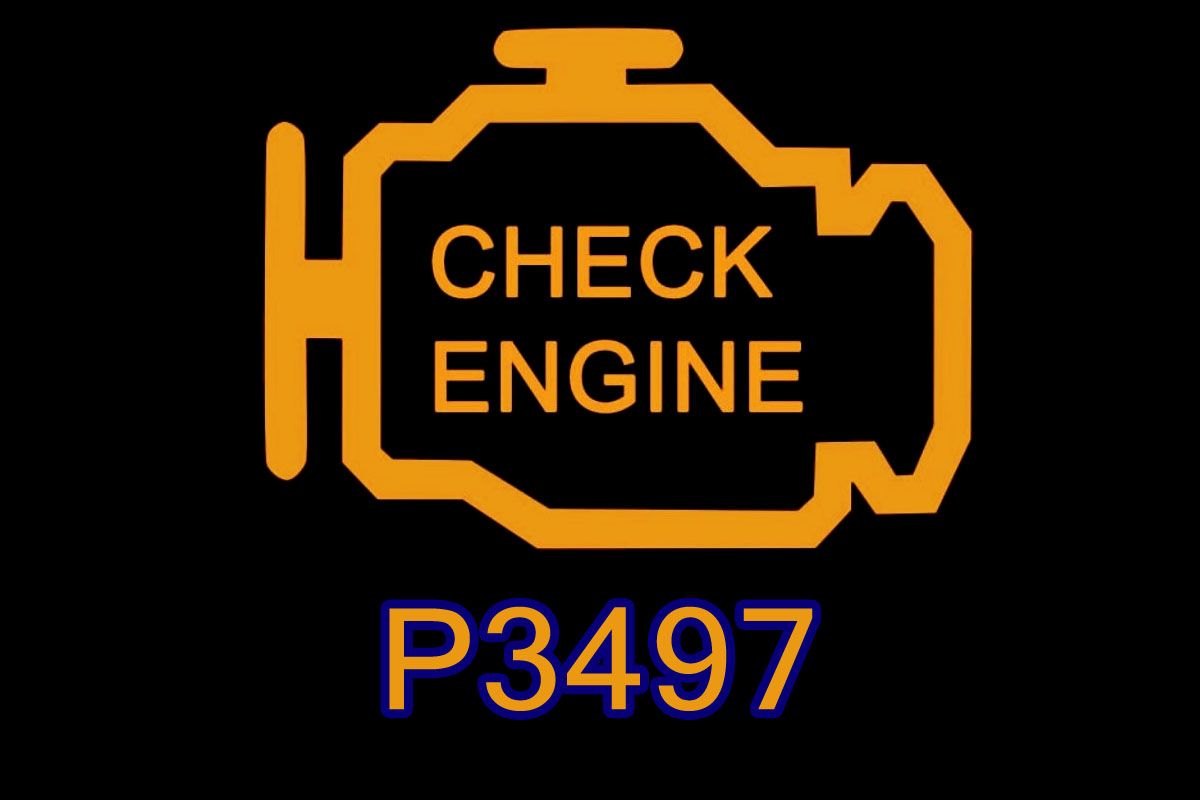
P3497 Cylinder Deactivation System (Bank 2)
P3497 is an OBD-II diagnostic trouble code indicating that the engine control module (ECM/PCM) has detected a problem with the cylinder deactivation system on Bank 2.
Cylinder deactivation is used on many larger gasoline engines to improve fuel economy when full engine power is not required. Under light-load conditions, the engine can temporarily stop combustion in selected cylinders. When more power is needed, those cylinders are activated again.
P3497 means the control module has detected that the expected cylinder-deactivation operation on Bank 2 is not occurring correctly.
The code itself does not identify one specific failed component. The problem can involve the oil supply used to operate the deactivation mechanism, a control solenoid, wiring, an oil-pressure problem, a mechanical component in the valvetrain, or the engine's control system.
What Is Cylinder Deactivation?
A cylinder-deactivation system allows an engine to operate with fewer active cylinders under suitable conditions.
For example, a V8 engine may temporarily operate using four cylinders during light cruising. When the driver demands acceleration, the system returns the deactivated cylinders to normal operation.
The purpose is to reduce pumping losses and fuel consumption when the engine does not need all of its available power.
The system may use:
-
Oil-pressure-controlled lifters
-
Special valve lifters
-
Cylinder deactivation solenoids
-
Oil control valves
-
Camshaft control mechanisms
-
Engine oil passages
-
Position or pressure feedback
-
ECM/PCM control strategies
The exact design varies significantly between manufacturers and engines.
What Does Bank 2 Mean?
Bank 2 refers to the cylinder bank that does not contain cylinder number 1.
This terminology applies primarily to engines with multiple cylinder banks, such as V6 and V8 engines.
On a V-engine, Bank 1 and Bank 2 are located on opposite sides of the engine.
P3497 therefore indicates that the cylinder-deactivation problem has been associated with Bank 2, rather than simply identifying a problem with the entire engine.
The exact cylinders affected depend on the engine design.
How Cylinder Deactivation Works
Although systems differ, the basic operating principle is relatively similar.
During normal operation, the camshaft operates the valves through the appropriate valvetrain components.
When cylinder deactivation is requested, the ECM commands an oil-control solenoid or similar actuator.
Engine oil is then directed through specific passages to operate a deactivation mechanism, often within a special lifter or rocker assembly.
The mechanism changes how the camshaft's movement is transferred to the valve.
The result is that selected valves remain closed or otherwise stop their normal operation, preventing combustion in the selected cylinder.
Fuel injection and ignition are also disabled for the affected cylinders.
When the engine requires additional power, the system reverses the process and restores normal cylinder operation.
This entire sequence has to happen correctly and at the appropriate engine speed, temperature, load and oil-pressure conditions.
Why Would the ECM Set P3497?
The ECM does not necessarily need to detect a completely failed system to set P3497.
It can monitor the expected results of cylinder deactivation and determine that Bank 2 is not responding correctly.
Several different problems can produce this condition.
Low or incorrect engine oil level
Cylinder-deactivation systems can be highly dependent on engine oil.
If the oil level is too low, the system may not develop the hydraulic pressure required to operate the deactivation mechanism.
This is one of the simplest things to check.
Incorrect engine oil
Using oil with the wrong viscosity or specification can affect hydraulic operation.
A cylinder-deactivation system designed around a particular oil specification may not behave correctly when the wrong oil is installed.
Oil that is severely degraded can also cause problems.
Restricted oil passages
Sludge, varnish or contamination can restrict the small oil passages used by the deactivation system.
Even when the engine has adequate overall oil pressure, a restricted passage can prevent the required pressure from reaching a particular control mechanism.
Faulty cylinder-deactivation solenoid
The oil-control solenoid may become stuck, electrically defective or contaminated.
A solenoid can fail mechanically even when its electrical circuit appears normal.
Conversely, an electrical fault can prevent the solenoid from operating at all.
Low engine oil pressure
If overall engine oil pressure is too low, the deactivation system may not be able to operate correctly.
Possible causes include:
-
Worn oil pump
-
Restricted oil pickup
-
Excessive bearing clearance
-
Low oil level
-
Internal oil leakage
-
Incorrect oil
-
Severe engine wear
Actual oil pressure should be measured according to the manufacturer's procedure when required.
Wiring or connector problems
The control solenoid depends on its electrical circuit.
Possible faults include:
-
Broken wires
-
Shorted wires
-
Corroded terminals
-
Loose connectors
-
Poor terminal contact
-
Damaged harness
-
Poor ground
-
Power-supply problems
Heat and oil contamination around the engine can accelerate wiring and connector problems.
Sticking or failed deactivation lifter
The lifter or other mechanical deactivation mechanism can become stuck.
This can occur because of:
-
Sludge
-
Varnish
-
Internal wear
-
Lack of lubrication
-
Mechanical damage
-
Loss of hydraulic function
This type of failure can require considerably more work than replacing an electrical solenoid.
Valvetrain problems
A damaged rocker arm, camshaft, lifter or related component can prevent the cylinder-deactivation system from operating correctly.
In some cases, the underlying mechanical problem may also produce abnormal engine noise or misfire symptoms.
Symptoms of P3497
The symptoms can range from almost unnoticeable to severe.
Possible symptoms include:
-
Check Engine Light
-
Reduced fuel economy
-
Rough engine operation
-
Hesitation
-
Reduced power
-
Engine vibration
-
Misfire
-
Unusual valvetrain noise
-
Poor transition between cylinder-deactivation modes
-
Increased emissions
-
Reduced engine performance
-
Limp or fail-safe operation
Some vehicles may continue to drive almost normally if the ECM simply disables cylinder deactivation as a protective strategy.
Other vehicles may develop significant drivability problems if the fault is caused by a mechanical valvetrain or oil-pressure problem.
Why Engine Oil Is So Important
Cylinder deactivation is one of the engine systems where oil condition can have a direct effect on mechanical operation.
The system may depend on precisely controlled oil pressure to move small internal components.
This means a problem that initially appears to be an electronic control issue may actually be hydraulic.
For example, replacing a deactivation solenoid will not solve a problem caused by:
-
Low oil level
-
Incorrect oil viscosity
-
Restricted oil passages
-
Low oil pressure
-
Internal engine wear
This is why checking the lubrication system is an important part of diagnosing P3497.
Diagnosing P3497
A good diagnosis should begin with the easiest and most informative checks.
Start by scanning for additional codes
P3497 should not be considered independently if other DTCs are present.
Look for codes relating to:
-
Engine misfires
-
Oil pressure
-
Variable valve timing
-
Camshaft position
-
Crankshaft position
-
Cylinder deactivation solenoids
-
Valvetrain operation
-
Fuel injection
Additional codes may reveal whether the problem is primarily electrical, hydraulic or mechanical.
Check the freeze-frame data
The freeze-frame information can show the conditions under which the ECM detected the problem.
Useful information can include:
-
Engine speed
-
Engine load
-
Coolant temperature
-
Oil temperature
-
Vehicle speed
-
Throttle position
-
Operating mode
If P3497 occurs only under particular conditions, that information can significantly narrow the diagnosis.
Check the Engine Oil First
Inspect the engine oil level on a level surface using the manufacturer's procedure.
Then consider:
-
Oil condition
-
Correct viscosity
-
Correct specification
-
Oil-change history
-
Possible sludge
-
Signs of fuel dilution
-
Signs of coolant contamination
If the oil is badly degraded or the wrong specification was used, correcting the lubrication issue may be necessary before further diagnosis.
However, changing the oil should not be treated as a guaranteed repair. If the code remains, additional testing is required.
Inspect the Cylinder Deactivation Circuit
Identify the Bank 2 cylinder-deactivation solenoid or oil-control valve using the vehicle-specific service information.
Inspect:
-
Connector condition
-
Wiring
-
Terminal tension
-
Corrosion
-
Oil contamination
-
Harness routing
-
Power supply
-
Ground
-
ECM control signal
Do not assume that every cylinder-deactivation system uses the same electrical arrangement.
Some systems use a simple solenoid circuit, while others use more sophisticated pulse-width-modulated control.
Test the Solenoid
The solenoid should be tested according to the manufacturer's specifications.
Depending on the system, testing may involve:
-
Electrical resistance
-
Power supply
-
Ground
-
Control signal
-
Current draw
-
Activation testing
-
Mechanical movement
-
Oil-pressure response
There is no universal resistance or voltage value that can be applied to every cylinder-deactivation solenoid.
A solenoid can also have correct electrical resistance while being mechanically stuck, so resistance testing alone is not sufficient.
Check Engine Oil Pressure
If the electrical system appears normal, hydraulic testing may become necessary.
Actual engine oil pressure can be compared with the manufacturer's specification under the required operating conditions.
This is particularly important when there are symptoms such as:
-
Valvetrain noise
-
Multiple deactivation codes
-
Low oil-pressure warnings
-
Engine wear symptoms
-
Codes appearing at hot idle
-
Problems that become worse as the engine warms up
A system can have sufficient pressure when cold but inadequate pressure when the oil becomes hot.
Mechanical Diagnosis
If the electrical and hydraulic systems pass inspection, the mechanical operation of the valvetrain may need to be investigated.
Possible areas include:
-
Deactivation lifters
-
Rocker arms
-
Camshaft lobes
-
Valve operation
-
Oil passages
-
Mechanical timing
-
Internal wear
Depending on the engine design, this may require significant disassembly.
This is one reason P3497 should not automatically lead to replacing electronic components.
P3497 and Misfire Codes
P3497 can sometimes appear together with misfire codes.
The relationship can work in either direction.
A cylinder-deactivation problem can cause abnormal combustion or valve operation.
Conversely, an engine that already has a severe combustion problem may cause the ECM to disable or modify cylinder-deactivation operation.
If misfire codes are present, determine which cylinders are affected and whether the misfire follows a particular bank or cylinder.
Ignition, fuel delivery, compression and valve operation should be considered rather than assuming the deactivation system is the sole problem.
P3497 Does Not Automatically Mean the Engine Is Damaged
The presence of this code does not necessarily mean that the engine needs major repair.
A loose connector, damaged wire, contaminated solenoid or incorrect oil can produce the same basic DTC.
However, the possibility of a hydraulic or mechanical problem means the code should not be ignored.
The diagnosis should move from simple external checks toward deeper mechanical inspection only when the evidence supports it.
Can You Drive With P3497?
If the vehicle has only a steady Check Engine Light and continues to run smoothly, short-term driving may be possible.
The vehicle may simply disable the cylinder-deactivation function and operate using all cylinders.
However, continued driving is less advisable when there are additional symptoms such as:
-
Severe vibration
-
Misfire
-
Loss of power
-
Loud valvetrain noise
-
Low oil-pressure warning
-
Engine overheating
-
Stalling
-
Flashing Check Engine Light
A flashing Check Engine Light can indicate a severe misfire capable of damaging the catalytic converter.
A low oil-pressure warning is even more urgent because continued operation can cause serious engine damage.
P3497 and Bank-Specific Cylinder Deactivation
A Bank 2-specific fault can provide a useful diagnostic clue.
If Bank 1 operates normally while Bank 2 consistently develops the problem, attention should be directed toward components and oil circuits specific to Bank 2.
This can include:
-
Bank 2 deactivation solenoid
-
Bank 2 wiring
-
Bank 2 oil passages
-
Bank 2 lifters
-
Bank 2 valvetrain components
-
Bank-specific control circuits
However, common systems such as the oil pump, engine oil supply and ECM can still affect both banks.
P3497 vs Other Cylinder Deactivation Codes
Cylinder-deactivation DTCs can look very similar while describing different problems.
P3497 specifically identifies a cylinder-deactivation system problem associated with Bank 2.
Other codes in the same family may identify:
-
Bank 1 cylinder-deactivation problems
-
Cylinder-deactivation solenoid circuit faults
-
Low or high electrical conditions
-
Performance problems
-
Specific actuator faults
The exact definition should always be checked against the manufacturer's service information because implementation differs between engines.
A Practical Diagnostic Strategy
For P3497, a logical workflow is:
Scan all codes → examine freeze-frame data → verify engine oil level and specification → inspect oil condition → identify Bank 2 deactivation components → inspect wiring/connectors → test the control solenoid → verify control signals → measure actual oil pressure when required → inspect oil passages → evaluate the deactivation lifters and valvetrain if necessary.
This sequence avoids jumping directly to expensive mechanical repairs.
What P3497 Really Tells You
P3497 Cylinder Deactivation System (Bank 2) tells you that the ECM has detected a problem with the expected operation of the cylinder-deactivation system on Bank 2.
It does not tell you that a particular solenoid, lifter, camshaft or control module has definitely failed.
Because these systems often combine electrical control, engine oil pressure and mechanical valvetrain operation, all three areas may need to be considered.
Starting with the oil level and specification, then checking the electrical control system and finally moving toward hydraulic and mechanical testing is usually the most efficient way to find the actual cause of P3497.