TR
TR EN
EN

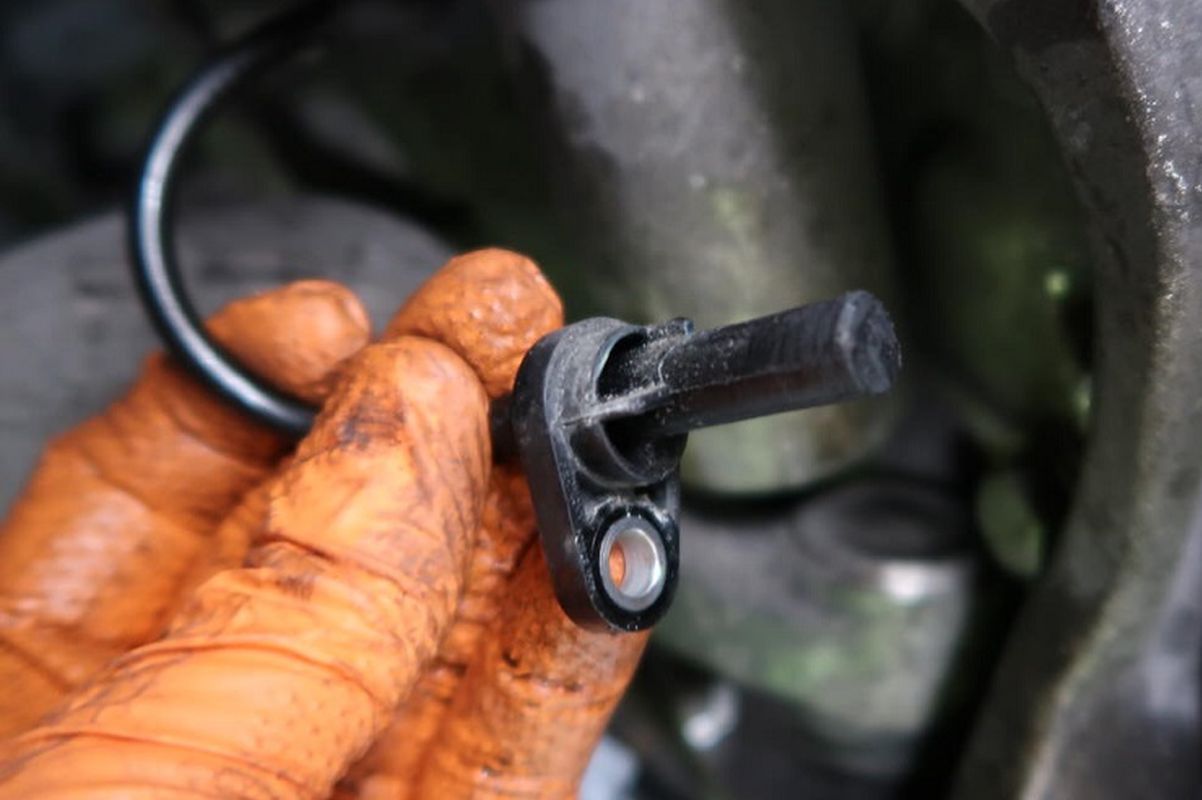
What Are the Symptoms of a Faulty Speed Sensor?
A speed sensor is an important component that measures the vehicle’s speed and sends this information to systems such as the engine control unit, transmission control module, ABS, instrument cluster, cruise control, and stability control system.
Depending on the vehicle, the term speed sensor may refer to a dedicated Vehicle Speed Sensor (VSS) mounted on the transmission, or to wheel speed sensors used by the ABS system to calculate vehicle speed.
A faulty speed sensor does not always mean that the speedometer will simply stop working. Depending on the vehicle’s electronic architecture, a speed sensor problem can also affect transmission shifting, ABS, ESP, cruise control, and engine operation.
What Does a Speed Sensor Do?
The primary function of a speed sensor is to detect how fast the vehicle or a rotating component is moving and provide this information to the relevant electronic control units.
Speed information can be used by:
-
The speedometer
-
The odometer
-
The engine control unit (ECU)
-
The automatic transmission control system
-
ABS
-
ESP/ESC
-
Traction control
-
Cruise control
-
Start-stop systems
-
Certain driver-assistance systems
Older vehicles may use a dedicated sensor installed on the transmission or differential. Many modern vehicles instead use information from the individual ABS wheel speed sensors to calculate the vehicle’s speed.
This distinction is important when diagnosing a speed-related fault.
The Most Common Symptoms of a Bad Speed Sensor
Speedometer stops working
One of the most obvious symptoms is a speedometer that remains at zero or does not display the correct vehicle speed.
On some vehicles, the odometer may also stop recording mileage because it relies on the same speed information.
However, a non-functioning speedometer does not automatically prove that the sensor itself has failed. A damaged wire, poor connector, fuse, instrument cluster problem, or communication fault can produce the same symptom.
Speedometer fluctuates or gives incorrect readings
A speedometer that suddenly drops to zero, jumps between different speeds, or shows an obviously incorrect speed may indicate an unstable speed signal.
Possible causes include:
-
A failing sensor
-
Damaged wiring
-
Loose electrical connections
-
Corroded connectors
-
A damaged reluctor or tone ring
-
Problems with a wheel bearing or magnetic encoder
-
Intermittent power or ground supply
If the problem occurs only over bumps, at certain speeds, or when the vehicle vibrates, wiring and connector problems should be considered carefully.
Automatic Transmission Problems
Vehicle speed information is extremely important to many automatic transmissions. The transmission control system uses speed data to determine when and how to change gears.
A faulty speed signal may cause:
-
Harsh gear changes
-
Delayed shifting
-
Incorrect shift timing
-
Gear hunting
-
Transmission remaining in one gear
-
Failure to engage certain gears
-
Higher-than-normal engine RPM
-
Transmission limp mode
If a transmission begins shifting abnormally at the same time that a speed-related fault code appears, the speed signal should be checked before assuming that the transmission itself has a mechanical failure.
Check Engine Light May Come On
When the ECU detects an implausible or missing vehicle-speed signal, it may store a diagnostic trouble code and illuminate the Check Engine Light.
Codes related to vehicle speed sensor faults can include P0500 and manufacturer-specific codes.
However, an OBD code should not automatically be interpreted as proof that the sensor needs to be replaced.
The ECU may be reporting that the expected speed signal is missing or incorrect. The actual cause could be the sensor, wiring, connector, power supply, communication network, or another component involved in generating the speed signal.
ABS and ESP Warning Lights
Modern vehicles may use wheel speed sensors to determine vehicle speed. If one of these sensors fails, the problem can affect several safety systems simultaneously.
Possible warning lights include:
-
ABS warning light
-
ESP/ESC warning light
-
Traction control warning light
-
Brake system warning
-
Stability control warning
A problem with one wheel speed sensor may cause the control module to see an implausible difference between the speeds of the four wheels.
For example, if three wheels report approximately the same speed while one wheel suddenly reports zero, the system may identify a problem with that wheel’s sensor or its circuit.
Cruise Control May Stop Working
Cruise control needs reliable vehicle-speed information to maintain a selected speed.
If the speed signal is missing or unreliable, the cruise control system may be disabled as a safety precaution.
Possible symptoms include:
-
Cruise control will not activate.
-
Cruise control switches off unexpectedly.
-
The system cannot maintain the selected speed.
-
A cruise control warning appears on the instrument cluster.
Cruise control problems, however, can have many other causes, so this symptom alone does not confirm a speed sensor failure.
Poor Engine Performance
In some vehicles, vehicle speed information is used by the engine control system for various calculations and operating strategies.
If the ECU loses reliable speed information, some vehicles may experience:
-
Poor throttle response
-
Reduced acceleration
-
Unusual engine behavior
-
Stalling during deceleration
-
Limp mode
This varies considerably between vehicle models. A speed sensor failure does not necessarily cause engine performance problems on every vehicle.
Engine RPM May Behave Abnormally
Certain vehicles use vehicle-speed information as part of their idle and deceleration control strategy.
When the driver releases the accelerator while the vehicle is moving, the ECU needs to know whether the vehicle is still moving or has stopped.
If the speed signal disappears, some vehicles may experience:
-
Unstable idle
-
Sudden RPM changes
-
Engine stalling during deceleration
This is not a universal symptom, but it can occur on specific vehicle designs.
Fuel Consumption Can Increase
A faulty speed signal can indirectly affect fuel consumption, particularly if it causes an automatic transmission to select inappropriate gears.
For example, the transmission may remain in a lower gear or shift at incorrect times, causing the engine to operate at higher RPM than necessary.
However, increased fuel consumption is a general symptom and should never be used by itself to diagnose a bad speed sensor.
What Causes a Speed Sensor to Fail?
Speed sensors can fail because of both electrical and mechanical problems.
Common causes include:
-
Internal sensor failure
-
Damaged wiring
-
Broken wires inside the harness
-
Corroded connectors
-
Loose connector pins
-
Water or oil contamination
-
Incorrect sensor installation
-
Damaged reluctor or tone ring
-
Metal debris around a magnetic sensor
-
Wheel bearing problems
-
Damaged magnetic encoder
-
Poor power supply
-
Poor ground connection
-
ECU communication problems
If a replacement sensor does not solve the problem, the wiring and the components that generate the sensor signal should be investigated.
Is a Speed Sensor the Same as an ABS Sensor?
Not necessarily.
A Vehicle Speed Sensor (VSS) generally measures the rotational speed of a transmission, differential, or another rotating component and provides a vehicle-speed signal.
An ABS wheel speed sensor, on the other hand, measures the rotational speed of an individual wheel.
Modern vehicles can use the four wheel speed signals to calculate vehicle speed. Therefore, some vehicles do not have a separate traditional VSS.
This is why the vehicle's specific system design should be identified before diagnosing a speed sensor problem.
How Is a Speed Sensor Diagnosed?
The most reliable approach is to check the actual signal rather than immediately replacing the sensor.
A diagnostic scanner can be used to examine:
-
Vehicle speed
-
Individual wheel speeds
-
Engine RPM
-
Transmission input speed
-
Transmission output speed
-
Stored fault codes
-
Live sensor data
-
Communication between control modules
For example, if the vehicle is moving but the ECU continues to display 0 km/h, there is a problem somewhere in the speed-information path.
For ABS-related problems, the speeds of all four wheels can be compared during a road test. If one wheel consistently reports a significantly different speed, that sensor, its wiring, the wheel bearing, and the magnetic encoder should be inspected.
Can a Speed Sensor Be Tested With a Multimeter?
Sometimes, but the test depends on the type of sensor.
Vehicles may use:
-
Magnetic inductive sensors
-
Hall-effect sensors
-
Active digital wheel speed sensors
-
Magnetic encoder systems
Some sensors can be checked for resistance, power supply, and ground with a multimeter. However, resistance testing alone is not sufficient for many modern sensors.
In difficult cases, an oscilloscope or advanced diagnostic equipment can be used to examine the actual sensor waveform or digital signal.
Replacing the Sensor Does Not Always Fix the Problem
Replacing the sensor may seem like the obvious solution, but a sensor replacement can be ineffective if the actual problem is elsewhere.
Before replacing the part, technicians should check:
-
Sensor power supply
-
Ground connection
-
Signal wire
-
Connector pins
-
Wiring harness
-
ECU connection
-
Sensor mounting position
-
Reluctor or tone ring
-
Wheel bearing condition
-
Magnetic encoder
-
Live data from the control module
In some cases, the sensor is working correctly but cannot generate a proper signal because the component it reads from is damaged.
Can You Drive With a Faulty Speed Sensor?
It depends on the type of sensor and which vehicle systems are affected.
If only the speedometer has stopped working, the vehicle may still be mechanically capable of driving. However, the situation becomes more important when ABS, ESP, traction control, or the transmission is also affected.
Extra caution is required when you see:
-
ABS warning light
-
ESP/ESC warning light
-
Transmission warning
-
Completely inactive speedometer
-
Severe or unpredictable gear changes
-
Multiple electronic warning messages
A faulty speed signal can affect active safety systems, so the problem should not be ignored.
Problems That Can Be Mistaken for a Bad Speed Sensor
A speedometer problem or ABS warning does not necessarily mean that the speed sensor itself is defective.
Similar symptoms can be caused by:
-
Broken wiring
-
Corroded connectors
-
Poor electrical connections
-
ABS sensor problems
-
Damaged wheel bearings
-
Damaged magnetic encoders
-
Reluctor ring damage
-
ECU problems
-
CAN-Bus communication faults
-
Instrument cluster problems
-
Low battery voltage
-
Transmission-related mechanical problems
This is particularly important on modern vehicles because several control modules can share the same vehicle-speed information.
Final Thoughts
A faulty speed sensor can cause much more than a non-functioning speedometer. Depending on the vehicle, symptoms may include incorrect speed readings, an inoperative odometer, harsh transmission shifts, cruise control failure, ABS or ESP warning lights, traction-control problems, and sometimes abnormal engine behavior.
The exact symptoms depend on how the vehicle generates and distributes speed information.
For this reason, a speed-related fault code should not automatically lead to sensor replacement. The best diagnostic approach is to read the stored codes, examine live speed data, compare wheel speeds when applicable, and test the sensor's power, ground, signal, and wiring.
A correct diagnosis can prevent unnecessary parts replacement and help identify problems in the wiring, connectors, wheel bearings, reluctor rings, or electronic control modules.