TR
TR EN
EN

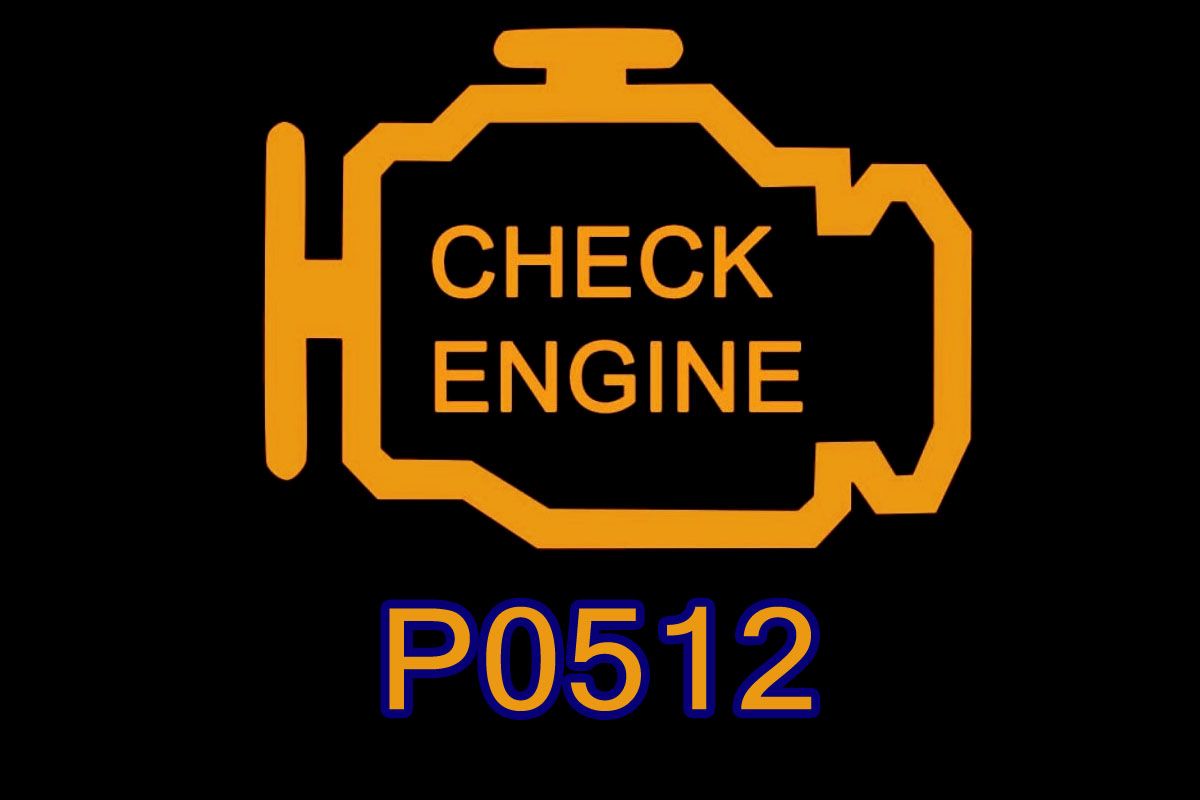
P0512 Starter Request Circuit Malfunction
The P0512 OBD-II trouble code means the engine control module (ECM/PCM) has detected a malfunction in the Starter Request circuit.
The starter request circuit is the electrical pathway through which the vehicle's control system determines that a starting request has been made and then coordinates the starter operation.
The important point is that P0512 does not automatically mean the starter motor is defective.
The fault can be located in the starter request switch or button, ignition switch, clutch or brake switch, wiring, relay, body control module, immobilizer system, CAN communication network, ECM/PCM, or another part of the starting authorization system.
What Is the Starter Request Circuit?
When you turn an ignition key to the START position or press the START button, the vehicle has to determine whether starting is actually permitted.
On a simple older vehicle, the process may be relatively straightforward:
Ignition switch → starter relay → starter solenoid → starter motor.
Modern vehicles are considerably more complicated.
A typical modern starting sequence can involve:
-
Ignition switch or START button
-
Body control module (BCM)
-
Engine control module (ECM/PCM)
-
Clutch pedal switch
-
Brake pedal switch
-
Park/Neutral position information
-
Immobilizer system
-
Keyless entry/start system
-
Starter relay
-
Starter solenoid
-
CAN communication
-
Battery voltage monitoring
The ECM may not directly carry the high current required by the starter motor. Instead, it can receive a starter request signal from another module and authorize or control the starting process.
What Does P0512 Actually Mean?
P0512 is a general circuit malfunction code.
It does not specify that the signal is necessarily:
-
Too high
-
Too low
-
Open
-
Shorted
-
Intermittent
Instead, the control module has detected that the starter request circuit is not behaving according to its expected logic.
For example, the ECM may expect a particular starter-request signal when the driver turns the key or presses the START button.
If that signal is missing, implausible, or does not correspond with the vehicle's starting conditions, P0512 can be stored.
The exact signal logic is manufacturer-specific.
Symptoms of P0512
The most obvious symptom is a starting problem, but the severity can vary considerably.
Possible symptoms include:
-
Engine does not crank
-
Intermittent no-crank condition
-
Starter operates only occasionally
-
START button does not respond correctly
-
Engine cranks but starting is inhibited
-
Delayed starter engagement
-
"Check Engine" or service warning
-
Key/immobilizer warning
-
Gear-position-related starting problems
-
Starter operates unexpectedly or fails to operate under certain conditions
Some vehicles can store P0512 even when the engine starts normally.
This can happen when the starter request signal briefly behaves incorrectly but the starting sequence eventually succeeds.
Common Causes of P0512
Faulty ignition switch
On vehicles using a conventional ignition key, worn internal contacts can prevent the START signal from being transmitted reliably.
The switch may work normally most of the time and fail only in certain key positions or temperatures.
Faulty START button
A push-button starting system can develop problems in the switch or its electronic input circuit.
However, the button itself should not automatically be blamed simply because P0512 is stored.
Damaged wiring
An open, shorted or high-resistance wire in the starter-request circuit can prevent the ECM or BCM from seeing the correct signal.
Loose or corroded connector
A poor connector connection can interrupt the request signal.
This is particularly relevant when the fault is intermittent.
Starter relay problem
The relay may have:
-
Burned contacts
-
Internal resistance
-
Coil failure
-
Intermittent operation
-
Poor terminal contact
The relay may be part of the starter-control circuit even though P0512 is fundamentally describing the starter request.
Clutch pedal switch
Manual-transmission vehicles commonly require the clutch pedal to be depressed before starting.
A faulty or incorrectly adjusted clutch switch can prevent the starting request from being accepted.
Brake pedal switch
Some push-button starting systems require the brake pedal to be depressed.
A brake-switch problem can therefore prevent the starter request from being recognized.
Park/Neutral switch or transmission range sensor
Automatic transmissions generally require the transmission to be in Park or Neutral before the starter is permitted to operate.
Incorrect gear-position information can interfere with the starting authorization sequence.
Immobilizer problem
If the vehicle does not recognize the key correctly, the starting request may be rejected.
Depending on the architecture, immobilizer-related problems may generate additional codes.
CAN communication problem
On modern vehicles, the START request may travel between modules over the CAN network rather than through a dedicated wire directly to the ECM.
A communication problem can therefore appear as a starter-request problem even when the physical START button or ignition switch is functioning correctly.
Low system voltage
A weak battery or poor battery connection can cause control modules and starter relays to behave incorrectly.
P0512 is not automatically a battery code, but system voltage should be checked when starting-related faults are present.
ECM/PCM or BCM problem
A control-module fault is possible, particularly if the input circuit, wiring, power supply and communication network have already been proven good.
How P0512 Should Be Diagnosed
The correct diagnostic procedure begins by determining how that particular vehicle generates and communicates the starter request.
This is critical because a 2002 vehicle with an ignition switch and starter relay can have a completely different system from a modern push-button vehicle.
Start With a Full Vehicle Scan
Do not scan only the engine ECU.
Check modules such as:
-
ECM/PCM
-
BCM
-
Immobilizer/security module
-
Keyless-start module
-
Transmission control module
-
Body gateway module
Look for related codes involving:
-
Immobilizer
-
Key recognition
-
CAN communication
-
Brake switch
-
Clutch switch
-
Transmission range
-
System voltage
-
Starter relay
-
Ignition switch
A related code can often identify the actual source of the starting problem.
Check What Happens When START Is Requested
This is one of the most important diagnostic questions:
Does the control module recognize the starter request?
If the vehicle has live data, look for parameters such as:
-
Starter request
-
Crank request
-
Ignition switch position
-
Start authorization
-
Brake pedal status
-
Clutch pedal status
-
Park/Neutral status
-
Immobilizer authorization
The exact names vary by manufacturer.
If the scan tool shows that the driver is pressing START but the ECM does not recognize the request, the problem is likely upstream of the ECM.
If the ECM clearly recognizes the request but the starter does not operate, the investigation should move further down the starting circuit.
Check the Ignition Switch or START Button
On a conventional ignition system, verify that the switch produces the expected START signal when moved to the START position.
On a push-button system, the button may send a low-current signal to a body-control module rather than directly switching starter power.
Therefore, testing the button with a simple continuity test may not be sufficient.
The technician needs to determine what signal the vehicle expects at the relevant module input.
Check the Brake or Clutch Switch
Starting authorization frequently depends on pedal position.
For a manual transmission:
Clutch pressed → starting authorization permitted
For many automatic vehicles:
Brake pressed + Park/Neutral → starting authorization permitted
If the control module does not see the required pedal signal, it may refuse to activate the starter.
This is why checking live data is often faster than replacing switches based on symptoms alone.
Check Park/Neutral Information
If the vehicle has an automatic transmission, confirm that the control modules correctly identify the transmission as being in:
-
Park
-
Neutral
If the system thinks the transmission is in Drive, Reverse or another gear, the starter may be intentionally disabled.
A faulty transmission range sensor, wiring problem or communication issue can therefore produce a no-crank condition that initially looks like a starter problem.
Check the Starter Relay
If the vehicle uses a conventional starter relay, inspect:
-
Relay power supply
-
Relay ground/control circuit
-
Relay coil resistance where applicable
-
Relay output
-
Terminal condition
-
Voltage drop across relay contacts under load
Simply hearing the relay click does not prove that its high-current contacts are functioning correctly.
Likewise, a relay that does not click does not necessarily mean the relay itself is defective; the control module may not be commanding it.
Test the Starter Solenoid Circuit
If the starter request is being correctly generated but the starter does not operate, check the voltage reaching the starter solenoid during a start attempt.
A useful diagnostic sequence is:
START request → control module → relay → starter-control circuit → solenoid → starter motor
The exact path varies by vehicle.
The objective is to identify where the starting command disappears.
Check Battery Voltage and Voltage Drop
Starting circuits carry substantial current.
A battery can show acceptable voltage with no load but experience a severe voltage drop during cranking.
Check:
-
Battery voltage
-
Battery terminal condition
-
Positive cable voltage drop
-
Ground cable voltage drop
-
Engine ground connections
-
Starter power supply
A poor ground connection can create confusing starting symptoms.
P0512 Does Not Automatically Mean a Bad Starter
This is one of the most important points when diagnosing the code.
The starter motor is generally the last part of the chain, not the first thing that should be replaced.
If the ECM has not even received a valid starter request, replacing the starter will not correct the underlying problem.
For example, a defective brake switch, clutch switch or ignition switch can prevent the starter from being commanded at all.
Likewise, a communication or immobilizer problem can prevent an otherwise perfectly functional starter from operating.
Can P0512 Cause a No-Crank Condition?
Yes.
If the vehicle's control system does not recognize or authorize the starter request, the starter may never receive the command to engage.
This can result in a complete no-crank condition.
However, P0512 can also occur intermittently, meaning the vehicle may start normally most of the time and suddenly refuse to crank.
That intermittent behavior is particularly useful diagnostically.
Can P0512 Cause Cranking but No Starting?
It can, depending on the vehicle architecture.
The starter request and engine-start authorization are related but not identical functions.
A vehicle may crank normally while another part of the starting authorization system prevents fuel injection, ignition or other engine-start functions.
Therefore, if the engine cranks but does not start, P0512 should not automatically be assumed to be the direct cause.
Check immobilizer status, engine-speed information and other stored codes as well.
Intermittent P0512 Faults
An intermittent P0512 deserves special attention.
Possible causes include:
-
Worn ignition-switch contacts
-
Loose START-button connector
-
Loose relay terminal
-
Partially broken wire
-
Poor ground
-
Connector corrosion
-
Engine movement affecting wiring
-
Intermittent brake/clutch switch
-
Intermittent CAN communication
-
Voltage drop during starting
A fault that disappears when the vehicle is sitting in the workshop may require monitoring live data while reproducing the no-start condition.
What Should Be Repaired?
The repair depends entirely on the failed part of the starting-request chain.
Possible repairs include:
-
Replacing the ignition switch
-
Replacing the START button
-
Repairing starter-request wiring
-
Repairing connector terminals
-
Replacing a starter relay
-
Adjusting or replacing a clutch switch
-
Replacing a brake switch
-
Repairing a transmission-range circuit
-
Correcting an immobilizer/key-recognition problem
-
Repairing CAN communication wiring
-
Correcting battery or ground connections
-
Repairing a control module when confirmed by proper testing
The starter motor itself should be replaced only when testing shows that the starter is actually the defective component.
Final Diagnostic Summary
P0512 – Starter Request Circuit Malfunction means the vehicle's control system has detected a problem with the electrical or electronic pathway used to request and authorize engine cranking.
It does not automatically indicate a failed starter motor.
The most useful diagnostic sequence is:
-
Scan all relevant modules.
-
Check freeze-frame and stored/pending codes.
-
Determine the vehicle's starting architecture.
-
Check whether the ECM/BCM recognizes the START request.
-
Verify brake, clutch and Park/Neutral conditions.
-
Check immobilizer/start authorization.
-
Inspect the ignition switch or START button circuit.
-
Test the starter relay and its control/output circuits.
-
Check starter-solenoid voltage during a start request.
-
Verify battery voltage, grounds and voltage drop.
The key diagnostic question with P0512 is not simply “Is the starter working?” but rather:
“Does the vehicle recognize, authorize and correctly transmit the driver's request to start the engine?”
Once that request is traced from the ignition switch or START button through the relevant modules and control circuits, the actual source of the P0512 fault can usually be isolated without unnecessarily replacing the starter, battery or ECU.