TR
TR EN
EN

Advice for Those Planning to Have an LPG Conversion
High gasoline prices have made LPG conversion an attractive option for many vehicle owners who want to reduce their fuel costs. However, converting a vehicle to LPG is not simply a matter of installing a tank and a few additional components. The system must be compatible with the engine, the installation must be carried out correctly, and the LPG ECU must be calibrated properly.
Before having an LPG system installed, it is worth looking beyond the installation price. The quality of the equipment, the experience of the installer, compatibility with your vehicle, warranty conditions, spare-part availability, and after-sales support can all affect the long-term result.
Do Not Choose an LPG System Based Only on Price
One of the most common mistakes is comparing LPG systems solely by installation price. Two systems may have noticeably different prices because of differences in injectors, ECU capabilities, regulator capacity, sensors, installation materials, software, calibration, and after-sales service.
Instead of asking only, “Which LPG system is the cheapest?”, ask:
Which LPG system is technically suitable for my vehicle?
A cheaper installation may not be a real saving if it later results in poor calibration, excessive fuel consumption, repeated warning lights, or expensive repairs.
Make Sure the System Is Compatible With Your Engine
Not every LPG system is suitable for every engine.
The correct system depends on factors such as:
-
Engine code
-
Number of cylinders
-
Engine power
-
Naturally aspirated or turbocharged configuration
-
Fuel injection system
-
Multi-point or direct injection
-
Manufacturer-specific LPG compatibility
-
Previous experience with the same engine
A naturally aspirated multi-point injection engine and a turbocharged direct-injection engine do not necessarily require the same LPG solution.
Direct-injection gasoline engines are particularly important because they may require dedicated LPG systems and, depending on the application, may continue using a certain amount of gasoline under specific operating conditions.
Research the Installer, Not Just the LPG Brand
A good LPG system can still produce poor results if it is installed incorrectly.
The installer should have experience with your specific vehicle and engine. A professional installation involves more than physically mounting the components. The installer should also understand the engine's fuel strategy, wiring, sensor signals, LPG pressure, injector sizing, and calibration requirements.
Before choosing a workshop, ask whether they have previously converted the same engine or vehicle.
A workshop that regularly works on your particular engine is generally preferable to one that simply installs many different brands without specialized experience.
Check the Workshop's Authorization and Technical Equipment
LPG installation is a safety-sensitive modification. The workshop should have the appropriate authorization and technical competence required in the relevant jurisdiction.
It is worth checking whether the installer:
-
Has the required licenses and certifications
-
Employs trained LPG technicians
-
Uses suitable installation equipment
-
Can perform leak checks
-
Has the correct LPG diagnostic and calibration software
-
Provides post-installation support
-
Can diagnose the system rather than simply replacing parts
A workshop saying “we install this brand” is not, by itself, proof of a high-quality installation.
Ask for References From Similar Vehicles
One of the best ways to evaluate an LPG system is to speak with owners who have been using it for a significant period of time.
Ideally, look for vehicles with the same engine or a very similar engine.
Ask users about:
Does the vehicle run smoothly on LPG?
Is cold starting normal?
Does the vehicle switch from gasoline to LPG smoothly?
Is the idle stable?
Is there any loss of power at high rpm or under heavy load?
Does the check engine light come on?
What is the actual LPG consumption?
Have the injectors or regulator caused problems?
How did the installer respond when a problem occurred?
Real-world experience can often reveal issues that are not obvious from advertising material.
Installation Quality Is Just as Important as the Brand
The LPG brand is important, but installation quality can be equally important.
Injector placement, hose routing, vacuum connections, regulator location, LPG pipe routing, electrical connections, fuses, connectors, and component mounting all need to be handled correctly.
Wiring should not be left loose or poorly protected. LPG hoses should not be unnecessarily long, and fuel lines should be routed away from excessive heat and potential mechanical damage.
A clean installation is therefore not merely a matter of appearance. It can directly affect reliability, safety, and calibration.
Choose a Regulator With Sufficient Capacity
The regulator reduces the pressure of LPG coming from the tank and supplies the engine with gaseous LPG at the pressure required by the system.
The regulator must have sufficient capacity for the engine's actual fuel demand.
An undersized regulator may suffer from pressure drops during high-load operation. This can result in:
-
Lean mixtures
-
Power loss
-
Misfires
-
Check engine warnings
-
Switching from LPG back to gasoline
-
Poor high-rpm operation
Regulator capacity should therefore be selected according to engine power and fuel demand rather than simply cylinder count.
Pay Attention to LPG Injector Selection
LPG injectors must also be properly matched to the engine.
Injectors that are too small may struggle to provide sufficient fuel at high rpm and high load. Injectors with unsuitable flow characteristics can also make calibration unnecessarily difficult.
The correct injector should be selected as part of the complete LPG system rather than treated as an independent component.
LPG ECU Calibration Is Extremely Important
A vehicle being able to run on LPG does not necessarily mean the conversion has been calibrated correctly.
Proper calibration should consider different engine speeds and load conditions rather than being performed only while the vehicle is idling in the workshop.
On systems with OBD integration, short-term and long-term fuel trims can provide useful information when comparing gasoline and LPG operation.
The objective is not simply to make the engine run on LPG. The objective is to achieve stable and appropriate fueling across the operating range without forcing the gasoline ECU to compensate excessively.
The Vehicle Should Already Run Properly on Gasoline
An LPG system should not be used to compensate for an existing gasoline-engine problem.
Before conversion, the vehicle should be checked for problems such as:
-
Misfires
-
Poor idle quality
-
Difficult starting
-
Existing check engine warnings
-
Excessive fuel trims
-
Poor acceleration
-
Vacuum or intake leaks
-
Ignition problems
If the vehicle does not run correctly on gasoline, those problems should be diagnosed first.
An LPG system can sometimes make an existing engine problem more noticeable rather than solving it.
Research Valve and Valve Seat Compatibility
Some engines may be more sensitive to long-term LPG operation than others because of their valve and valve-seat design, combustion temperatures, engine calibration, and operating conditions.
This does not mean that every LPG-powered engine will experience valve problems. It means that the specific engine should be researched before conversion, particularly if the vehicle will be used extensively and for high annual mileage.
Avoid generalized claims such as “LPG always burns valves.” Engine design and operating conditions matter.
Read the Warranty Conditions Carefully
The length of the warranty is important, but what the warranty actually covers is even more important.
Before installation, ask:
How long is the LPG system warranty?
Is installation labor covered?
Are the ECU, injectors, regulator, and sensors covered?
Are replacement parts new or refurbished?
What happens if a component repeatedly fails?
Does the manufacturer provide any coverage for engine damage attributed to the LPG system?
Are periodic services required to maintain the warranty?
Whenever possible, obtain these conditions in writing.
Check Spare-Part Prices Before Installation
The initial installation price is only part of the total cost of LPG ownership.
Before choosing a system, investigate the prices and availability of commonly replaced components such as:
-
LPG filters
-
Injectors
-
Regulator
-
Pressure sensors
-
Temperature sensors
-
Solenoids
-
ECU and related electronic components
A system may appear inexpensive at installation but become expensive to maintain if replacement parts are difficult to find or unusually costly.
Check the Quality of All Installation Components
The LPG ECU, injectors, and regulator are not the only components that matter.
The quality and suitability of the tank, multivalve, LPG lines, hoses, clamps, filters, electrical connections, and other components also matter.
Safety-critical components such as the LPG tank and multivalve should meet the applicable standards and approval requirements for the vehicle and jurisdiction.
Do not assume that every component supplied with an LPG kit has identical quality simply because it is included in the installation package.
Choose the LPG Tank Carefully
Tank selection should take into account the vehicle's available space, mounting location, capacity requirements, and installation configuration.
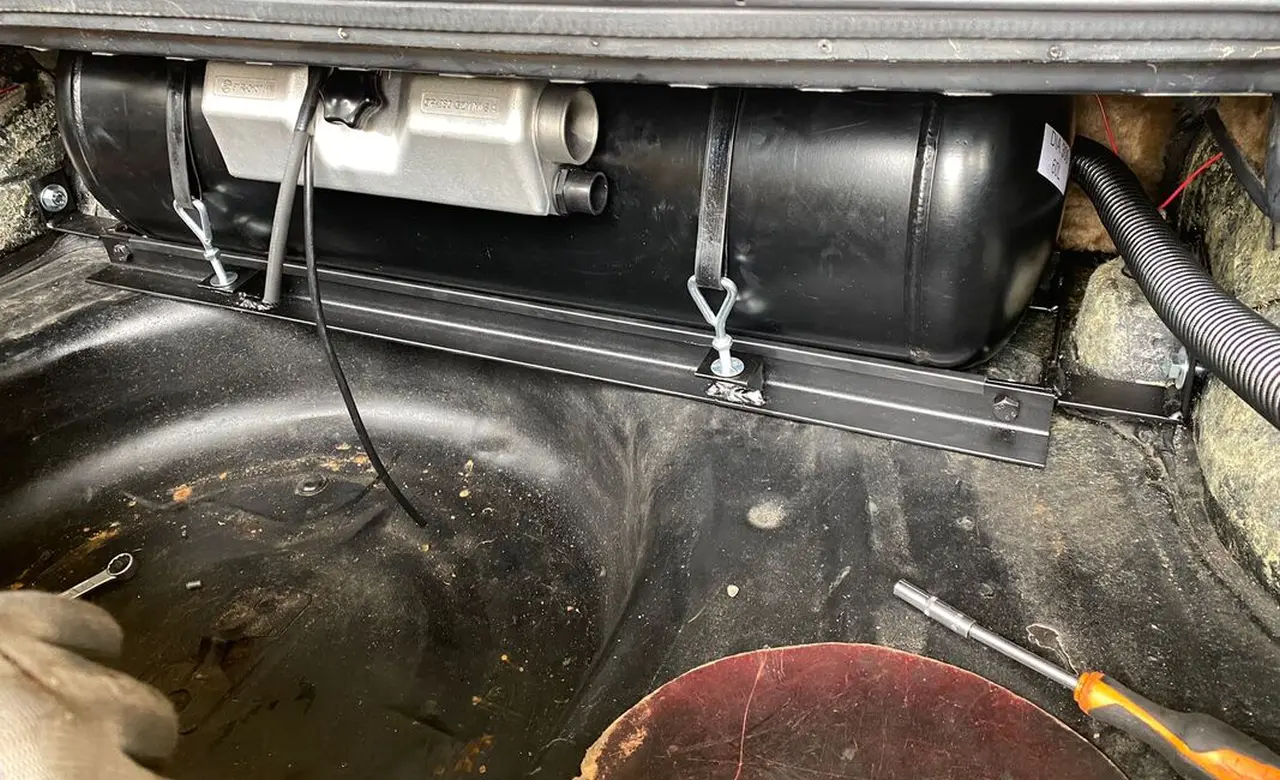
Toroidal tanks can often be installed in a spare-wheel well and may preserve more usable luggage space. Cylindrical tanks may be more suitable for other vehicle layouts.
A larger tank is not automatically better. The tank must fit safely and securely while meeting the applicable technical and regulatory requirements.
Collect the Invoice and Required Documents
Do not postpone the paperwork until later simply because the vehicle has recently passed inspection.
After the LPG conversion, make sure you receive the documents required for your vehicle and jurisdiction, such as:
-
Installation invoice
-
Warranty documentation
-
Installation and technical documentation
-
Required engineering/project documents
-
Inspection or certification documents where applicable
-
Documentation identifying the installed LPG system where required
If the conversion must be recorded in the vehicle's official registration or inspection system, complete those procedures within the required period.
A recently completed vehicle inspection does not eliminate the need to properly document a new LPG conversion.
Test the Vehicle After Installation
After the installation is completed, the vehicle should be tested under different operating conditions.
Cold starting, the transition from gasoline to LPG, idle quality, low-speed operation, medium load, acceleration, and higher-load operation should all be checked.
During the first few days of use, pay attention to:
-
Check engine light
-
Misfires
-
Rough idle
-
Unusual LPG smell
-
Loss of power
-
Excessive fuel consumption
-
Unexpected switching back to gasoline
An LPG smell should never be considered normal. If you smell LPG, stop using the system and have it inspected for leaks by a qualified professional.
Do Not Neglect the Gasoline System
Having an LPG system does not mean that the gasoline system is no longer important.
Many LPG vehicles start on gasoline and switch to LPG after certain operating conditions are reached. Some systems may also use gasoline under specific conditions.
For this reason, the gasoline system should not be allowed to remain neglected for long periods.
Keep an appropriate amount of gasoline in the tank and make sure the vehicle's gasoline system remains functional.
Maintain the LPG System Properly
LPG systems require periodic inspection and maintenance. The exact schedule depends on the vehicle, LPG system, manufacturer recommendations, and operating conditions.
Maintenance may include:
-
LPG filter replacement
-
Regulator pressure checks
-
Injector performance checks
-
Hose and connection inspections
-
Electrical connection checks
-
Leak inspection
-
Calibration verification
Maintenance should not be based solely on a universal mileage figure. The manufacturer's recommendations and the actual condition of the system should be considered.
Do Not Focus Only on Fuel Savings
The main reason for installing LPG is usually to reduce fuel costs, but the actual savings depend on more than the price difference between gasoline and LPG.
LPG consumption in liters can be higher than gasoline consumption because LPG has different energy content per liter. However, the lower price per liter can still make the cost per kilometer significantly lower.
After installation, measure the vehicle's actual consumption over several tanks instead of relying on theoretical figures.
Comparing fuel used, distance traveled, and cost per kilometer provides a much more realistic picture of the financial benefit.
The Right LPG System Is a Combination of Equipment, Installation, and Calibration
Choosing an LPG system should never be based solely on brand or price. The most important factors are the compatibility of the system with the engine, the experience of the installer, the quality of the installation, correct calibration, suitable tank and multivalve selection, warranty conditions, spare-part availability, and proper documentation.
A properly selected and correctly installed LPG system can significantly reduce everyday fuel costs while maintaining good drivability. On the other hand, an unsuitable system or poor installation can eventually lead to excessive consumption, poor performance, engine warning lights, repeated repairs, and safety concerns.
Before making a decision, get several quotations, but compare much more than the final price. A safe, compatible, properly calibrated, professionally installed, and properly documented LPG system is usually a far better long-term choice than the cheapest conversion available.