TR
TR EN
EN

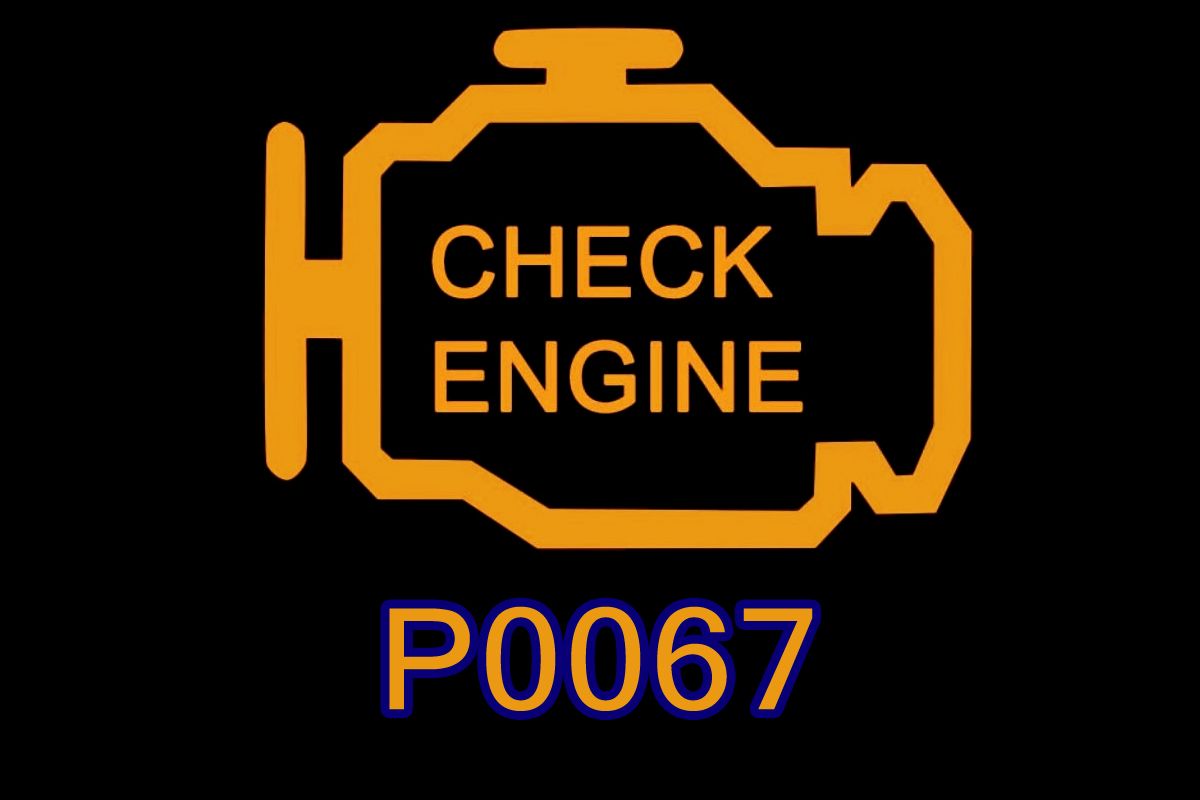
P0067 Air-Assisted Injector Control Circuit High
The P0067 diagnostic trouble code (DTC) indicates that the engine control module (ECM) has detected a higher-than-expected electrical signal in the air-assisted injector control circuit.
Air-assisted injection systems use additional air to improve the way fuel is atomized as it enters the engine. Depending on the vehicle, this system may be used to improve cold starting, fuel vaporization, combustion quality, emissions, or overall fuel delivery.
Because the exact design of air-assisted injection varies between manufacturers, the component controlled by the circuit and the expected electrical values can differ considerably from one vehicle to another.
What Does P0067 Mean?
P0067 can be broken down as follows:
-
P – Powertrain
-
0 – Generic OBD-II code
-
067 – Air-assisted injector control circuit high
The important word in this code is “High.”
It generally means that the ECM is seeing a voltage or electrical condition in the control circuit that is higher than the value it expects.
This does not necessarily mean that the injector itself is receiving too much fuel. The problem may be in the control circuit, wiring, connector, solenoid/valve, power supply, or the air-assisted injection component itself.
What Is an Air-Assisted Injector System?
An air-assisted injector system uses air in combination with fuel injection to improve fuel atomization.
Instead of relying entirely on fuel pressure and the injector nozzle to break fuel into small droplets, the system introduces air to help disperse the fuel.
The result can be a finer fuel mixture and improved combustion under certain operating conditions.
Depending on the engine design, the system can include:
-
An air-assisted injector
-
An air control valve or solenoid
-
Electrical wiring
-
Connectors
-
Air passages or hoses
-
An ECM-controlled actuator
-
Associated vacuum or air supply components
Not every vehicle uses the same hardware. Therefore, the manufacturer's wiring diagram and service information are particularly important when diagnosing P0067.
Symptoms of P0067
The symptoms can range from almost unnoticeable to significant drivability problems.
Possible symptoms include:
-
Check Engine Light
-
Rough idle
-
Difficult starting
-
Poor cold-start performance
-
Engine hesitation
-
Reduced acceleration
-
Poor throttle response
-
Increased fuel consumption
-
Engine misfires
-
Unstable engine operation
-
Increased exhaust emissions
-
Reduced engine performance
-
Limp mode on some vehicles
In some applications, the vehicle may continue to drive relatively normally because the air-assisted injection system is only important during particular operating conditions.
Common Causes of P0067
Several problems can cause the ECM to detect a high signal in this circuit.
Air-assisted injector or actuator failure
The controlled injector, solenoid, or air-control actuator may have an internal electrical fault. An internal short or abnormal resistance can change the electrical characteristics of the circuit.
Short to voltage
A damaged wire can contact a power source, causing the ECM to see a voltage higher than expected on the control circuit.
This is particularly important when the wiring runs close to other powered circuits.
Damaged wiring
Heat, vibration, oil contamination, moisture, or physical contact with engine components can damage the harness.
A wire may look acceptable from the outside while having an internal break or high-resistance connection.
Connector problems
Loose terminals, corrosion, water intrusion, bent pins, or poor terminal tension can interfere with the circuit.
Faulty control solenoid
If the system uses a solenoid to control air flow, the solenoid can fail electrically or mechanically.
Power supply problem
Depending on the circuit design, an incorrect power supply or wiring problem can produce an abnormally high circuit voltage.
Poor grounding
A damaged ground connection can alter the voltage seen by the ECM and create an apparent control-circuit problem.
ECM fault
An ECM failure is possible, but it should generally be considered only after the component, wiring, connectors, power supply, and grounds have been properly tested.
How Is P0067 Diagnosed?
A good diagnosis should begin with the electrical circuit rather than immediately replacing the injector or actuator.
1. Scan for all stored and pending codes
Connect a suitable diagnostic scanner and check for:
-
Stored DTCs
-
Pending DTCs
-
Freeze-frame data
-
Related injector or circuit codes
-
Misfire codes
-
Fuel-system codes
Other codes can provide important clues about whether the problem is isolated to the P0067 circuit.
2. Check the freeze-frame data
Freeze-frame information can show the operating conditions when the ECM detected the fault.
Look at parameters such as:
-
Engine RPM
-
Engine load
-
Coolant temperature
-
Intake temperature
-
Battery voltage
-
Throttle position
-
Fuel trims
-
Engine operating status
This can help determine whether the problem occurs only during starting, cold operation, idle, acceleration, or another specific condition.
3. Identify the exact component
Before testing the circuit, determine exactly which component the manufacturer identifies as the air-assisted injector control device.
Do not assume that the component is identical to one used on another engine.
The manufacturer's wiring diagram should be used to identify:
-
Power supply
-
Ground
-
Control wire
-
ECM terminal
-
Connector pin numbers
-
Related fuses or relays
4. Inspect the wiring and connector
Visually inspect the entire circuit.
Pay particular attention to areas near:
-
Exhaust components
-
Cylinder head
-
Intake manifold
-
Fuel system components
-
Moving engine components
-
High-temperature areas
Look for melted insulation, exposed copper, chafing, corrosion, loose connectors, and poorly repaired wiring.
5. Test the electrical circuit
Using the manufacturer's specifications, check the circuit with a multimeter or appropriate diagnostic equipment.
Depending on the system, testing may include:
-
Supply voltage
-
Ground voltage drop
-
Control-circuit voltage
-
Resistance of the actuator
-
Continuity
-
Short-to-ground testing
-
Short-to-voltage testing
The expected values are vehicle-specific. There is no universal voltage or resistance value that should be applied to every P0067 system.
Why a Continuity Test May Not Be Enough
A circuit can show continuity with a multimeter and still have a problem when the engine is operating.
For example, a damaged wire may make electrical contact while stationary but lose contact when the wiring harness moves or vibrates.
For this reason, intermittent problems may require:
-
Voltage-drop testing
-
Load testing
-
Harness movement testing
-
Live-data monitoring
-
Oscilloscope testing
A wiring problem that only appears when the engine moves or reaches operating temperature can otherwise be difficult to reproduce.
Can a Faulty Injector Cause P0067?
Yes, depending on the system design.
If the air-assisted injector or its control solenoid has an internal electrical problem, the ECM can detect an abnormal control-circuit voltage.
However, the code does not prove that the component itself is defective.
The same code can be produced by a wiring short, connector problem, incorrect power supply, or another electrical fault.
Can P0067 Affect Fuel Economy?
It can.
If the air-assisted injection system is needed for proper fuel atomization under certain operating conditions, a malfunction can affect combustion quality.
The result may include:
-
Poor fuel economy
-
Increased emissions
-
Hesitation
-
Rough running
-
Poor starting
The actual effect depends heavily on how the system is implemented on the specific engine.
Is It Safe to Drive With P0067?
If the engine is running normally and the only symptom is the Check Engine Light, short-distance driving may be possible.
However, continued driving should not be treated as a permanent solution.
If P0067 is accompanied by:
-
Severe misfires
-
Strong hesitation
-
Engine stalling
-
Significant loss of power
-
Flashing Check Engine Light
-
Difficult starting
the vehicle should be diagnosed as soon as possible. A severe combustion problem can potentially lead to additional engine or emissions-system damage.
Common Diagnostic Mistakes
One of the biggest mistakes is replacing the injector or actuator immediately after seeing P0067.
The code specifically concerns a control circuit high condition, so the electrical side needs to be investigated.
Other common mistakes include:
-
Replacing the component without testing the wiring
-
Ignoring connector corrosion
-
Assuming “high circuit” means excessive fuel delivery
-
Using generic resistance values
-
Applying battery voltage directly to an unknown control circuit
-
Ignoring other stored DTCs
-
Replacing the ECM before checking the harness
-
Assuming every engine uses the same air-assisted injection design
What Should Be Repaired?
The correct repair depends on the test results.
Possible repairs include:
-
Repairing damaged wiring
-
Replacing a corroded connector or terminal
-
Repairing a poor ground
-
Correcting a power-supply problem
-
Replacing the air-assisted injector
-
Replacing an air-control solenoid or actuator
-
Repairing an air supply problem
-
Correcting an improperly routed harness
-
In rare cases, repairing or replacing the ECM
The component should only be replaced after the circuit and component have been tested according to the manufacturer's specifications.
After the Repair
Once the fault has been corrected, clear the stored DTC and perform a proper road test.
The vehicle should be monitored under the operating conditions in which P0067 originally appeared.
After the test, scan the ECM again and check for:
-
P0067 returning
-
Pending codes
-
Misfire activity
-
Fuel-trim abnormalities
-
Abnormal actuator operation
If the code does not return and the engine operates normally, the repair can generally be considered successful.
Final Thoughts
P0067 indicates a high electrical condition in the air-assisted injector control circuit. The fault may originate from the injector or actuator itself, but wiring, connectors, power supply, grounding, and control-circuit problems must also be considered.
The most reliable approach is to identify the exact air-assisted injection system used by the vehicle, inspect the circuit carefully, and compare electrical measurements with the manufacturer's specifications. Replacing parts based solely on the DTC can easily result in unnecessary expense without solving the underlying problem.