TR
TR EN
EN

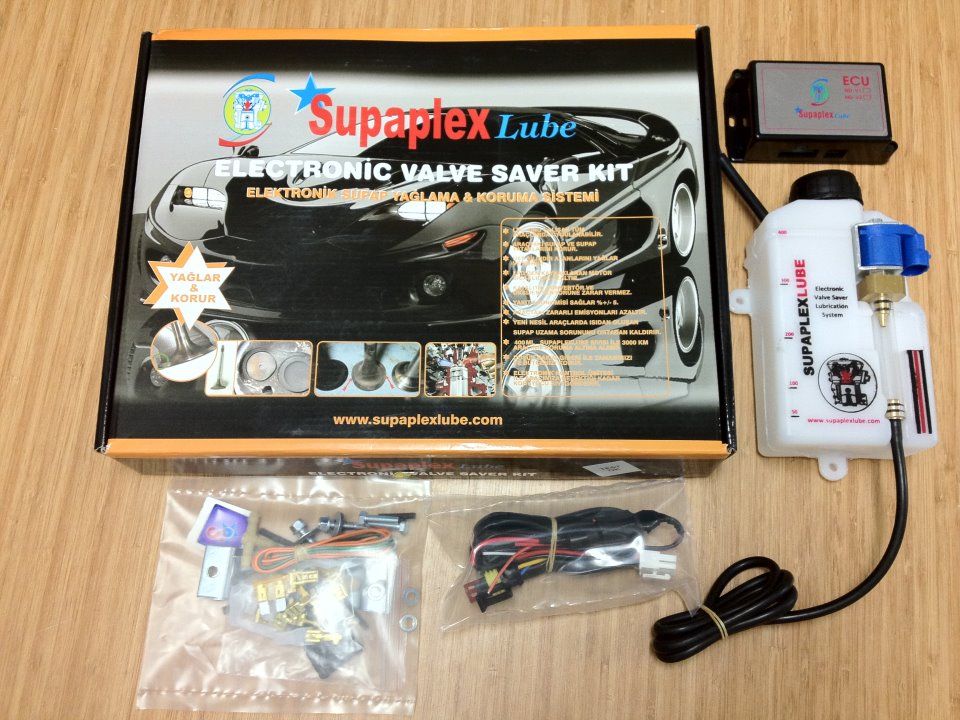
What Is the Supaplexlube Electronic Valve Saver Kit?
Some LPG and CNG-powered engines may be more sensitive to valve and valve-seat wear during long-term operation. The risk depends on factors such as engine design, valve-seat materials, operating temperature, engine load, combustion conditions, and LPG calibration.
The Supaplexlube Electronic Valve Saver Kit is an electronically controlled valve protection and additive-dosing system designed for LPG and CNG vehicles. It delivers a specially formulated Valve Saver fluid into the engine's intake system at a controlled rate, with the aim of helping reduce valve and valve-seat wear.
However, this type of system is not automatically required for every LPG vehicle. It is also important to understand that a Valve Saver system does not repair valves or valve seats that are already mechanically damaged.
Why Is a Valve Saver System Used?
The main purpose of a Valve Saver system is to provide additional protection for engines that may be susceptible to valve and valve-seat wear during LPG or CNG operation.
Some engines have valve and valve-seat designs that tolerate LPG operation very well, while others may be more sensitive under certain operating conditions.
For this reason, the decision to install a Valve Saver system should be based on the specific engine rather than simply on the fact that the vehicle uses LPG.
Why Can Valve Wear Become a Concern With LPG?
LPG operation has combustion characteristics that differ from gasoline operation. Under high engine loads and high temperatures, the operating conditions of the exhaust valves and valve seats become particularly important.
However, it is incorrect to say that LPG automatically causes valve damage in every engine.
Valve durability depends on factors such as:
-
Engine design
-
Valve and valve-seat materials
-
Operating temperature
-
LPG calibration
-
Air-fuel mixture
-
Ignition system
-
Engine load
-
High-rpm operation
-
Cooling-system condition
A Valve Saver system should therefore be considered according to the characteristics of the engine rather than as a universal requirement.
How Does the Supaplexlube Electronic Valve Saver Kit Work?
The system generally consists of a fluid reservoir, electronic control unit, dosing system, and associated connections.
When the vehicle is operating on LPG or CNG, the electronic system controls the amount of Valve Saver fluid delivered to the engine's intake system.
The fluid is introduced into the intake system through an appropriate connection point so that it can enter the engine together with the intake air.
The main advantage of electronic dosing is that the amount of fluid can be controlled more precisely than with a simple constant drip system.
Where Is the Valve Saver Fluid Introduced?
Valve Saver fluid is not added to the engine oil or LPG tank.
Instead, it is delivered to the engine's intake system through a suitable dosing connection.
The exact installation method depends on the vehicle, engine configuration, and Valve Saver system. The connection should therefore be made according to the system's technical requirements rather than using a generic installation method.
What Is the Difference Between an Electronic and a Simple Drip-Type Valve Saver?
Not all Valve Saver systems use electronic control.
Simple systems may use engine vacuum to draw the additive into the intake system. Electronic systems use a control unit to regulate the dosing process.
The purpose of electronic control is to provide a more controlled amount of fluid according to engine operating conditions.
This can be useful because engine load and fuel consumption are not constant. A fixed drip rate does not necessarily provide the same dosing under every operating condition.
Does More Valve Saver Fluid Provide Better Protection?
No.
More additive does not automatically mean better valve protection.
If the dosage is too low, the intended protective effect may not be achieved. Excessive dosing, on the other hand, can move the system away from its intended operating parameters.
The dosing rate should therefore be adjusted according to the system's specifications rather than being increased arbitrarily.
Is the Supaplexlube System Necessary for Every LPG Vehicle?
No.
This is one of the most important points to understand.
Not every LPG-powered engine needs a Valve Saver system. Some engines have excellent resistance to long-term LPG operation, while others may require additional attention because of their valve and valve-seat design.
The following factors should be considered:
The engine's history with LPG
Valve and valve-seat design
Annual mileage
Amount of high-rpm and high-load driving
Operating temperature
Quality of LPG calibration
If the engine does not have a particular sensitivity to valve-seat wear, installing a Valve Saver system simply because the vehicle has LPG is not necessarily justified.
Does Supaplexlube Completely Prevent Valve Burning?
No.
The purpose of a Valve Saver system is to help reduce or delay valve and valve-seat wear. It should not be presented as a guaranteed solution that completely prevents valve damage.
Valve problems can have many causes, including:
-
Incorrect LPG calibration
-
Lean operation
-
Excessive engine temperature
-
Cooling-system problems
-
Ignition problems
-
Engine-specific design characteristics
-
Prolonged high-load operation
-
Existing mechanical problems
A Valve Saver system cannot compensate for an incorrectly calibrated LPG system or an overheating engine.
LPG Calibration Is Also Critical for Valve Protection
Installing a Valve Saver system does not mean that LPG calibration can be ignored.
The LPG system must provide the correct amount of fuel under different operating conditions. This becomes particularly important at high engine speeds and heavy loads.
A properly calibrated LPG system should have:
-
Correct injector selection
-
Adequate regulator capacity
-
Appropriate LPG pressure
-
Suitable injection times
-
Correct air-fuel mixture
-
Proper fuel-trim behavior
-
Comparable gasoline and LPG operating characteristics
A poorly calibrated LPG system can create engine problems even when a Valve Saver system is installed.
Can It Be Used on Turbocharged Engines?
Valve Saver applications on turbocharged and supercharged engines require additional consideration.
Turbocharged engines operate with different intake pressures and load characteristics compared with naturally aspirated engines. Therefore, the Valve Saver system and dosing method must be suitable for the engine's operating conditions.
A simple vacuum-based dosing system should not automatically be assumed to be suitable for every turbocharged engine.
The correct system should be selected according to the engine and the manufacturer's specifications.
What About Direct-Injection Engines?
Direct-injection gasoline engines can require a more specialized LPG conversion strategy.
The LPG system, gasoline injector strategy, engine load, fuel-control system, and Valve Saver installation must all be considered together.
For this reason, a standard Valve Saver installation should not simply be applied to a direct-injection engine without first confirming compatibility with the particular LPG system and engine.
How Long Does the Valve Saver Fluid Last?
Fluid consumption depends on the dosing rate, engine fuel consumption, and driving conditions.
There is therefore no universal mileage figure that applies to every installation.
The fluid reservoir should be checked regularly rather than waiting until it becomes completely empty.
When the level is low, it should be replenished with the appropriate fluid for the system.
Which Valve Saver Fluid Should Be Used?
The fluid should be compatible with the Valve Saver system.
Different products can have different formulations and dosing requirements. Therefore, another additive should not be used simply because it is marketed for a similar purpose.
The safest approach is to use the fluid recommended for the particular Valve Saver system and follow the specified dosing requirements.
Does Supaplexlube Reduce Fuel Consumption?
Fuel economy is not the primary purpose of a Valve Saver system.
Its main purpose is to provide additional protection against valve and valve-seat wear in suitable LPG and CNG applications.
Fuel consumption is primarily influenced by factors such as:
-
LPG calibration
-
Injector selection
-
Regulator pressure
-
Engine condition
-
Ignition system
-
Air-fuel mixture
-
Driving style
-
Traffic conditions
-
Tire pressure
Therefore, a Valve Saver system should not be purchased with the expectation that it will directly reduce fuel consumption.
Can Supaplexlube Repair Existing Valve Damage?
No.
A Valve Saver system is not a mechanical repair system.
If the engine already has:
-
Burned valves
-
Worn valve seats
-
Low compression
-
Damaged valves
-
Valve-clearance problems
installing a Valve Saver system will not reverse the existing damage.
In such cases, the engine must first be diagnosed mechanically. Compression testing, cylinder leak-down testing, valve-clearance inspection, and, when necessary, cylinder-head inspection can help determine the actual problem.
The LPG System Should Also Be Checked
Installing a Valve Saver system does not eliminate the need to maintain the LPG system itself.
Important parameters include:
LPG pressure
Injector operating times
Fuel trims
Regulator performance
Engine coolant temperature
Differences between gasoline and LPG operation
These should be monitored when diagnosing an LPG-powered engine.
A Valve Saver system should be regarded as an additional protective system, not as a solution for LPG system problems.
What Should Be Checked After Installation?
After installation, the system should be checked to ensure that it is actually dosing the fluid correctly.
Particular attention should be paid to:
-
Fluid level
-
Electrical connections
-
Dosing settings
-
Fluid hoses
-
Intake-manifold connection
-
Connection points
-
Possible fluid leaks
-
System warnings
The Valve Saver system should also be checked during routine LPG servicing.
When Does a Valve Saver System Make Sense?
A Valve Saver system may be worth considering when:
-
The engine is known to be sensitive to valve-seat wear during LPG operation
-
The vehicle has high annual mileage
-
The vehicle will be used on LPG for many years
-
High-rpm or high-load driving is common
-
The same engine has a history of valve-seat wear
-
A qualified LPG specialist recommends additional valve protection
On the other hand, installing a Valve Saver system on every LPG vehicle as a mandatory component is not technically justified.
Valve Protection Depends on More Than One Component
Long-term engine durability cannot be attributed to a Valve Saver system alone.
Correct LPG system selection, suitable injectors and regulator, professional installation, accurate calibration, a healthy ignition system, proper cooling, appropriate engine oil, and regular maintenance all contribute to reliable operation.
The Supaplexlube Electronic Valve Saver Kit is an electronically controlled additive-dosing system intended to help protect valves and valve seats in suitable LPG and CNG applications. It is not required for every LPG vehicle and cannot repair valves that are already mechanically damaged.
The best approach is to first determine whether the particular engine actually has a valve-wear concern and then select an appropriate Valve Saver system if additional protection is justified.