TR
TR EN
EN

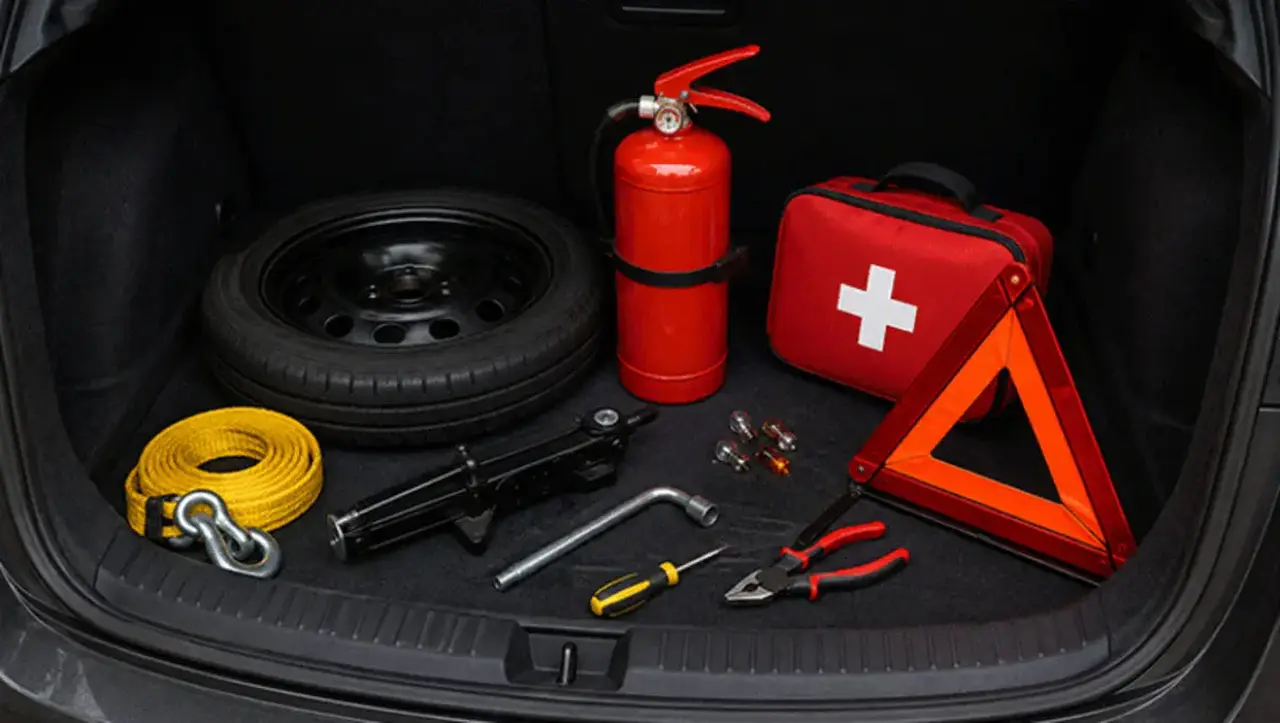
Documents and Equipment Required in Passenger Cars
A passenger car needs more than a functioning engine and four wheels to be legally and safely used on public roads. Depending on the country, the driver and vehicle may need specific documents, while the vehicle itself may be required to carry certain emergency and safety equipment.
The exact requirements are not identical worldwide. Vehicle registration systems, insurance rules, inspection procedures, and mandatory equipment vary between countries and sometimes between vehicle categories.
For that reason, it is useful to distinguish between documents required for the vehicle and driver and equipment that should or must be carried in the vehicle.
Driver's License
The driver must have a valid driving license appropriate for the type of vehicle being driven.
For a normal passenger car, this generally means holding the appropriate passenger-car license category and meeting the applicable age and licensing requirements.
In many countries, driving-license information can be checked electronically, so the driver may not always be required to carry a physical card. However, this does not eliminate the requirement to hold a valid license.
Drivers should also make sure that their license has not expired and that there are no restrictions preventing them from driving the vehicle.
Vehicle Registration Document
A registered vehicle normally has an official registration document or electronic registration record.
Depending on the country, this document may contain information such as:
-
Registration number
-
Vehicle identification number (VIN)
-
Make and model
-
Engine or technical information
-
Vehicle category
-
Registered owner
-
Registration date
-
Other technical information
Some countries still require a physical registration document, while others increasingly use electronic records.
The important point is that the vehicle must be properly registered and its registration information must be current.
Mandatory Motor Insurance
In many countries, at least a minimum level of third-party motor insurance is legally required before a vehicle can be driven on public roads.
This insurance generally covers the driver's legal liability for certain damages caused to other people or property.
It should not be confused with comprehensive insurance.
Third-party liability insurance primarily protects against covered claims made by other parties, while comprehensive or collision insurance can provide additional protection for the insured vehicle depending on the policy.
The exact insurance requirements vary by country.
Vehicle Inspection Certificate
Many countries require passenger cars to undergo periodic roadworthiness inspections.
The inspection may evaluate important safety and environmental systems such as:
-
Brakes
-
Steering
-
Suspension
-
Tires
-
Lighting
-
Safety equipment
-
Vehicle structure
-
Exhaust and emissions
-
Other safety-related components
The inspection interval depends on the country, vehicle age, vehicle category, and intended use.
A vehicle that has passed its inspection is not necessarily mechanically perfect. A roadworthiness inspection is based on a defined set of criteria and is not a substitute for regular maintenance.
Two Warning Triangles
A warning triangle is one of the most useful emergency items that can be carried in a passenger car.
In countries where warning triangles are mandatory, they are used to warn approaching traffic when a vehicle has broken down or has stopped because of an accident or another emergency.
Some jurisdictions require one triangle, while others may have different requirements.
Warning triangles should be stored where they can be reached quickly without creating additional danger for the occupants.
First Aid Kit
A first aid kit is required or recommended in many countries.
Its purpose is to provide basic first-aid supplies until professional medical assistance becomes available.
A useful first aid kit may contain items such as:
-
Sterile dressings
-
Bandages
-
Adhesive plasters
-
Disposable gloves
-
Antiseptic materials
-
Scissors
-
Emergency blanket
-
Other basic first-aid supplies
The exact contents required by law vary between jurisdictions.
The kit should also be checked periodically because some medical products have expiration dates.
Fire Extinguisher
A portable fire extinguisher is mandatory for certain vehicle categories in some countries and strongly recommended for many other vehicles.
A small extinguisher can be useful for dealing with an early-stage fire involving the engine compartment, electrical components, or other parts of the vehicle.
The extinguisher should be:
-
Suitable for automotive use
-
Properly maintained
-
Within its service or expiration period where applicable
-
Easily accessible
-
Securely mounted
It should not be buried underneath luggage where it would be difficult to reach during an emergency.
Jack and Wheel Wrench
A jack and wheel wrench are traditional vehicle tools used to change a damaged wheel.
However, not every modern passenger car is equipped with a conventional spare wheel.
Manufacturers increasingly use alternatives such as:
-
Tire repair kits
-
Electric compressors
-
Sealant kits
-
Run-flat tires
-
Temporary spare wheels
Therefore, it is not universally correct to say that every modern passenger car must carry a conventional spare tire.
The equipment supplied with the vehicle should be checked, and the driver should understand how the manufacturer's emergency tire system works.
Spare Wheel or Tire Repair Kit
If the vehicle is equipped with a spare wheel, it should be kept properly inflated and in usable condition.
A spare wheel with a flat tire is of little value during an emergency.
Vehicles equipped with a tire repair kit should also have the required sealant and compressor available and in working condition.
Drivers should remember that some repair kits are only temporary solutions. A severely damaged tire, sidewall puncture, or damaged wheel may still require professional assistance.
Basic Hand Tools
Basic tools can be useful during an emergency.
Depending on the vehicle and local requirements, commonly supplied tools may include:
-
Screwdrivers
-
Pliers
-
Basic wheel tools
-
Other manufacturer-supplied tools
However, the presence of these tools does not mean that every driver should attempt complex repairs on the roadside.
Brake systems, fuel systems, high-voltage electrical systems, LPG systems, and other safety-critical components should be handled by qualified technicians when a repair requires specialist knowledge.
Flashlight or Portable Light
A flashlight is extremely useful during a nighttime breakdown.
It can help the driver inspect a tire, locate a component, read warning information, or make the vehicle more visible during an emergency.
A dedicated flashlight can be more practical than relying entirely on a smartphone because it does not consume the phone's battery.
Where local regulations require specific emergency lighting equipment, those requirements should be followed.
Tow Rope or Towing Equipment
A tow rope or appropriate towing equipment can be useful when a vehicle needs to be moved after a minor breakdown.
However, towing is not suitable for every situation.
A vehicle should not simply be pulled with a rope if:
-
The brakes are not functioning
-
Steering control has been lost
-
The vehicle has suffered major structural damage
-
The drivetrain has been damaged
-
The manufacturer prohibits the proposed towing method
-
Road or traffic conditions make towing unsafe
Automatic transmissions, four-wheel-drive systems, electric vehicles, and hybrid vehicles can have specific towing requirements.
The manufacturer's instructions should always be checked before towing.
Snow Chains and Traction Equipment
In regions where snow and ice are common, snow chains or other approved traction equipment may be required or strongly recommended.
The exact requirements vary according to local weather, road regulations, vehicle type, and road signs.
Chains must also be correctly sized and installed. Incorrect installation can damage tires, wheels, suspension components, or bodywork.
Winter tires and snow chains are not necessarily interchangeable from a legal or practical perspective.
Spare Bulbs and Lighting Equipment
Traditional vehicles equipped with replaceable bulbs may benefit from carrying spare bulbs.
However, many modern cars use LED modules or integrated lighting assemblies rather than conventional replaceable bulbs.
For this reason, a universal rule requiring a specific collection of spare bulbs cannot be applied to every modern passenger car.
The vehicle's original lighting system and the applicable local requirements should be considered.
Safety Vest
A reflective safety vest is mandatory or recommended in many countries.
It can make a driver significantly more visible when standing outside a vehicle at night or in poor weather.
This is particularly important when changing a tire, placing warning equipment, or dealing with a breakdown on a highway.
Where required by local law, the vest should be kept somewhere accessible from inside the passenger compartment rather than underneath luggage in the trunk.
Reflective or Emergency Equipment
In addition to warning triangles and safety vests, some countries require or recommend other emergency equipment.
Depending on the jurisdiction, this can include:
-
Reflective warning devices
-
Emergency lights
-
Additional first-aid equipment
-
Fire extinguishers
-
Emergency blankets
-
Winter emergency equipment
These requirements can differ substantially between countries, so drivers traveling internationally should check the rules of each country they plan to enter.
What Documents Should You Keep in the Car?
There is no single worldwide list of documents that every driver must physically carry.
However, a driver should generally be able to provide evidence of:
Driver authorization
Proof that the person driving the vehicle is legally licensed to drive it.
Vehicle registration
Proof that the vehicle is legally registered.
Insurance
Proof of the legally required motor insurance, where applicable.
Roadworthiness inspection
Where periodic inspection is required, the vehicle should have a valid inspection status or certificate.
Additional documents
Depending on the vehicle and country, additional documentation may be required for:
-
Commercial use
-
Towing equipment
-
Special modifications
-
LPG or alternative-fuel systems
-
Imported vehicles
-
Rental or company vehicles
-
Cross-border travel
-
Special transport activities
Electronic verification is increasingly common, so some information may be accessible to authorities without a physical document being carried.
LPG Vehicles and Additional Requirements
Vehicles equipped with LPG or other alternative-fuel systems can have additional technical and documentation requirements.
The requirements vary considerably between countries, but safety-critical components may include:
-
Fuel tank
-
Valves
-
Pressure regulator
-
Fuel lines
-
Injectors
-
Filling connection
-
Electrical connections
-
Control unit
The installation must comply with the requirements applicable to the vehicle and the jurisdiction where it is registered.
An LPG system that has been physically installed correctly is not automatically legally approved. Documentation, inspection, certification, and registration requirements may also apply.
Electric and Hybrid Vehicles
Electric and hybrid vehicles require some additional considerations.
A high-voltage vehicle should not be treated like a conventional gasoline or diesel vehicle when it comes to roadside repairs.
High-voltage cables and components may carry dangerous electrical energy even when the vehicle appears to be switched off.
Drivers should not attempt to repair or disconnect high-voltage components unless they have the appropriate training.
Emergency responders and technicians use specific procedures for isolating high-voltage systems.
For these vehicles, the manufacturer's emergency instructions are particularly important.
Useful Equipment That Is Not Always Legally Mandatory
There is a difference between legally required equipment and equipment that is simply useful.
A driver may choose to carry:
-
Tire pressure gauge
-
Portable air compressor
-
Jump starter
-
Battery booster cables
-
Work gloves
-
Rain jacket
-
Drinking water
-
Emergency blanket
-
Phone charger
-
Power bank
-
Basic tool kit
-
Tire repair equipment
-
Portable warning light
These items can be extremely useful during long-distance travel even when they are not legally required.
What Should You Check Before a Long Trip?
Before a long journey, it is worth checking both the vehicle and its emergency equipment.
Make sure that:
-
Required documents are valid
-
Insurance is active
-
Vehicle inspection is current where required
-
Tires are in good condition
-
Tire pressure is correct
-
Spare wheel or repair kit is usable
-
Warning equipment is present
-
First aid kit is complete
-
Fire extinguisher is serviceable where required
-
Lights work correctly
-
Safety equipment is easily accessible
A few minutes of preparation can make a major difference when a breakdown occurs far from home.
Why Are These Documents and Equipment Important?
Mandatory documents demonstrate that the driver and vehicle meet the legal requirements for road use. Emergency equipment, on the other hand, helps the driver respond to unexpected situations such as a breakdown, tire failure, accident, or vehicle fire.
The exact list of mandatory documents and equipment is not universal. It changes according to the country, vehicle category, age, intended use, and local legislation.
For this reason, drivers should always distinguish between equipment that is legally mandatory, equipment that is required only for certain vehicle types, and equipment that is simply recommended for safety.
The most important principle is not merely to carry the minimum items required by law. A well-prepared vehicle should also contain the equipment necessary to handle a realistic roadside emergency safely.