TR
TR EN
EN

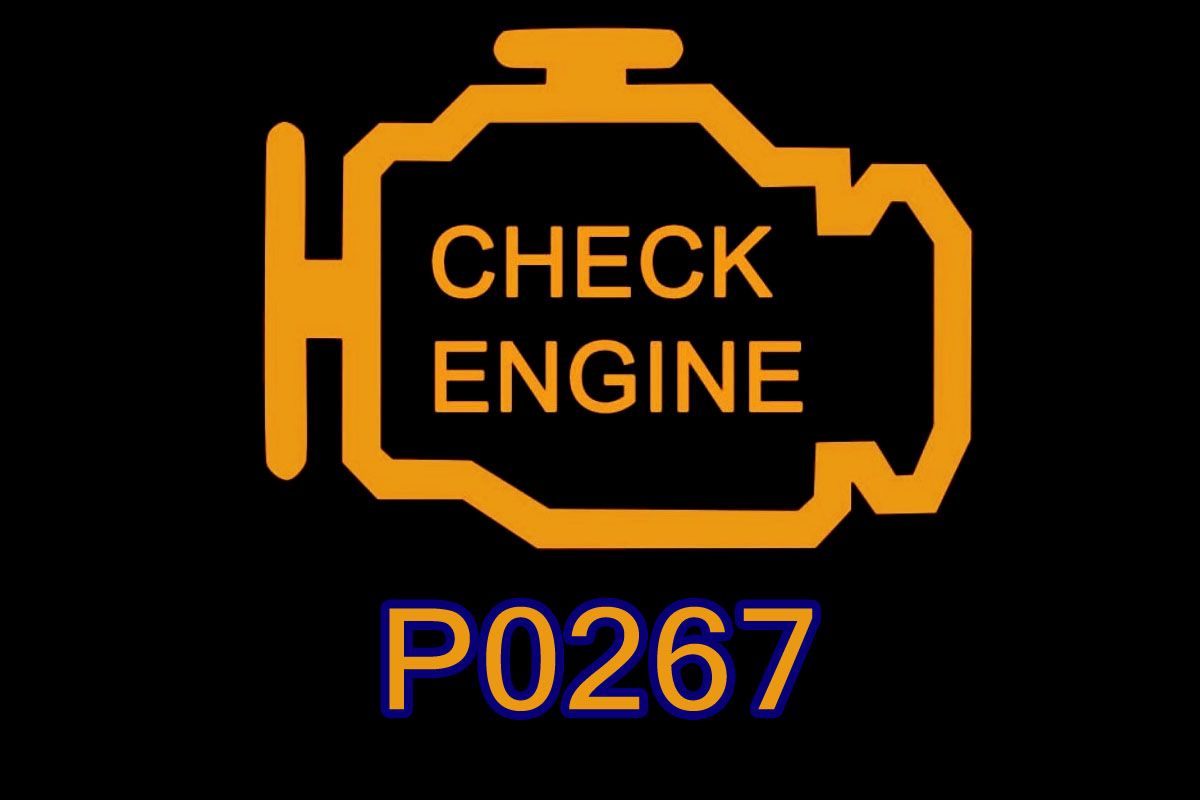
P0267 Cylinder 3 Injector Circuit Low
P0267 is an OBD-II diagnostic trouble code that means the engine control module (ECM/PCM) has detected an abnormally low electrical condition in the fuel injector circuit for cylinder #3.
The word “Low” refers to the electrical circuit, not necessarily to low fuel pressure, low fuel delivery, or a clogged injector.
This distinction is important when diagnosing P0267. The code does not automatically mean that the cylinder #3 injector needs to be replaced. The injector, wiring, connector, power supply, control circuit, or ECM injector driver can all potentially be responsible.
What Does P0267 Mean?
The ECM controls the fuel injector for cylinder #3 by sending precisely timed electrical commands.
When the electrical response of that circuit is outside the expected range on the low side, the ECM can store P0267.
Depending on the engine design, the injector may receive a shared power supply while the ECM controls the circuit on the ground side. Other systems use different electrical arrangements.
Therefore, the exact meaning of the measured voltage depends on the vehicle's circuit design.
A technician should use the manufacturer's wiring diagram and diagnostic specifications rather than applying a universal voltage value to every vehicle.
Does “Circuit Low” Mean Low Fuel Pressure?
No.
This is one of the most important points when interpreting P0267.
Circuit Low describes an electrical condition.
It does not necessarily mean:
-
Low fuel pressure
-
Low fuel volume
-
Low injector flow
-
A clogged fuel filter
-
A lean mixture
-
An empty fuel rail
-
An injector that is mechanically stuck closed
A vehicle can have normal fuel pressure and still set P0267 because the electrical circuit controlling the cylinder #3 injector has a problem.
Likewise, an injector that is mechanically restricted can cause poor cylinder operation, but that alone does not necessarily explain an electrical “circuit low” code.
Common Causes of P0267
Several electrical and injector-related problems can trigger this code.
Faulty cylinder #3 injector
The injector itself can develop an internal electrical fault.
An internal short, damaged coil, actuator problem, or other electrical failure can alter the circuit characteristics enough for the ECM to recognize an abnormal low condition.
The exact failure mode depends on the injector technology used by the engine.
Short to ground
A damaged injector control wire may contact ground.
If the control circuit is unintentionally pulled toward ground, the ECM can detect an electrical condition lower than expected and set P0267.
This is particularly important when the code appears suddenly after wiring repairs, engine work, or harness damage.
Damaged injector wiring
Engine wiring is exposed to heat, vibration, moisture, oil, and movement.
Possible problems include:
-
Broken wire strands
-
Chafed insulation
-
Melted wiring
-
Internal conductor damage
-
Incorrect previous repairs
-
High resistance
-
Intermittent connections
A wire can look normal from the outside while being electrically damaged internally.
Connector or terminal problem
The cylinder #3 injector connector should be inspected carefully.
Problems may include:
-
Corroded terminals
-
Bent pins
-
Loose terminals
-
Poor terminal tension
-
Water or oil contamination
-
Damaged connector locking mechanism
-
Terminal pushed backward inside the connector
A poor connection can cause the circuit to behave differently as the engine vibrates.
Shared power supply problem
On some engines, multiple injectors share a common electrical supply.
If that supply or its wiring has a problem, more than one injector may show abnormal behavior.
If P0267 is accompanied by other injector circuit codes, the common power supply and related wiring should be investigated.
ECM injector driver problem
The ECM contains electronic drivers responsible for controlling the injectors.
A damaged driver can create an abnormal electrical condition.
However, an ECM failure should generally be considered only after the injector, wiring, connector, power supply, grounds, and control circuit have been properly tested.
Symptoms of P0267
The symptoms depend on how severely cylinder #3 injector operation has been affected.
Possible symptoms include:
-
Check Engine Light
-
Rough idle
-
Engine vibration
-
Misfire
-
Uneven engine operation
-
Hesitation
-
Poor acceleration
-
Reduced engine power
-
Increased fuel consumption
-
Hard starting
-
Engine stalling
-
Increased exhaust emissions
-
Smoke on some diesel engines
If the injector stops operating correctly, cylinder #3 may contribute significantly less power to the engine.
In severe cases, the engine may run as though one cylinder is not functioning properly.
Can P0267 Cause a Misfire?
Yes.
If the injector cannot be controlled correctly, cylinder #3 may not receive the correct fuel quantity or injection event.
This can lead to incomplete or unstable combustion.
As a result, P0267 may appear together with a cylinder-specific misfire code such as P0303 – Cylinder 3 Misfire Detected.
It is important to diagnose the two codes together if they are present.
A misfire does not prove that the injector is defective. Ignition, compression, valve operation, timing, and other problems can also cause cylinder #3 to misfire.
P0267 vs P0268
These codes concern the same injector circuit but describe opposite electrical conditions.
P0267 – Cylinder 3 Injector Circuit Low
The ECM detects an abnormally low electrical condition in the cylinder #3 injector circuit.
P0268 – Cylinder 3 Injector Circuit High
The ECM detects an abnormally high electrical condition in the cylinder #3 injector circuit.
Neither code automatically identifies the injector as the failed part.
The circuit must be tested to determine whether the problem is inside the injector, in the wiring, at the connector, in the power supply, or in the ECM driver.
P0267 vs P0269
P0267 should also be distinguished from P0269 – Cylinder 3 Contribution / Balance Fault.
P0267 concerns the electrical control circuit of the cylinder #3 injector.
P0269 concerns the amount of power cylinder #3 is contributing compared with the other cylinders.
This means P0269 can potentially be caused by problems such as low compression, ignition failure, valve problems, timing issues, or poor injector performance even when the injector circuit itself is electrically normal.
P0267 is specifically focused on an abnormal electrical condition.
How Is P0267 Diagnosed?
A proper diagnosis should proceed from the simplest electrical checks toward more advanced testing.
1. Scan for all codes
Start by checking all active, pending, and stored DTCs.
Look for additional codes related to:
-
Other fuel injectors
-
Misfires
-
Fuel pressure
-
Engine timing
-
Camshaft or crankshaft position
-
ECM power supply
-
Battery voltage
-
Communication problems
Additional codes can provide an important clue about whether the problem is isolated to cylinder #3 or affects a shared circuit.
2. Check freeze-frame data
Freeze-frame data records the operating conditions when the ECM detected the fault.
Depending on the vehicle, this may include:
-
Engine RPM
-
Engine load
-
Coolant temperature
-
Battery voltage
-
Fuel pressure
-
Throttle position
-
Vehicle speed
This can help determine whether the fault occurs during starting, idle, acceleration, or heavy engine load.
3. Inspect the cylinder #3 injector connector
Inspect the injector connector for corrosion, contamination, damaged terminals, loose pins, and poor terminal tension.
A connector that appears physically intact can still have an electrical problem.
4. Inspect the wiring harness
Follow the injector wiring through the engine harness.
Pay particular attention to areas where the harness can rub against brackets, engine components, or other wiring.
Look for:
-
Chafing
-
Melted insulation
-
Broken wires
-
Previous repairs
-
Pinched wiring
-
Oil contamination
-
Water intrusion
5. Check for a short to ground
The control circuit should be tested according to the manufacturer's wiring diagram.
If the circuit is unintentionally connected to ground, the ECM may see the low electrical condition associated with P0267.
The test method depends on the vehicle's injector circuit design.
6. Check injector power supply
If the injector uses a shared power supply, verify that the supply is present and stable under the appropriate test conditions.
If multiple injector codes are stored, this check becomes particularly important.
7. Test the injector
The injector should be tested according to its specific design.
Depending on the system, testing may involve:
-
Resistance
-
Current draw
-
Injector activation
-
Current waveform
-
Mechanical fuel delivery
-
Injector correction values
-
Return-flow testing on applicable diesel systems
There is no universal injector resistance value that can safely be applied to every engine.
8. Use an oscilloscope when necessary
An oscilloscope can show the injector's actual electrical control waveform.
This can help identify problems that may not be obvious with a basic multimeter, including abnormal switching behavior, current patterns, voltage behavior, or driver problems.
The correct waveform must be compared with manufacturer information or a known-good cylinder where appropriate.
9. Compare with another cylinder
When the engine design and diagnostic procedure allow it, cylinder #3 can be compared with another injector circuit.
On some systems, component swapping can help determine whether the fault follows the injector.
However, injector coding or calibration may be required after replacement or swapping on certain modern engines.
10. Test the ECM driver last
If the injector, connector, wiring, power supply, and control circuit all pass their required tests, the ECM driver may need to be investigated.
The ECM should not be replaced simply because P0267 is stored.
Why a Multimeter Alone May Not Be Enough
A basic multimeter can be useful for checking continuity, resistance, voltage, and voltage drop, but injector circuits can behave differently while the engine is actually running.
An injector may appear electrically acceptable during a static test but develop a problem during activation.
This is why current and voltage waveform testing can be valuable when diagnosing intermittent or difficult injector circuit faults.
The exact waveform depends on the injector technology and the manufacturer's control strategy.
Should You Replace the Injector?
Not before confirming the cause.
P0267 can certainly be caused by a defective injector, but replacing the injector without testing the circuit can leave the original problem untouched.
For example, if the injector control wire is shorted to ground, installing a new injector will not repair the wiring.
Likewise, a loose connector terminal can continue causing P0267 even after the injector has been replaced.
A proper diagnosis should establish whether the low electrical condition originates from the injector, wiring, connector, power supply, or ECM control circuit.
Can You Drive With P0267?
The answer depends on the symptoms.
If the vehicle is running normally and P0267 is intermittent, it may remain driveable for a short period while the problem is diagnosed.
However, continued driving is not recommended when there is:
-
Severe engine vibration
-
Strong misfire
-
Major power loss
-
Frequent stalling
-
Heavy smoke
-
Unusual engine noises
-
Flashing Check Engine Light
A severe misfire can cause additional engine and emissions-system problems. On gasoline engines, unburned fuel reaching the catalytic converter can cause excessive heat and potentially damage the converter.
The Correct Way to Approach P0267
P0267 – Cylinder 3 Injector Circuit Low tells you that the ECM has detected an abnormally low electrical condition in the cylinder #3 injector circuit.
It does not automatically mean low fuel pressure, a clogged injector, or a defective injector.
The correct diagnostic path is to inspect the cylinder #3 injector and connector, follow the wiring, check for unwanted connections to ground, verify the injector power supply, test the injector's electrical behavior, and evaluate the ECM driver only when the rest of the circuit has been proven correct.
The most important distinction is simple: P0267 is an electrical circuit code, not a direct diagnosis of the injector itself. Finding the reason for the low electrical condition is what leads to the correct repair.