TR
TR EN
EN

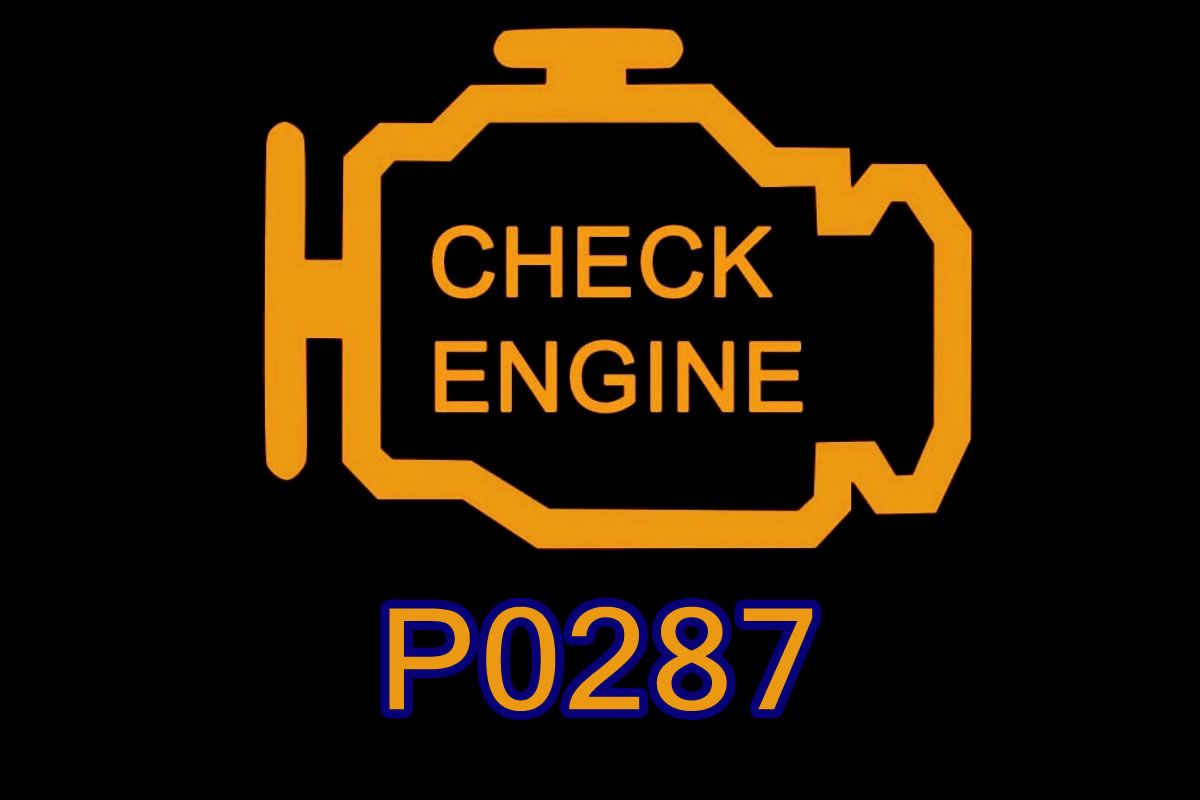
P0287 Cylinder 9 Contribution / Balance Fault
P0287 is an OBD-II diagnostic trouble code indicating that the engine control module (ECM/PCM) has detected an abnormal power contribution or balance condition from cylinder #9.
In simple terms, the ECU believes that cylinder #9 is not contributing the expected amount of power compared with the other cylinders.
This is primarily a cylinder performance and combustion-balance code. It does not automatically mean that the cylinder #9 fuel injector is defective. The actual cause can be related to fuel delivery, injector operation, ignition, compression, valve operation, engine timing, airflow, or an electrical problem.
What Does “Contribution / Balance” Mean?
For an engine to operate smoothly, each cylinder must produce a relatively consistent amount of combustion torque.
The ECU can monitor small changes in crankshaft speed after combustion events and use this information to determine whether individual cylinders are contributing normally.
If cylinder #9 produces significantly less or otherwise abnormal torque compared with the other cylinders, the ECU may store P0287.
The cylinder may still be firing. It does not necessarily have to be completely dead or continuously misfiring.
For example, an injector that delivers slightly less fuel or a cylinder with slightly reduced compression can still produce combustion, but the resulting power contribution may be lower than expected.
Cylinder 9 Location Must Be Confirmed
The physical location of cylinder #9 depends on the engine manufacturer's cylinder-numbering system.
P0287 is generally relevant to engines with enough cylinders to have a cylinder #9 designation.
Do not assume the location of cylinder #9 simply by counting cylinders from the front or rear of the engine.
Before testing an injector, spark plug, ignition coil, or wiring, confirm the cylinder numbering using the manufacturer's service information.
What Causes P0287?
There are several possible causes.
Faulty fuel injector
The injector for cylinder #9 is an important suspect.
It may have:
-
Restricted fuel flow
-
Poor atomization
-
Internal leakage
-
Mechanical sticking
-
Incorrect fuel delivery
-
Electrical problems
-
Internal wear
-
Incorrect calibration
However, P0287 does not prove that the injector is bad.
Injector wiring or connector problem
The injector may work correctly while its electrical circuit has a problem.
Possible causes include:
-
Loose connector
-
Corroded terminals
-
Broken wire
-
High resistance
-
Damaged harness
-
Intermittent connection
-
Poor power supply
-
Control-circuit problem
A wiring fault can cause the injector to operate differently from the other cylinders.
Low fuel pressure
Insufficient fuel pressure can reduce the amount of fuel available for combustion.
Depending on the engine, possible causes include:
-
Weak fuel pump
-
Restricted fuel filter
-
Fuel-pressure regulator problem
-
High-pressure fuel-pump problem
-
Fuel rail pressure problem
-
Fuel-pressure control fault
If several cylinders have contribution problems, a general fuel-system problem becomes more likely.
Ignition problem
On gasoline engines, cylinder #9 may have a weak or inconsistent spark.
Possible causes include:
-
Faulty spark plug
-
Defective ignition coil
-
Coil connector problem
-
Ignition wiring fault
-
Incorrect spark-plug gap
-
Oil contamination
-
Moisture contamination
A weak spark can reduce combustion torque without necessarily causing a complete loss of combustion.
Low compression
A mechanical problem inside cylinder #9 can significantly reduce its contribution.
Possible causes include:
-
Worn piston rings
-
Damaged piston
-
Burned valve
-
Bent valve
-
Valve-seat damage
-
Cylinder-wall wear
-
Head-gasket failure
If compression is substantially lower than the other cylinders, replacing the injector will not correct the problem.
Valve or valvetrain problem
Cylinder #9 may have an issue with its valves or valvetrain.
Possible causes include:
-
Damaged valve
-
Valve clearance problem
-
Weak valve spring
-
Broken rocker arm
-
Camshaft-lobe wear
-
Hydraulic lifter problem
These faults can affect cylinder filling and combustion.
Engine timing problem
Incorrect camshaft or crankshaft timing can affect cylinder contribution.
Potential causes include:
-
Timing-chain problem
-
Timing-belt problem
-
Incorrect timing installation
-
Variable valve timing malfunction
-
Camshaft/crankshaft synchronization problem
If P0287 is accompanied by camshaft or crankshaft codes, those should be investigated carefully.
Airflow or EGR problem
Cylinder contribution can also be affected by problems involving the air entering the cylinder.
Possible causes include:
-
Intake manifold problems
-
Carbon deposits
-
EGR malfunction
-
Intake restriction
-
Uneven air distribution
-
Vacuum leaks where applicable
This can be particularly relevant on certain diesel engines.
Symptoms of P0287
The symptoms depend on the severity of the cylinder imbalance.
Possible symptoms include:
-
Check Engine Light
-
Rough idle
-
Engine vibration
-
Uneven engine operation
-
Hesitation
-
Poor acceleration
-
Reduced engine power
-
Increased fuel consumption
-
Hard starting
-
Misfire
-
Engine stalling
-
Increased exhaust smoke on some diesel engines
-
Poor throttle response
A mild contribution imbalance may produce almost no noticeable symptoms.
A severe imbalance can make the engine run very roughly.
Can P0287 Cause a Misfire?
Yes.
If cylinder #9 is producing significantly less combustion torque, the ECU may also detect a misfire.
However, P0287 and a misfire code are not exactly the same diagnosis.
A contribution fault can occur when the cylinder is still firing but producing less power than the ECU expects.
If a P0300-series misfire code is also present, it should be diagnosed together with P0287.
How Is P0287 Diagnosed?
The goal is to determine why cylinder #9 is contributing differently from the other cylinders.
1. Scan for all trouble codes
Check current, pending, and stored DTCs.
Pay attention to codes involving:
-
Cylinder #9
-
Fuel injectors
-
Fuel pressure
-
Misfires
-
Ignition
-
Camshaft position
-
Crankshaft position
-
VVT
-
Engine timing
-
EGR
-
ECU voltage
Another code may reveal the underlying cause.
2. Check freeze-frame data
Look at the conditions present when P0287 was stored.
Useful information includes:
-
Engine RPM
-
Engine load
-
Engine temperature
-
Fuel pressure
-
Vehicle speed
-
Throttle position
-
Injector-related data
If the fault occurs only under heavy load, the diagnostic direction can be different from a problem that occurs at idle.
3. Check cylinder contribution data
If the scan tool supports cylinder balance or contribution testing, compare cylinder #9 with the other cylinders.
The manufacturer's specifications are essential because there is no universal contribution value that applies to every engine.
The important question is whether cylinder #9 is significantly different from the expected range and from the other cylinders.
4. Inspect the injector connector and wiring
Check the cylinder #9 injector circuit for:
-
Corrosion
-
Loose terminals
-
Damaged pins
-
Broken wires
-
Chafing
-
Oil contamination
-
Water intrusion
-
Previous wiring repairs
A connector problem can cause intermittent cylinder contribution issues.
5. Test the injector
Depending on the engine, injector testing can include:
-
Electrical testing
-
Injector balance testing
-
Flow testing
-
Leak testing
-
Current waveform analysis
-
Scan-tool activation
A simple resistance test may not be sufficient.
An injector can have normal resistance but still have a mechanical fuel-delivery problem.
Injector Swap Testing
On engines where the injectors can be safely exchanged and do not require special cylinder-specific coding, moving the suspected injector to another cylinder can provide useful evidence.
If the contribution problem follows the injector, the injector becomes a much stronger suspect.
If the problem remains on cylinder #9, attention should shift toward:
-
Wiring
-
Compression
-
Ignition
-
Valves
-
Airflow
-
Engine timing
Modern injectors may require coding or calibration after replacement, so the manufacturer's procedure should always be followed.
Check Fuel Pressure
Fuel pressure should be tested according to the engine manufacturer's specifications.
On modern diesel and direct-injection gasoline engines, it may be necessary to examine both low-pressure and high-pressure fuel systems.
If fuel pressure is consistently incorrect, replacing only the cylinder #9 injector may not solve the problem.
Check Ignition on Gasoline Engines
If the engine uses spark ignition, inspect the cylinder #9 spark plug and ignition coil.
Where appropriate, swapping an ignition coil with another cylinder can help determine whether the problem follows the coil.
If the misfire or contribution problem moves with the coil, the ignition coil becomes a strong suspect.
Perform a Compression Test
If the injector, fuel system, and ignition system appear normal, cylinder compression should be compared with the other cylinders.
A significant compression difference can indicate an internal engine problem.
If compression is low, a leak-down test can help identify whether the leakage is occurring through:
-
Intake valve
-
Exhaust valve
-
Piston rings
-
Head gasket
Check Engine Timing
If the cylinder still shows abnormal contribution after fuel, ignition, and compression checks, investigate engine timing.
Check:
-
Camshaft/crankshaft synchronization
-
Timing-chain or belt alignment
-
Variable valve timing
-
Camshaft operation
Incorrect timing can cause poor combustion and cylinder imbalance.
Does P0287 Mean the Injector Is Bad?
No.
The injector is one possible cause, but the code itself does not identify the failed component.
P0287 tells you that cylinder #9 is contributing differently from the expected level.
The cause could be:
-
Injector
-
Injector wiring
-
Fuel pressure
-
Ignition
-
Compression
-
Valve operation
-
Airflow
-
EGR
-
Engine timing
Testing is therefore much more important than simply replacing parts.
P0287 vs. P0286
These codes are related to cylinder contribution/balance faults but refer to different cylinders.
P0286 – Cylinder 9 Contribution / Balance High
P0287 – Cylinder 9 Contribution / Balance Fault
The exact diagnostic behavior and manufacturer implementation can vary, so the vehicle-specific service information should be consulted when interpreting the code.
P0287 vs. P0288
These codes should not be confused.
P0287 is a cylinder #9 contribution/balance fault.
P0288 is associated with a cylinder #10 injector circuit low condition.
One concerns cylinder performance, while the other concerns an injector electrical circuit.
P0287 vs. P0290
P0287 concerns cylinder #9 contribution/balance.
P0290 concerns cylinder #10 contribution/balance.
The diagnostic principle is similar, but the cylinder involved is different.
Can You Drive With P0287?
If the engine runs smoothly and the Check Engine Light is steady, a short drive to a repair facility may be possible.
However, continued driving should be avoided if the engine is running badly.
Pay particular attention to:
-
Severe engine shaking
-
Major power loss
-
Engine stalling
-
Flashing Check Engine Light
-
Heavy smoke
-
Strong fuel smell
-
Abnormal engine noise
-
Severe misfire
On gasoline engines, severe misfiring can overheat and damage the catalytic converter.
On diesel engines, prolonged poor combustion can increase emissions and place additional stress on the exhaust aftertreatment system.
What Should Be Replaced for P0287?
There is no automatic replacement part for P0287.
The correct diagnostic sequence is generally:
Confirm cylinder #9 → check all DTCs → examine contribution data → inspect injector and wiring → verify fuel pressure → test injector → check ignition where applicable → perform compression testing → investigate valves and engine timing if necessary.
If the injector fails testing, replace the injector.
If the wiring is damaged, repair the wiring.
If compression is low, investigate the internal engine problem.
If the injector, wiring, fuel system, ignition, and mechanical condition are all correct, ECU control and other system-level causes can then be investigated.
The Key Point About P0287
P0287 does not identify a specific failed component. It identifies an abnormal contribution from cylinder #9.
The ECU has determined that cylinder #9 is producing a different amount of combustion torque than expected.
The most effective diagnosis is therefore to compare cylinder #9 with the other cylinders and systematically check fuel delivery, injector operation, ignition, compression, valve operation, airflow, and engine timing.
Replacing the injector immediately may solve the problem if the injector is actually faulty, but proper testing is the best way to avoid replacing a good injector when the real problem is elsewhere.