TR
TR EN
EN

Why Does an LPG Vehicle Turn On the Check Engine Light?
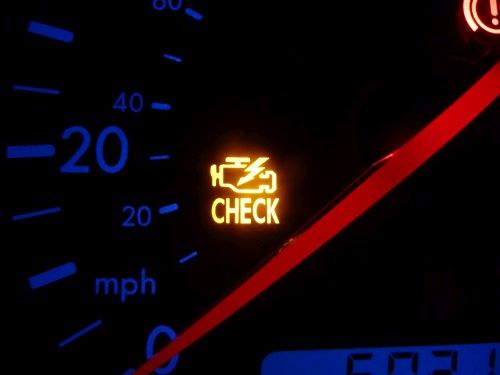
It is quite common for an LPG-equipped vehicle to illuminate the Check Engine light. However, this does not always mean that a specific LPG component has failed.
When a vehicle runs on LPG, the engine control unit (ECU) continues to monitor the air-fuel mixture, fuel trims, oxygen sensor signals, combustion quality, and other engine parameters.
If the LPG system cannot supply the correct amount of fuel under certain operating conditions, the ECU may detect an abnormal condition and store an OBD-II fault code.
This is why a Check Engine light that appears only when the vehicle is running on LPG often points toward LPG calibration, fuel pressure, injectors, or air-fuel mixture problems. However, the exact cause should always be determined by reading the stored diagnostic trouble codes.
Incorrect LPG Calibration
One of the most common reasons for a Check Engine light on an LPG vehicle is incorrect calibration.
The LPG ECU needs to deliver an appropriate amount of fuel based on the gasoline ECU's requirements and the engine's operating conditions.
If the calibration is incorrect, the engine may:
-
Receive too much LPG
-
Receive too little LPG
-
Run correctly at idle but lean out under heavy load
-
Run correctly at low RPM but become too rich at higher RPM
-
Operate normally under light acceleration but develop problems during sudden acceleration
When fuel corrections reach the limits expected by the ECU, a fault code may be stored and the Check Engine light may turn on.
Lean Mixture on LPG
A lean mixture means that the engine is receiving insufficient fuel relative to the amount of air entering the engine.
This can happen for several reasons:
-
Incorrect LPG calibration
-
Insufficient LPG injector capacity
-
Low regulator pressure
-
LPG pressure dropping under heavy load
-
Restricted LPG filter
-
Dirty or worn LPG injectors
-
Incorrect injector sizing
-
Incorrect LPG injector hose installation
-
An LPG regulator that is too small for the engine
-
Incorrect LPG ECU settings
A vehicle may drive normally during gentle driving while becoming too lean during hard acceleration or high engine load.
This is why checking the LPG system only at idle is not enough.
Rich Mixture on LPG
The opposite problem is an excessively rich mixture, where the engine receives more LPG than necessary.
Possible causes include:
-
Incorrect LPG calibration
-
Excessive LPG injector flow
-
Excessive regulator pressure
-
Incorrect injector selection
-
LPG injector problems
-
Incorrect LPG ECU settings
-
Problems with LPG pressure or pressure sensing
A rich mixture can also cause the ECU's fuel corrections to reach their limits and trigger a fault code.
LPG Injectors Can Trigger the Check Engine Light
LPG injectors are responsible for delivering the required amount of LPG to the engine.
If one injector does not operate like the others, the cylinders may receive different amounts of fuel.
An LPG injector can:
-
Become restricted or dirty
-
Deliver too much fuel
-
Deliver too little fuel
-
Become slow to respond
-
Develop an electrical problem
-
Develop a mechanical problem
This can cause unstable idle, hesitation, poor acceleration, or misfire.
If the ECU detects repeated misfires, it can store a misfire-related diagnostic code and illuminate the Check Engine light.
Why Is LPG Regulator Pressure Important?
The LPG regulator converts liquid LPG from the tank into gas and supplies it to the injectors at an appropriate pressure.
If regulator pressure is unstable, the amount of fuel delivered by the injectors can also change.
A particularly important situation occurs when regulator pressure drops under high engine load.
The vehicle may appear completely normal during:
-
Idling
-
Light acceleration
-
Constant-speed driving
but develop a lean mixture during:
-
Hard acceleration
-
High RPM
-
Uphill driving
-
Full-throttle operation
-
Heavy engine load
Therefore, LPG pressure should not be evaluated only at idle.
A Restricted LPG Filter Can Cause a Fault
LPG filters help prevent contaminants from reaching the injectors.
As a filter becomes restricted, LPG flow can become insufficient, particularly when the engine demands a large amount of fuel.
The result may be:
-
Reduced engine performance
-
Lean mixture under load
-
LPG pressure drop
-
Hesitation
-
Misfire
-
Check Engine light
A filter problem can therefore sometimes appear only during high fuel demand.
Air Leaks Can Cause an LPG-Related Check Engine Light
Not every LPG-related Check Engine light is actually caused by the LPG system.
An air leak in the engine's intake system can also create a lean mixture.
Possible sources include:
-
Vacuum hoses
-
Intake manifold gasket
-
PCV system
-
Throttle body area
-
Cracked intake hoses
-
Other intake connections
Unmetered air entering the engine changes the air-fuel ratio.
The oxygen sensor may then detect a lean condition, causing the ECU to increase fuel correction. If the correction becomes excessive, a fault code may be stored.
The LPG system may therefore be perfectly functional while an intake leak is causing the problem.
Why Can the Check Engine Light Appear After an LPG Conversion?
If the Check Engine light begins appearing after an LPG installation, the installation and calibration should be carefully evaluated.
Important points include:
LPG injector hose installation
The injector hoses should be installed appropriately and as consistently as possible between cylinders.
Injector capacity
The LPG injectors must be capable of supplying enough fuel for the engine, particularly at high load and high RPM.
Regulator capacity
The regulator must be capable of maintaining adequate gas flow and pressure for the engine's maximum fuel demand.
LPG pressure
Pressure should remain stable under different operating conditions rather than only at idle.
LPG fuel map
The LPG calibration should be checked against gasoline operation and ECU fuel-trim data.
Can the Oxygen Sensor Cause an LPG-Related Check Engine Light?
The oxygen sensor is one of the most important sources of information when diagnosing LPG calibration.
If the LPG mixture is consistently too rich or too lean, the oxygen sensor can report the resulting exhaust condition to the ECU.
The ECU may then:
-
Increase fuel correction
-
Decrease fuel correction
-
Reach its correction limits
-
Store a mixture-related OBD-II code
-
Turn on the Check Engine light
However, an oxygen sensor-related code does not automatically mean that the oxygen sensor itself has failed.
The sensor may simply be reporting a mixture problem caused by the LPG system.
Why Can Codes Such as P0171 and P0174 Appear on LPG?
Some OBD-II codes are particularly relevant to air-fuel mixture problems.
For example:
P0171 – System Too Lean
The ECU has detected that the engine is operating too lean on the monitored bank.
P0172 – System Too Rich
The ECU has detected an excessively rich mixture.
P0174 – System Too Lean Bank 2
A lean condition has been detected on Bank 2.
If these codes appear specifically while the vehicle is running on LPG, the LPG calibration, regulator pressure, injectors, filters, and intake system should be investigated.
However, if the same codes appear while the vehicle is running on gasoline, the problem should not automatically be attributed to LPG.
What If the Car Runs Normally on Gasoline but Turns On the Light on LPG?
This is a very useful diagnostic clue.
If the vehicle:
-
Runs normally on gasoline
-
Has normal fuel consumption on gasoline
-
Does not trigger the Check Engine light on gasoline
-
Develops abnormal fuel trims on LPG
-
Turns on the Check Engine light after switching to LPG
then the LPG system becomes a much stronger suspect.
The following components and parameters should be examined:
-
LPG calibration
-
LPG pressure
-
LPG regulator
-
LPG injectors
-
LPG filters
-
Injector capacity
-
LPG ECU settings
-
Fuel trims
-
Intake and exhaust leaks
This does not prove that the LPG system is defective, but it significantly narrows the diagnostic direction.
What If the Problem Occurs on Both Gasoline and LPG?
If the Check Engine light and the same fault occur on both fuels, the diagnosis should not focus only on the LPG system.
The following systems may need to be checked:
-
MAF sensor
-
MAP sensor
-
Oxygen sensors
-
Fuel pressure
-
Gasoline injectors
-
Spark plugs
-
Ignition coils
-
Intake and vacuum leaks
-
Exhaust leaks
-
Engine coolant temperature sensor
-
Thermostat
-
PCV system
-
Engine mechanical condition
In some cases, an LPG system does not create the original problem but makes an existing engine problem more noticeable.
Misfire on LPG Can Turn On the Check Engine Light
LPG can make certain ignition problems more noticeable because combustion conditions can differ from gasoline operation.
A spark plug or ignition coil that is marginal on gasoline may cause more obvious misfires when the engine operates on LPG.
The vehicle may therefore:
-
Run relatively well on gasoline
-
Misfire noticeably on LPG
-
Hesitate during acceleration
-
Shake at idle
-
Trigger a Check Engine light
Possible misfire-related codes include:
-
P0300 – Random/Multiple Cylinder Misfire
-
P0301 – Cylinder 1 Misfire
-
P0302 – Cylinder 2 Misfire
-
P0303 – Cylinder 3 Misfire
-
P0304 – Cylinder 4 Misfire
The correct response is not necessarily to replace the LPG injectors.
Spark plugs, ignition coils, fuel delivery, LPG injectors, compression, and air-fuel mixture should all be considered.
A Flashing Check Engine Light Requires Attention
A continuously illuminated Check Engine light and a flashing Check Engine light should not be treated in exactly the same way.
A flashing light can indicate an active and potentially severe misfire.
During severe misfire, unburned fuel can enter the exhaust system and cause the catalytic converter to overheat.
For this reason, a flashing Check Engine light should not be ignored or followed by continued hard driving.
The vehicle should be diagnosed as soon as possible.
What Should You Do If LPG Turns On the Check Engine Light?
The first step should be to read the OBD-II fault codes.
Simply seeing the Check Engine light is not enough to determine whether the problem is related to LPG calibration, the oxygen sensor, ignition, fuel delivery, or another system.
A useful diagnostic sequence is:
1. Read the OBD-II codes
Find out exactly what condition the ECU has detected.
2. Determine whether the problem occurs on gasoline, LPG, or both
This is one of the most valuable clues in LPG diagnostics.
3. Check fuel trims
STFT and LTFT can provide important information about how the ECU is correcting the mixture.
4. Check LPG pressure
Verify that pressure remains stable at idle, during acceleration, and under high load.
5. Check LPG injectors
Injector operation, flow, response, and cylinder-to-cylinder consistency should be evaluated.
6. Check for intake and exhaust leaks
An intake leak can create a lean mixture, while an exhaust leak before the oxygen sensor can introduce outside air and distort sensor readings.
7. Check the ignition system
Spark plugs and ignition coils should not be overlooked.
8. Evaluate LPG calibration under load
A calibration that looks perfect at idle may still be incorrect during acceleration or high engine load.
Is an Idle-Only LPG Adjustment Enough?
No.
This is one of the common mistakes in LPG tuning.
An LPG system may operate perfectly at idle but fail to supply the correct amount of fuel at higher RPM or engine load.
For this reason, LPG calibration should be evaluated under different operating conditions, such as:
-
Idle
-
Light load
-
Moderate load
-
Acceleration
-
High RPM
-
High engine load
Fuel trims and other relevant live data can help determine whether the LPG calibration is tracking gasoline operation correctly.
Clearing the Check Engine Light Does Not Fix the Problem
Deleting the stored fault code may turn off the Check Engine light temporarily.
However, if the underlying problem remains, the ECU can detect it again and illuminate the light.
Repeatedly clearing codes or disconnecting the battery is therefore not a proper repair.
The important question is not "How do I turn the light off?" but "Why did the ECU turn the light on?"
Why Does an LPG Vehicle Turn On the Check Engine Light?
An LPG vehicle can illuminate the Check Engine light for many different reasons.
Common causes include:
-
Incorrect LPG calibration
-
Lean mixture
-
Rich mixture
-
LPG injector problems
-
Regulator pressure problems
-
Restricted LPG filters
-
Insufficient injector capacity
-
Intake or vacuum leaks
-
Exhaust leaks
-
Oxygen sensor problems
-
MAF or MAP sensor problems
-
Spark plug problems
-
Ignition coil problems
-
Fuel pressure problems
-
LPG ECU or wiring problems
The most important point is that an LPG-related Check Engine light does not automatically mean that an LPG component has failed.
The OBD-II code, fuel trims, live sensor data, LPG pressure, injector operation, ignition system, and intake/exhaust condition should be evaluated together.
If the vehicle runs normally on gasoline but repeatedly turns on the Check Engine light while operating on LPG, LPG calibration, pressure, injectors, filters, and system capacity should be among the first areas investigated. If the same fault occurs on both gasoline and LPG, the engine's common systems should be investigated as well.