TR
TR EN
EN

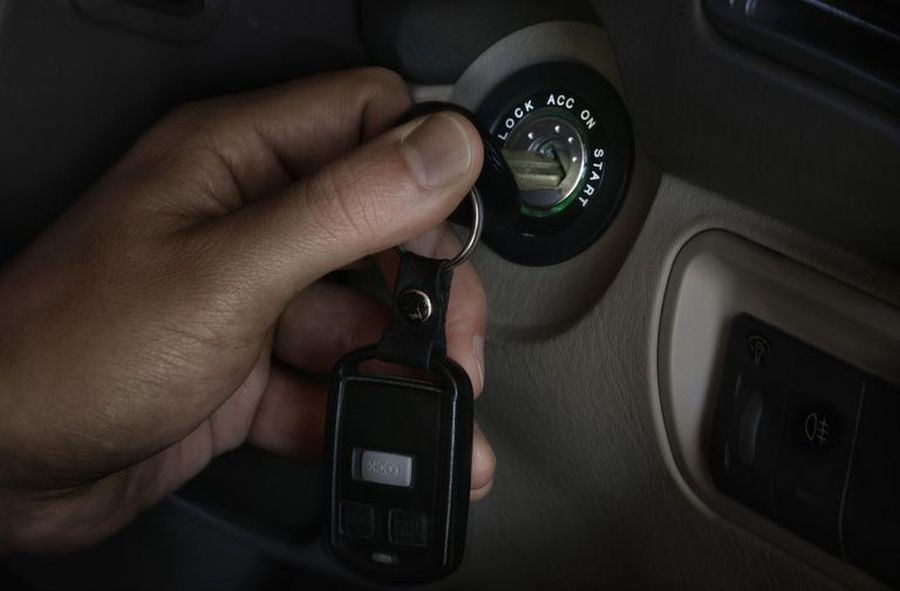
Ignition Switch Faults and Problems
The ignition switch is one of the key components in a vehicle's electrical and starting system. It controls the electrical power supplied to many circuits when the driver turns the key or presses the start button. Although the ignition switch is a relatively simple component, a failure can cause a wide range of problems, from difficulty starting the engine to intermittent electrical faults.
An ignition switch problem should not always be confused with a weak battery, starter motor failure, or immobilizer problem. In many cases, the symptoms can overlap, making proper diagnosis important.
What Does the Ignition Switch Do?
The ignition switch controls different electrical circuits depending on its position. In a traditional key-operated system, these positions are generally:
LOCK/OFF: Most vehicle electrical systems are switched off.
ACC: Accessories such as the radio and some electrical equipment receive power.
ON/RUN: The vehicle's main electrical systems and engine control modules are powered.
START: Power is supplied to the starter circuit so the starter motor can crank the engine.
Modern vehicles may use an electronic ignition switch or a push-button start system instead of a traditional mechanical switch. However, the basic principle remains similar: the vehicle must recognize the driver's starting request and activate the appropriate electrical circuits.
Common Ignition Switch Failure Symptoms
An ignition switch does not always fail completely. It may develop intermittent contact problems, causing symptoms that appear and disappear unexpectedly.
Some of the most common signs include:
-
The engine does not start when the key is turned.
-
Electrical systems switch off unexpectedly.
-
The dashboard lights flicker or disappear.
-
The starter motor does not operate.
-
The engine stalls while driving.
-
Accessories suddenly lose power.
-
The vehicle starts intermittently.
-
Warning lights appear unexpectedly.
-
The radio or other electrical equipment switches off.
-
The key has to be moved or turned several times before the vehicle responds.
-
Electrical problems occur when the key is moved slightly.
The exact symptoms depend on which internal contact or circuit inside the ignition switch has developed a problem.
The Car Does Not Start
One of the most noticeable symptoms is a no-start condition.
When the key is turned to the START position, the starter motor should normally engage. If the ignition switch fails to send power to the starter control circuit, nothing may happen when the key is turned.
However, this symptom does not automatically mean that the ignition switch is faulty.
A similar condition can be caused by:
-
A weak or discharged battery
-
A faulty starter motor
-
A defective starter relay
-
A blown fuse
-
Damaged wiring
-
A clutch or brake pedal safety switch
-
An immobilizer problem
-
A faulty electronic control module
For this reason, the ignition switch should be tested rather than replaced based only on the no-start symptom.
Intermittent Starting Problems
An ignition switch can develop worn internal contacts over time. When this happens, the vehicle may start normally on one occasion and fail to respond the next time.
For example, the dashboard may illuminate normally, but turning the key to the START position may produce no response. Moving the key slightly or trying again may suddenly make the starter operate.
This type of intermittent behavior is particularly suspicious when the battery and starter motor have already been tested and found to be in good condition.
Dashboard Lights Flicker or Turn Off
A faulty ignition switch can interrupt power to the vehicle's ignition or accessory circuits.
If the dashboard lights suddenly go out, flicker, or reset when the key is moved, the ignition switch or its wiring should be inspected.
In modern vehicles, even a brief interruption of power can cause electronic modules to restart and may result in multiple warning lights appearing on the instrument cluster.
Engine Stalls While Driving
A more serious ignition switch problem can cause the engine to stall while the vehicle is moving.
If the switch momentarily loses contact in the RUN position, power to important engine control circuits may be interrupted. Depending on the vehicle's electrical architecture, this can cause the engine control unit or other critical systems to lose power.
An engine that suddenly stalls because of an electrical power interruption should be diagnosed as soon as possible, because the problem can potentially affect vehicle safety.
Electrical Accessories Stop Working
Some ignition switch contacts supply power to accessories such as:
-
Radio
-
Climate control
-
Instrument cluster
-
Interior electrical systems
-
Power outlets
-
Wipers or other switched circuits, depending on vehicle design
If several accessories stop working at the same time and the problem changes when the ignition key is moved, the ignition switch becomes one of the components worth checking.
The Key Feels Different
In a traditional mechanical ignition system, a worn ignition switch or related lock mechanism may cause changes in the way the key feels.
You may notice:
-
The key becomes difficult to turn.
-
The key feels loose.
-
The key does not return correctly from the START position.
-
The key occasionally gets stuck.
-
The ignition positions are difficult to select.
However, mechanical problems with the ignition lock cylinder and electrical problems with the ignition switch are not necessarily the same thing. They should be inspected separately.
Warning Lights and Electronic Problems
Modern vehicles contain numerous electronic control modules. If ignition power becomes unstable, the vehicle may record communication or voltage-related fault codes.
The driver may suddenly see several warning lights at once, even though the original problem is related to a single electrical power supply.
Possible symptoms include:
-
Check engine light
-
ABS warning
-
Airbag warning
-
Electronic stability control warning
-
Battery/charging warning
-
Immobilizer warning
-
Multiple communication-related fault codes
These warning lights do not necessarily mean that all of these systems have failed. An unstable ignition supply can sometimes trigger multiple secondary faults.
Ignition Switch Problems in Push-Button Start Vehicles
Vehicles with keyless entry and push-button starting do not necessarily have a conventional mechanical ignition switch.
Instead, the starting system may include:
-
Start/Stop button
-
Keyless entry module
-
Immobilizer system
-
Steering lock
-
Brake or clutch switch
-
Body control module
-
Engine control unit
-
Starter relay
-
Electronic ignition or power management circuits
A problem with any of these components can produce symptoms that resemble an ignition switch failure.
For example, if pressing the START button does nothing, the problem could be caused by the start button itself, the brake pedal switch, the key fob, immobilizer system, wiring, or an electronic control module.
What Causes an Ignition Switch to Fail?
Ignition switches can fail for several reasons.
Normal wear
Every time the key is inserted and turned, the internal contacts and mechanical components are subjected to wear.
Electrical arcing
Electrical loads can cause arcing across internal contacts, gradually damaging their surfaces.
Overheating
A poor electrical connection can increase resistance and generate heat. Over time, this can damage the switch or its connector.
Heavy key rings
A large or heavy key ring can place additional mechanical stress on the ignition lock mechanism while the vehicle is being driven.
Corrosion
Moisture or corrosion in the switch connector can increase electrical resistance and cause intermittent faults.
Damaged wiring
The ignition switch itself may be functioning correctly while the wiring or connector supplying it is damaged.
How Is an Ignition Switch Diagnosed?
A proper diagnosis should begin with the basics rather than immediately replacing the ignition switch.
The battery voltage should be checked first. The condition of the battery terminals, grounds, fuses, and relevant relays should also be inspected.
If these components are functioning correctly, the ignition switch can be tested according to the vehicle manufacturer's wiring diagram.
A technician may check whether the switch receives the correct input voltage and whether it produces the correct output voltage in each ignition position.
A multimeter can be useful for checking continuity and voltage. On some vehicles, a scan tool can also help identify communication problems or ignition-status signals reported by control modules.
Can an Ignition Switch Be Repaired?
In some older vehicles, an electrical ignition switch may be replaceable separately from the mechanical lock cylinder.
In other vehicles, the complete ignition lock or switch assembly may need to be replaced.
For modern vehicles with electronic ignition systems, replacement can be more complicated because the new component may need to be programmed or synchronized with the immobilizer and other control modules.
Therefore, the correct replacement procedure depends heavily on the vehicle's electrical architecture.
Is It Safe to Drive With a Faulty Ignition Switch?
It depends on the nature of the fault.
If the problem only affects accessories, the vehicle may continue to operate temporarily. However, if the ignition switch can interrupt power to the engine control system while driving, continuing to drive can be dangerous.
Unexpected engine stalling can affect power steering assistance, braking assistance, acceleration, and other vehicle functions depending on the specific vehicle.
For an intermittent ignition fault, it is better to diagnose the problem before it becomes a complete failure.
Ignition Switch or Battery: How Can You Tell the Difference?
A weak battery often causes slow cranking, clicking noises, dim lights, or complete loss of electrical power.
An ignition switch problem may produce a different pattern. The dashboard and accessories may work normally, but turning the key to START may produce no response. Intermittent operation is also common with worn ignition switch contacts.
Nevertheless, the symptoms can overlap, so measuring battery voltage and checking the starter circuit is more reliable than diagnosing the problem from symptoms alone.
When Should the Ignition Switch Be Replaced?
Replacement should be considered when testing confirms that the switch is not reliably supplying the required electrical outputs.
Signs that make replacement more likely include:
-
Intermittent loss of ignition power
-
Burned or damaged electrical contacts
-
Excessive resistance inside the switch
-
Failure to supply voltage in a specific ignition position
-
Visible overheating or connector damage
-
Repeated no-start conditions caused by the switch
Replacing the switch without confirming the fault can result in unnecessary expense, especially because similar symptoms can be caused by the battery, starter, relay, wiring, immobilizer, or control modules.
A correctly diagnosed ignition switch problem is usually straightforward to resolve, but intermittent electrical faults should not be ignored because a small contact problem can eventually become a complete loss of ignition power.