TR
TR EN
EN

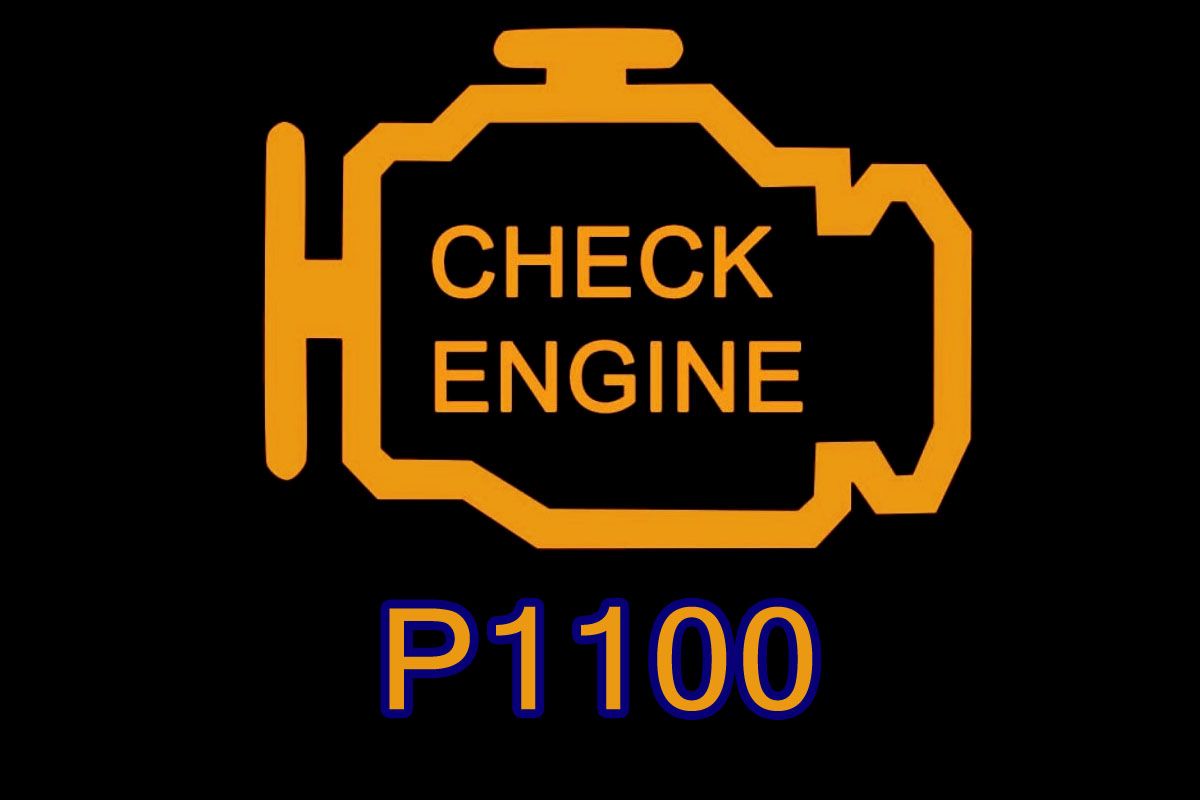
P1100 Mass Air Flow (MAF) Sensor Intermittent
The P1100 trouble code means that the engine control module (ECM/PCM) has detected an intermittent signal or operation from the Mass Air Flow (MAF) sensor.
Unlike a simple “low” or “high” MAF signal code, P1100 indicates that the MAF signal may be dropping out, becoming unstable, changing unexpectedly, or temporarily disappearing during engine operation.
The engine computer depends heavily on the MAF sensor to determine how much air is entering the engine. If the signal becomes unreliable even for a short period, the ECM may have difficulty calculating the correct fuel quantity, ignition strategy, EGR operation, turbocharger control, or other engine functions.
A P1100 therefore does not automatically mean that the MAF sensor itself is defective. The sensor, wiring, connector, power supply, ground, air intake system, or even an engine operating condition can cause the ECM to see an intermittent MAF signal.
What Does the MAF Sensor Do?
The Mass Air Flow sensor measures the amount of air entering the engine.
On many modern engines, the MAF sensor is installed in the intake duct between the air filter housing and the throttle body. Depending on the engine design, the sensor may use a heated sensing element to measure airflow.
As airflow increases, the sensor produces a corresponding electrical signal. The ECM uses this information together with other inputs such as:
-
Engine speed
-
Throttle position
-
Intake air temperature
-
Manifold pressure
-
Engine coolant temperature
-
Oxygen or air-fuel ratio sensor feedback
-
Fuel pressure
-
EGR operation
-
Turbocharger boost pressure on forced-induction engines
The ECM does not simply look at the MAF value by itself. It compares the airflow measurement with what it expects under the current operating conditions.
For example, when the driver suddenly opens the throttle, airflow should normally increase in a predictable manner. If the MAF signal suddenly drops to zero, jumps to an implausible value, or disappears briefly, the ECM may recognize the event as an intermittent MAF fault.
What Makes P1100 Different From a Normal MAF Fault?
The word “Intermittent” is particularly important in this code.
A continuously incorrect MAF signal may generate a range/performance, low-input, or high-input fault depending on the vehicle and diagnostic strategy.
P1100 suggests that the problem may not be present all the time.
The vehicle might therefore:
-
Run normally for several minutes or several days.
-
Suddenly hesitate during acceleration.
-
Lose power temporarily.
-
Develop an unstable idle.
-
Show an intermittent Check Engine Light.
-
Experience a brief stumble when the throttle is opened.
-
Work correctly after restarting the engine.
-
Produce normal MAF readings during a workshop inspection.
-
Fail only when driving over bumps or under engine vibration.
This intermittent nature can make P1100 more difficult to diagnose than a permanently failed sensor.
Common Symptoms of P1100
The symptoms depend on how frequently the MAF signal becomes unreliable and how the ECM reacts to it.
Possible symptoms include:
Rough or unstable idle
If the MAF signal becomes unstable at idle, the ECM may have difficulty maintaining the correct air-fuel mixture.
Hesitation during acceleration
A brief interruption in the airflow signal can cause the engine to respond poorly when the throttle is opened.
Reduced engine power
Some vehicles may enter a protective strategy when the ECM can no longer trust the MAF signal.
Poor throttle response
The driver may feel a delay, stumble, or uneven response when accelerating.
Engine stalling
A severe or repeated MAF signal dropout can contribute to stalling, particularly during idle or rapid throttle transitions.
Poor fuel economy
Incorrect airflow information can cause the ECM to calculate fueling incorrectly.
Hard starting
In some applications, incorrect airflow information can affect starting and initial engine operation.
Check Engine Light
The malfunction indicator lamp may illuminate when the ECM determines that the MAF signal has become unreliable often enough to meet its diagnostic criteria.
Why Does a MAF Signal Become Intermittent?
There are several possibilities, and they should be considered separately rather than immediately replacing the sensor.
1. Contaminated MAF Sensor
A dirty sensing element is one of the most common possibilities.
Dust, oil vapor, crankcase ventilation deposits, and other contamination can accumulate on the sensing element. This can make the sensor response unstable or inaccurate.
An aftermarket or poorly maintained air filter can sometimes contribute to contamination.
However, cleaning the sensor is not automatically the correct solution for every P1100 case. Some MAF sensors can be damaged by improper cleaning methods.
If cleaning is permitted by the manufacturer, use a product specifically intended for MAF sensors and avoid touching delicate sensing elements.
2. Loose MAF Connector
A connector that is not fully locked can cause an intermittent electrical connection.
The sensor may work perfectly while the vehicle is stationary, but vibration from the engine can momentarily interrupt the connection while driving.
This is particularly important when the fault occurs during acceleration or on rough roads.
Inspect the connector for:
-
Loose terminals
-
Bent pins
-
Corrosion
-
Water intrusion
-
Damaged locking tabs
-
Poor terminal tension
-
Oil or chemical contamination
3. Damaged MAF Wiring
The wiring between the MAF sensor and ECM can be damaged even when the insulation appears normal.
A wire may be:
-
Internally broken
-
Stretched
-
Chafed against another component
-
Damaged by heat
-
Intermittently shorted
-
Poorly repaired
-
Pinched during previous maintenance
An internal conductor break can be particularly difficult to find because the circuit may work normally until the harness moves.
4. Poor Power or Ground
The MAF sensor requires the appropriate electrical supply and ground/reference circuits.
A poor ground connection can cause unstable sensor behavior.
Similarly, a supply problem can cause the sensor to stop operating temporarily.
Do not assume that the sensor is faulty simply because its output disappears. The first question should be whether the sensor still has the required electrical supply and ground when the fault occurs.
5. Air Filter or Intake Problems
The MAF sensor measures airflow entering the engine, so the intake system around it matters.
A severely restricted air filter can affect airflow measurements.
A damaged air filter housing, incorrectly installed filter, loose intake duct, or poorly sealed connection can also create abnormal airflow conditions.
The exact effect of an intake leak depends on where the leak is located relative to the MAF sensor.
6. Air Leak After the MAF Sensor
An intake leak downstream of the MAF sensor is an important diagnostic possibility.
The MAF sensor measures air entering through the sensor. If additional air enters the engine after the MAF through an unmetered leak, the ECM may receive an airflow measurement that does not correspond to the actual air entering the combustion process.
Possible leak locations include:
-
Intake hose
-
Throttle body seal
-
Intake manifold gasket
-
PCV hoses
-
Vacuum hoses
-
Turbocharger plumbing
-
Intercooler connections
-
Intake duct joints
An intake leak does not necessarily mean the MAF sensor itself is malfunctioning.
7. Engine Vibration
Intermittent faults frequently become easier to reproduce when vibration is involved.
If the engine moves under acceleration, a damaged harness or loose connector may move with it.
This can create a situation where:
-
The vehicle idles normally.
-
The MAF readings appear normal in the workshop.
-
The fault appears during acceleration.
-
The signal returns when the engine load changes.
This is why a visual inspection while the engine is stationary may not be sufficient.
8. Water or Oil Contamination
Water entering the intake system can affect the MAF sensor.
Oil vapor from the crankcase ventilation system can also contaminate the sensing element over time.
On turbocharged engines, excessive oil contamination in the intake system deserves additional attention because it can point toward problems elsewhere in the ventilation or turbocharger system.
9. Incorrect or Incompatible MAF Sensor
A replacement sensor may physically fit the vehicle but still produce an incorrect signal if it is not the correct specification.
This can happen with:
-
Incorrect aftermarket parts
-
Incorrect sensor calibration
-
Wrong sensor for the engine variant
-
Modified intake systems
-
Incorrect air filter housing
-
Non-original intake components
The ECM expects the MAF signal to behave within a particular range. A sensor that does not match the vehicle's calibration can create diagnostic problems even if it is electrically functional.
10. Electrical Interference
In some cases, electrical interference or poor wiring practices can disturb a sensitive airflow signal.
Previous repairs, aftermarket electrical equipment, poorly routed wiring, or damaged shielding can become relevant.
This is not usually the first thing to suspect, but it becomes more important when the sensor, connector, power supply, and intake system all appear normal.
How P1100 Should Be Diagnosed
The most useful approach is to find when the MAF signal becomes unstable.
Start by scanning the vehicle and recording all stored and pending diagnostic codes.
Do not concentrate only on P1100.
Other codes involving:
-
Fuel mixture
-
Intake pressure
-
Throttle position
-
EGR
-
Turbocharger boost
-
Oxygen sensors
-
Fuel pressure
-
Engine speed
may provide important clues.
Freeze-frame data can also be valuable because it shows the operating conditions under which the ECM recognized the problem.
Look at factors such as:
-
Engine RPM
-
Engine load
-
Vehicle speed
-
Coolant temperature
-
Intake air temperature
-
MAF value
-
MAP value
-
Throttle position
-
Fuel trims on gasoline engines
-
Boost pressure on turbocharged engines
Watch the MAF Signal With Live Data
A scan tool capable of displaying live MAF data can be extremely useful.
The goal is not to find one universal MAF number.
MAF readings vary considerably according to engine size, engine design, RPM, throttle position, atmospheric pressure, temperature, and load.
Instead, watch the behavior of the signal.
At a stable operating condition, the MAF reading should generally behave consistently.
During a smooth increase in engine speed, the airflow reading should respond in a logical manner.
A sudden unexplained drop, spike, dropout, or implausible change can help identify the intermittent event.
Comparing MAF data with MAP, throttle position, RPM, and engine load makes the diagnosis much more reliable.
Perform a Wiring and Connector Inspection
If the MAF value suddenly disappears, the electrical circuit should be investigated.
Depending on the vehicle, the MAF circuit may contain:
-
Power supply
-
Ground
-
Signal
-
Reference circuits
-
Additional circuits for integrated intake-air-temperature sensing
The exact circuit depends on the sensor design.
Use the manufacturer's wiring diagram and specifications rather than assuming a particular pin arrangement or voltage.
A technician may monitor the circuit while gently manipulating the harness and connector to see whether the signal changes.
This type of test is particularly useful when the problem is caused by a loose terminal or internally damaged wire.
Check the Intake System
Inspect the complete intake path.
Look for:
-
Cracks
-
Loose clamps
-
Disconnected hoses
-
Damaged ducts
-
Incorrect filter installation
-
Airbox problems
-
PCV leaks
-
Vacuum leaks
-
Turbocharger hose damage
-
Intercooler hose leaks
On turbocharged engines, the intake and boost system should be inspected carefully because airflow problems can become more complicated than a simple MAF fault.
Check for Exhaust and EGR-Related Problems
The MAF measurement can also be affected indirectly by what happens elsewhere in the engine.
EGR operation changes the amount of fresh air entering the engine. If an EGR valve is stuck, leaking, or operating incorrectly, the relationship between MAF, MAP, engine load, and combustion can become abnormal.
Therefore, an apparently strange MAF reading should sometimes be investigated together with EGR operation rather than treated as an isolated sensor problem.
Compare MAF and MAP Information
MAF and MAP sensors measure different things.
The MAF measures the mass of air entering the engine, while the MAP sensor measures pressure in the intake manifold.
Because they describe different aspects of engine operation, comparing them can be extremely useful.
If the MAF suddenly reports an implausible change while the MAP, throttle position, RPM, and engine load remain consistent, the MAF circuit becomes more suspicious.
If several sensors disagree simultaneously, however, the problem may be caused by an intake, engine-control, or reference problem rather than one sensor.
What About Fuel Trim Data?
On gasoline engines, fuel trims can provide another valuable clue.
If the MAF signal is inaccurate, the ECM may calculate an incorrect amount of fuel.
The resulting fuel-trim behavior can help determine whether the airflow measurement is influencing mixture control.
However, abnormal fuel trims do not prove that the MAF is defective.
Vacuum leaks, fuel-pressure problems, injector issues, exhaust leaks, oxygen-sensor problems, and other faults can also alter fuel trims.
The data needs to be interpreted as a complete system.
Can You Still Drive With P1100?
It depends on the symptoms.
If the Check Engine Light is on but the engine runs normally, a short trip to a repair facility may be possible.
However, continued driving is not ideal if the engine is experiencing:
-
Severe hesitation
-
Stalling
-
Major loss of power
-
Heavy misfire
-
Very rich or lean operation
-
Poor throttle response
-
Flashing Check Engine Light
A severe mixture problem or misfire can cause additional damage, including catalytic-converter damage on applicable gasoline vehicles.
If the engine stalls in traffic or loses power unexpectedly, the safety risk is more important than the code itself.
Does P1100 Mean the MAF Sensor Must Be Replaced?
No.
This is one of the most important points when diagnosing an intermittent MAF fault.
P1100 identifies an intermittent condition involving the MAF system, not a guaranteed failed sensor.
Replacing the sensor without checking the circuit can leave the original problem untouched.
For example, if the real cause is a damaged wire near the MAF connector, installing a new sensor may temporarily appear to solve the problem or may have no effect at all.
A proper diagnosis should establish whether the MAF signal is actually failing and, if so, whether the failure originates from the sensor or its surrounding circuit.
A Practical Diagnostic Sequence
A logical diagnostic process can look like this:
1. Scan all modules and record every code.
Related faults may explain why the MAF signal is considered implausible.
2. Check freeze-frame data.
Determine the RPM, load, temperature, and driving conditions when P1100 was recorded.
3. Inspect the MAF sensor and connector.
Look for contamination, loose terminals, corrosion, damaged wiring, and poor connector locking.
4. Inspect the air intake system.
Check the air filter, airbox, intake duct, clamps, PCV system, vacuum hoses, and turbo plumbing where applicable.
5. Monitor live MAF data.
Look for sudden dropouts, spikes, or changes that do not correspond to engine operating conditions.
6. Verify power, ground, and signal circuits.
Use the vehicle-specific wiring diagram and manufacturer's test procedure.
7. Compare MAF with other engine data.
MAP, throttle position, RPM, fuel trims, EGR behavior, and boost pressure can help establish whether the MAF reading makes sense.
8. Reproduce the fault if possible.
If the problem occurs only during acceleration, road testing with appropriate diagnostic equipment may be necessary.
9. Test the suspected component.
Only after the evidence points toward the MAF sensor should replacement become the logical next step.
10. Clear the code and verify the repair.
The vehicle should be driven under conditions similar to those that originally produced the fault, followed by another scan.
P1100 on Turbocharged Engines
Turbocharged engines deserve additional attention because airflow is affected by boost pressure and turbocharger operation.
A MAF problem can sometimes be confused with:
-
Boost leaks
-
Wastegate problems
-
Variable-geometry turbocharger problems
-
Boost-control solenoid faults
-
MAP sensor problems
-
Intercooler leaks
-
EGR problems
-
Intake restrictions
For example, a leaking intercooler hose can change the relationship between measured airflow and actual engine operation. The MAF sensor may be functioning correctly while another part of the air system is causing the abnormal behavior.
P1100 on Diesel Engines
Diesel engines can also use MAF information extensively for fuel control and EGR management.
On a diesel, an unusual MAF reading may be associated with:
-
EGR operation
-
Intake restriction
-
Turbocharger operation
-
Boost leaks
-
Air filter restriction
-
Intake contamination
-
MAF sensor contamination
A diesel MAF diagnosis should therefore consider the complete air-management system rather than treating the sensor as an isolated component.
Why Intermittent MAF Faults Can Be Difficult to Find
A permanent electrical failure is often easier to diagnose because the fault remains present.
An intermittent fault may disappear before the vehicle reaches the workshop.
The sensor may test normally.
The connector may appear visually perfect.
The wiring may work when stationary.
Then the problem returns when the vehicle experiences:
-
Engine movement
-
Vibration
-
Heat
-
Moisture
-
Acceleration
-
High airflow
-
Certain RPM ranges
This is why freeze-frame data, live data, wiring tests, and controlled road testing can be more useful than simply measuring the sensor once with the engine stopped.
The Right Way to Think About P1100
P1100 is best viewed as a signal reliability problem.
The ECM is effectively saying that it cannot consistently rely on the airflow information it is receiving.
That can happen because the MAF sensing element is contaminated or failing, but it can also happen because the electrical path is unstable or because something in the intake or engine system causes the airflow information to become inconsistent.
The most effective diagnosis therefore follows the signal from the air entering the engine all the way through the MAF sensor, wiring, ECM interpretation, and related engine operating data.
A new MAF sensor may solve the problem when the sensor is genuinely failing. But when the fault is caused by a connector, harness, intake leak, contamination, incorrect component, or another engine-management problem, replacing the sensor alone will not address the underlying cause.