TR
TR EN
EN

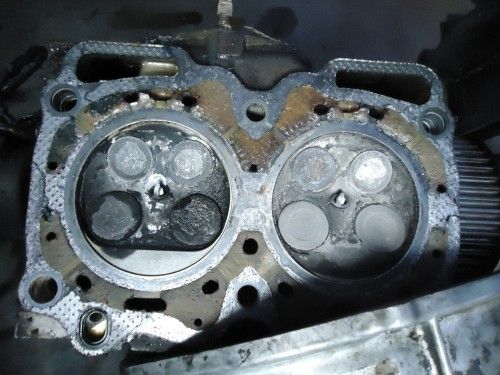
What Is Valve Burning?
Valve burning is a condition in which a valve, particularly an exhaust valve, becomes damaged, burned, deformed, or loses material because of excessive heat, an excessively lean air-fuel mixture, incorrect valve clearance, ignition problems, or other abnormal operating conditions.
It is commonly described as a “burned valve” or “melted valve.” In reality, the valve does not necessarily melt completely. More commonly, the valve edge and sealing surface suffer from burning, pitting, deformation, erosion, and material loss.
What Do Engine Valves Do?
Engine valves control the flow of air or air-fuel mixture into the cylinders and the removal of combustion gases.
The intake valve allows fresh air or an air-fuel mixture to enter the cylinder.
The exhaust valve allows the hot combustion gases to leave the cylinder after combustion.
Because the exhaust valve is directly exposed to extremely hot exhaust gases, it operates under a particularly high thermal load. For this reason, when people refer to valve burning, exhaust valves are usually the main concern.
Why Does a Valve Burn?
There is no single cause of valve burning. Several different problems can create the conditions that eventually damage a valve.
Lean air-fuel mixture
A mixture containing too much air and insufficient fuel can increase combustion temperatures. If an engine operates with a lean mixture for an extended period, the exhaust valves may be exposed to excessive thermal stress.
This is also important in LPG-converted vehicles. However, it is incorrect to say that every engine running on LPG will experience valve burning. Engine design, LPG calibration, fuel mixture, operating temperature, and the materials used for the valves and valve seats all influence the risk.
Incorrect LPG calibration
Incorrect LPG calibration can cause the engine to run too lean, particularly under high load.
An LPG system may appear to operate normally at idle while still providing an incorrect fuel quantity at high engine speed or heavy load.
For this reason, checking only idle operation is not enough to determine whether an LPG system is correctly calibrated.
Insufficient valve clearance
On engines that use adjustable valve clearance, a reduction in valve clearance over time can become a serious problem.
If the clearance becomes too small, the valve may not fully close. When a valve cannot properly seat against the valve seat, heat transfer from the valve to the cylinder head is reduced.
The valve can then remain excessively hot and eventually suffer from burning or sealing-surface damage.
Ignition problems
Incorrect ignition timing, defective spark plugs, ignition coil problems, and other combustion-related faults can increase exhaust temperatures.
Long-term ignition problems can damage not only valves but also the catalytic converter, pistons, and other engine components.
Engine overheating
Cooling-system problems can also increase the thermal load on the valves and cylinder head.
Low coolant level, thermostat problems, radiator restrictions, water pump problems, or other cooling-system faults can cause the engine to operate above its normal temperature range.
Damaged valve seat
A valve can also become damaged because of a problem with the valve seat itself.
The valve seat provides an important sealing surface and also helps transfer heat from the valve into the cylinder head. If the seat is damaged or its contact with the valve becomes inadequate, the valve may operate at a higher temperature.
Can LPG Cause Valve Burning?
This is one of the most frequently discussed issues among LPG vehicle owners.
It is not technically correct to describe LPG itself as a fuel that automatically “melts valves.” However, LPG operation can affect the thermal conditions under which an engine operates, and some engines may be more sensitive to valve and valve-seat wear when running on LPG.
A combination of lean operation under heavy load, incorrect LPG calibration, high exhaust temperatures, and valve-seat materials that are less tolerant of the operating conditions can increase the risk of valve damage.
For this reason, LPG conversion should not be evaluated only by the brand of the LPG kit.
The engine's compatibility with LPG, injector capacity, regulator capacity, fuel mapping, high-load calibration, cooling system, and valve mechanism should also be considered.
What Are the Symptoms of a Burned Valve?
Valve damage is not always obvious during the early stages. As the damage progresses, engine performance and combustion quality can deteriorate.
Common symptoms include:
-
Rough idle
-
Engine vibration
-
Misfires
-
Loss of engine power
-
Reduced performance under load
-
Check engine light
-
Misfire-related OBD-II trouble codes
-
Increased fuel consumption
-
Low compression
-
Difficult starting
-
Significant compression differences between cylinders
-
More noticeable running problems on LPG than on gasoline
When a valve is severely damaged, the affected cylinder may develop a significant compression loss and the engine may continuously misfire.
How Can Valve Burning Be Diagnosed?
Valve burning cannot be confirmed simply by listening to the engine or observing an unstable idle.
The first step may be to scan the vehicle for diagnostic trouble codes and examine misfire data. However, a code such as P0301 only indicates a misfire on cylinder 1. It does not prove that the valve on that cylinder is burned.
The same symptom can be caused by a spark plug, ignition coil, injector, fuel-pressure problem, intake leak, compression problem, or another mechanical fault.
Therefore, the diagnosis should proceed step by step rather than replacing the cylinder head or valves immediately.
Is a Compression Test Important?
Yes. A compression test is an important diagnostic procedure when valve damage is suspected.
A burned or improperly sealing valve can cause compression loss in the affected cylinder. If one cylinder has significantly lower compression than the others, a mechanical problem becomes more likely.
However, low compression does not automatically mean that a valve is burned.
Worn piston rings, piston damage, cylinder-wall problems, or a head-gasket failure can also cause compression loss.
Why Is a Leak-Down Test Useful?
A cylinder leak-down test can provide more detailed information than a compression test when a valve problem is suspected.
During the test, compressed air is introduced into the cylinder and the technician listens for where the air is escaping.
If significant air can be heard escaping through the exhaust system, an exhaust valve may not be sealing properly.
Air escaping through the intake system can indicate an intake-valve sealing problem.
If air is escaping noticeably into the crankcase, the problem may involve the piston, piston rings, or cylinder.
This makes the leak-down test particularly useful when trying to determine whether compression loss is caused by a valve or another internal engine component.
How Is a Burned Valve Repaired?
If a valve is severely burned or damaged, the cylinder head usually needs to be removed.
Once the cylinder head is removed, the technician can inspect:
Valves, valve seats, valve stem seals, valve guides, valve springs, and the valve-to-seat contact surfaces.
Damaged components can then be replaced or repaired as necessary. If the valve seat is damaged, it may require machining or replacement depending on its condition and the engine design.
However, replacing only the damaged valve is not enough.
The reason why the valve became damaged must also be identified.
For example, if the engine continues to operate with a lean mixture, a new valve may eventually suffer the same damage.
How Can Valve Damage Be Reduced in LPG Vehicles?
Correct LPG calibration is one of the most important factors.
Particular attention should be paid to the engine's operation under high load and at high RPM. LPG injector times, fuel trims, mixture behavior, and other operating parameters should be checked rather than relying only on idle operation.
The engine should also operate correctly on gasoline. An existing ignition or fuel-system problem can become more noticeable after an LPG conversion.
On engines that require valve-clearance inspection or adjustment, the manufacturer's recommended maintenance procedure should be followed.
The cooling system must also be in good condition because excessive engine temperature can increase the thermal load on the valves.
Does Every LPG Vehicle Suffer From Valve Burning?
No.
This is one of the most common misconceptions about LPG vehicles.
Not every LPG-powered vehicle develops valve-burning problems. The risk depends on factors such as:
-
Engine design
-
Valve and valve-seat materials
-
Engine operating temperature
-
Engine load and RPM
-
LPG calibration
-
Injector and regulator capacity
-
Maintenance condition
-
Valve-clearance condition
-
Cooling-system performance
Some engines can operate on LPG for many years without significant valve problems, while other engines may be more sensitive to valve-seat wear.
Therefore, simply knowing that a vehicle uses LPG is not enough to diagnose valve burning.
What Should You Do If You Suspect Valve Burning?
If an engine misfires particularly when running on LPG, has low compression, repeatedly produces a misfire on the same cylinder, and the ignition and fuel systems appear to be functioning correctly, an internal mechanical inspection should be considered.
The exact diagnostic sequence depends on the vehicle, but it may include reading trouble codes, checking misfire data, inspecting spark plugs and ignition coils, evaluating the injectors and fuel system, performing a compression test, and carrying out a leak-down test if necessary.
If these results point toward a mechanical problem, cylinder-head removal may become necessary.
The most important point with valve burning is not simply replacing the damaged valve. The underlying reason why the valve became excessively hot or lost its ability to seal must also be identified. Otherwise, the repaired engine may experience the same valve problem again under the same operating conditions.