TR
TR EN
EN

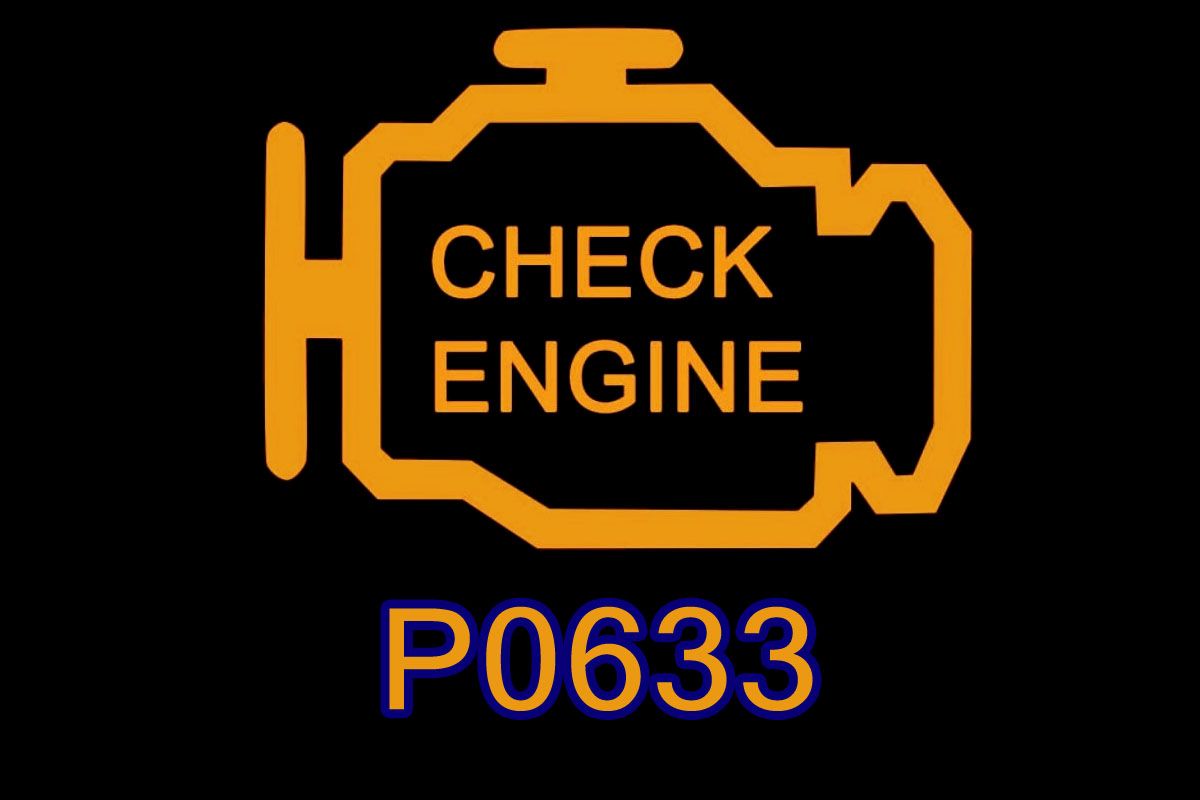
P0633 Immobilizer Key Not Programmed – ECM/PCM
The P0633 – Immobilizer Key Not Programmed – ECM/PCM diagnostic trouble code (DTC) indicates that the ECM/PCM does not recognize or has not been properly programmed with the vehicle's immobilizer key information.
The immobilizer system is designed to prevent unauthorized engine starting. When the ignition is switched on, the vehicle's security system checks whether the key or key transponder is authorized. The immobilizer system then communicates with the ECM/PCM or another control module to permit engine operation.
If the ECM/PCM does not have the required immobilizer information, P0633 can be stored.
In simple terms:
The engine computer does not recognize the immobilizer key authorization information it expects.
What Does P0633 Mean?
P0633 generally means that the ECM/PCM has detected a problem with immobilizer key programming or authorization.
The system can involve several components:
-
Ignition key or key fob
-
Transponder chip
-
Immobilizer antenna/receiver
-
Immobilizer control module
-
Body control module
-
ECM/PCM
-
CAN communication network
-
Vehicle security software
The exact architecture differs between manufacturers.
A simplified sequence is:
Key detected → Immobilizer verifies key → Security system communicates authorization → ECM/PCM receives authorization → Engine starting is permitted
If the required key authorization is missing or invalid, P0633 may be stored.
Does P0633 Mean the Key Is Bad?
Not necessarily.
The code specifically refers to the ECM/PCM not having the expected immobilizer key programming or authorization.
Possible causes include:
-
Key not programmed
-
Replacement key not programmed
-
ECM/PCM replacement
-
Immobilizer module replacement
-
Lost key programming
-
Incorrect module configuration
-
Communication problem
-
Immobilizer antenna problem
-
Faulty transponder
-
Low vehicle voltage during programming
-
Failed immobilizer module
Therefore, replacing the key is not always the correct repair.
What Is an Immobilizer System?
An immobilizer is an electronic anti-theft system that prevents the engine from starting unless an authorized key is detected.
Modern systems typically use a transponder integrated into the key.
The transponder can communicate with the vehicle's immobilizer system without requiring the key to provide conventional electrical power for the authentication process.
Once the key is authenticated, the vehicle allows the engine control system to operate normally.
What Happens When the Key Is Not Programmed?
Depending on the vehicle, an unprogrammed key can result in:
-
Engine cranks but does not start
-
Engine starts and immediately stalls
-
Security warning light remains illuminated
-
Immobilizer warning message
-
Check Engine Light
-
Remote functions working but engine starting disabled
The exact behavior depends on the vehicle's immobilizer architecture.
Can P0633 Cause a No-Start Condition?
Yes.
This is one of the most important symptoms associated with P0633.
If the immobilizer system does not authorize the key, the ECM/PCM may prevent fuel injection, ignition or another engine-starting function.
The starter motor may still operate normally.
This can create a situation where:
Engine cranks normally → Engine does not start → Security/immobilizer warning appears
However, P0633 does not mean that every no-start condition is caused by the immobilizer.
Can the Engine Crank With P0633?
Yes.
On many vehicles, the immobilizer does not necessarily prevent the starter motor from operating.
The vehicle may allow:
Starter operation → Engine cranking
while preventing:
Engine authorization → Engine running
This is why a vehicle can crank normally while refusing to start.
Can P0633 Prevent the Starter From Operating?
Potentially, depending on the vehicle.
Some immobilizer systems can interact with starting authorization and may prevent starter operation.
Therefore, the exact symptoms depend on the manufacturer's immobilizer strategy.
Can P0633 Cause the Engine to Start and Stall?
Yes.
Some systems may allow the engine to start briefly and then shut it down when immobilizer authorization fails.
A common pattern can be:
Engine starts → Immobilizer authorization fails → Engine stalls
However, other mechanical or fuel-related problems can produce similar symptoms.
What Causes P0633?
Common possible causes include:
-
Key has not been programmed
-
Replacement key was not registered
-
ECM/PCM was replaced
-
Immobilizer module was replaced
-
BCM was replaced
-
Key transponder failure
-
Incorrect immobilizer configuration
-
Lost key programming
-
Immobilizer antenna failure
-
Wiring problem
-
CAN communication problem
-
Low battery voltage
-
Failed ECM/PCM
-
Failed immobilizer module
-
Programming procedure interrupted
-
Incorrect software or coding
Can a New Key Cause P0633?
Yes.
If a replacement key has been cut mechanically but its transponder has not been programmed to the vehicle, the immobilizer may reject it.
This is an important distinction:
Key cutting ≠ immobilizer programming
A key can physically fit and turn the ignition while still being electronically unauthorized.
Can a Used Key Cause P0633?
Yes, potentially.
Depending on the immobilizer system, a used key may already be associated with another vehicle.
Some systems allow keys to be reprogrammed, while others may require a new or specially prepared transponder.
The manufacturer's immobilizer procedure should be followed.
Can a Replacement ECM Cause P0633?
Yes.
This is one of the most important causes.
When an ECM/PCM is replaced, the replacement unit may not contain the correct immobilizer authorization information.
The vehicle may require:
-
Immobilizer synchronization
-
Key programming
-
Module pairing
-
ECU configuration
-
Security-code authorization
-
Manufacturer-specific initialization
Until this procedure is completed, P0633 may appear.
Can a Used ECM Cause P0633?
Yes.
A used ECM can retain immobilizer information from the vehicle it originally came from.
Installing it into another vehicle can therefore create an immobilizer mismatch.
Depending on the vehicle, the module may need to be:
-
Reset
-
Virginized
-
Reprogrammed
-
Configured
-
Paired with the immobilizer system
The exact procedure varies by manufacturer.
Can a Replacement BCM Cause P0633?
Yes.
On many modern vehicles, the body control module participates in immobilizer authorization.
Replacing the BCM without completing the required configuration or synchronization can cause immobilizer-related DTCs.
Can a Bad Immobilizer Antenna Cause P0633?
Potentially.
The antenna or receiver is responsible for detecting the key's transponder.
If the vehicle cannot reliably read the transponder, it may not receive valid key authorization.
Possible antenna problems include:
-
Broken wiring
-
Poor connector contact
-
Damaged antenna
-
Internal receiver failure
-
Water intrusion
Can a Weak Key-Fob Battery Cause P0633?
Usually, not directly.
This is an important distinction.
Many keyless-entry systems use a separate transponder function for immobilizer authentication. The immobilizer transponder may not depend on the same battery used for remote locking.
Therefore, a weak remote-control battery does not automatically mean that the immobilizer key is unprogrammed.
However, keyless-start systems can have additional requirements, so the vehicle-specific procedure matters.
Can a Dead Vehicle Battery Cause P0633?
Yes, potentially.
Low vehicle voltage can interfere with immobilizer communication and programming.
If the battery voltage becomes extremely low during starting or programming, modules may lose communication or fail to complete synchronization.
Check:
-
Battery condition
-
Battery terminals
-
Ground connections
-
Charging voltage
Can a Bad Alternator Cause P0633?
Indirectly, potentially.
An unstable or excessive charging voltage can cause electronic modules to behave abnormally.
If P0633 appears together with multiple voltage-related codes, the charging system should be tested.
Can a CAN Communication Problem Cause P0633?
Yes.
The immobilizer system may communicate with the ECM/PCM through the vehicle's communication network.
If communication is interrupted, the ECM may not receive the necessary authorization.
Possible causes include:
-
Damaged CAN wiring
-
Poor connector
-
Module power loss
-
Module ground problem
-
Shorted CAN line
-
Faulty control module
If several modules report communication errors, investigate the network before replacing immobilizer components.
Symptoms of P0633
Possible symptoms include:
-
Engine will not start
-
Engine cranks but does not start
-
Engine starts and stalls
-
Security warning light
-
Immobilizer warning message
-
Check Engine Light
-
Key recognition problems
-
Remote/keyless-start problems
-
Multiple communication DTCs
Some vehicles may store P0633 without immediately preventing starting.
Is P0633 a Serious Code?
P0633 can be a serious starting-related fault.
It is not normally a mechanical engine problem, but an immobilizer authorization problem can leave the vehicle unable to start.
If the vehicle is already running normally, the code may not immediately create a drivability problem.
However, ignoring it can be risky because a future restart may not be possible if the authorization problem becomes more severe.
Can You Drive With P0633?
If the vehicle starts and operates normally, it may be possible to drive it.
However, the immobilizer problem should be diagnosed promptly.
If the vehicle is already experiencing:
-
No-start
-
Intermittent starting
-
Security warning
-
Key recognition problems
it is better not to rely on the vehicle for essential transportation until the problem is resolved.
How Is P0633 Diagnosed?
A proper diagnosis should begin with the immobilizer system rather than immediately replacing the ECM.
1. Scan all modules
Check the ECM/PCM, BCM, immobilizer module and other relevant modules for additional DTCs.
2. Check whether the key is recognized
Use the vehicle's diagnostic system to determine whether the immobilizer recognizes the key.
3. Try the spare key
If another correctly programmed key starts the vehicle normally, the original key becomes a strong suspect.
4. Check the vehicle battery
Low voltage can interfere with immobilizer operation.
5. Check immobilizer-related fuses
Verify power supplies to the relevant modules.
6. Inspect connectors and wiring
Check the immobilizer antenna, BCM, ECM/PCM and related wiring.
7. Check communication
Look for CAN communication problems.
8. Check module configuration
Determine whether the ECM/PCM or BCM has recently been replaced.
9. Perform immobilizer/key programming
If the key or module is not properly registered, use the manufacturer's approved programming procedure.
10. Verify the repair
Start the vehicle several times, clear the DTC and rescan all modules.
What If P0633 Appeared After Replacing the ECM?
This is one of the strongest clues.
If the vehicle was operating normally and P0633 appeared immediately after ECM replacement, the first thing to investigate is ECM-to-immobilizer synchronization.
The replacement ECM may not yet be paired with:
-
The immobilizer system
-
BCM
-
Existing keys
-
Vehicle security configuration
In this situation, replacing another component without performing the correct programming procedure is unlikely to solve the problem.
What If P0633 Appeared After Programming a Key?
Check whether the programming procedure actually completed successfully.
Possible problems include:
-
Incorrect programming procedure
-
Incorrect key type
-
Programming limit reached
-
Low battery voltage
-
Communication interruption
-
Incorrect security authorization
-
Key transponder not compatible with the vehicle
A professional diagnostic tool may be required.
What If the Remote Locking Works but the Engine Does Not Start?
This can happen.
The remote-control function and immobilizer authorization are not necessarily the same system.
A key may successfully:
-
Lock the doors
-
Unlock the doors
-
Open the trunk
while still failing to provide valid engine-start authorization.
Therefore, working remote buttons do not prove that the immobilizer transponder is correctly programmed.
What If the Security Light Is Flashing?
A flashing security or immobilizer light can indicate that the vehicle has not successfully recognized or authorized the key.
However, the exact meaning of the light varies by manufacturer.
The vehicle-specific owner's manual and diagnostic information should be consulted.
What If the Security Light Stays On?
A continuously illuminated security light can also indicate an immobilizer fault.
Check:
-
Key recognition
-
Immobilizer DTCs
-
Module communication
-
Battery voltage
-
Key programming
The light's behavior during ignition-on and starting can provide useful diagnostic information.
Can P0633 Be Caused by the Ignition Switch?
Potentially, depending on the vehicle.
If the ignition switch or its electrical circuit fails to provide the correct power or signal to the immobilizer system, authorization may not complete.
However, this should be verified through circuit testing rather than assumed from the presence of P0633.
Can P0633 Be Caused by the ECU Software?
Yes, potentially.
Incorrect software, incomplete programming or configuration problems can affect immobilizer authorization.
This may be particularly relevant after:
-
ECU replacement
-
ECU programming
-
Software updates
-
Module cloning
-
Major electrical repairs
Can ECU Cloning Cause P0633?
Yes, potentially.
When an ECU is cloned or transferred between vehicles, immobilizer-related data must be handled correctly.
An incomplete or incorrect cloning process can leave the replacement ECU unable to authenticate the vehicle's key.
Can P0633 Be Fixed Without Replacing the Key?
Yes.
If the existing key is physically and electronically functional, the issue may simply be that it needs to be properly programmed or synchronized.
Other possible repairs include:
-
Immobilizer synchronization
-
ECU programming
-
BCM configuration
-
Wiring repair
-
Antenna replacement
-
Communication repair
Can P0633 Be Fixed Without Replacing the ECM?
Yes, in many cases.
If the ECM is healthy and simply lacks the correct immobilizer information, programming or synchronization may resolve the problem.
This is why ECM replacement should not be the first step.
Can a Locksmith Fix P0633?
Sometimes.
An automotive locksmith with appropriate manufacturer-compatible equipment may be able to diagnose and program immobilizer keys on supported vehicles.
For certain vehicles, however, dealer-level diagnostic equipment or manufacturer security authorization may be required.
Can a Dealer Fix P0633?
Yes.
A dealership can typically perform manufacturer-specific immobilizer diagnostics and programming.
This can be particularly useful when the problem involves:
-
Replacement ECM
-
Replacement BCM
-
Security-code authorization
-
Key registration
-
Module synchronization
-
Manufacturer-specific software
Common Diagnostic Mistakes
Replacing the key immediately
The problem may actually be ECM/BCM programming.
Replacing the ECM immediately
A healthy ECM may simply need to be synchronized with the immobilizer.
Assuming a working remote means the key is programmed
Remote locking and immobilizer authorization can operate independently.
Ignoring battery voltage
Low voltage can interfere with programming and module communication.
Ignoring other DTCs
Communication and power-supply codes can reveal the underlying problem.
Programming modules without checking configuration
Incorrect module configuration can create additional immobilizer faults.
How Is P0633 Cleared?
The proper procedure is:
Scan all modules → Check key recognition → Check spare key → Check battery voltage → Check fuses → Inspect immobilizer wiring/connectors → Check CAN communication → Verify ECM/PCM configuration → Program/synchronize key or module → Clear DTC → Start vehicle → Test with all available keys → Rescan
Simply clearing P0633 with an OBD scanner does not normally solve the underlying immobilizer authorization problem.
P0633 After ECU Replacement
This deserves special attention because it is a common situation in which the code can appear.
The sequence may look like this:
Original ECM removed → Replacement ECM installed → Engine cranks → Immobilizer does not authorize replacement ECM → P0633 stored
The solution may involve pairing the replacement ECM with the vehicle's immobilizer system.
Depending on the manufacturer, this can require security authorization and specialized programming equipment.
P0633 vs. Other Immobilizer Problems
P0633 should not be confused with every immobilizer-related DTC.
The important distinction is that P0633 specifically points toward the ECM/PCM not having the expected programmed immobilizer key information.
Other immobilizer codes may instead concern:
-
Antenna/receiver circuits
-
Key transponder communication
-
Immobilizer module communication
-
Security-system configuration
-
Incorrect key
-
Communication between control modules
The additional DTCs are therefore important for identifying the exact problem.
Final Thoughts on P0633
P0633 – Immobilizer Key Not Programmed – ECM/PCM indicates that the ECM/PCM does not have valid or recognized immobilizer key authorization information.
The most important areas to investigate are:
Key programming → Immobilizer system → ECM/PCM configuration → BCM/immobilizer communication → Key transponder → Antenna/receiver → Battery voltage → Wiring → CAN communication
The most important point is that P0633 does not automatically mean the key, ECM or immobilizer module is defective.
If the code appeared after replacing or programming an ECM, BCM, key or other security-related component, module synchronization and programming should be investigated first.
If the vehicle cranks but will not start and the security/immobilizer warning is active, P0633 becomes particularly relevant because the engine may be mechanically capable of starting but electronically unauthorized to run.