TR
TR EN
EN

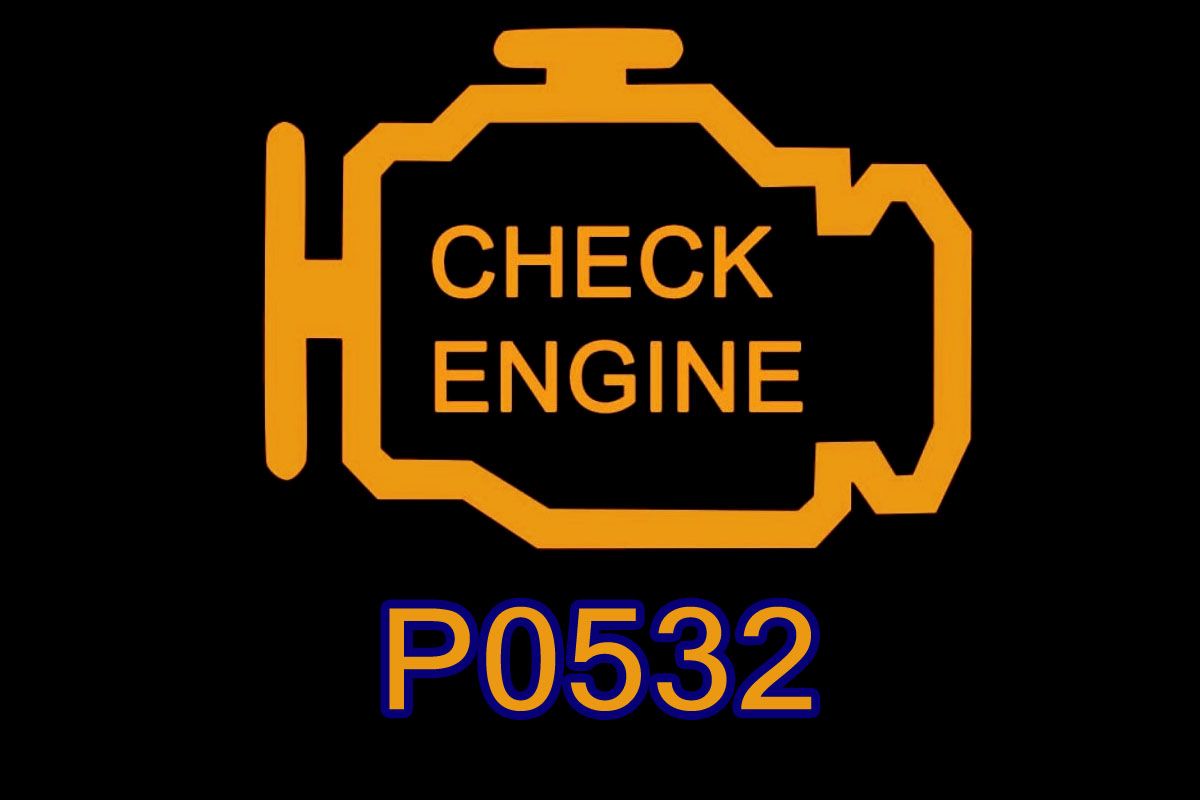
P0532 A/C Refrigerant Pressure Sensor "A" Circuit Low Input
The P0532 trouble code means that the engine control module (ECM/PCM) or HVAC control system has detected an abnormally low electrical signal from the A/C refrigerant pressure sensor "A" circuit.
The key word is “Circuit Low.” This does not automatically mean that the refrigerant pressure itself is low.
The vehicle is reporting that the electrical signal produced by the refrigerant pressure sensor is lower than the expected range. The actual refrigerant pressure may indeed be low, but an electrical problem involving the sensor, wiring, reference voltage or ground can produce the same code.
This distinction is critical when diagnosing P0532.
What Is the A/C Refrigerant Pressure Sensor?
The refrigerant pressure sensor monitors pressure inside the air-conditioning system and sends this information to the vehicle's control system.
The control module uses the pressure information to determine whether the A/C system can operate safely.
Depending on the vehicle, the pressure signal can be used to:
-
Enable or disable the A/C compressor
-
Control compressor output
-
Control cooling-fan operation
-
Protect the compressor from excessively low pressure
-
Protect the system from excessive pressure
-
Adjust A/C performance
-
Detect refrigerant-related problems
Many modern vehicles use a three-wire pressure transducer with a reference voltage, ground and signal circuit.
However, the exact electrical design varies by manufacturer.
What Does "Low Input" Mean?
P0532 specifically describes an electrical signal that is lower than expected.
It does not necessarily mean:
“The A/C system has low refrigerant pressure.”
For example, a pressure sensor may normally produce a voltage within a certain range corresponding to refrigerant pressure.
If the signal wire becomes:
-
Shorted to ground
-
Pulled below its normal voltage
-
Connected to a faulty sensor
-
Affected by a poor reference or ground circuit
the control module can detect a low input and store P0532.
Therefore, actual refrigerant pressure and sensor signal must be separated during diagnosis.
Symptoms of P0532
Possible symptoms include:
-
Check Engine Light
-
A/C not cooling
-
A/C compressor not engaging
-
Intermittent A/C operation
-
Cooling fans operating abnormally
-
Compressor being disabled
-
Weak cabin cooling
-
HVAC system entering a protection mode
Some vehicles may continue to provide A/C operation despite the code, particularly if the control system can substitute a default pressure value.
Common Causes of P0532
Faulty A/C refrigerant pressure sensor
The sensor itself may have an internal electrical fault and produce a signal below the expected range.
This is one possible cause, but it should not be assumed without testing.
Signal wire shorted to ground
This is an important possibility with a low-input code.
If the pressure sensor signal wire is unintentionally connected to ground, the control module can see a very low voltage.
Possible causes include:
-
Damaged insulation
-
Pinched wiring
-
Harness rubbing against metal
-
Corrosion
-
Incorrect previous repairs
Low or missing reference voltage
Many pressure sensors require a reference voltage supplied by the control module.
If that reference is missing or significantly lower than expected, the sensor cannot produce the correct signal.
A reference-voltage problem can sometimes affect several sensors if they share the same supply.
Poor sensor ground
The pressure sensor needs a reliable ground.
A problem with the ground circuit can alter the sensor's output and create an incorrect pressure reading.
Damaged connector
A loose, corroded or contaminated connector can cause the pressure signal to drop unexpectedly.
Pay particular attention to terminals with poor contact tension.
Wiring resistance
Damaged or partially broken wiring can create abnormal voltage readings.
This is particularly important if the fault occurs intermittently when the engine or A/C lines move.
Actual low refrigerant pressure
A genuinely low refrigerant charge can cause the pressure sensor to report a low pressure condition.
However, whether that produces P0532 specifically depends on the vehicle's pressure-sensor calibration and diagnostic strategy.
This is why actual system pressure should be checked rather than assuming that the code alone proves a refrigerant leak.
Control module problem
An ECM/PCM or HVAC module can potentially misinterpret the sensor signal or have an internal fault.
This should generally be considered only after the sensor, reference, ground and wiring have been verified.
How to Diagnose P0532
A good diagnosis should answer two separate questions:
Is the refrigerant pressure actually low?
and
Is the pressure sensor producing the correct electrical signal?
Both need to be answered.
1. Scan all relevant modules
Start with a complete diagnostic scan.
Look for additional codes involving:
-
A/C refrigerant pressure
-
A/C compressor
-
Evaporator temperature
-
Ambient temperature
-
Cooling fans
-
System voltage
-
Sensor reference voltage
-
HVAC communication
If several sensors report electrical problems at the same time, investigate the shared power or ground circuits before replacing individual sensors.
2. Check the pressure reading in live data
Look at the A/C refrigerant pressure parameter with the scan tool.
With the system stabilized and the engine off, compare the reported pressure with what would be expected for the refrigerant temperature.
An obviously implausible pressure reading can indicate a sensor or circuit problem.
For example, if the scan tool reports extremely low pressure while the physical system is known to have normal pressure, P0532 is more likely to be an electrical/sensor problem.
3. Measure actual refrigerant pressure
Use appropriate A/C service equipment to determine the actual system pressure.
Then compare it with the pressure reported by the sensor.
This comparison is extremely valuable.
If:
Actual pressure is normal + scan-tool pressure is abnormally low
then the sensor circuit becomes a major suspect.
If:
Actual pressure is genuinely low + scan-tool pressure agrees
then the refrigerant system itself needs investigation.
4. Check the sensor reference voltage
If the system uses a three-wire sensor, identify the:
-
Reference voltage
-
Sensor ground
-
Signal wire
The reference voltage should be checked against the manufacturer's specification.
Do not assume that every vehicle uses exactly 5 volts.
Although 5 V is common, the actual circuit must be confirmed from the wiring diagram and service information.
5. Check the sensor ground
Measure the ground circuit properly.
A ground can show continuity with the ignition off and still have excessive resistance under operating conditions.
A voltage-drop test can provide much better information.
6. Check the signal voltage
Measure the pressure sensor signal and compare it with the manufacturer's expected pressure-to-voltage relationship.
The signal should correspond logically to actual refrigerant pressure.
If the actual pressure is normal but the signal remains near ground, investigate:
-
Sensor
-
Signal wire
-
Sensor ground
-
Reference circuit
7. Inspect the wiring
Trace the pressure sensor harness carefully.
Look for:
-
Chafing
-
Pinched wires
-
Broken conductors
-
Corrosion
-
Oil contamination
-
Loose terminals
-
Previous repair work
A/C pressure sensors are often installed in areas exposed to vibration, moisture and engine movement, so harness problems are not unusual.
Can Low Refrigerant Cause P0532?
It can be related, but P0532 should not automatically be diagnosed as low refrigerant.
A genuinely low refrigerant charge results in low system pressure, and the pressure sensor will correctly report that condition.
However, P0532 is specifically a low electrical input code.
A shorted signal wire or defective pressure sensor can produce the same electrical symptom even when the refrigerant charge is correct.
The best diagnostic method is therefore to compare:
Actual refrigerant pressure → sensor signal → scan-tool pressure value
This establishes whether the problem is physical or electrical.
Can a Bad Pressure Sensor Cause P0532?
Yes.
A failed pressure sensor can produce an output voltage below the expected range.
However, the sensor should not be replaced simply because P0532 is stored.
For example, if the sensor has a correct reference voltage and ground but its signal remains abnormally low despite normal refrigerant pressure, the sensor becomes a strong suspect.
If the signal is low because its signal wire is shorted to ground, replacing the sensor will not solve the problem.
Can P0532 Prevent the A/C Compressor From Working?
Yes.
The control system needs a reliable pressure signal before it can safely operate the compressor.
If the module believes that refrigerant pressure is dangerously low, it may deliberately prevent compressor operation.
Therefore:
A/C compressor not engaging + P0532
does not automatically mean the compressor is defective.
The compressor may simply be disabled because the control system does not trust the pressure signal.
Can P0532 Be Caused by a Blown Fuse?
Potentially, depending on the vehicle's electrical architecture.
The pressure sensor may share a power supply or reference circuit with other sensors.
If the sensor loses its required supply, its signal may become invalid.
However, a blown fuse would normally affect more than just the pressure sensor if several components share that circuit.
This is why checking related codes and the wiring diagram is important.
P0532 vs. P0533 and P0534
These codes provide different diagnostic information.
P0532 – A/C Refrigerant Pressure Sensor "A" Circuit Low Input
The pressure sensor circuit is producing a lower-than-expected electrical signal.
P0533 – A/C Refrigerant Pressure Sensor "A" Circuit High Input
The pressure sensor circuit is producing a higher-than-expected electrical signal.
P0534 – A/C Refrigerant Charge Loss / Pressure Loss Malfunction
The system has detected a condition associated with insufficient refrigerant charge or pressure loss.
The important distinction is that P0532 is primarily an electrical input diagnosis, while P0534 points more toward the refrigerant system's pressure/charge condition.
Why the Difference Matters
Consider two vehicles with apparently similar A/C symptoms.
In the first vehicle, the refrigerant pressure is genuinely very low because of a leak.
In the second vehicle, the refrigerant charge is correct, but the pressure sensor signal wire is shorted to ground.
Both vehicles may have an A/C system that does not cool and a compressor that has been disabled.
But the repairs are completely different.
The first vehicle needs the refrigerant leak identified and repaired.
The second vehicle needs an electrical repair.
P0532 alone cannot distinguish these situations.
Should You Add Refrigerant When P0532 Appears?
No—not until actual refrigerant pressure has been verified.
Adding refrigerant based solely on the code can create a second problem if the system is already correctly charged.
If the sensor is reporting low pressure incorrectly, additional refrigerant will not repair the electrical fault.
The proper sequence is to verify actual pressure first and then diagnose the sensor circuit.
Final Diagnostic Summary
P0532 means the A/C refrigerant pressure sensor "A" circuit is producing an electrical signal that is lower than the expected range. It does not automatically mean that the A/C system is low on refrigerant.
The most important diagnostic comparison is:
Actual refrigerant pressure ↔ pressure reported by the scan tool ↔ sensor signal voltage
If actual pressure is low and the sensor agrees, investigate refrigerant charge loss and possible leaks. If actual pressure is normal but the sensor reports extremely low pressure, investigate the sensor, signal wire, reference voltage and ground circuit.
Pay particular attention to a signal wire shorted to ground, because this can directly produce a low-input condition.
Do not replace the pressure sensor or add refrigerant simply because P0532 is stored. First determine whether the low reading represents a genuine refrigerant-pressure condition or an electrical signal problem.