TR
TR EN
EN

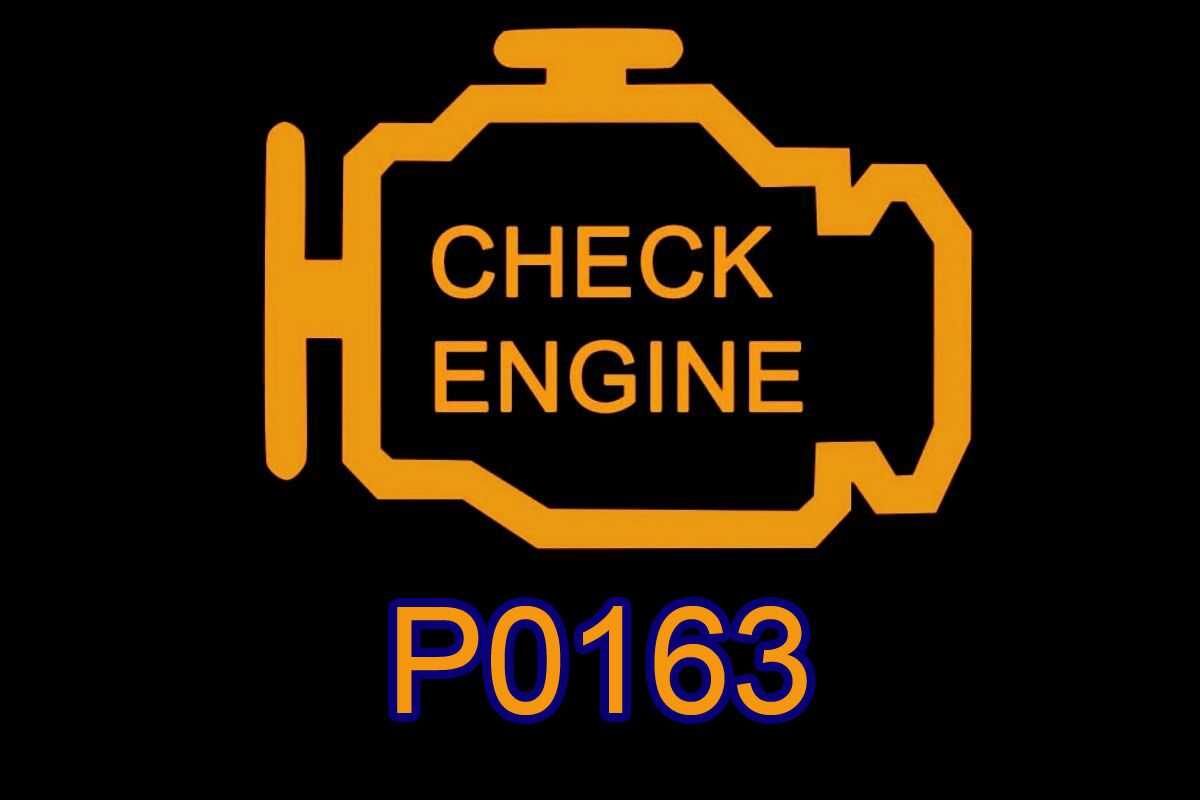
P0163 O2 Sensor Circuit Low Voltage (Bank 2, Sensor 3)
P0163 is stored when the engine control module (ECM/PCM) detects that the oxygen sensor signal from Bank 2, Sensor 3 is lower than the expected electrical range.
At first glance, this sounds like a straightforward oxygen sensor failure. In practice, the sensor itself is only one possibility. A low signal can also be caused by wiring problems, connector corrosion, a short to ground, exhaust conditions, or an engine operating condition that is causing the sensor to report an unusually low oxygen level.
The exact location and function of Sensor 3 can vary considerably between vehicle manufacturers, so the vehicle's wiring diagram and service information should always be used before replacing anything.
What Does P0163 Actually Mean?
The code can be broken down into three parts:
P – Powertrain-related fault
0163 – Specific diagnostic code identifying an O2 sensor circuit low-voltage condition
Bank 2, Sensor 3 – The affected oxygen sensor position
The word “Low” is particularly important.
P0163 does not simply mean that the engine has “too little oxygen.” It means the ECM is seeing an oxygen sensor circuit signal that is electrically lower than the expected value.
Depending on the type of oxygen sensor used, this may be a relatively low voltage signal, a low signal level, or an abnormal output from the sensor's signal circuit.
Therefore, replacing the sensor without checking the circuit can easily result in an unnecessary repair.
What Are Bank 2 and Sensor 3?
Bank 2 refers to the engine bank that does not contain cylinder number 1 on engines with two cylinder banks.
For example, on a V6 or V8 engine, the cylinders are divided into two banks. The bank containing cylinder #1 is Bank 1, while the opposite bank is Bank 2.
Sensor 3 is more complicated because manufacturers do not always use exactly the same sensor numbering strategy.
On some vehicles, Sensor 1 is located before the catalytic converter and Sensor 2 after it. On vehicles with multiple catalysts or multiple oxygen sensors, Sensor 3 may be positioned farther downstream.
Consequently, it is not safe to assume that every Bank 2 Sensor 3 is located in exactly the same place.
Always confirm the sensor location using the vehicle-specific service information.
Why Does the Engine Need This Oxygen Sensor?
Oxygen sensors monitor the oxygen content of the exhaust gases.
The ECM uses information from the oxygen-sensing system to determine whether combustion is occurring under the expected conditions and, depending on the sensor's position and design, to monitor fuel control or catalytic-converter operation.
A sensor located farther downstream may have a different role from an upstream air-fuel sensor.
This distinction matters with P0163 because Bank 2 Sensor 3 may not be the primary sensor responsible for controlling the air-fuel mixture. On some vehicles it is mainly involved in emissions monitoring.
That means the vehicle may continue to run relatively normally even though P0163 has been stored.
Common Causes of P0163
Several different problems can cause the ECM to detect a low O2 sensor circuit signal.
Faulty oxygen sensor
The sensing element may become aged, contaminated, damaged, or electrically defective. An old sensor can gradually become less responsive or produce an abnormal output.
Oil contamination, coolant contamination, excessive fuel, silicone contamination, or other exhaust contaminants can also affect the sensor.
Signal wire shorted to ground
A short to ground is one of the most important electrical possibilities with a low-voltage code.
If the signal circuit is unintentionally connected to ground, the ECM can see a voltage much lower than expected.
This can happen because of damaged insulation, a crushed harness, incorrect previous repairs, or wiring that has rubbed against the exhaust system or another metal component.
Damaged wiring
Heat from the exhaust system can severely affect oxygen sensor wiring.
The harness may become brittle, melted, stretched, or internally broken. A wire can look acceptable externally while having a poor electrical connection internally.
Corroded or contaminated connector
Water, road salt, oil, dirt, and corrosion can increase resistance or interfere with the electrical connection between the sensor and ECM.
A connector that has been disturbed during exhaust or sensor work deserves particular attention.
Exhaust leak
An exhaust leak near the sensor can introduce outside air into the exhaust stream.
Because outside air contains oxygen, the sensor may report conditions that do not correspond to the actual combustion mixture.
An exhaust leak can therefore create oxygen-sensor-related fault codes without the sensor itself being defective.
Engine running condition
A genuine engine problem can influence the oxygen sensor signal.
Fuel-system problems, excessive fuel, insufficient fuel, ignition problems, misfires, vacuum leaks, injector problems, and other combustion-related faults can all alter exhaust oxygen content.
This is why P0163 should not automatically be treated as an isolated sensor problem.
Sensor contamination
A sensor exposed to coolant, oil, fuel, or unsuitable chemical products may produce an abnormal signal.
Incorrect sensor or previous repair
A sensor that is physically similar but electrically incompatible can create strange readings and recurring DTCs.
This is especially important after an aftermarket sensor installation.
ECM/PCM fault
The control module is possible, but it should normally be considered after the sensor, wiring, connector, power supply, grounds, and engine operating conditions have been properly tested.
Symptoms You May Notice
P0163 can produce surprisingly few noticeable symptoms.
In some vehicles, the only obvious symptom is:
-
Check Engine Light
-
Stored diagnostic trouble code
Depending on how the affected sensor is used by the vehicle, other symptoms may include:
-
Poor fuel economy
-
Increased emissions
-
Rough or unstable engine operation
-
Hesitation
-
Reduced performance
-
Abnormal fuel-trim readings
-
Poorer drivability during certain operating conditions
-
Failed emissions inspection
If P0163 occurs together with misfire, fuel-pressure, injector, or mixture-related codes, the vehicle may have much more noticeable running problems.
Those additional codes can be extremely useful because they may identify the underlying problem rather than merely describing what the oxygen sensor is reporting.
P0163 Does Not Automatically Mean “Replace the O2 Sensor”
This is one of the most important points when diagnosing this code.
The ECM does not know that the oxygen sensor has physically failed.
It knows that the electrical signal it is receiving from the Bank 2 Sensor 3 circuit is lower than expected.
Imagine an oxygen sensor producing a normal signal, but the signal wire has been damaged and is touching the engine block. The ECM may see a low signal even though the sensing element itself is perfectly functional.
Replacing the sensor would not repair the damaged wire.
The same principle applies to connector problems, exhaust leaks, power-supply problems, and engine-running conditions.
How P0163 Should Be Diagnosed
A good diagnosis begins with the complete fault picture rather than immediately removing the sensor.
1. Scan for all stored codes
Use a diagnostic scanner to check every powertrain-related code.
Pay particular attention to:
-
Other O2 sensor codes
-
Fuel-trim codes
-
Misfire codes
-
Injector codes
-
Fuel-pressure codes
-
Air-intake problems
-
Catalytic-converter codes
A group of related codes can reveal much more than P0163 by itself.
2. Check the freeze-frame data
Freeze-frame information can show the conditions under which P0163 was recorded.
Engine speed, coolant temperature, load, fuel trims, vehicle speed, and other parameters may help determine whether the problem occurs during cold operation, idle, acceleration, cruising, or another specific condition.
3. Confirm the exact sensor
Identify Bank 2 Sensor 3 using the manufacturer's documentation.
Do not rely solely on the physical appearance of the exhaust system or assumptions based on another vehicle.
4. Inspect the sensor and connector
Look for:
-
Melted insulation
-
Burn marks
-
Broken wires
-
Loose terminals
-
Bent pins
-
Corrosion
-
Water intrusion
-
Oil contamination
-
Harness contact with the exhaust
-
Previous poor-quality repairs
Oxygen sensor wiring is particularly vulnerable because it is exposed to considerable heat.
5. Check the signal circuit
The signal circuit should be tested according to the manufacturer's wiring diagram.
The technician may check for an unwanted connection to ground, continuity, voltage behavior, and other circuit characteristics.
There is no single universal voltage value that applies to every oxygen sensor because modern vehicles use different sensor technologies.
6. Check sensor operation with live data
Look at the actual sensor data while the engine is operating.
The technician should determine whether the reported value is genuinely low, stuck, responding slowly, or inconsistent with other sensor information.
Comparing Bank 2 Sensor 3 with other sensors can sometimes provide useful clues, but the comparison must take the sensor type and location into account.
7. Check for exhaust leaks
Inspect the exhaust system around the affected sensor.
A small leak can introduce oxygen and distort the sensor's interpretation of exhaust gases.
8. Investigate engine-related problems
If the sensor and circuit appear healthy, look at the engine's operating condition.
Fuel pressure, injector operation, ignition, air intake, misfires, fuel trims, and other relevant parameters may need to be examined.
9. Test the sensor itself
If the electrical circuit and engine operation are correct, the sensor can then be tested according to the manufacturer's procedure.
The correct test depends on whether the vehicle uses a conventional oxygen sensor, air-fuel ratio sensor, or another sensor design.
Do Not Use a Universal O2 Sensor Voltage Test
A common diagnostic mistake is assuming every oxygen sensor should operate within the same simple voltage range.
Older narrowband oxygen sensors and newer air-fuel ratio or wideband sensors do not operate identically.
Even when two sensors use similar connectors, their electrical behavior can be completely different.
For this reason, testing should follow the vehicle manufacturer's specifications rather than a generic internet voltage chart.
The same applies to heater resistance and other electrical measurements.
What If P0163 Appears After an O2 Sensor Replacement?
If P0163 appeared shortly after the sensor was replaced, start by examining the repair.
Check whether:
-
The correct sensor was installed
-
The connector is fully locked
-
The wiring was routed correctly
-
The harness is away from the exhaust
-
Any wires were stretched or damaged
-
The replacement sensor has the correct electrical characteristics
-
The connector pins are properly seated
A sensor replacement can disturb wiring that was already weak.
An incorrect replacement part can also produce a new fault even though the original problem has been removed.
P0163 vs. Other O2 Sensor Codes
P0163 should not be confused with every oxygen sensor-related DTC.
P0163 – O2 Sensor Circuit Low Voltage, Bank 2 Sensor 3
The ECM is detecting a low electrical signal from the specified sensor circuit.
O2 sensor high-voltage codes
These indicate the ECM is seeing a signal higher than expected. The electrical causes are different from a low-signal condition.
O2 sensor slow-response codes
These indicate that the sensor is responding too slowly rather than necessarily producing a continuously low signal.
O2 sensor heater codes
These concern the sensor's heating circuit rather than necessarily the oxygen-sensing signal itself.
Several of these codes can occur together. For example, a heater problem may cause abnormal sensor operation during warm-up, while a wiring problem can directly produce a low signal.
Can You Drive With P0163?
If the engine is running normally and P0163 is the only code, the vehicle may remain drivable for a limited period.
However, the Check Engine Light should not simply be ignored.
A faulty oxygen-sensor circuit can affect emissions and, depending on the sensor's role in the particular vehicle, fuel control or catalytic-converter monitoring.
The situation becomes more urgent if P0163 is accompanied by:
-
Flashing Check Engine Light
-
Severe misfire
-
Major power loss
-
Strong fuel smell
-
Heavy smoke
-
Rough running
-
Overheating
-
Other serious engine or fuel-system faults
A flashing Check Engine Light generally indicates a potentially catalyst-damaging misfire and should be treated much more urgently than an isolated emissions-related code.
How Is P0163 Repaired?
The repair depends entirely on what testing identifies.
Possible repairs include:
-
Replacing a failed oxygen sensor
-
Repairing damaged wiring
-
Repairing a short to ground
-
Replacing damaged connector terminals
-
Cleaning or repairing electrical connections where appropriate
-
Correcting an exhaust leak
-
Repairing a fuel or ignition problem
-
Correcting an engine air/fuel issue
-
Installing the correct sensor
-
Repairing a sensor heater or associated circuit when applicable
-
Addressing an ECM issue only after other possibilities have been eliminated
Clearing the code without repairing the cause is not a real solution. If the ECM detects the same abnormal signal again, P0163 will return.
A Practical Way to Think About P0163
Think of the ECM as receiving a message from Bank 2 Sensor 3.
The expected electrical signal is within a certain operating range, but the signal arriving at the ECM is lower than it should be.
The problem could be inside the sensor, between the sensor and the ECM, or caused by conditions that are making the sensor report an abnormal value.
That makes P0163 a circuit and signal diagnosis, not simply a “bad oxygen sensor” code.
Correctly identifying the sensor, checking its wiring and connector, verifying the signal with appropriate test equipment, and considering the engine's actual operating condition are the keys to finding the real cause.