TR
TR EN
EN

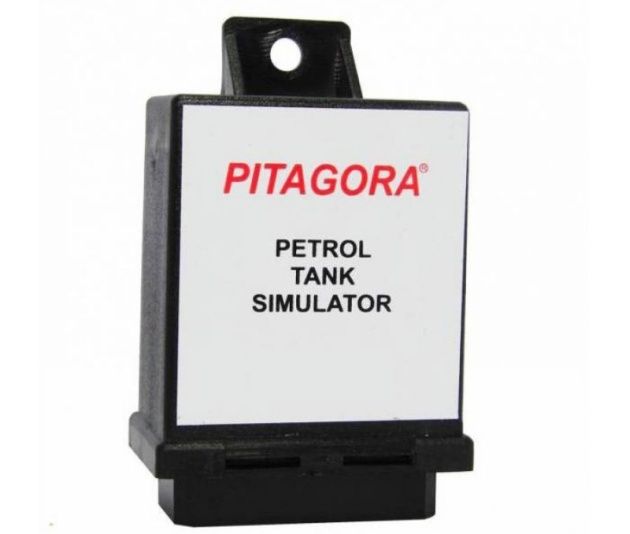
What Is a Fuel Level Emulator? How Does It Work?
A Fuel Level Emulator is an electronic device used in some LPG conversion systems to manage the vehicle’s original fuel-level information while the engine is running on LPG.
One of the common problems after converting a gasoline vehicle to LPG is that the gasoline fuel gauge may appear to drop even though the vehicle is actually consuming LPG. In some vehicles, the fuel-level system calculates fuel consumption or changes the displayed fuel level based on information received from the engine ECU.
A Fuel Level Emulator is designed to compensate for this behavior and help keep the gasoline fuel gauge closer to the actual gasoline level.
Why Is a Fuel Level Emulator Needed?
A vehicle's original fuel gauge is normally designed around gasoline operation.
When the vehicle is converted to LPG, the engine can operate for long periods without consuming gasoline in the conventional way. However, the vehicle's ECU may continue receiving information related to injector operation and fuel consumption.
Depending on the vehicle, this can cause the gasoline gauge to behave incorrectly.
For example, a driver may start the day with a half tank of gasoline, drive 200 km mostly on LPG, and then notice that the gasoline gauge has fallen significantly.
The vehicle may not have actually consumed that amount of gasoline. Instead, the fuel-level system may have interpreted the vehicle's operating data in a way that causes the displayed fuel level to decrease.
This is one of the situations where a Fuel Level Emulator can be useful.
How Does a Fuel Level Emulator Work?
The exact operating principle varies according to the vehicle and LPG system.
In a basic application, the emulator monitors or interacts with the fuel-level information and modifies the signal or operating behavior so that the original gasoline gauge does not continuously indicate a false reduction.
Some systems work by interpreting the fuel-level sensor signal, while others communicate with the vehicle's electronic systems according to a specific control strategy.
The important point is that a Fuel Level Emulator does not add gasoline to the tank and does not measure LPG consumption.
Its purpose is to manage the vehicle's fuel-level information so that the original gauge remains more representative of the actual gasoline level.
Fuel Level Emulator and LPG Systems
Fuel Level Emulators are not required on every LPG-equipped vehicle.
Whether one is needed depends on the vehicle's fuel-level system and how the original ECU calculates or displays fuel consumption.
Some vehicles have a relatively simple fuel-level system and do not experience a significant gauge problem after LPG conversion.
Other vehicles can continuously recalculate the gasoline level while operating on LPG. In these vehicles, the gauge may gradually fall even though very little gasoline is actually being consumed.
Therefore, the need for a Fuel Level Emulator should be determined according to the specific vehicle and LPG installation.
What Happens Without a Fuel Level Emulator?
If a vehicle has a fuel-gauge behavior problem after LPG installation and no appropriate correction is used, several situations may occur.
The gasoline gauge may:
-
Gradually decrease while driving on LPG
-
Show a lower level than the actual amount of gasoline
-
Drop significantly after long-distance LPG operation
-
Recover after the vehicle is switched off and restarted
-
Change after refueling
-
Show inconsistent fuel-level information
The exact behavior depends on the vehicle's fuel-level sensor, ECU strategy, instrument cluster, and LPG system.
A falling gasoline gauge does not automatically mean that gasoline is physically being consumed at the same rate indicated on the dashboard.
Why Does the Gasoline Gauge Drop While Running on LPG?
This is one of the most important reasons for using a Fuel Level Emulator.
In some vehicles, the fuel-level system is not based solely on the physical position of the fuel sender.
The ECU or instrument cluster may also use calculated fuel consumption and other information.
During gasoline operation, the system can compare fuel-injection activity with the fuel-level signal.
After LPG conversion, however, the engine may receive its primary fuel from LPG injectors while the original gasoline ECU continues operating according to its normal control logic.
This can create a difference between:
Actual gasoline consumption
and
Calculated gasoline consumption
When the vehicle's fuel-level strategy is affected by this calculation, the dashboard may display a lower gasoline level than the actual amount in the tank.
Does a Fuel Level Emulator Stop Gasoline Consumption?
No.
This is an important distinction.
A Fuel Level Emulator does not prevent the engine from using gasoline.
It does not control the fuel pump as a conventional fuel cut-off device, and it does not determine whether the engine is running on gasoline or LPG.
Its main function is related to the fuel-level information and gauge behavior.
Some modern LPG systems may also use gasoline under certain operating conditions, depending on the vehicle, LPG ECU calibration, injection technology, engine load, temperature, and system strategy.
Therefore, the emulator should not be confused with a gasoline cut-off system.
Fuel Level Emulator vs. Fuel Level Sensor
These are completely different components.
The fuel level sensor, usually integrated with the fuel sender assembly, physically measures the approximate fuel level inside the gasoline tank.
The Fuel Level Emulator does not replace the fuel sender's basic physical measurement function.
Instead, it works with the vehicle's electronic fuel-level strategy to compensate for behavior caused by LPG operation.
If the actual fuel-level sensor is defective, installing an emulator will not necessarily solve the problem.
A faulty sender, damaged wiring, poor electrical connection, or instrument-cluster problem must be diagnosed separately.
Fuel Level Emulator vs. Fuel Pump Relay
A Fuel Level Emulator is also completely different from a fuel pump relay.
A fuel pump relay is responsible for supplying electrical power to the fuel pump according to the vehicle's control strategy.
A Fuel Level Emulator is related to fuel-level information and the behavior of the gasoline gauge.
Therefore, a Fuel Level Emulator should not be used as a substitute for a defective fuel pump relay.
Fuel Level Emulator vs. Lambda Emulator
The names can sometimes cause confusion because both devices may be found in LPG installations.
A lambda emulator deals with the oxygen-sensor/lambda signal and was particularly common in older LPG systems.
A Fuel Level Emulator deals with fuel-level information and gasoline gauge behavior.
They perform different functions.
A lambda emulator is concerned with the engine's mixture-feedback strategy, while a Fuel Level Emulator is concerned with the way fuel-level information is handled during LPG operation.
Symptoms of a Fuel Level Emulator Problem
A faulty emulator or incorrect installation can cause symptoms such as:
-
Gasoline gauge behaving abnormally
-
Fuel level changing unexpectedly during LPG operation
-
Gauge failing to recover correctly
-
Incorrect fuel-level display after switching between LPG and gasoline
-
Fuel-level information becoming inconsistent
-
Problems appearing after LPG system installation or electrical modifications
However, these symptoms can also originate from the vehicle itself.
Possible causes include:
-
Fuel-level sender problems
-
Fuel tank sender wiring
-
Poor electrical connections
-
Instrument cluster faults
-
ECU communication problems
-
Incorrect LPG wiring
-
Incorrect emulator configuration
-
Incompatible emulator
-
LPG ECU configuration problems
For this reason, replacing the emulator without diagnosis is not always the correct solution.
How Is a Fuel Level Emulator Diagnosed?
Diagnosis should begin by determining whether the problem is actually caused by the emulator.
A technician can compare the displayed fuel level with the actual fuel level and observe what happens under different operating conditions.
Useful checks include:
Gasoline operation
The vehicle should be driven on gasoline and the behavior of the fuel gauge should be observed.
LPG operation
The same vehicle can then be monitored while operating on LPG.
If the fuel gauge only behaves incorrectly during LPG operation, the LPG system and its interaction with the vehicle's fuel-level strategy become more relevant.
Fuel-level sensor signal
The fuel sender and its wiring should be checked to determine whether the original fuel-level signal is correct.
Electrical connections
The emulator's power, ground, signal, and communication connections should be inspected.
LPG ECU configuration
If the emulator is integrated with or controlled by the LPG system, its configuration should be checked.
Vehicle-specific diagnostic data
Some vehicles can provide fuel-level information through diagnostic equipment. Comparing this information with the physical fuel level can help determine whether the problem originates from the sender, ECU calculation, instrument cluster, or LPG-related electronics.
Can a Fuel Level Emulator Cause a Check Engine Light?
In some installations, an incorrect connection or incompatible device can potentially create electrical or communication problems that result in diagnostic trouble codes.
However, a Fuel Level Emulator is not normally installed to control the engine's air-fuel mixture.
If the Check Engine Light appears after an LPG installation, the diagnosis should not automatically focus on the Fuel Level Emulator.
The following should also be checked:
-
LPG ECU
-
Wiring
-
Injector connections
-
Lambda sensor
-
Fuel trims
-
Intake leaks
-
LPG pressure
-
Gasoline injection signals
-
Vehicle ECU communication
An OBD fault code should always be interpreted in the context of the vehicle's actual symptoms and live data.
Can a Fuel Level Emulator Increase Fuel Consumption?
A properly installed Fuel Level Emulator should not directly increase gasoline or LPG consumption.
Its purpose is related to fuel-level information rather than fuel delivery.
However, if an emulator is incorrectly installed or if the LPG conversion has broader electrical or calibration problems, the vehicle may develop drivability or fuel-control issues.
In such a situation, increased consumption could be caused by the underlying LPG system problem rather than by the emulator itself.
Is a Fuel Level Emulator Necessary on Every LPG Vehicle?
No.
This is an important point when discussing LPG conversion systems.
Some vehicles continue to display the gasoline level correctly while operating on LPG. Others have a fuel-gauge strategy that causes the displayed gasoline level to fall artificially.
If the original system already behaves correctly, a separate Fuel Level Emulator may not be necessary.
The correct approach is therefore to determine how the specific vehicle calculates and displays fuel level before deciding whether an emulator is required.
What Should Be Checked Before Installing One?
Before installing a Fuel Level Emulator, the vehicle's original fuel-level system should be checked.
It is useful to verify:
-
Whether the gasoline gauge actually drops incorrectly
-
Whether the fuel sender works correctly
-
Whether the vehicle uses calculated fuel-level information
-
Whether the problem only occurs during LPG operation
-
Whether the LPG ECU supports the required function
-
Whether the emulator is compatible with the vehicle
-
Whether the wiring can be installed without compromising the original system
-
Whether the emulator requires specific calibration
Installing an incompatible device can create additional electrical problems instead of solving the original gauge issue.
Fuel Level Emulator in Modern LPG Systems
Modern LPG systems are considerably more sophisticated than older conversion systems.
Many current LPG ECUs can communicate with vehicle electronics and manage various signals without requiring separate external modules for every function.
Some LPG systems can also communicate through vehicle communication networks or use dedicated strategies for fuel-level management.
As a result, the traditional standalone Fuel Level Emulator is not universal.
Whether a separate emulator is required depends on the vehicle's electronics, LPG ECU, fuel-level system, and the specific conversion kit.
An Important Point About the Gasoline Gauge
A fuel gauge is not always a direct measurement of fuel volume.
In modern vehicles, the displayed value can be influenced by electronic calculations, filtering, sender characteristics, ECU data, and instrument-cluster software.
This explains why a gasoline gauge may sometimes show a lower level after extended LPG operation even though the driver has not consumed an equivalent amount of gasoline.
The correct diagnosis is therefore not simply to assume that the fuel sender is defective.
The relationship between the fuel-level sensor, vehicle ECU, instrument cluster, LPG ECU, and Fuel Level Emulator should be considered as a complete system.
What Should Be Done If the Fuel Gauge Behaves Incorrectly on LPG?
The first step should be to determine whether the gasoline level is actually changing or whether only the displayed value is changing.
If the physical gasoline level remains stable but the dashboard gauge decreases during LPG operation, the problem may be related to the vehicle's fuel-level calculation or LPG integration.
If the gauge also behaves incorrectly while driving exclusively on gasoline, the original vehicle fuel-level system should be investigated first.
This distinction can prevent unnecessary replacement of LPG components.
Fuel Level Emulator: The Key Point
A Fuel Level Emulator is an electronic component used in certain LPG systems to help manage the vehicle's gasoline fuel-level information while the engine operates on LPG.
Its main purpose is to prevent or compensate for incorrect gasoline-gauge behavior caused by the way some vehicles calculate fuel consumption and fuel level during LPG operation.
It is not a fuel pump relay, gasoline cut-off valve, gasoline injector, or lambda emulator.
Most importantly, not every LPG vehicle requires a Fuel Level Emulator. The need for one depends on the vehicle's fuel-level system and the design of the LPG conversion system.
If a gasoline gauge behaves incorrectly after LPG conversion, the correct solution is to diagnose the fuel sender, wiring, vehicle ECU, instrument cluster, LPG ECU, and emulator—if fitted—together rather than replacing one component without testing.