TR
TR EN
EN

How to Use a Car Paint Thickness Gauge? How to Interpret the Readings
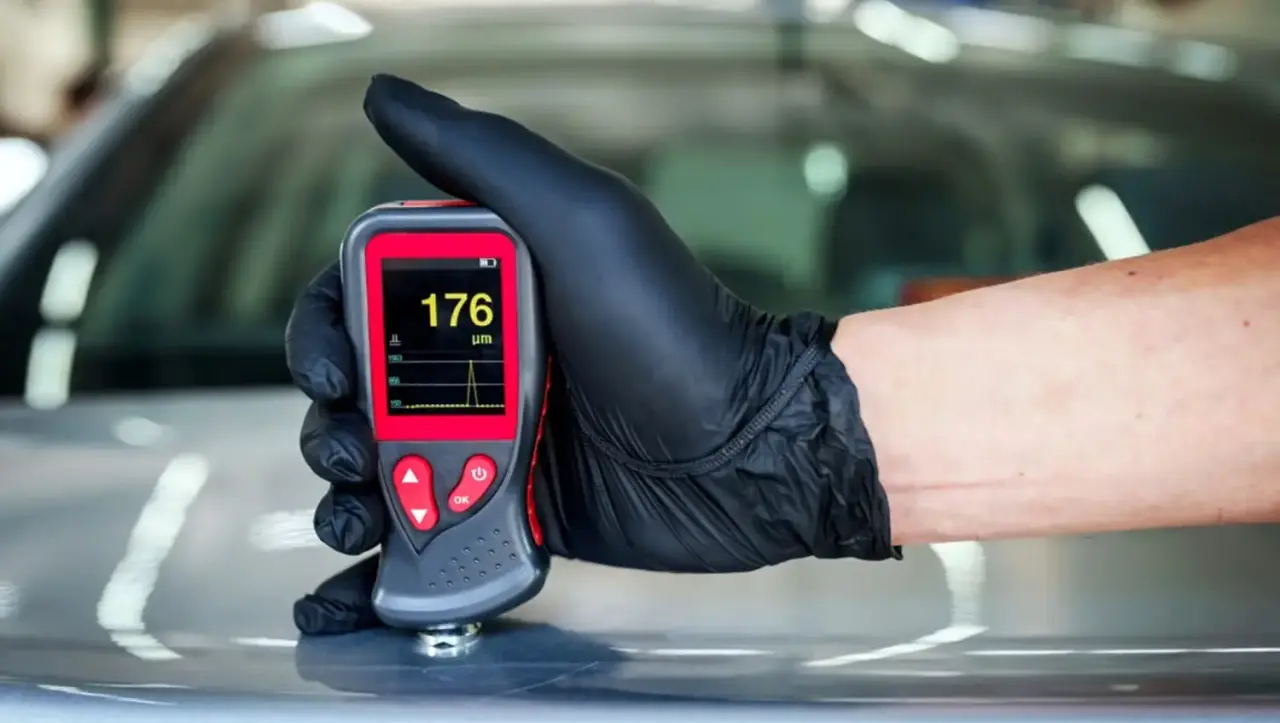
A car paint thickness gauge is one of the most important inspection tools used when purchasing a used vehicle. It helps determine whether a body panel still has its original factory paint or has been repainted, repaired with body filler, or replaced. Even professionally repaired areas and spot paintwork that are difficult to detect visually can often be identified with this device.
So, how do you use a paint thickness gauge, and how should the readings be interpreted?
What Is a Paint Thickness Gauge?
A paint thickness gauge is a device that measures the thickness of a vehicle's paint coating on metal surfaces in microns (µm).
It helps identify:
-
Paint thickness
-
Body filler (putty)
-
Possible panel replacement
How to Use a Paint Thickness Gauge
Using the device is relatively simple, but interpreting the readings correctly is essential.
1. Hold the Gauge Flat Against the Surface
Place the gauge on the panel:
-
Perpendicular to the surface
-
Steady and firmly
Holding the gauge at an angle may result in inaccurate readings.
2. Measure Each Body Panel Separately
Measure each panel individually, including:
-
Hood
-
Roof
-
Fenders
-
Doors
-
Trunk lid
3. Take Multiple Measurements on Each Panel
Measure several locations on the same panel, such as:
-
Upper section
-
Middle section
-
Lower section
Multiple readings provide a more reliable assessment.
4. Compare the Readings
This is the most important step.
The paint thickness values on different panels should generally be similar if the vehicle retains its original finish.
How to Interpret Paint Thickness Readings
As a general guideline, paint thickness values can be interpreted as follows:
Factory Original Paint
Typically:
-
80–180 microns
This usually indicates:
-
Original factory paint
The exact range may vary depending on the vehicle manufacturer.
Spot Repair / Localized Repaint
Typically:
-
180–300 microns
This range may indicate:
-
Minor repainting
-
Localized body repair
Complete Panel Repaint
Typically:
-
300–600 microns
These readings generally suggest:
-
The entire panel has been repainted
-
Cosmetic refinishing has been performed
Body Filler Present
Typically:
-
600 microns and above
These values usually indicate:
-
Body filler has been applied after collision damage
-
Dent repair work has been carried out
How Can You Tell If a Panel Has Been Replaced?
A paint thickness gauge alone cannot always confirm that a panel has been replaced.
However, the following readings may indicate replacement:
-
A reading of zero or an unusually low value
-
Measurements that differ significantly from the surrounding panels
For example:
-
Hood: 120 µm
-
Right fender: 0 µm
This may suggest that the right fender has been replaced.
What Does It Mean If One Panel Has Different Readings?
If different areas of the same panel produce noticeably different measurements, such as:
-
Lower section showing one value
-
Upper section showing another
it may indicate:
-
Localized repainting
-
Body filler repairs
Does a Paint Thickness Gauge Detect Everything?
No.
The gauge can detect:
-
Paint thickness
-
Body filler
However, it cannot always determine the quality of the repair.
For example, results may be less reliable on:
-
Professionally repaired panels
-
Plastic body panels
-
Aluminum body panels
Are Aluminum Panels Measured Differently?
Yes.
Aluminum body panels:
-
Require a compatible gauge or the correct calibration mode
-
May have different reference values than steel panels
Proper calibration is essential for accurate measurements.
Is a Paint Thickness Gauge Enough on Its Own?
No.
For the most accurate evaluation, the readings should be combined with:
-
Visual inspection
-
Underbody inspection on a vehicle lift
-
Professional vehicle inspection report
-
Chassis inspection
Common Mistakes When Using a Paint Thickness Gauge
The most common mistakes include:
-
Taking only one measurement per panel
-
Holding the gauge at an angle
-
Measuring dirty or contaminated surfaces
-
Ignoring manufacturer-specific paint thickness variations
Conclusion
A paint thickness gauge is one of the most valuable tools for evaluating a vehicle's body condition. It can help identify:
-
Spot repainting
-
Complete panel repainting
-
Body filler repairs
-
Possible panel replacement
However, it should not be relied upon as the sole method of evaluation. The most accurate assessment is achieved by combining paint thickness measurements with a professional inspection and a thorough visual examination.