TR
TR EN
EN

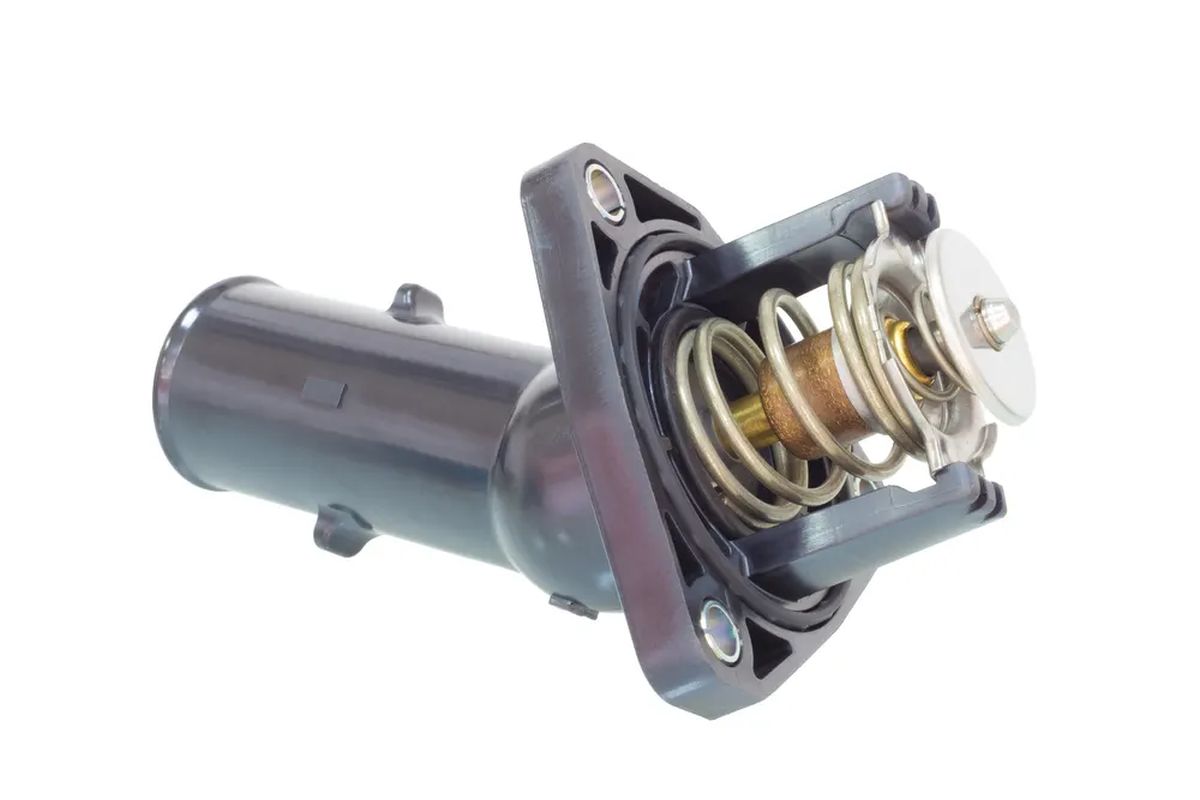
What Is a Thermostatic Vacuum Sensor? What Are the Symptoms of Failure?
A thermostatic vacuum sensor is a temperature-sensitive component used in some vehicle vacuum-control and emission-control systems. It combines temperature sensing with vacuum control, allowing a vacuum circuit to operate only when the engine or coolant reaches a specific temperature.
These components are particularly associated with older vacuum-operated engine-management and emissions systems. Depending on the vehicle, a thermostatic vacuum sensor may control or regulate vacuum supplied to components such as the EGR valve, vacuum advance mechanism, thermal vacuum switch, air injection system, or other vacuum-operated devices.
The exact terminology can vary between manufacturers. Similar components may be called a Thermostatic Vacuum Switch (TVS), Thermal Vacuum Valve (TVV), or Thermal Vacuum Switch Valve.
What Does a Thermostatic Vacuum Sensor Do?
Its main purpose is to prevent a vacuum-operated system from functioning at the wrong engine temperature.
For example, an emissions-control system may not need to operate when the engine is cold. The thermostatic vacuum device can therefore block or redirect the vacuum signal until the coolant reaches a predetermined temperature.
Once the required temperature is reached, the internal thermal element changes position and allows the vacuum signal to pass.
In simple terms:
Engine temperature → Thermal element → Vacuum control → Vacuum-operated component
This allows the engine's vacuum systems to respond not only to engine load or throttle position but also to temperature.
How Does a Thermostatic Vacuum Sensor Work?
The component generally contains a temperature-sensitive element and one or more vacuum passages.
When the engine is cold, the thermal element keeps the vacuum passage in a particular position.
As coolant temperature increases, the thermal element responds to the temperature change and changes the internal valve position.
Depending on the design, it may:
-
Allow vacuum to pass
-
Block vacuum
-
Redirect vacuum to another port
-
Change the vacuum signal at a specified temperature
Some designs operate at a single temperature threshold, while others can have multiple temperature-controlled vacuum ports.
Where Is the Thermostatic Vacuum Sensor Located?
The location depends heavily on the vehicle and engine.
It may be installed:
-
In the engine coolant passage
-
On the intake manifold
-
Near the thermostat housing
-
On a coolant outlet
-
On the cylinder head
-
In a vacuum hose assembly
-
On an emissions-control component
Some versions are directly exposed to engine coolant so they can accurately respond to coolant temperature.
What Systems Can a Thermostatic Vacuum Sensor Control?
The exact application varies by vehicle.
A thermostatic vacuum device can be used in systems such as:
-
EGR control
-
Distributor vacuum advance on older gasoline engines
-
Air injection systems
-
Vacuum-operated emission controls
-
Intake air control systems
-
Carburetor vacuum controls
-
Vacuum actuators
-
Engine warm-up systems
It is particularly important to identify the component's specific vacuum ports and operating temperature before diagnosing it.
What Are the Symptoms of a Bad Thermostatic Vacuum Sensor?
A failed thermostatic vacuum sensor can cause different symptoms depending on which vacuum system it controls.
Common symptoms include:
-
Rough engine operation
-
Poor acceleration
-
Engine hesitation
-
Reduced engine performance
-
Increased fuel consumption
-
Increased emissions
-
EGR-related problems
-
Vacuum actuator not operating correctly
-
Vacuum advance problems on older engines
-
Check Engine Light on applicable vehicles
-
Difficult cold or warm operation
-
Engine stalling in some situations
-
Incorrect vacuum signal
-
Vacuum leakage
-
Emissions test failure
Because the component often controls another system rather than directly controlling the engine, the symptoms can be difficult to associate with the sensor itself.
What Happens If the Sensor Stays Open?
If the thermostatic vacuum valve remains open when it should be closed, vacuum can reach a component before the engine reaches the required temperature.
Depending on the system, this can cause:
-
EGR operation during cold start
-
Incorrect ignition timing on older engines
-
Poor cold drivability
-
Engine hesitation
-
Rough idle
-
Increased emissions
-
Reduced engine performance
The exact symptoms depend on what the vacuum circuit operates.
What Happens If the Sensor Stays Closed?
If the valve remains closed when it should allow vacuum to pass, the controlled component may never receive the required vacuum signal.
For example, an EGR valve may not receive sufficient vacuum to operate.
This can lead to:
-
Increased NOx emissions
-
EGR-related fault conditions
-
Reduced fuel efficiency
-
Engine hesitation
-
Poor engine performance
-
Check Engine Light on vehicles capable of detecting the problem
Can a Thermostatic Vacuum Sensor Cause an EGR Problem?
Yes.
On vehicles that use vacuum-controlled EGR systems, the thermostatic vacuum device can determine when vacuum is allowed to reach the EGR valve.
If the thermal vacuum valve fails, the EGR system may receive vacuum at the wrong time—or may not receive it at all.
However, an EGR problem can also be caused by:
-
Blocked vacuum hose
-
Vacuum leak
-
Faulty EGR valve
-
Faulty vacuum solenoid
-
Carbon buildup
-
Electrical problem
-
Faulty EGR position sensor
-
Engine control module problem
Therefore, the thermostatic vacuum sensor should not automatically be blamed for an EGR-related symptom.
Can It Cause Poor Fuel Economy?
It can contribute to increased fuel consumption if it causes another engine-control or vacuum-operated system to operate incorrectly.
However, poor fuel economy has many possible causes.
Other possibilities include:
-
Faulty oxygen sensor
-
Incorrect fuel pressure
-
Dirty injectors
-
Vacuum leaks
-
Incorrect ignition timing
-
Faulty coolant temperature sensor
-
Airflow sensor problems
-
EGR malfunction
-
Thermostat problems
A complete diagnosis is necessary before replacing the thermostatic vacuum component.
Can It Cause a Vacuum Leak?
Yes, depending on the design.
A damaged valve, cracked housing, failed diaphragm, or deteriorated seal can allow unwanted air into the vacuum circuit.
A vacuum leak can affect several systems simultaneously.
Possible symptoms include:
-
Rough idle
-
High or unstable idle
-
Hesitation
-
Poor acceleration
-
Lean running condition
-
Reduced engine performance
The vacuum hoses connected to the component should also be inspected because old rubber hoses can crack and produce the same symptoms.
How Is a Thermostatic Vacuum Sensor Diagnosed?
Diagnosis depends on the particular component.
A technician should first identify:
-
The vacuum port configuration
-
The controlled system
-
The temperature at which the valve should change state
-
The manufacturer's vacuum specifications
The vacuum circuit can then be tested at different engine temperatures.
A technician may check whether:
-
Vacuum is present at the correct port
-
Vacuum is blocked when the engine is cold
-
Vacuum is allowed when the engine reaches the specified temperature
-
Vacuum is redirected correctly
-
The valve leaks when it should be closed
The exact test procedure should follow the manufacturer's specifications.
Can You Test It With a Vacuum Pump?
Yes.
A hand-operated vacuum pump can be useful for testing thermostatic vacuum valves.
The technician can apply vacuum to the appropriate port and observe whether the valve holds vacuum and whether the vacuum path changes as temperature changes.
For coolant-operated thermal vacuum valves, the component may need to be tested at different temperatures.
For example, it may be placed in temperature-controlled water while monitoring the vacuum passages.
The exact temperature thresholds vary by component, so a generic temperature value should not be assumed.
Can a Multimeter Be Used to Test It?
Not always.
Many traditional thermostatic vacuum valves are purely mechanical devices and do not have an electrical connection.
A multimeter therefore cannot test the vacuum function directly.
If the vehicle uses an electrically assisted thermal vacuum component or a temperature sensor with electrical circuitry, electrical testing may be appropriate.
The wiring diagram should be consulted before performing resistance or voltage measurements.
Thermostatic Vacuum Sensor vs. Coolant Temperature Sensor
These components can be confused because both respond to engine temperature.
A coolant temperature sensor (ECT) normally measures coolant temperature and sends an electrical signal to the ECU.
A thermostatic vacuum sensor/switch generally uses temperature to control a vacuum passage mechanically.
They perform different functions.
A faulty ECT sensor can directly affect fuel injection, ignition timing, cooling fan operation, and other ECU-controlled functions.
A thermostatic vacuum device generally affects the vacuum-operated system connected to it.
Does It Trigger an OBD Fault Code?
It depends on the vehicle.
Older vehicles with purely mechanical thermostatic vacuum switches may not have any electronic monitoring of the component.
In such cases, there may be no dedicated OBD fault code.
Modern vehicles are more likely to monitor the systems controlled by vacuum.
If the vacuum control affects EGR operation, boost control, or another electronically monitored system, the ECU may detect an abnormal operating condition and store a related diagnostic trouble code.
The stored code may identify the affected system rather than the thermostatic vacuum component itself.
What Causes Thermostatic Vacuum Sensor Failure?
Several factors can cause failure.
Age and Thermal Cycling
The component is repeatedly exposed to changes in engine temperature. Years of thermal cycling can eventually affect internal components.
Coolant Contamination
If the component is exposed to engine coolant, contaminated or degraded coolant can contribute to deposits and corrosion.
Vacuum Hose Deterioration
The sensor may be functioning correctly while the connected vacuum hoses are cracked, hardened, or leaking.
Internal Mechanical Failure
The thermal element or internal valve mechanism can become stuck.
Corrosion
Metal components may corrode when exposed to moisture or contaminated coolant.
Seal Failure
A deteriorated seal can cause coolant or vacuum leakage.
Should a Thermostatic Vacuum Sensor Be Replaced Immediately?
No.
Because vacuum systems contain many hoses, valves, solenoids, and actuators, diagnosis should be performed before replacing the component.
The technician should first determine whether:
-
The component receives the correct temperature input.
-
The vacuum supply is present.
-
The vacuum hoses are intact.
-
The valve changes state at the specified temperature.
-
The controlled actuator operates correctly.
This prevents replacing a good thermostatic vacuum valve when the actual problem is simply a cracked vacuum hose.
Can You Drive With a Bad Thermostatic Vacuum Sensor?
The seriousness depends on what the component controls.
If it only affects an emissions-control system, the vehicle may continue to operate but can experience poor drivability or increased emissions.
However, if the failure affects an important engine-control or vacuum-operated system, continued driving may lead to poor performance or other problems.
If the engine is stalling, running severely rough, or losing significant power, the vehicle should be inspected rather than continuously driven.
Final Thoughts
A thermostatic vacuum sensor, often referred to as a Thermostatic Vacuum Switch (TVS) or Thermal Vacuum Valve (TVV), is designed to control a vacuum circuit according to engine temperature.
It is especially associated with older vacuum-operated engine and emissions systems. Depending on the application, it can control vacuum for the EGR system, ignition advance, air injection, or other vacuum-operated components.
A failed unit can cause rough running, hesitation, poor acceleration, increased fuel consumption, increased emissions, EGR problems, vacuum leaks, or engine-control issues.
The most important point during diagnosis is that the component itself should not be blamed automatically. Vacuum hoses, solenoids, actuators, EGR valves, and other parts of the vacuum circuit can produce nearly identical symptoms.
The correct diagnosis involves identifying the component's temperature and vacuum specifications, checking the vacuum circuit, and verifying that the valve changes its operating state at the correct temperature.