TR
TR EN
EN

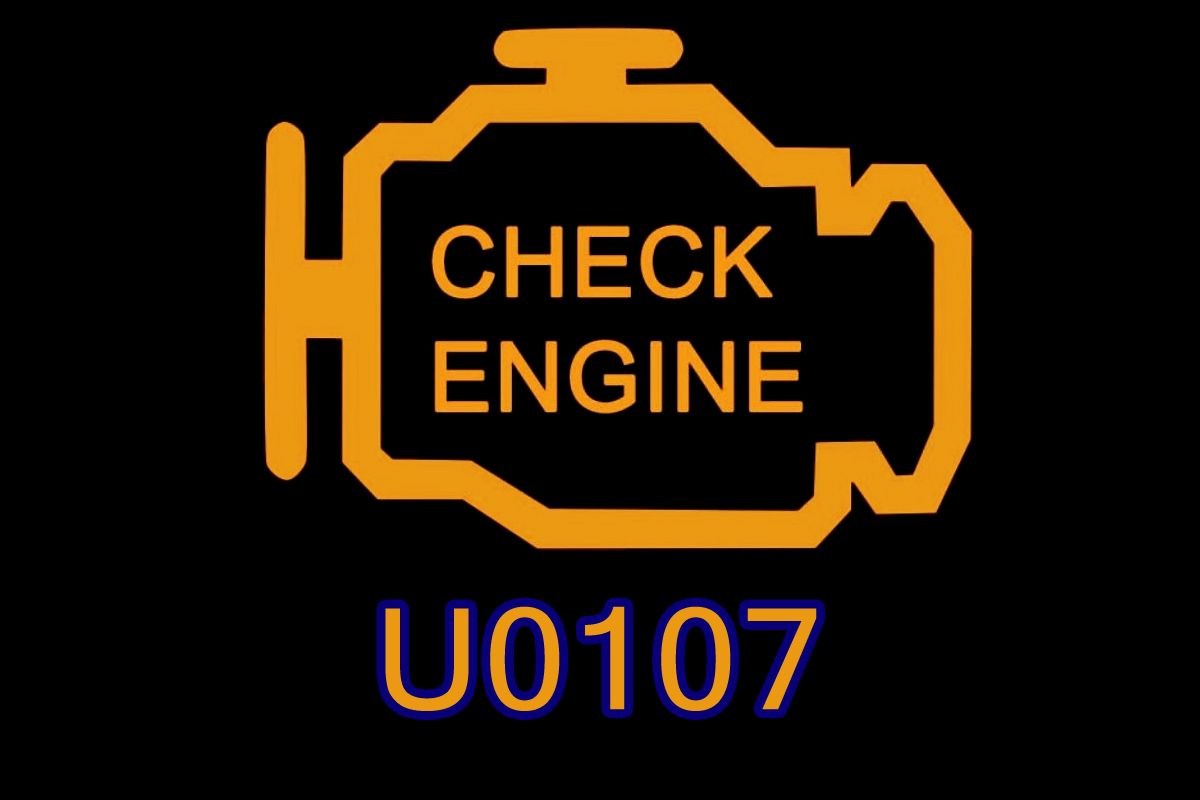
U0107 Lost Communication With Throttle Actuator Control (TAC) Module
U0107 is a network communication fault that occurs when another control module can no longer communicate properly with the Throttle Actuator Control (TAC) module.
This is an important distinction: U0107 does not initially say that the throttle body is mechanically defective.
The code says that a control module expected to exchange information with the TAC module has lost that communication.
In modern vehicles, the throttle system is not simply a mechanical throttle plate connected to the accelerator pedal. Electronic throttle control involves sensors, actuators, control circuits and communication between multiple modules. A failure anywhere in the relevant power, ground, communication or control path can result in U0107.
What Is the TAC Module?
The Throttle Actuator Control system manages the electronic throttle.
Depending on the vehicle, the TAC function may be handled by:
-
A dedicated TAC module
-
The ECM/PCM
-
A module integrated into the throttle assembly
-
Another engine-control unit that performs the TAC function
This distinction is critical.
Not every vehicle has a physically separate module called a "TAC module."
On some vehicles, the throttle actuator electronics are integrated into the throttle body, while on others the vehicle architecture uses a separate controller.
Therefore, the generic description of U0107 should not be used to assume that a particular separate module exists.
Why Does the Vehicle Need Communication With the TAC System?
Electronic throttle control requires coordination between several systems.
The vehicle may need to exchange information involving:
-
Accelerator pedal position
-
Throttle position
-
Requested engine torque
-
Actual throttle position
-
Engine speed
-
Transmission requests
-
Cruise control
-
Traction control
-
Stability control
-
Torque reduction requests
-
Engine protection strategies
The communication network allows these systems to coordinate engine torque.
If the expected TAC communication disappears, the vehicle may no longer be able to safely determine or control throttle operation.
What Does "Lost Communication" Actually Mean?
"Lost communication" is primarily a network/electrical diagnosis.
It does not necessarily mean:
-
The throttle plate is stuck
-
The throttle motor has burned out
-
The accelerator pedal is defective
-
The engine control module has failed
-
The throttle body must be replaced
The module may have stopped communicating because it has lost:
-
Battery power
-
Ignition power
-
Ground
-
CAN network communication
-
Network integrity
-
Internal electronic operation
In other words, the TAC module may be perfectly functional but unable to communicate because the circuit supplying or connecting it has failed.
Common Symptoms of U0107
The symptoms can range from a warning light to a complete inability to control the engine properly.
Possible symptoms include:
-
Check Engine Light
-
Electronic throttle warning
-
Reduced engine power
-
Limp-home mode
-
Poor accelerator response
-
Throttle response delay
-
Limited engine RPM
-
Engine stalling
-
Difficult starting
-
Cruise control cancellation
-
Traction/stability control warnings
-
Transmission-related warning messages
-
Accelerator pedal becoming ineffective
-
Engine refusing to increase RPM
In severe cases, the vehicle may start but operate only at a very limited throttle opening.
Why Does U0107 Happen?
There is no single component responsible for this code.
A good diagnosis begins with the communication path, not with parts replacement.
Loss of TAC power supply
If the TAC controller loses its required battery or ignition supply, it can disappear from the network.
Possible causes include:
-
Blown fuse
-
Failed relay
-
Open power wire
-
Corroded fuse connection
-
Loose terminal
-
Damaged harness
-
Ignition-power problem
This is one of the first things worth checking.
Poor TAC ground
A controller can have battery voltage at its power terminal but still fail to operate correctly because its ground connection is poor.
Possible causes include:
-
Corroded ground point
-
Loose ground bolt
-
Broken ground wire
-
High resistance in the ground circuit
-
Engine/chassis ground problem
This is why measuring only battery voltage is not enough.
CAN communication fault
Many modern vehicles use CAN communication for control-module networking.
A damaged CAN wire can prevent the TAC system from communicating.
Possible causes include:
-
Open CAN wire
-
Short to ground
-
Short to power
-
CAN-H/CAN-L wiring damage
-
Excessive resistance
-
Poor connector contact
-
Water intrusion
-
Harness damage
The exact network architecture varies by vehicle.
Damaged connector
Connectors near the engine compartment are exposed to:
-
Heat
-
Vibration
-
Moisture
-
Oil
-
Dirt
-
Chemical contamination
A connector can appear connected while having a damaged or loose terminal inside.
Harness damage
The wiring between the TAC system and the vehicle network may become damaged by:
-
Engine movement
-
Chafing
-
Previous repair work
-
Rodent damage
-
Heat from the exhaust
-
Incorrect harness routing
-
Collision damage
An intermittent harness fault can be particularly difficult to diagnose because the vehicle may work normally until vibration or temperature changes the electrical connection.
A Dead TAC Module Is Only One Possibility
A failed TAC controller is certainly possible, but it should not be the first conclusion.
For example, imagine the TAC module has lost its ignition power because of a failed relay.
A scan tool may report U0107.
The technician could replace the throttle assembly and still have exactly the same problem.
The actual repair would have been a power-supply fault.
This is why communication codes require a different diagnostic mindset from component-specific codes.
The First Diagnostic Step: Scan Every Module
Do not diagnose U0107 by scanning only the ECM.
Perform a complete vehicle scan if the diagnostic equipment allows it.
Look for:
-
U0107
-
Other U-codes
-
Low-voltage codes
-
ECM communication codes
-
ABS/ESC communication faults
-
Transmission communication faults
-
TAC-related codes
-
Power-supply-related codes
The pattern of the codes can be more useful than U0107 by itself.
If several unrelated modules suddenly report communication failures, a shared power supply, ground or network problem becomes much more likely.
Check Whether the TAC Module Can Be Accessed
One of the most useful questions is:
Can the scan tool communicate with the TAC module?
If the TAC module is completely inaccessible while other modules communicate normally, the diagnosis should focus heavily on:
-
TAC power
-
TAC ground
-
Network wiring
-
TAC connector
-
TAC module itself
If the TAC module communicates intermittently, the investigation changes slightly toward intermittent wiring, terminal tension, network integrity and voltage stability.
Check Battery and Charging Voltage
Low system voltage can produce a surprisingly large number of communication faults.
Before condemning an electronic module, check:
-
Battery condition
-
Battery terminals
-
Charging voltage
-
Ground connections
-
Voltage during engine cranking
-
Main power connections
A weak battery or poor connection can cause control modules to reset or disappear from the network.
However, low voltage should not be used as a generic explanation if the problem continues under normal electrical conditions.
Power Testing Is More Important Than Continuity Alone
A common diagnostic mistake is checking a wire with an ohmmeter, seeing continuity and declaring the wiring good.
That is not enough for a modern control network.
A wire can show continuity with almost no load but develop excessive voltage drop when the module is operating.
Similarly, a connector terminal may make enough contact for a basic continuity test but not enough for reliable communication.
Depending on the manufacturer's procedure, the technician may need:
-
Voltage-drop testing
-
Loaded circuit testing
-
Network resistance testing
-
Oscilloscope analysis
-
CAN waveform inspection
-
Module communication testing
The manufacturer's wiring diagram and network specifications should determine the exact procedure.
Inspect the CAN Network Carefully
If the TAC system communicates through CAN, the network should be examined according to the vehicle manufacturer's procedure.
A technician may investigate:
-
CAN-H
-
CAN-L
-
Network termination
-
Short circuits
-
Open circuits
-
Connector condition
-
Harness resistance
-
Network waveform
Do not apply a generic CAN resistance rule blindly to every vehicle configuration.
The vehicle may use different network architectures, gateways or additional communication systems.
Look for Other Modules That Could Be Disrupting the Network
A particularly interesting situation occurs when U0107 appears together with many unrelated communication codes.
The problem may not actually originate at the TAC module.
A damaged module elsewhere on the network can sometimes interfere with communication for other controllers.
For example, a module with an internal electrical fault or a shorted communication circuit can disrupt part of the network.
Therefore, if several modules become inaccessible simultaneously, investigate the network as a system rather than replacing each module individually.
Check the Throttle Assembly
The throttle body still deserves inspection, but it should be approached correctly.
Depending on the vehicle, the throttle assembly may contain:
-
Electric throttle motor
-
Throttle position sensors
-
Electronic control circuitry
-
Connector terminals
-
Integrated TAC electronics
Inspect for:
-
Damaged connector
-
Bent terminals
-
Corrosion
-
Water contamination
-
Damaged wiring
-
Physical throttle damage
-
Signs of previous repair
If the throttle electronics are integrated into the throttle assembly, the distinction between "TAC module" and "throttle body" becomes manufacturer-specific.
Can a Bad Throttle Body Cause U0107?
It can, but U0107 does not prove that the throttle body is bad.
If the throttle assembly contains the TAC electronics, an internal failure could potentially cause loss of communication.
However, the same code can be produced by a completely external problem.
For example:
A damaged power wire → TAC loses power → TAC disappears from network → ECM detects lost communication → U0107 is stored.
In that scenario, the throttle body itself is not the root cause.
Can the Accelerator Pedal Cause U0107?
Normally, an accelerator pedal problem is diagnosed differently from a lost TAC communication problem.
The accelerator pedal generally contains position sensors that allow the engine-control system to determine driver demand.
A defective pedal can cause throttle-related symptoms and other DTCs, but it does not automatically explain why the TAC controller has disappeared from communication.
If U0107 is present, determine first whether the TAC system itself is communicating.
Then investigate pedal signals if the vehicle's data and other fault codes indicate a pedal-related problem.
U0107 and Reduced Power Mode
Reduced power mode is a logical safety response when throttle control cannot be reliably verified.
If the vehicle cannot establish reliable communication with the throttle-control system, the ECM may limit torque to reduce the possibility of unintended or unpredictable acceleration.
Depending on the vehicle, this can produce:
-
Very slow acceleration
-
Fixed or limited RPM
-
Restricted throttle opening
-
Poor response to the accelerator
-
Engine shutdown
-
Limited driving capability
The exact fail-safe strategy is manufacturer-specific.
U0107 That Appears Intermittently
An intermittent U0107 can be harder to diagnose than a permanent fault.
The vehicle may:
-
Start normally.
-
Operate normally.
-
Lose communication briefly.
-
Enter reduced-power mode.
-
Recover after restarting.
This behavior does not mean the problem is imaginary.
Intermittent electrical faults often change with:
-
Engine vibration
-
Temperature
-
Moisture
-
Harness movement
-
Connector position
-
Battery voltage
A technician may need to monitor communication and power circuits while manipulating the relevant harness or reproducing the conditions recorded in freeze-frame data.
What If U0107 Appears After Engine or Throttle Work?
This is an important diagnostic clue.
If U0107 appears immediately after:
-
Throttle body replacement
-
Engine removal
-
Intake work
-
Wiring repair
-
Battery replacement
-
ECU replacement
-
Engine harness work
-
Collision repair
inspect the disturbed area before replacing additional parts.
A connector that was not completely locked, a harness routed incorrectly, or a ground connection left loose can create a communication fault.
U0107 After Battery Replacement
A battery replacement can sometimes coincide with communication faults because modules experience a power interruption during the work.
A single historical U0107 immediately following a battery or electrical event does not necessarily prove that the TAC system is defective.
If the code clears and never returns, the original voltage event may have been responsible.
If U0107 returns repeatedly, the electrical and communication circuits should be investigated.
Should You Replace the TAC Module?
Not based on U0107 alone.
Before replacing a TAC module, the diagnosis should establish that:
-
Required power is present
-
Ground is good under load
-
Relevant fuses and relays are functioning
-
Communication wiring is intact
-
Connectors are secure
-
No other module is disrupting the network
-
The TAC system is correctly configured
-
Manufacturer-specific tests point toward an internal module fault
If the module is replaced, programming, configuration, calibration or relearn procedures may be required depending on the vehicle.
A physically installed module is not necessarily a fully functional replacement until the required software/configuration procedures have been completed.
What About Throttle Relearn?
Some vehicles require an electronic throttle initialization or relearn after:
-
Throttle body replacement
-
ECM replacement
-
Battery disconnection
-
Software updates
-
Certain repairs
However, a relearn procedure should not be treated as a cure for a genuine communication failure.
If the TAC module cannot communicate, performing repeated throttle relearns is unlikely to solve the underlying network problem.
First restore reliable communication.
A Practical Diagnostic Example
Consider a vehicle that suddenly enters reduced-power mode and stores U0107.
The technician scans the vehicle and discovers that the ECM cannot communicate with the TAC system.
Instead of replacing the throttle body immediately, the technician checks the TAC module's power supply.
The ignition power is missing.
Further inspection reveals a blown fuse.
The fuse is replaced, but it immediately blows again.
That result changes the diagnosis completely.
Now the technician should search for a short circuit rather than replacing the TAC module.
A damaged harness near the engine is eventually found.
The TAC module was never the original problem.
Another Example: Intermittent Communication
Suppose U0107 appears only after driving over rough roads.
The vehicle works normally after being restarted.
A scan shows the code as intermittent.
The technician inspects the TAC connector and finds a terminal with insufficient contact tension.
When the engine vibrates, the terminal briefly loses contact.
Communication drops, the ECM detects the TAC module as unavailable, and U0107 is stored.
Again, the expensive electronic component may be completely functional.
When U0107 Is Accompanied by Throttle Position Codes
If U0107 appears alongside throttle position or actuator codes, do not automatically assume all of the components have failed.
The codes should be considered together.
A single power, ground or communication problem can sometimes create several apparently unrelated throttle faults.
The diagnostic order should generally be:
Power and ground → communication → wiring/connectors → TAC operation → sensor/actuator diagnosis → module diagnosis
The exact sequence can vary by manufacturer.
Can U0107 Be Caused by a Mechanical Throttle Problem?
A purely mechanical problem, such as a dirty or physically sticking throttle plate, does not normally explain a lost communication code by itself.
A mechanical throttle problem is more likely to generate performance, position or actuator-related faults.
U0107 specifically points toward the electronic communication relationship with the TAC system.
If both a mechanical throttle fault and U0107 are present, diagnose both rather than assuming one automatically caused the other.
Is U0107 Serious?
Yes, it can be.
The vehicle may still run, but electronic throttle control is a safety-critical function.
If the vehicle has:
-
Sudden loss of accelerator response
-
Severe reduced power
-
Stalling
-
Unpredictable throttle behavior
-
Multiple warning lights
-
Intermittent loss of throttle control
it should be diagnosed promptly.
Do not continue driving normally while assuming that clearing the code has permanently solved the problem.
The Most Important Diagnostic Lesson
U0107 is a good example of why a diagnostic trouble code should be treated as information about a monitored system, rather than a direct instruction to replace a component.
The code tells you that communication with the TAC system has been lost.
It does not tell you, by itself, whether the cause is:
-
A dead TAC module
-
A throttle assembly
-
A blown fuse
-
Missing ignition power
-
Poor ground
-
CAN wiring
-
A loose connector
-
Harness damage
-
Low system voltage
-
Another module interfering with the network
-
Software/configuration
-
An internal module failure
That distinction can save a substantial amount of unnecessary parts replacement.
Final Diagnosis
U0107 – Lost Communication With Throttle Actuator Control (TAC) Module is primarily a communication/network fault involving the electronic throttle-control system.
The correct diagnostic strategy is to establish why the TAC system is no longer communicating.
Start with a complete vehicle scan and determine whether the TAC module is accessible. Then verify battery condition, fuses, module power, grounds, connectors and communication circuits. If the vehicle uses CAN communication, investigate the network according to the manufacturer's specifications.
Only after the external circuits and network have been proven should the TAC module or integrated throttle electronics become a primary suspect.
And because TAC architecture varies considerably between manufacturers, the generic B/U-code description should always be combined with the vehicle's specific wiring diagram, module architecture and manufacturer diagnostic procedure.