TR
TR EN
EN

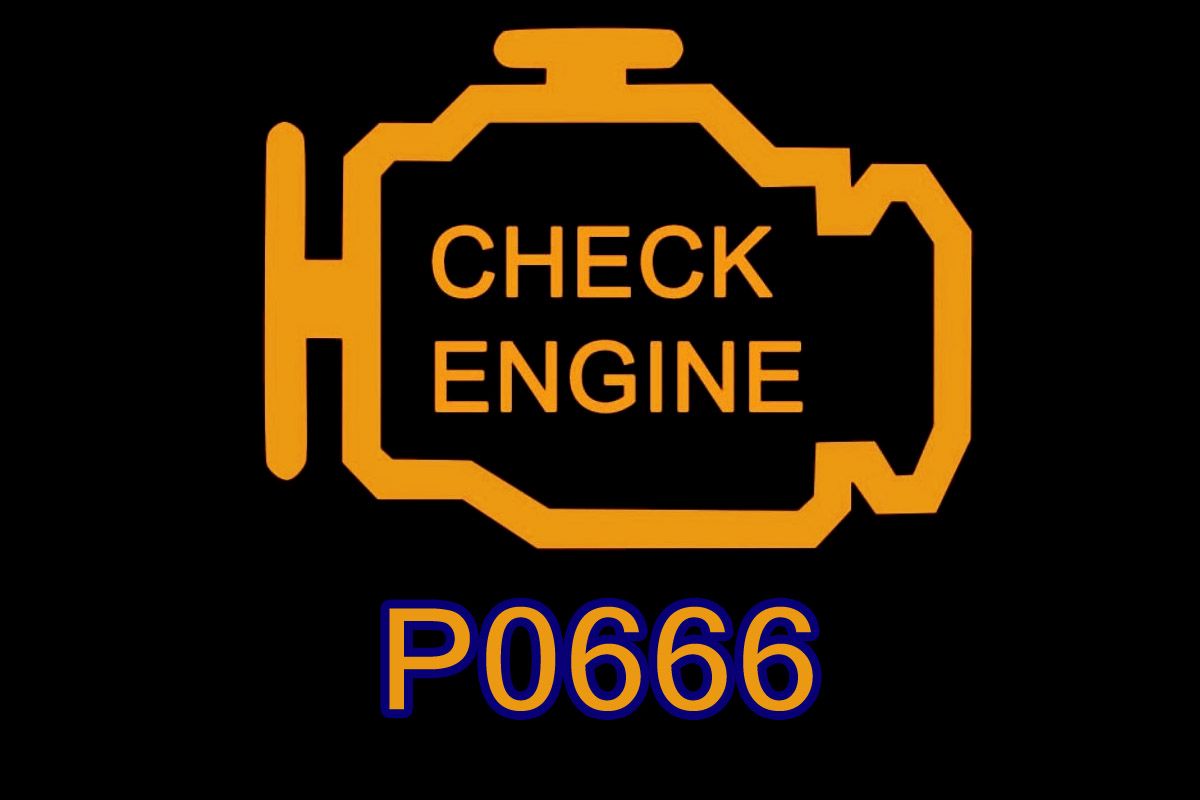
P0666 PCM/ECM/TCM Internal Temperature Sensor Circuit
The P0666 – PCM/ECM/TCM Internal Temperature Sensor Circuit diagnostic trouble code (DTC) indicates that the vehicle's control system has detected a problem with the internal temperature sensor circuit associated with the PCM, ECM, or TCM.
This code is different from faults involving the engine coolant temperature sensor or transmission fluid temperature sensor. P0666 concerns the temperature monitoring circuit associated with the powertrain control module itself.
The exact design varies between manufacturers. In some vehicles, the internal temperature sensor is integrated directly into the control module's electronics. In others, the temperature-monitoring system may use a separate or externally accessible circuit.
What Does P0666 Mean?
In simple terms:
The ECM/PCM/TCM has detected a general malfunction in its internal temperature sensor circuit.
The control module monitors its own temperature because electronic components must operate within a suitable temperature range.
The internal temperature sensor provides information that can be used to determine whether the module is operating within its expected thermal range.
If the signal or circuit does not behave as expected, the control module can store P0666.
Unlike:
P0668 – Internal Temperature Sensor Circuit Low
or
P0669 – Internal Temperature Sensor Circuit High
P0666 is a general circuit malfunction code and does not specifically identify the signal as being too low or too high.
What Is the PCM/ECM/TCM?
The terminology depends on the vehicle.
ECM – Engine Control Module
The ECM primarily controls engine functions.
TCM – Transmission Control Module
The TCM controls automatic transmission operation.
PCM – Powertrain Control Module
The PCM combines engine and transmission control functions in one module.
P0666 can therefore apply to the internal temperature monitoring circuit of the relevant powertrain control module.
Why Does the Control Module Monitor Its Temperature?
Modern control modules contain sensitive electronic components.
Excessive heat can affect:
-
Microprocessors
-
Voltage regulators
-
Memory
-
Communication circuits
-
Sensor processing
-
Output drivers
The internal temperature sensor allows the control system to monitor the module's thermal condition.
If the temperature becomes excessive, some vehicles can modify operation or activate protective strategies.
What Causes P0666?
Possible causes include:
-
Internal temperature sensor failure
-
Internal control-module circuit failure
-
Damaged wiring
-
Open circuit
-
Short circuit
-
Corroded connector
-
Loose terminal
-
Poor electrical connection
-
Control-module power problem
-
Ground problem
-
Excessive module temperature
-
Water intrusion
-
Software or calibration issue
-
Internal PCM/ECM/TCM failure
The exact cause depends on the vehicle's electrical architecture.
Can the Internal Temperature Sensor Fail?
Yes.
The sensor or its associated circuitry can fail.
In many vehicles, the sensor is integrated into the control module's circuit board.
If so, it may not be possible to replace the sensor as an individual service part.
Depending on the vehicle, the solution may involve:
-
Specialized electronic repair
-
Module reprogramming
-
Control-module replacement
Can Wiring Problems Cause P0666?
Yes, depending on the vehicle.
If the internal temperature monitoring circuit has an externally accessible portion, damaged wiring can cause the fault.
Inspect for:
-
Broken wires
-
Chafing
-
Melted insulation
-
Pinched wiring
-
Corrosion
-
Short circuits
-
Poor previous repairs
Can a Bad Connector Cause P0666?
Yes.
A damaged connector can interrupt the temperature sensor circuit or alter its electrical characteristics.
Check for:
-
Corroded pins
-
Loose terminals
-
Bent contacts
-
Water intrusion
-
Damaged connector locks
-
Poor terminal tension
Can Module Overheating Cause P0666?
Potentially.
If the control module is genuinely operating at an abnormal temperature, its internal temperature monitoring system may detect a problem.
Possible reasons for excessive module temperature include:
-
Poor ventilation
-
Excessive heat from nearby components
-
Incorrect module mounting
-
Damaged cooling arrangement
-
High under-hood temperatures
-
Internal electronic failure
However, P0666 alone does not prove that the module is overheating.
It identifies a malfunction associated with the internal temperature sensor circuit.
Can Low Battery Voltage Cause P0666?
Possibly.
Unstable electrical voltage can cause control-module errors.
Check:
-
Battery voltage
-
Battery condition
-
Cranking voltage
-
Charging voltage
-
Battery terminals
-
Main grounds
If several unrelated electronic DTCs appear simultaneously, system voltage should be checked early in the diagnosis.
Can a Bad Alternator Cause P0666?
Potentially.
An alternator that is undercharging, overcharging, or producing unstable voltage can affect electronic control modules.
If P0666 appears together with other voltage-related or communication codes, inspect the charging system.
Symptoms of P0666
Symptoms depend on the vehicle and the severity of the fault.
Possible symptoms include:
-
Check Engine Light
-
Transmission warning light
-
Reduced engine power
-
Limp mode
-
Poor throttle response
-
Difficult starting
-
Intermittent stalling
-
Transmission shifting problems
-
Multiple warning lights
-
Communication problems
Some vehicles may have no noticeable drivability symptoms apart from the stored DTC.
Can P0666 Cause Limp Mode?
Yes, it can.
If the control system determines that the module's internal temperature monitoring system is unreliable or that the module may be operating outside its safe range, a protective strategy may be activated.
Depending on the vehicle, this can include:
-
Reduced engine power
-
Limited RPM
-
Restricted transmission operation
-
Fixed gear selection
-
Reduced torque
The exact response is manufacturer-specific.
Can P0666 Cause Transmission Problems?
Yes, if the affected module controls the transmission.
If the TCM or integrated PCM is affected, possible symptoms include:
-
Harsh shifting
-
Delayed shifting
-
Incorrect gear selection
-
Transmission limp mode
-
Fixed-gear operation
-
Torque converter control problems
If the fault is associated with an ECM that does not control transmission functions, transmission symptoms may not occur.
Can P0666 Cause Engine Problems?
Yes, depending on the affected module.
If the ECM or PCM is affected, the vehicle may experience:
-
Reduced engine power
-
Poor throttle response
-
Stalling
-
Difficult starting
-
Irregular engine operation
However, P0666 does not indicate that the engine itself has a mechanical failure.
Can P0666 Cause a No-Start Condition?
It is possible, but not typical.
A serious internal control-module failure can interfere with critical engine-management functions and potentially result in a no-start condition.
If the vehicle does not start, also check:
-
Battery
-
Starter
-
Crankshaft position signal
-
Fuel pressure
-
Injector operation
-
Immobilizer
-
ECM communication
How Is P0666 Diagnosed?
A systematic approach is important because a control-module replacement can be expensive.
1. Scan all control modules
Check:
-
ECM
-
PCM
-
TCM
-
ABS
-
Body control module
-
Other networked modules
Look for additional communication, power, or voltage-related codes.
2. Check freeze-frame data
Record the conditions under which P0666 was stored.
Pay attention to:
-
Battery voltage
-
Engine temperature
-
Engine RPM
-
Vehicle speed
-
Ambient temperature
-
Transmission temperature
3. Check battery and charging voltage
Confirm that the vehicle's electrical system is operating normally.
4. Inspect the module connector
Look for:
-
Corrosion
-
Water
-
Loose terminals
-
Bent pins
-
Damaged connector locks
5. Inspect wiring
If the circuit has an externally accessible section, check for opens, shorts, and physical damage.
6. Check module power and ground
Verify proper supply voltage and ground quality.
7. Check live data
If the scan tool can display internal module temperature, compare the reading with realistic conditions.
8. Check the temperature sensor circuit
Use the manufacturer's wiring diagram and specifications to determine whether the signal, reference, and ground circuits are correct.
9. Check for software updates
Some control-module faults may be related to software or calibration.
10. Evaluate the control module
If all external circuits and operating conditions are correct, internal module failure becomes more likely.
Can a Scan Tool Diagnose P0666?
Yes.
A capable diagnostic scanner can provide useful information such as:
-
Internal module temperature
-
Module voltage
-
Sensor values
-
Freeze-frame data
-
Communication status
-
Module status
-
Additional manufacturer-specific DTCs
A basic OBD scanner may only display P0666 and therefore may not be sufficient for complete diagnosis.
Why Is Freeze-Frame Data Important?
Freeze-frame data shows the conditions present when the code was stored.
For example, if P0666 appeared during:
-
Very low system voltage
-
A major communication interruption
-
Extreme module temperature
these conditions can provide important diagnostic clues.
If the fault occurs repeatedly under normal electrical and temperature conditions, an internal sensor or module problem becomes more likely.
What If P0666 Appears When the Vehicle Is Cold?
This can be an important clue.
If the vehicle has been sitting for several hours and the internal temperature sensor reports an implausible condition, actual module overheating is unlikely.
Investigate:
-
Sensor circuit
-
Wiring
-
Signal voltage
-
Reference voltage
-
Ground
-
Internal module electronics
What If P0666 Appears Only When the Vehicle Is Hot?
A temperature-dependent fault can point toward:
-
Actual module overheating
-
Heat-related electronic failure
-
Connector expansion
-
Wiring problems
-
Internal circuit failure
Live data should ideally be monitored while the fault occurs.
Can Water Damage Cause P0666?
Yes.
Water intrusion around the control module can cause electrical faults.
Potential consequences include:
-
Corrosion
-
Short circuits
-
Open circuits
-
Communication failures
-
Abnormal sensor signals
If the vehicle has experienced flooding, heavy rain, or engine-bay washing, inspect the control-module area carefully.
Can Software Cause P0666?
Possibly.
The control module's software interprets the temperature sensor information.
A software or calibration problem could potentially cause an incorrect interpretation of the circuit.
If manufacturer service information identifies a relevant software update, reprogramming may be part of the repair.
Is P0666 a Serious Code?
It can be serious depending on the underlying cause.
If the vehicle continues to operate normally and the fault is limited to the temperature-monitoring circuit, there may be few immediate symptoms.
However, if the code is an early indication of internal control-module failure, the problem can progress to:
-
Limp mode
-
Reduced power
-
Transmission problems
-
Stalling
-
Communication failures
-
No-start conditions
For that reason, P0666 should not simply be cleared and ignored.
Can You Drive With P0666?
Short-term driving may be possible if the vehicle operates normally, but the problem should be diagnosed as soon as possible.
Avoid continued driving if you experience:
-
Sudden loss of power
-
Stalling
-
Transmission malfunction
-
Repeated limp mode
-
Multiple warning lights
-
Intermittent no-start conditions
-
Electrical burning smell
These symptoms may indicate a more serious control-module or electrical problem.
How Is P0666 Repaired?
The repair depends on the confirmed cause.
Possible repairs include:
-
Repairing damaged wiring
-
Repairing an open or short circuit
-
Replacing damaged terminals
-
Cleaning corroded connectors
-
Repairing module power or ground
-
Correcting charging-system problems
-
Improving module cooling
-
Updating module software
-
Repairing the internal temperature sensor circuit
-
Repairing the control module
-
Replacing and programming the control module
Does P0666 Mean the ECM/PCM/TCM Must Be Replaced?
No.
P0666 does not automatically prove that the control module itself has failed.
Before replacing the module, check:
-
Battery voltage
-
Charging voltage
-
Module power
-
Module ground
-
Connector condition
-
Wiring
-
Sensor circuit
-
Actual module temperature
-
Live data
-
Communication
-
Software/calibration
Only after these areas have been verified should internal module failure be considered strongly.
Can the Internal Temperature Sensor Be Replaced Separately?
Often, no.
In many control modules, the temperature sensor is integrated directly into the circuit board.
If this is the case, a normal workshop may not be able to replace the sensor separately.
Specialized electronic repair may be possible, but some vehicles require control-module replacement and programming.
P0666 vs. P0668 vs. P0669
These codes are closely related:
P0666 → PCM/ECM/TCM Internal Temperature Sensor Circuit
This is the general circuit malfunction code.
P0668 → PCM/ECM/TCM Internal Temperature Sensor Circuit Low
The detected sensor circuit signal is below the expected range.
P0669 → PCM/ECM/TCM Internal Temperature Sensor Circuit High
The detected sensor circuit signal is above the expected range.
The exact circuit architecture can vary between manufacturers, so vehicle-specific service information should always be consulted.
Common Diagnostic Mistakes
Assuming P0666 means the control module is overheating
The code identifies a problem with the internal temperature sensor circuit. It does not automatically prove excessive physical temperature.
Replacing the control module immediately
External power, ground, wiring, connectors, and system voltage should be tested first.
Ignoring battery voltage
Low or unstable voltage can cause control-module faults.
Ignoring module grounds
A poor ground can create abnormal sensor and communication behavior.
Ignoring additional DTCs
Other codes may identify the actual source of the problem.
Clearing the code without checking freeze-frame data
Freeze-frame information can show whether the fault occurred under unusual electrical or temperature conditions.
How Do You Clear P0666?
The correct diagnostic process is:
Scan all modules → Record all DTCs → Check freeze-frame data → Check battery and charging voltage → Inspect module power and ground → Inspect connectors → Check wiring → Verify the internal temperature signal → Check live data → Check software → Repair the confirmed fault → Clear the DTC → Test-drive the vehicle → Rescan
If P0666 returns, the underlying internal temperature sensor circuit problem has not been resolved.
Final Thoughts on P0666
P0666 – PCM/ECM/TCM Internal Temperature Sensor Circuit indicates a general malfunction in the internal temperature sensor circuit associated with the powertrain control module.
Possible causes include a failed internal temperature sensor, damaged wiring, poor connector contact, short or open circuit, poor power or ground, water intrusion, software issue, excessive module temperature, or internal control-module failure.
The most important point is that P0666 does not automatically mean that the ECM, PCM, or TCM needs to be replaced.
A proper diagnostic sequence should be:
Check freeze-frame data → Check battery and charging voltage → Check module power and ground → Inspect connectors and wiring → Verify the temperature sensor circuit → Check live data → Check software → Evaluate the control module.
If P0666 is accompanied by limp mode, stalling, transmission problems, communication faults, or intermittent no-start conditions, the vehicle should be diagnosed promptly because a control-module problem can eventually affect critical engine or transmission functions.