TR
TR EN
EN

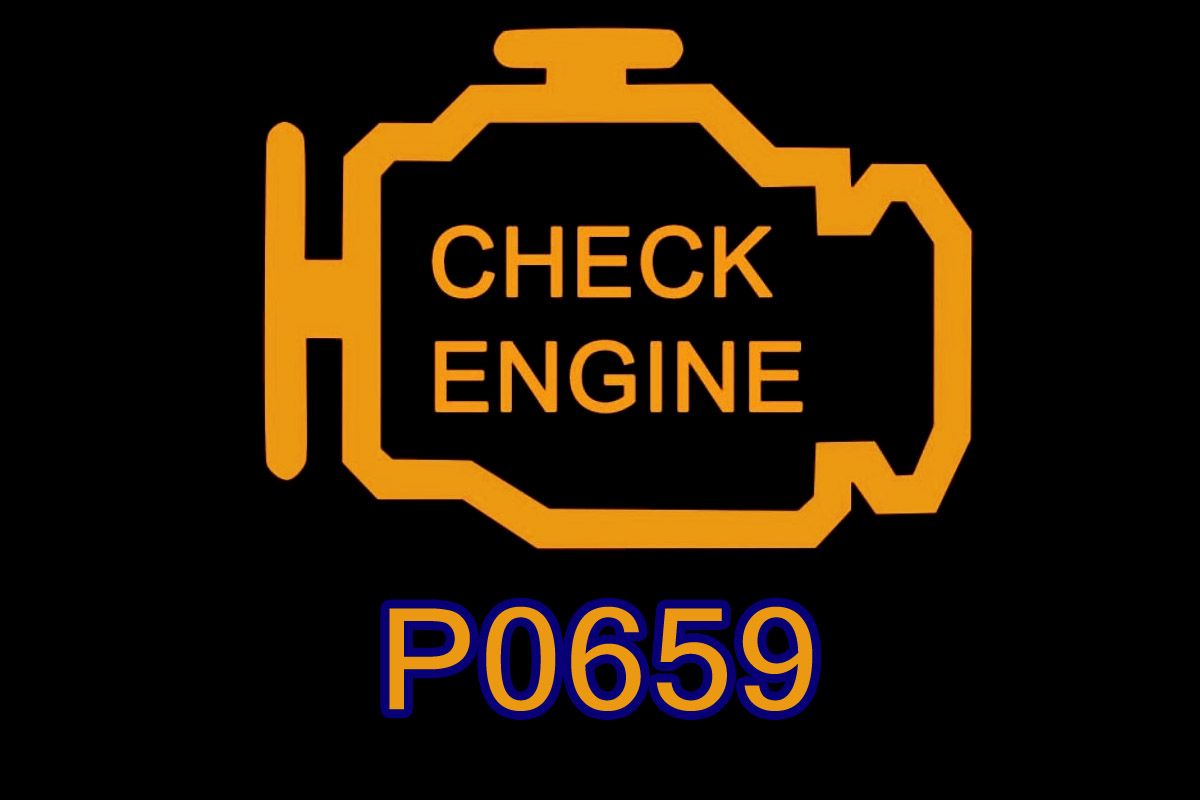
P0659 Actuator Supply Voltage "A" Circuit High
The P0659 trouble code is a generic OBD-II diagnostic trouble code related to the Actuator Supply Voltage "A" circuit.
P0659 – Actuator Supply Voltage "A" Circuit High
This code means that the engine or powertrain control module has detected a higher-than-expected voltage in the Actuator Supply Voltage "A" circuit.
This is an important distinction: P0659 does not identify one specific actuator. The letter "A" refers to a manufacturer-defined actuator power-supply circuit that may provide voltage to one or more electronically controlled components.
Depending on the vehicle, this circuit may be associated with systems such as transmission control, engine actuators, emissions components, throttle-related systems, or other electronically controlled devices.
The exact components supplied by Actuator Supply Voltage "A" vary between manufacturers and models.
What Does P0659 Mean?
P0659 can be understood as:
P = Powertrain
0 = Generic OBD-II code
6 = Computer output/control-related fault
5 = Actuator supply voltage system
9 = Circuit high
In simple terms:
The control module has detected that the voltage on Actuator Supply Voltage "A" is higher than the expected value.
This can be caused by:
-
Excessive system voltage
-
Alternator overcharging
-
Wiring problems
-
Short to another power circuit
-
Faulty actuator
-
Faulty voltage regulator
-
Poor electrical connections
-
Control-module problems
What Is Actuator Supply Voltage "A"?
Modern vehicles contain numerous electronically controlled actuators.
These components require electrical power to operate.
Instead of providing each actuator with a completely independent power supply, some vehicle manufacturers use shared or grouped power-supply circuits.
One such circuit may be identified in the diagnostic system as:
Actuator Supply Voltage "A"
The letter A does not necessarily mean a particular physical actuator.
For example, one vehicle may use Supply Voltage "A" for a group of transmission-related components, while another manufacturer may use it for a different group of actuators.
Therefore, the vehicle-specific wiring diagram is essential when diagnosing P0659.
What Does "Circuit High" Mean?
The word High means that the control module sees a voltage level above the expected threshold.
This is different from:
-
Circuit Low — voltage is too low
-
Circuit Open — electrical continuity is missing
-
Intermittent — the fault occurs irregularly
-
Range/Performance — the electrical or functional behavior is outside the expected range
P0659 specifically points toward an over-voltage condition in the actuator supply circuit.
Symptoms of P0659
Symptoms vary according to which components receive power from Supply Voltage "A".
Possible symptoms include:
-
Check Engine Light
-
Transmission warning light
-
Reduced engine power
-
Limp mode
-
Poor acceleration
-
Erratic transmission shifting
-
Transmission stuck in one gear
-
Throttle-control problems
-
Engine hesitation
-
Stalling
-
Various actuator-related warning lights
-
Multiple diagnostic trouble codes
-
Intermittent electrical problems
Some vehicles may have no obvious symptoms other than the Check Engine Light.
Is P0659 Serious?
P0659 should be diagnosed promptly.
An excessive voltage condition can potentially damage electronic components if the voltage is significantly above normal.
The seriousness depends on the actual voltage and which actuators are supplied by the affected circuit.
If P0659 appears together with multiple actuator or transmission codes, the vehicle may enter a protective mode.
Common Causes of P0659
Alternator overcharging
An alternator or voltage regulator that produces excessive voltage is one of the first things worth checking.
Faulty voltage regulator
The voltage regulator controls charging voltage. If it fails, system voltage can become too high.
Short to another power circuit
A wire belonging to the actuator supply circuit may be contacting a higher-voltage power source.
Damaged wiring
A damaged harness can cause an unintended electrical connection.
Corroded or damaged connector
Poor connections can create abnormal electrical conditions.
Faulty actuator
An actuator connected to the supply circuit may have an internal electrical fault.
Incorrect previous wiring repair
Aftermarket equipment or poorly repaired wiring can connect circuits incorrectly.
Battery or charging-system problem
Abnormal charging voltage can affect the entire vehicle electrical system.
Faulty control module
A PCM, ECM or another control module can potentially misinterpret or incorrectly control the supply circuit.
Can a Bad Alternator Cause P0659?
Yes.
An alternator that is overcharging can raise vehicle system voltage beyond the expected level.
This can affect numerous electronic components simultaneously.
Check:
-
Battery voltage
-
Alternator output
-
Voltage regulator operation
-
Charging voltage under load
-
Voltage stability
If the charging voltage is abnormally high, the charging system should be repaired before replacing other components.
Can a Bad Voltage Regulator Cause P0659?
Yes.
On many vehicles, the voltage regulator controls alternator output.
If the regulator fails, charging voltage may rise excessively.
Depending on the vehicle design, the regulator may be integrated into the alternator or controlled electronically by the vehicle's powertrain system.
Can a Weak Battery Cause P0659?
A weak battery does not normally directly cause a circuit-high fault, but battery and charging-system problems should still be checked.
A failing battery can place unusual demands on the charging system.
More importantly, if the battery is failing because of a charging-system problem, the actual cause may be excessive or unstable alternator voltage.
Can a Bad Ground Cause P0659?
Potentially, yes.
A poor ground can create abnormal voltage relationships within an electrical system.
Inspect:
-
Battery grounds
-
Engine ground straps
-
Chassis grounds
-
Control-module grounds
-
Actuator grounds
However, a ground problem more commonly contributes to low or unstable voltage rather than a straightforward supply-voltage-high condition.
Can Wiring Cause P0659?
Yes.
Wiring should be carefully inspected.
Possible problems include:
-
Short to battery positive
-
Short to another power supply
-
Damaged insulation
-
Melted wiring
-
Incorrect aftermarket wiring
-
Pinched wires
-
Corroded terminals
A short to a higher-voltage supply can cause the control module to see excessive voltage on the actuator supply circuit.
Can a Faulty Actuator Cause P0659?
It can, depending on the circuit design.
If an actuator internally fails and affects the shared supply circuit, it may cause abnormal voltage or electrical behavior.
However, because P0659 is a supply voltage high code, the overall power supply should be tested before assuming the actuator is defective.
Can an Aftermarket Accessory Cause P0659?
Yes.
Poorly installed aftermarket equipment can interfere with vehicle electrical circuits.
Potential sources include:
-
Remote starters
-
Alarm systems
-
Additional lighting
-
Audio equipment
-
Tracking devices
-
Auxiliary electronics
If P0659 appeared after electrical modifications, inspect those modifications carefully.
Can P0659 Cause Transmission Problems?
Yes, on some vehicles.
If the affected actuator supply circuit powers transmission components, an over-voltage condition can cause:
-
Harsh shifting
-
Delayed shifting
-
Incorrect gear selection
-
Transmission limp mode
-
Solenoid-related codes
-
Loss of certain gears
If P0659 appears together with transmission codes, determine which components share Actuator Supply Voltage "A".
Can P0659 Cause Limp Mode?
Yes.
The vehicle may enter a protective strategy if the control module detects a potentially damaging voltage condition.
The exact response depends on the manufacturer.
Possible protective actions include:
-
Reduced engine power
-
Limited transmission operation
-
Fixed gear selection
-
Reduced actuator operation
-
Warning lights
Can P0659 Cause Engine Stalling?
Potentially.
If an engine-critical actuator receives abnormal voltage, its operation may be affected.
For example, if the affected supply circuit powers a component involved in engine control, excessive voltage may cause incorrect operation or protective shutdown.
However, stalling is not a universal symptom of P0659.
How to Diagnose P0659
Because Actuator Supply Voltage "A" is manufacturer-specific, diagnosis should begin by determining exactly which components are connected to this circuit.
1. Scan all diagnostic codes
Look for additional codes involving:
-
Actuators
-
Solenoids
-
Transmission
-
Throttle control
-
Engine management
-
Charging voltage
-
Module communication
Multiple related codes can reveal which circuit is affected.
2. Identify Supply Voltage "A"
Use manufacturer-specific service information and the wiring diagram to determine:
-
Which module controls the circuit
-
Which fuse supplies it
-
Which actuators receive power
-
Where the circuit runs
-
What the normal voltage should be
This is one of the most important steps.
3. Check battery voltage
Measure battery voltage with the engine off and running.
Do not assume that the charging system is functioning correctly simply because the vehicle starts.
4. Check alternator output
Measure charging voltage under different operating conditions.
Check whether voltage remains within manufacturer specifications.
An abnormally high charging voltage should be addressed first.
5. Inspect the relevant fuse
Check the fuse or power-distribution circuit associated with Actuator Supply Voltage "A".
Also inspect the fuse box for:
-
Heat damage
-
Corrosion
-
Water intrusion
-
Loose terminals
6. Inspect the wiring
Follow the supply circuit and look for:
-
Short to battery positive
-
Short to another power circuit
-
Melted insulation
-
Chafing
-
Pinched wiring
-
Previous repairs
7. Inspect connectors
Check relevant connectors for:
-
Corrosion
-
Bent terminals
-
Loose pins
-
Water intrusion
-
Poor terminal tension
8. Measure the supply voltage
Use a multimeter to determine the actual voltage present in the circuit.
Compare it with the manufacturer's specification.
A circuit that is genuinely receiving excessive voltage must be traced back to its source.
9. Check for voltage with the circuit disabled
Depending on the wiring design, technicians may isolate components and check whether excessive voltage remains.
This can help determine whether the problem is upstream in the power supply or related to a connected component.
10. Inspect connected actuators
If multiple actuators share Supply Voltage "A", test them according to manufacturer specifications.
A shorted component may affect the shared circuit.
11. Check grounds
Verify the relevant grounds for:
-
Actuators
-
ECM/PCM
-
TCM
-
Battery
-
Engine
-
Chassis
12. Check control-module output
If the external power supply and wiring are correct, investigate whether the control module is incorrectly controlling the circuit.
Why a Wiring Diagram Is Important
P0659 is one of the codes where a generic OBD-II description is not enough to identify the defective component.
The same code can involve different circuits on different vehicles.
A factory wiring diagram can show:
-
Supply Voltage "A" location
-
Fuse
-
Relay
-
Control module
-
Connected actuators
-
Splices
-
Ground points
-
Connector pins
Without this information, replacing parts based solely on the code can be misleading.
How to Test for Excessive Voltage
A digital multimeter can be used to measure voltage, but the test should follow the vehicle manufacturer's procedure.
Typical checks include:
Battery voltage
Check voltage with the engine off.
Charging voltage
Check voltage with the engine running.
Actuator supply voltage
Measure the voltage at the relevant circuit.
Voltage under load
Some electrical problems appear only when components are operating.
Voltage drop
Check power and ground voltage drops where appropriate.
The measured values should always be compared with the manufacturer's specifications.
Can P0659 Be Caused by Overcharging?
Absolutely.
If the vehicle's electrical system is operating at an abnormally high voltage, multiple modules and actuators can report electrical faults.
For this reason, the charging system is an important early diagnostic step.
If several unrelated "circuit high" codes appear simultaneously, investigate system voltage before replacing individual components.
What If P0659 Appears With Multiple Codes?
This is an important diagnostic clue.
For example, if P0659 appears together with several:
-
Solenoid circuit codes
-
Actuator circuit codes
-
Transmission codes
-
Sensor voltage codes
the problem may be a shared power supply rather than several failed components.
Check the common fuse, relay, wiring and charging system.
Can P0659 Be Intermittent?
Yes.
An intermittent P0659 can be caused by:
-
Loose connections
-
Damaged wiring
-
Alternator voltage fluctuations
-
Heat-related electrical problems
-
Vibration
-
Intermittent shorts
-
Internal actuator faults
The fault may occur only under certain conditions.
Why Does P0659 Appear After the Engine Gets Hot?
Heat can affect:
-
Wiring insulation
-
Electrical connectors
-
Alternator operation
-
Voltage regulators
-
Actuator resistance
-
Control-module electronics
If the code appears only after the engine warms up, monitor system voltage while reproducing the fault.
Can P0659 Return After Clearing the Code?
Yes.
If the underlying voltage problem remains, the ECM/PCM can detect the abnormal condition again.
Clearing the code does not repair an electrical fault.
Can You Drive With P0659?
It is better to diagnose P0659 promptly.
If the vehicle is experiencing excessive charging voltage, continued driving can potentially damage expensive electronic components.
Do not ignore the code if you also notice:
-
Battery warning light
-
Multiple electrical warnings
-
Transmission problems
-
Engine power loss
-
Burning electrical smell
-
Flickering lights
-
Unusually high system voltage
Does P0659 Damage Electronic Components?
Potentially, yes.
Electronic control modules and actuators are designed to operate within specific voltage ranges.
Significantly excessive voltage can cause damage to:
-
Solenoids
-
Sensors
-
Actuators
-
Control modules
-
Relays
-
Other electronic components
This is why a genuine over-voltage condition should be addressed quickly.
Common Diagnostic Mistakes With P0659
Assuming "Actuator A" is a specific actuator
The letter A usually identifies a manufacturer-defined supply circuit rather than one universal physical component.
Replacing an actuator immediately
The problem may actually be system-wide over-voltage.
Ignoring the alternator
An overcharging alternator can produce multiple electrical faults.
Ignoring the voltage regulator
A failed regulator can cause excessive charging voltage.
Replacing the ECM immediately
The external power supply and wiring should be tested first.
Looking at only one diagnostic code
Additional codes may identify the common circuit affected.
Ignoring aftermarket wiring
Incorrect electrical modifications can create shorts or unintended power connections.
What Is the Correct Repair for P0659?
The repair depends on the confirmed cause.
Possible repairs include:
-
Repairing a short circuit
-
Repairing damaged wiring
-
Replacing a damaged connector
-
Repairing poor electrical connections
-
Replacing a faulty fuse or relay after correcting the underlying problem
-
Repairing the alternator
-
Replacing the voltage regulator
-
Replacing a defective actuator
-
Repairing an actuator power-supply circuit
-
Correcting aftermarket wiring
-
Repairing module grounds
-
Updating software where applicable
-
Replacing the ECM/PCM/TCM only when properly diagnosed as defective
How to Verify the Repair
After completing the repair:
-
Clear all diagnostic codes.
-
Check battery voltage.
-
Check charging-system voltage.
-
Verify Actuator Supply Voltage "A".
-
Confirm that connected actuators operate correctly.
-
Test-drive the vehicle.
-
Monitor voltage under different loads and engine speeds.
-
Perform another complete diagnostic scan.
P0659 should not return.
Frequently Asked Questions About P0659
What does P0659 mean?
P0659 means the control module has detected excessively high voltage in the Actuator Supply Voltage "A" circuit.
What is Actuator Supply Voltage "A"?
It is a manufacturer-defined electrical supply circuit used to power one or more electronically controlled components.
Does P0659 identify a specific actuator?
No. The exact components connected to Supply Voltage "A" vary between vehicles.
Can an alternator cause P0659?
Yes. An overcharging alternator or faulty voltage regulator can create excessive system voltage.
Can wiring cause P0659?
Yes. A short to another power circuit or battery positive can cause the code.
Can P0659 cause transmission problems?
Yes, if transmission-related components receive power from the affected circuit.
Can P0659 cause limp mode?
Yes, depending on the affected system and vehicle.
Can P0659 damage the ECU?
A significant over-voltage condition can potentially damage electronic control modules, although the code itself does not prove that the ECU is damaged.
Can a bad battery cause P0659?
A weak battery is not normally the direct cause of a circuit-high fault, but the battery and charging system should be tested.
Can P0659 be intermittent?
Yes. Voltage fluctuations, loose connections, heat and intermittent shorts can cause intermittent occurrences.
Can I drive with P0659?
It is advisable to diagnose it promptly, particularly if system voltage is actually too high or multiple electrical problems are present.
Should I replace the actuator?
Not before determining why the supply voltage is high.
Should I replace the ECU?
No. Check the charging system, wiring, connectors, fuses, grounds and connected actuators first.
Final Thoughts on P0659
P0659 – Actuator Supply Voltage "A" Circuit High indicates that the vehicle's control module has detected higher-than-expected voltage in a manufacturer-defined actuator power-supply circuit.
The most important areas to investigate are:
-
Battery voltage
-
Alternator output
-
Voltage regulator
-
Actuator Supply Voltage "A"
-
Fuses and relays
-
Wiring
-
Short circuits
-
Connectors
-
Grounds
-
Connected actuators
-
ECM/PCM/TCM control
A logical diagnostic sequence is:
Scan All Codes → Identify Supply Voltage "A" → Check Battery → Test Charging System → Inspect Fuse/Relay → Measure Supply Voltage → Inspect Wiring → Check for Shorts → Inspect Connectors and Grounds → Test Connected Actuators → Evaluate Control Module
The most important point is that P0659 is a circuit-level voltage fault, not a direct instruction to replace a particular actuator. Because the definition of "Supply Voltage A" differs between manufacturers, the vehicle-specific wiring diagram and live electrical measurements are essential for finding the actual cause.