TR
TR EN
EN

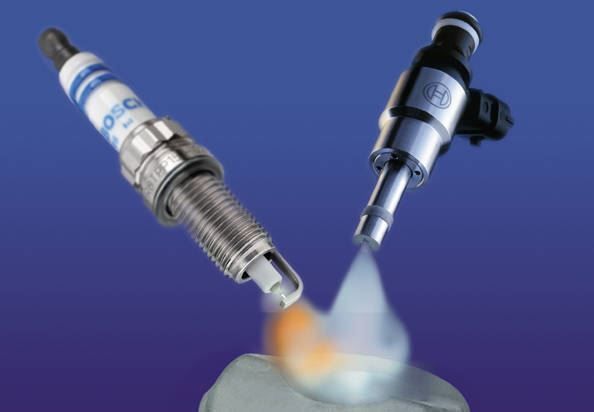
Electronic Fuel Injection Systems and Their Advantages
Electronic fuel injection (EFI) systems are used in modern gasoline and diesel engines to deliver fuel to the engine in a controlled and precise manner. Unlike traditional carburetors, which rely mainly on mechanical principles to create the air-fuel mixture, electronic fuel injection uses sensors and an engine control unit (ECU) to determine how much fuel the engine needs under different operating conditions.
This technology has become standard in modern vehicles because it provides more precise fuel control, easier starting, better emissions management, improved drivability, and greater adaptability to changing engine conditions.
How Does an Electronic Fuel Injection System Work?
The ECU is the central component of an electronic fuel injection system. It continuously receives information from various sensors and uses this information to calculate the appropriate fuel quantity and injection timing.
Depending on the engine, the ECU may monitor information such as:
-
Engine speed
-
Crankshaft position
-
Camshaft position
-
Throttle position
-
Airflow
-
Intake manifold pressure
-
Engine coolant temperature
-
Intake air temperature
-
Oxygen sensor readings
-
Accelerator pedal position
-
Fuel pressure
-
Engine load
Based on these inputs, the ECU controls the fuel injectors by sending electrical signals that determine when the injectors open and how long they remain open.
For example, a cold engine may require additional fuel during starting and warm-up. Once the engine reaches operating temperature, the ECU can reduce the amount of fuel being injected. During acceleration, high engine load, cruising, and idle operation, the injection strategy can be continuously adjusted.
This means that an electronic fuel injection system does not simply deliver a fixed amount of fuel. It constantly adapts fuel delivery to the engine's current operating conditions.
Main Components of Electronic Fuel Injection
Electronic fuel injection is not made up of injectors alone. It consists of several mechanical, electrical, and electronic components working together.
Fuel Pump
The fuel pump draws fuel from the tank and supplies it to the fuel system at the required pressure. Depending on the vehicle, the pump may be installed inside the fuel tank or elsewhere in the fuel system.
Fuel Filter
The fuel filter removes contaminants and particles from the fuel before they can reach sensitive components such as the injectors.
Fuel Rail
In many multi-port injection systems, the fuel rail distributes pressurized fuel to the individual injectors.
Fuel Injectors
The injectors receive electrical commands from the ECU and open for precisely controlled periods. They spray fuel into the intake port or, in direct-injection engines, directly into the combustion chamber.
Engine Control Unit (ECU)
The ECU processes sensor information and determines the appropriate injection strategy. In modern engines, it may also control ignition timing, throttle operation, variable valve timing, turbocharger systems, emissions equipment, and many other functions.
Sensors
Sensors provide information about engine temperature, airflow, pressure, position, oxygen concentration, and other operating conditions.
Types of Electronic Fuel Injection Systems
Electronic fuel injection has evolved considerably over the years. Different systems are used depending on the engine design and technology.
Throttle Body Injection (TBI)
Throttle body injection, sometimes called single-point injection, places one or more injectors around the throttle body. Fuel is introduced into the intake air before it is distributed to the individual cylinders.
These systems were an important step beyond carburetors but have largely been replaced by more precise multi-point and direct injection systems.
Multi-Point Fuel Injection (MPI)
Multi-point injection uses a separate injector for each cylinder. The injectors are generally positioned close to the intake valves.
This arrangement provides more precise fuel distribution between cylinders and became extremely common in gasoline engines.
Sequential Fuel Injection
In sequential systems, the ECU can control each injector according to the position and operating cycle of the corresponding cylinder.
This allows fuel delivery to be better synchronized with the engine's intake events and can improve fuel control and emissions performance.
Gasoline Direct Injection (GDI)
In a gasoline direct-injection engine, fuel is injected directly into the combustion chamber rather than into the intake port.
Because injection pressure, timing, and quantity can be controlled very precisely, GDI technology allows manufacturers to optimize combustion under a wide range of operating conditions.
Diesel common-rail systems also use electronically controlled injectors, but their combustion process and fuel-system operating principles are different from those of gasoline direct injection.
More Precise Fuel Control
One of the biggest advantages of electronic fuel injection is the ability to control fuel delivery very accurately.
A modern ECU can consider engine speed, load, temperature, airflow, throttle position, oxygen sensor feedback, and many other parameters before determining the injection strategy.
This is considerably more flexible than a traditional carburetor, where fuel delivery is primarily determined by mechanical airflow and pressure relationships.
Precise fuel control helps the engine operate closer to its desired air-fuel ratio under different conditions.
Improved Fuel Economy
Electronic fuel injection can help reduce unnecessary fuel consumption by supplying fuel according to the engine's actual requirements.
At idle and light loads, the ECU can reduce fuel delivery. During acceleration, it can increase fuel delivery when additional engine power is required.
However, electronic fuel injection does not automatically mean that every vehicle will have low fuel consumption. Vehicle weight, engine displacement, transmission type, driving style, tire pressure, aerodynamic drag, engine condition, temperature, and many other factors also influence fuel consumption.
Easier Cold Starting
Cold starting is another area where electronic fuel injection provides a major advantage.
When an engine is cold, fuel evaporation characteristics change and the engine may require a different air-fuel mixture. The ECU can use coolant temperature and other sensor data to determine the appropriate fuel strategy during starting and warm-up.
This allows modern EFI engines to start much more consistently in cold weather compared with many older carbureted systems.
More Stable Idle Operation
Engine load can change even when the accelerator pedal is not being pressed.
For example, switching on the air conditioning, activating electrical equipment, or increasing alternator load can place additional demand on the engine.
Modern engine management systems can compensate for these changes by adjusting fuel delivery, throttle position, ignition timing, and other parameters.
As a result, electronically controlled engines can maintain a more stable idle under changing conditions.
Better Throttle Response
Electronic fuel injection allows the ECU to coordinate fuel delivery with the driver's acceleration request and the engine's operating conditions.
Modern vehicles often use electronic throttle control, in which the accelerator pedal is connected to position sensors rather than directly controlling the throttle plate with a mechanical cable.
The ECU interprets the driver's request and determines the appropriate throttle opening and fuel strategy.
This allows the engine management system to provide more controlled throttle response while also considering traction control, stability control, emissions, and other vehicle functions.
Lower Exhaust Emissions
Emission control is one of the most important reasons electronic fuel injection became widespread.
The ECU can use oxygen sensor feedback to determine whether the engine is operating with an appropriate mixture under conditions where closed-loop control is available.
EFI also works together with systems such as:
-
Catalytic converters
-
Oxygen sensors
-
EGR systems
-
EVAP systems
-
Exhaust gas sensors
-
Variable valve timing
-
Diesel particulate filters on applicable diesel engines
-
SCR/AdBlue systems on applicable diesel vehicles
Together, these technologies allow modern engines to meet increasingly strict emissions requirements.
Better Engine Performance
Electronic fuel injection is not only about reducing fuel consumption. It also gives manufacturers much greater control over engine performance.
The ECU can adjust fuel delivery according to engine speed and load and coordinate it with ignition timing and other engine-management functions.
On turbocharged engines, fuel delivery can also be coordinated with boost pressure, airflow, throttle position, and knock-control strategies.
This allows an engine to deliver strong performance while maintaining better control over fuel consumption and emissions.
Better Adaptation to Altitude and Changing Conditions
Atmospheric pressure and air density change with altitude.
Older carbureted engines can require mechanical adjustments to compensate for major altitude changes because the carburetor cannot automatically measure all of the conditions affecting combustion.
Electronic fuel injection can use information from MAP or MAF sensors, along with other engine data, to adjust fuel delivery as operating conditions change.
As a result, EFI-equipped engines can generally adapt much more effectively to changes in altitude, temperature, and engine load.
More Effective Diagnostic Capability
Another major advantage of electronic fuel injection is the ability to monitor the system electronically.
The ECU can compare sensor signals with expected operating ranges and identify inconsistencies between different systems.
When a problem is detected, the ECU may store a diagnostic trouble code (DTC). Depending on the fault, the code may relate to:
-
Fuel injector circuits
-
Fuel pressure
-
MAF or MAP sensors
-
Oxygen sensors
-
Throttle position
-
Crankshaft position
-
Camshaft position
-
Engine temperature
-
Fuel control
-
Electronic throttle control
However, an important diagnostic principle should always be remembered:
A diagnostic trouble code does not automatically prove that the named component has failed.
For example, an injector circuit code can be caused by the injector itself, but it may also result from damaged wiring, a poor connector, inadequate power supply, a grounding problem, or an ECU driver fault.
For this reason, proper diagnosis should include electrical measurements, live-data analysis, wiring checks, and component testing rather than replacing parts based only on the stored code.
Common Problems in Electronic Fuel Injection Systems
Although EFI systems provide many advantages, they contain numerous components that can develop faults.
Dirty or Restricted Fuel Injectors
Deposits can alter the injector spray pattern or reduce fuel delivery.
Fuel Pressure Problems
A weak fuel pump, restricted filter, faulty pressure regulator, pressure-control problem, or electrical supply issue can cause incorrect fuel pressure.
Sensor Failures
MAF, MAP, oxygen, coolant-temperature, crankshaft, camshaft, and throttle-position sensors can all affect engine operation if they provide inaccurate information.
Wiring and Connector Problems
Corrosion, loose terminals, damaged wires, poor grounds, and intermittent electrical connections can create difficult-to-diagnose EFI problems.
Throttle Body Problems
Electronic throttle systems can experience faults involving the throttle motor, position sensors, wiring, connectors, or ECU control.
ECU Problems
ECU failures are possible but should not automatically be assumed. Power supply, grounds, wiring, sensors, and related components should normally be checked before condemning the ECU.
Electronic Fuel Injection vs. Carburetors
The fundamental difference is how fuel delivery is controlled.
A carburetor relies mainly on airflow, pressure differences, and mechanical components to create the air-fuel mixture. Electronic fuel injection uses sensors and an ECU to determine the appropriate fuel quantity and injection timing.
This difference provides EFI with significant advantages in areas such as:
-
Cold starting
-
Fuel control
-
Fuel economy
-
Emission management
-
Idle stability
-
Throttle response
-
Altitude compensation
-
Engine management
-
Diagnostic capability
Carburetors can still have advantages in certain classic or specialized applications because their mechanical construction can be relatively simple and straightforward to work on.
EFI systems, however, provide the level of precision required by modern engines and modern emissions regulations.
Disadvantages of Electronic Fuel Injection
Electronic fuel injection is not completely without drawbacks.
The biggest disadvantage is increased system complexity. Instead of relying primarily on mechanical components, EFI depends on sensors, wiring, electronic control modules, injectors, fuel-pressure systems, and communication between different control systems.
As a result, diagnosing a fault can require a scan tool, multimeter, oscilloscope, live-data analysis, wiring diagrams, and manufacturer-specific diagnostic procedures.
A problem that appears to be an injector failure, for example, may actually originate from the wiring or ECU control circuit.
The system can also be more sensitive to poor electrical connections and incorrect repairs than a simple mechanical fuel system.
Why Did Electronic Fuel Injection Become Standard?
Modern engines are expected to provide several things at the same time: good fuel economy, low emissions, reliable cold starting, smooth drivability, strong performance, and consistent operation under changing conditions.
Achieving all of these requirements with a purely mechanical fuel system is extremely difficult.
Electronic fuel injection allows the engine control unit to continuously evaluate operating conditions and adjust fuel delivery accordingly. When combined with electronic ignition, variable valve timing, turbocharging, electronic throttle control, and modern emissions systems, EFI becomes an essential part of the overall engine-management strategy.
The real advantage of electronic fuel injection is therefore not simply that it replaces a carburetor. Its main benefit is precise, continuously adjustable control of fuel delivery based on what the engine actually needs at any given moment.
When the system is properly maintained and correctly diagnosed, this precision contributes to better drivability, improved fuel efficiency, lower emissions, easier starting, and more consistent engine performance.