TR
TR EN
EN

Limitations of Carburetor-Based Fuel Systems
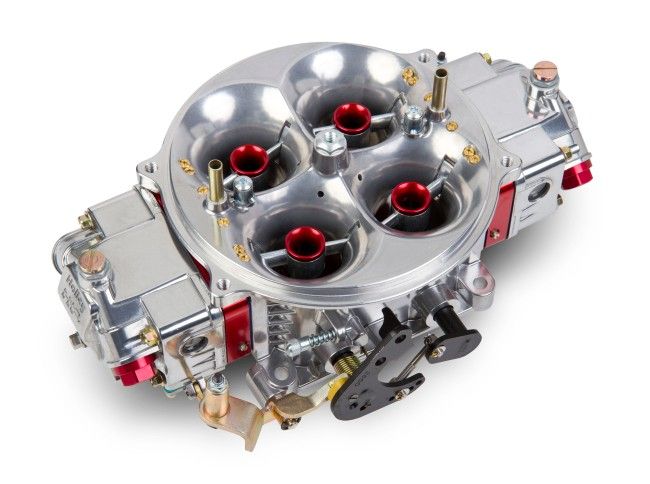
Carburetor-based fuel systems were used in automobiles for many decades and played an important role in the development of gasoline engines. Before electronic fuel injection became widespread, the carburetor was the standard method of mixing fuel with intake air.
Carburetors have a relatively simple mechanical design and can work reliably when properly adjusted. However, as engine technology advanced, their limitations became increasingly apparent. The main problem is that a carburetor cannot control the air-fuel mixture as precisely and dynamically as a modern electronic fuel injection system.
Limited Air-Fuel Mixture Control
A carburetor uses airflow and pressure differences to draw fuel into the intake air. This principle is effective within a certain range of operating conditions, but an engine does not operate under constant conditions.
The engine may need different amounts of fuel during:
-
Cold starting
-
Idling
-
Cruising
-
Acceleration
-
High engine speed
-
High engine load
-
Hill climbing
-
High-altitude operation
A carburetor uses mechanical systems such as jets, vacuum-operated devices, accelerator pumps, and choke mechanisms to compensate for these changes. However, these mechanisms cannot provide the same level of real-time precision as an ECU-controlled injection system.
Potentially Higher Fuel Consumption
One of the major limitations of carburetor systems is that maintaining the ideal air-fuel mixture under every operating condition is difficult.
If more fuel is supplied than the engine actually requires, some of that fuel may not contribute efficiently to combustion. Rich mixtures can occur particularly during cold starts, acceleration, and transitions between different operating conditions.
A properly calibrated electronic fuel injection system can adjust fuel delivery much more precisely and therefore can generally achieve better fuel efficiency under comparable conditions.
However, fuel consumption is not determined by the fuel system alone. Engine displacement, vehicle weight, transmission, driving style, tire pressure, aerodynamic resistance, engine condition, and many other factors also have a major influence.
Difficulties During Cold Starting
Cold starting is one of the most recognizable limitations of carburetor-equipped engines.
When an engine is cold, fuel evaporation characteristics change and a different air-fuel mixture may be required. Carburetors traditionally compensate for this with a choke or another form of mechanical enrichment.
During cold starting, the mixture may need to be richer. As the engine warms up, the enrichment must gradually decrease.
An incorrectly adjusted, worn, or dirty carburetor can cause:
-
Difficult starting
-
Extended cranking
-
Stalling immediately after startup
-
Unstable idle
-
Excessive fuel consumption
-
Strong gasoline odor
Electronic fuel injection can use coolant-temperature and other sensor inputs to automatically determine the appropriate fuel strategy during starting and warm-up.
Problems at High Altitude
Atmospheric pressure and air density decrease as altitude increases. This affects the amount of oxygen entering the engine and can change the air-fuel mixture in a carbureted engine.
A carburetor adjusted for sea-level operation may not maintain the same ideal mixture at significantly higher altitudes.
As a result, the engine may run too rich or too lean depending on the design and calibration of the carburetor.
Electronic fuel injection can use information from MAP or MAF sensors and other engine-management inputs to adjust fuel delivery according to changing atmospheric and engine conditions.
Limited Control During Sudden Acceleration
When the driver suddenly opens the throttle, the engine's airflow can increase very quickly.
Carburetors generally use an accelerator pump to provide additional fuel during rapid throttle opening. This helps prevent the mixture from becoming temporarily too lean.
The system can work effectively when properly adjusted, but its response is still based on mechanical characteristics.
A worn or incorrectly adjusted carburetor may cause:
-
Hesitation
-
Stumbling
-
Poor throttle response
-
Temporary loss of power
-
Intake or exhaust popping
-
Excessive fuel consumption
Electronic fuel injection can respond to throttle position, airflow, engine speed, load, and other parameters simultaneously, allowing much more precise fuel control during acceleration.
More Limited Idle Control
Idle operation is particularly sensitive because the engine is operating at low speed and relatively low airflow.
In carbureted systems, idle speed and mixture are typically controlled using mechanical adjustments, idle circuits, bypass passages, and other components.
When additional loads are introduced, such as the air-conditioning compressor or increased alternator demand, the engine may need additional control to prevent the idle speed from dropping.
Some carburetors use vacuum-operated or mechanical idle compensation systems for this purpose. However, they cannot provide the same level of continuous electronic control available in modern engine management systems.
Limited Emissions Control
One of the most important reasons carburetors eventually disappeared from most modern vehicles was their difficulty in meeting increasingly strict emissions standards.
Gasoline engines produce pollutants such as:
-
Carbon monoxide (CO)
-
Hydrocarbons (HC)
-
Nitrogen oxides (NOx)
Controlling these emissions effectively requires accurate management of combustion conditions across a wide range of engine operating states.
Carburetors can be combined with emission-control equipment, including catalytic converters and other systems. However, maintaining sufficiently precise mixture control under all conditions is much more difficult with a primarily mechanical fuel system.
Electronic fuel injection made it possible to coordinate fuel delivery with oxygen sensors, catalytic converters, EGR systems, EVAP systems, ignition control, and other emissions technologies.
Limited Adaptation to Changing Engine Conditions
Modern engine management systems can simultaneously monitor many parameters, including:
-
Engine speed
-
Engine load
-
Airflow
-
Intake pressure
-
Coolant temperature
-
Throttle position
-
Oxygen sensor feedback
-
Fuel pressure
-
Crankshaft position
-
Camshaft position
The ECU can then use this information to modify fuel delivery and other engine functions.
A conventional carburetor does not have this type of centralized electronic decision-making capability.
Some advanced carburetor systems were equipped with electronic or vacuum-controlled devices, but their control capability remained fundamentally different from that of a modern ECU-based system.
Uneven Fuel Distribution Between Cylinders
In a conventional carbureted engine, a single carburetor may supply the air-fuel mixture to several cylinders through the intake manifold.
Depending on manifold design, temperature, airflow, and engine operating conditions, the mixture reaching individual cylinders may not always be identical.
One cylinder may receive a slightly richer or leaner mixture than another.
Multi-point electronic fuel injection reduces this limitation by placing an individual injector near each cylinder's intake port. This allows fuel delivery to be controlled much more closely for each cylinder.
Sensitivity to Heat and Fuel Vaporization
The location and mechanical design of a carburetor can make it sensitive to engine-compartment temperatures.
Under certain conditions, particularly in older vehicles and hot environments, excessive heat can affect fuel behavior inside the fuel system.
One possible problem is vapor lock, in which fuel vapor formation interferes with normal fuel delivery.
The result can be hard starting, hesitation, stalling, or temporary loss of fuel supply.
Pressurized electronic fuel systems can reduce some of these problems by maintaining controlled fuel pressure throughout the fuel delivery system.
Limited Fuel Vapor Control
Modern vehicles are designed to control not only the fuel burned by the engine but also gasoline vapors that could otherwise escape into the atmosphere.
The EVAP system captures fuel vapors and allows them to be introduced into the engine under appropriate conditions.
Older carbureted vehicles could also use fuel-vapor control systems, but they generally did not have the same level of integrated electronic control found in modern fuel systems.
Limited Integration With Modern Engine Management
Modern engines rely on extensive communication between different systems.
Fuel injection can work together with:
-
Electronic throttle control
-
Ignition control
-
Variable valve timing
-
Turbocharger control
-
Knock control
-
Emissions systems
-
Transmission control
-
Traction and stability systems
-
OBD diagnostics
A conventional carburetor was not designed for this level of electronic integration.
Modern vehicles therefore require a fuel system that can respond electronically to information from multiple sensors and control modules.
Differences in Diagnostic Capability
The mechanical simplicity of a carburetor can be an advantage when troubleshooting certain problems. Many faults can be inspected and adjusted using basic mechanical tools and testing equipment.
However, modern electronic fuel injection systems provide much more extensive diagnostic information.
An ECU can monitor sensors, actuator circuits, fuel-control parameters, and system relationships. When it detects an abnormal condition, it may store a diagnostic trouble code.
A carbureted vehicle generally does not provide this same level of electronic diagnostic information.
This means that diagnosing a carburetor problem often depends more heavily on mechanical knowledge, physical inspection, vacuum measurements, fuel-pressure checks, adjustment procedures, and observation of engine behavior.
Does This Mean Carburetors Were Bad Systems?
Not at all.
Carburetors were highly effective for the technology and requirements of their time. Their simple mechanical construction offered several advantages:
-
Relatively simple design
-
Fewer electronic components
-
Easy access to many mechanical components
-
Straightforward adjustment on many classic applications
-
Low system complexity
-
Good suitability for certain classic and specialized applications
The problem is not that carburetors cannot make an engine run well. A properly tuned carburetor can provide excellent performance.
The issue is that modern engines are expected to do much more than simply run.
They must provide low emissions, consistent fuel economy, reliable cold starting, smooth drivability, precise fuel control, and stable operation across a wide range of temperatures, altitudes, and engine loads.
Why Did Electronic Fuel Injection Replace Carburetors?
The transition from carburetors to electronic fuel injection was driven by several factors rather than a single disadvantage.
Electronic fuel injection provides much greater control over:
-
Fuel quantity
-
Injection timing
-
Cold-start enrichment
-
Acceleration enrichment
-
Idle operation
-
Emissions
-
Altitude compensation
-
Engine load response
-
Fuel economy
As emissions regulations became stricter and engines became more sophisticated, the limitations of purely mechanical fuel metering became increasingly difficult to overcome.
Electronic fuel injection eventually became the more practical solution because it could integrate fuel delivery with the entire engine-management system.
Carburetors remain important in automotive history and are still used in classic vehicles, certain specialized applications, and some small engines. However, for modern passenger vehicles, the precision and adaptability of electronic fuel injection make it far better suited to the demands of modern engine technology.