TR
TR EN
EN

What Is a Blow-Off Valve (Dump Valve)? What Are the Symptoms of Blow-Off Valve Failure?
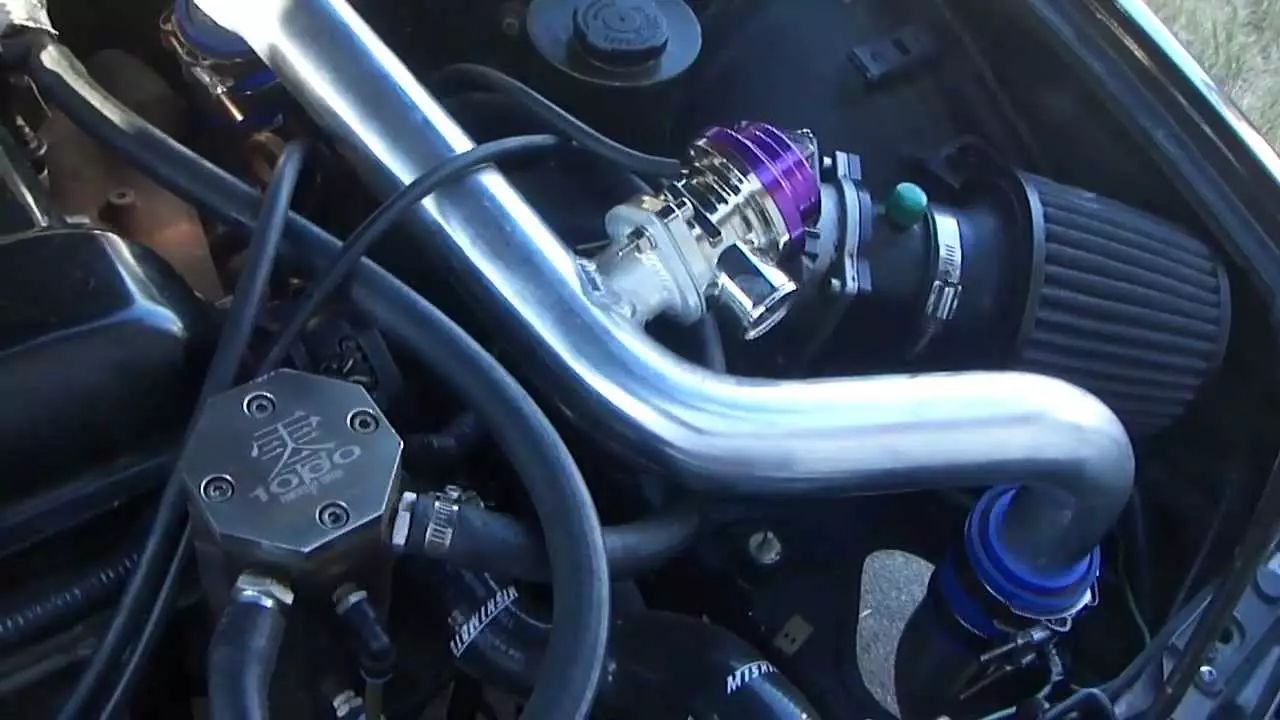
A Blow-Off Valve (BOV), also known as a Dump Valve, is a pressure-relief component used mainly on turbocharged engines. Its primary function is to release excess boost pressure from the intake system when the throttle closes suddenly.
When a turbocharger is producing boost and the driver suddenly lifts off the accelerator, the throttle valve can close while the turbocharger is still spinning at high speed and attempting to push air through the intake system.
Without a suitable pressure-relief strategy, this pressurized air can encounter a closed throttle and create pressure waves that travel back toward the turbocharger compressor.
The Blow-Off Valve helps manage this situation by opening and releasing or redirecting the pressurized air.
This protects the turbocharger from unnecessary compressor surge and helps the turbocharger recover more effectively when the throttle is opened again.
How Does a Blow-Off Valve Work?
The basic operating principle is relatively simple.
During acceleration, the throttle is open and the turbocharger compresses air into the intake system. Boost pressure builds between the turbocharger compressor and the throttle body.
When the driver suddenly releases the accelerator:
-
The throttle closes or significantly reduces airflow.
-
Pressurized air remains in the charge pipe.
-
Pressure begins to rise upstream of the closed throttle.
-
The Blow-Off Valve receives a signal to open.
-
Excess pressure is released or recirculated.
-
Pressure in the intake system is reduced.
-
The turbocharger is protected from excessive compressor-side pressure fluctuations.
Depending on the vehicle and valve design, the released air may be vented into the atmosphere or routed back into the intake system.
Why Is a Blow-Off Valve Needed?
A turbocharger can continue spinning for a short period after the driver closes the throttle.
This creates an important problem.
The compressor is still trying to move air, but the throttle is no longer allowing that air to enter the engine normally.
If the pressurized air has nowhere to go, the pressure can travel backward through the intake system toward the compressor.
This phenomenon can contribute to compressor surge.
A Blow-Off Valve provides a controlled path for the excess pressure.
The result can be:
-
Reduced pressure buildup against the compressor
-
Less compressor surge
-
Better turbocharger behavior during throttle lift-off
-
Improved response when the throttle is reopened
-
Reduced stress on some turbocharger components
Blow-Off Valve vs. Wastegate
These two components are often confused because both are associated with turbocharged engines, but they perform completely different jobs.
The wastegate controls exhaust-gas flow to the turbocharger turbine and therefore helps regulate turbocharger boost production.
The Blow-Off Valve manages pressurized air on the compressor/intake side, particularly when the throttle closes.
In simple terms:
Wastegate = controls turbocharger boost production.
Blow-Off Valve = releases or redirects excess intake pressure during throttle closure.
A wastegate cannot replace a Blow-Off Valve, and a Blow-Off Valve cannot perform the function of a wastegate.
Blow-Off Valve vs. Diverter Valve
A Blow-Off Valve and a Diverter Valve perform a similar pressure-management function, but they handle the discharged air differently.
A traditional Blow-Off Valve often vents excess pressurized air into the atmosphere.
A Diverter Valve, sometimes called a bypass valve, normally redirects the excess air back into the turbocharger's intake system.
This difference is particularly important on engines that use a Mass Air Flow (MAF) sensor.
If the MAF sensor has already measured the air and the system then vents that air to the atmosphere, the ECU may temporarily detect an airflow imbalance.
This can contribute to drivability problems on some vehicles.
For this reason, a recirculating valve is often preferred on factory turbocharged systems.
What Does a Blow-Off Valve Sound Like?
The characteristic “whoosh” or “psshh” sound associated with modified turbocharged cars is often produced when a Blow-Off Valve vents compressed air into the atmosphere.
The sound can vary considerably depending on:
-
Valve design
-
Turbocharger size
-
Boost pressure
-
Intake system
-
Valve spring
-
Throttle behavior
-
Air filter and intake pipe design
However, sound alone is not an indication of a properly functioning Blow-Off Valve.
A valve can make a loud sound and still be incorrectly adjusted or leaking.
Does Every Turbocharged Car Have a Blow-Off Valve?
Not necessarily in the aftermarket sense.
Many modern turbocharged engines use an electronically controlled or mechanically controlled bypass/diverter valve integrated into the factory turbocharging system.
Manufacturers may use different terminology, including:
-
Diverter Valve
-
Compressor Bypass Valve
-
Recirculation Valve
-
Charge Air Bypass Valve
-
Turbocharger Bypass Valve
The exact design depends on the engine.
Therefore, saying that every turbocharged vehicle uses a traditional atmospheric Blow-Off Valve would be incorrect.
What Are the Symptoms of Blow-Off Valve Failure?
A faulty Blow-Off Valve can cause several different symptoms depending on whether the valve is stuck open, stuck closed, leaking, incorrectly adjusted, or suffering from a control problem.
Loss of Boost Pressure
One of the most common symptoms is reduced boost.
If the valve does not seal properly, compressed air can escape before it reaches the engine.
The driver may notice:
-
Reduced acceleration
-
Lower turbo boost
-
Sluggish throttle response
-
Poor performance under load
-
Longer acceleration times
A boost leak elsewhere in the intake system can create very similar symptoms, so the BOV should not automatically be blamed.
Hissing or Air-Leak Noise
A leaking Blow-Off Valve can produce a continuous hissing sound.
A properly functioning valve normally opens under specific conditions and remains sealed when it needs to hold boost.
If the valve is leaking while the engine is under boost, pressurized air may escape through the valve.
A persistent hissing noise during acceleration can therefore indicate a leak.
Turbocharger Boost Fluctuation
A malfunctioning valve can cause unstable boost pressure.
Instead of building boost smoothly, the pressure may rise and fall unexpectedly.
The driver may experience inconsistent acceleration, particularly under heavy throttle.
Boost fluctuation can also be caused by a wastegate problem, boost-control solenoid, turbocharger problem, intake leak, or sensor fault.
Poor Throttle Response
A faulty BOV can affect how the turbocharger behaves when the driver rapidly changes throttle position.
If the valve does not operate correctly, the turbocharger may not recover as efficiently after a throttle lift.
The driver may notice delayed response when accelerating again.
Compressor Surge
A Blow-Off Valve that fails to release or redirect pressure properly can contribute to compressor surge.
One possible symptom is a rapid fluttering or chattering sound from the turbocharger area when the driver suddenly releases the accelerator.
This is sometimes mistaken for a desirable performance sound.
However, compressor surge is not something that should automatically be considered harmless.
Repeated or severe surge can place unnecessary stress on the turbocharger compressor system.
Engine Hesitation
A malfunctioning valve can sometimes contribute to hesitation when the throttle is reopened.
This may be particularly noticeable during rapid gear changes or repeated acceleration.
However, hesitation can have many causes, including:
-
Ignition problems
-
Fuel delivery problems
-
Vacuum leaks
-
MAF sensor problems
-
MAP sensor problems
-
Throttle body problems
-
Turbocharger control faults
A complete diagnosis is therefore necessary.
Rich or Lean Air-Fuel Mixture Symptoms
On certain MAF-equipped systems, an improperly vented Blow-Off Valve can create an airflow measurement discrepancy.
The MAF sensor measures air entering the engine. If that air is subsequently vented to the atmosphere instead of being recirculated, the ECU may temporarily have an incorrect understanding of the amount of air actually entering the engine.
Depending on the system, this can contribute to:
-
Rough running
-
Hesitation
-
Stalling
-
Poor idle quality
-
Rich mixture symptoms
-
Check Engine Light
This does not mean that every atmospheric BOV causes these problems. The effect depends on the engine's airflow measurement strategy and calibration.
Engine Stalling After Releasing the Throttle
In some applications, a leaking or incorrectly configured valve can contribute to engine stalling when the driver suddenly releases the accelerator.
This is particularly possible when the engine management system is sensitive to changes in measured airflow.
If the engine repeatedly stalls after coming off boost, the entire intake and boost-control system should be inspected rather than simply replacing the BOV.
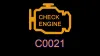
Check Engine Light
A Blow-Off Valve itself may not always have a dedicated diagnostic code.
However, a valve problem can create conditions that cause the ECU to detect:
-
Incorrect boost pressure
-
Airflow discrepancies
-
Mixture problems
-
Unexpected pressure changes
-
Turbocharger control problems
Depending on the vehicle, this can lead to a Check Engine Light and stored diagnostic trouble codes.
Why Does a Blow-Off Valve Fail?
There are several possible causes.
Worn valve diaphragm
Some valves use a diaphragm to control pressure. Over time, the diaphragm can become damaged, hardened, or torn.
A damaged diaphragm may prevent the valve from sealing correctly.
Weak or damaged spring
Mechanical Blow-Off Valves often use a spring to control the valve's resting position.
If the spring is damaged, incorrectly selected, or improperly adjusted, the valve may open too easily or fail to open when required.
Vacuum or control-line leak
Some BOV systems use a vacuum or pressure signal to control the valve.
A cracked hose, disconnected line, blocked passage, or leaking connection can prevent the valve from receiving the correct control signal.
Valve contamination
Oil vapor and intake-system contamination can accumulate around the valve mechanism.
This may cause the valve to become sticky or slow to respond.
Incorrect adjustment
Aftermarket adjustable Blow-Off Valves can be incorrectly configured.
If the valve is adjusted too softly, it may leak boost.
If it is adjusted too firmly, it may not respond correctly when the throttle closes.
The correct adjustment depends on the valve design and engine application.
Damaged seals
A damaged O-ring, gasket, or sealing surface can allow boost pressure to escape.
Sometimes the valve itself is functional, but the seal around it is leaking.
How Do You Diagnose a Faulty Blow-Off Valve?
A proper diagnosis should begin with a visual inspection.
Check:
-
BOV housing
-
Vacuum hoses
-
Control lines
-
Clamps
-
Intake pipes
-
Charge pipes
-
Seals
-
Mounting points
-
Electrical connectors on electronically controlled valves
Look for cracks, loose connections, oil residue, damaged hoses, and signs of air leakage.
Perform a Boost Leak Test
A boost leak test can be very useful.
The intake/charge system is pressurized with an appropriate test setup while the technician observes whether pressure is escaping.
This can reveal leaks from:
-
Blow-Off Valve
-
Intercooler
-
Charge pipes
-
Hose connections
-
Throttle-body connections
-
Intake manifold
-
Other boost-system components
A BOV should not be condemned until other possible boost leaks have been eliminated.
Check the Control Signal
If the valve uses a vacuum line, the vacuum signal should be checked.
A damaged or disconnected vacuum hose can make a perfectly good valve appear faulty.
Electronically controlled valves require a different diagnostic procedure.
Their wiring, power supply, ground, control signal, and actuator operation may need to be tested according to the manufacturer's service information.
Compare Requested and Actual Boost
On vehicles with suitable diagnostic data, requested boost and actual boost can be compared.
If the ECU requests a certain boost level but the engine consistently fails to reach it, the technician should investigate the complete turbocharging system.
Possible causes include:
-
Blow-Off Valve leakage
-
Wastegate problems
-
Turbocharger damage
-
Boost-control solenoid failure
-
Intake leaks
-
Intercooler leaks
-
Sensor problems
-
Exhaust restrictions
Can a Bad Blow-Off Valve Damage the Turbocharger?
A malfunctioning Blow-Off Valve can contribute to turbocharger problems, particularly if it fails to manage pressure correctly and repeated compressor surge occurs.
However, it would be inaccurate to say that every BOV failure immediately damages a turbocharger.
The severity depends on:
-
Turbocharger design
-
Engine operating conditions
-
Boost pressure
-
Frequency of surge
-
Duration of the problem
-
Valve design
-
Overall condition of the turbocharging system
A persistent surge condition should nevertheless be investigated rather than ignored.
Can a Blow-Off Valve Increase Horsepower?
A Blow-Off Valve is primarily a pressure-management device, not a horsepower-producing component.
Replacing a factory valve with a high-quality aftermarket valve does not automatically increase engine power.
The main purpose is to manage pressure correctly when the throttle closes.
A properly functioning valve can help maintain correct turbocharger operation, but the valve itself does not create additional engine power in the same way that increased boost, improved airflow, or engine modifications can.
Is a Blow-Off Valve Necessary on a Turbocharged Engine?
The exact pressure-management solution depends on the engine's design.
Many turbocharged engines need a method of controlling compressor-side pressure when the throttle closes, but the system may use a diverter valve, bypass valve, electronically controlled compressor recirculation valve, or another factory-designed solution rather than a traditional atmospheric BOV.
Therefore, installing an aftermarket Blow-Off Valve is not automatically an upgrade.
The valve must be compatible with the turbocharger, engine management system, airflow measurement strategy, and boost level.
Can a Blow-Off Valve Cause a Check Engine Light?
Yes, it can in certain circumstances.
A leaking or incorrectly configured valve can affect boost pressure or measured airflow.
The ECU may detect a discrepancy between expected and actual operating conditions.
Depending on the vehicle, this may result in diagnostic trouble codes related to:
-
Boost pressure
-
Airflow
-
Fuel mixture
-
Turbocharger performance
-
Intake pressure
However, a Check Engine Light should not be used as proof that the BOV itself is faulty.
The stored codes and live data must be analyzed.
Should You Buy an Atmospheric or Recirculating Blow-Off Valve?
The correct choice depends on the engine.
An atmospheric valve releases the compressed air outside the intake system and produces the characteristic discharge sound.
A recirculating valve sends the air back into the intake system.
For many factory vehicles using a MAF sensor, the recirculating configuration is generally more compatible with the original engine-management strategy.
An atmospheric valve may work correctly on some applications, but it should not be installed simply because it produces a louder sound.
Final Thoughts
The Blow-Off Valve, also called a Dump Valve, is an important pressure-management component found in many turbocharged engine systems.
Its job is to deal with excess compressor-side pressure when the throttle suddenly closes. Depending on the vehicle, the valve may release the air into the atmosphere or redirect it back into the intake system.
A properly functioning BOV can help reduce unwanted compressor pressure fluctuations and improve turbocharger behavior during rapid throttle changes.
When the valve fails, symptoms can include boost loss, hissing noises, boost fluctuation, poor throttle response, compressor surge, hesitation, engine stalling, mixture-related problems, and a Check Engine Light.
However, many of these symptoms can also be caused by other turbocharger or intake-system problems. A leaking intercooler hose, damaged charge pipe, faulty wastegate, defective boost-control solenoid, MAF/MAP sensor problem, or turbocharger fault can produce very similar symptoms.
For this reason, diagnosing a Blow-Off Valve should involve inspection of the entire boost-control system rather than replacing the valve based on one symptom alone.
A properly matched and correctly adjusted Blow-Off Valve should work with the engine's turbocharger, ECU calibration, airflow measurement system, and intake configuration. When these components work together correctly, the turbocharging system can maintain stable boost pressure while responding smoothly to rapid changes in throttle position.