TR
TR EN
EN

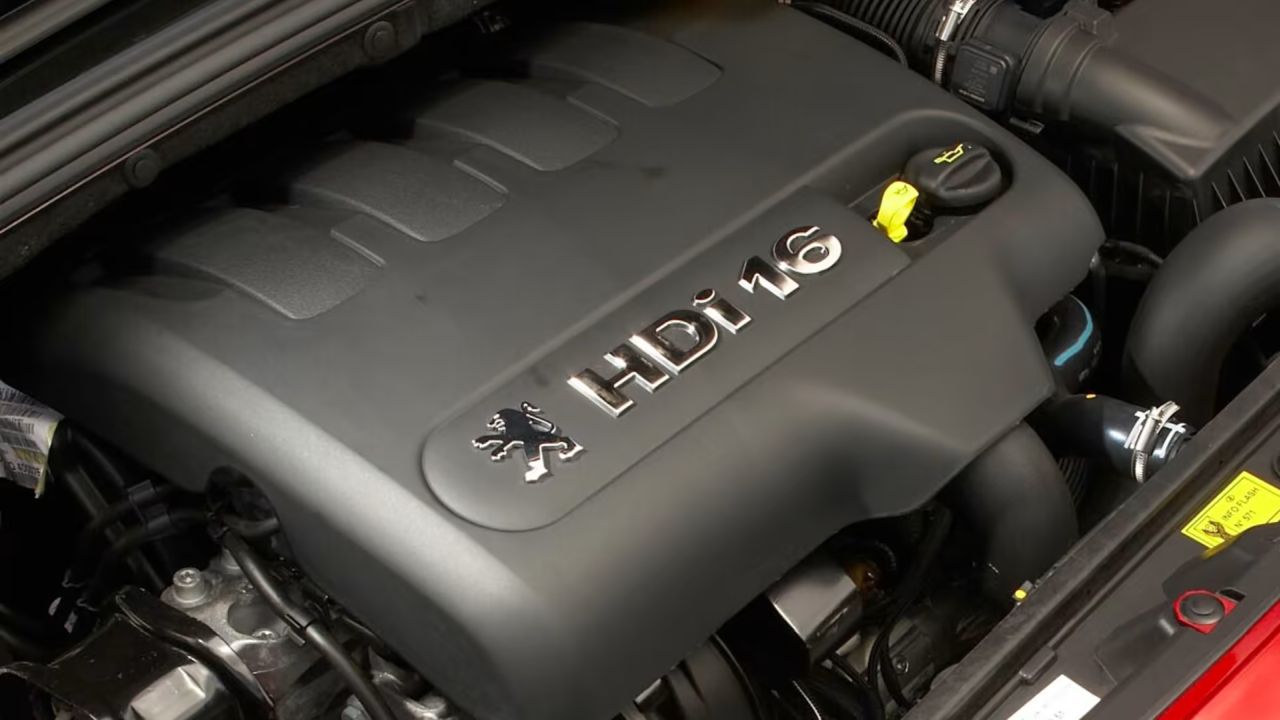
What Is an HDi Engine? How Does It Work? What Are the Advantages of an HDi Engine?
HDi stands for High-pressure Direct Injection and is a diesel engine technology developed and widely used by PSA Peugeot Citroën, particularly in Peugeot and Citroën vehicles. The technology was introduced to improve diesel engine efficiency, performance, emissions, and fuel economy through high-pressure direct fuel injection.
Today, the HDi name is particularly associated with Peugeot and Citroën diesel engines, although the technology has evolved significantly over the years. Different HDi engines can use different generations of common-rail injection, turbocharging, exhaust-gas recirculation, particulate filters, and emissions-control systems.
The basic principle remains the same: diesel fuel is injected directly into the combustion chamber at high pressure, allowing the engine to control the quantity and timing of fuel much more precisely than older diesel injection systems.
What Does HDi Mean?
The abbreviation HDi comes from High-pressure Direct Injection.
The name describes the two fundamental characteristics of the system:
High-pressure injection:
Diesel fuel is pressurized to a high level before being delivered to the injectors.
Direct injection:
Fuel is injected directly into the engine's combustion chamber rather than into a separate pre-combustion chamber.
This combination allows the engine to achieve better control over the combustion process.
How Does an HDi Diesel Engine Work?
An HDi engine operates according to the basic principles of a four-stroke diesel engine.
The four main stages are:
-
Intake
-
Compression
-
Combustion
-
Exhaust
During the intake stroke, air enters the cylinder.
During compression, the piston compresses the air and significantly increases its temperature.
Near the end of the compression stroke, diesel fuel is injected directly into the hot compressed air.
The fuel ignites because of the high temperature inside the combustion chamber.
The resulting combustion produces rapidly expanding gases that push the piston downward and generate mechanical power.
The crankshaft converts the piston's movement into rotational motion, which is ultimately transferred to the transmission and wheels.
The major difference compared with older diesel engines is the sophisticated high-pressure fuel-injection system used to control this process.
What Is the Common Rail System in an HDi Engine?
Most HDi engines use a Common Rail fuel-injection system.
In a common-rail system, fuel is pressurized by a high-pressure pump and stored in a common fuel rail.
The rail acts as a pressurized reservoir supplying fuel to the individual injectors.
The engine control unit can then control each injector electronically.
This provides much greater flexibility than older mechanical diesel injection systems.
The ECU can determine:
-
When fuel should be injected
-
How much fuel should be injected
-
How many injection events should occur
-
Injection timing
-
Injection duration
Depending on the engine generation, multiple injection events can occur during a single combustion cycle.
What Is the High-Pressure Fuel Pump?
The high-pressure fuel pump is one of the most important components of an HDi fuel system.
Its job is to raise diesel fuel pressure to the level required by the common-rail injection system.
Fuel is supplied from the fuel tank to the high-pressure pump.
The pump then compresses the fuel and sends it to the common rail.
The ECU controls the fuel system so that the required rail pressure is maintained under different operating conditions.
If the high-pressure pump develops a problem, the engine may experience:
-
Hard starting
-
Poor acceleration
-
Low power
-
Rough running
-
Engine stalling
-
Failure to start
-
Fuel-pressure-related fault codes
What Are HDi Injectors?
HDi injectors are electronically controlled fuel injectors designed to inject very precise quantities of diesel directly into the combustion chamber.
Modern diesel injectors operate at extremely high pressures and must open and close very quickly.
The injector's ability to deliver a precise amount of fuel is essential for proper combustion.
Depending on the engine generation, the injector can perform multiple injections during one combustion cycle.
These may include a small pilot injection followed by the main injection and, in some applications, additional injection events.
This strategy helps control combustion noise, performance, emissions, and particulate formation.
Why Does an HDi Engine Use Multiple Injection Events?
Multiple injection is one of the important developments in modern common-rail diesel technology.
A small quantity of fuel can be injected before the main combustion event.
This pilot injection can help control the rate at which combustion pressure rises.
The main injection then produces the majority of the engine's power.
Additional injection events may be used for emissions-control purposes depending on the engine's design and operating conditions.
The exact injection strategy varies according to engine generation and calibration.
Does an HDi Engine Have a Turbocharger?
Many HDi engines are turbocharged.
Turbocharging allows the engine to force more air into the cylinders.
More available air allows the engine to burn fuel efficiently while producing more torque and power from a relatively small engine displacement.
Depending on the specific HDi engine, the turbocharger may use a fixed-geometry or variable-geometry design.
Some engines also use other technologies to improve airflow and boost control.
Turbocharging is one of the reasons many HDi engines can produce strong low- and mid-range torque while maintaining relatively good fuel economy.
What Is the Role of the Intercooler?
Turbocharging increases intake-air temperature because compressing air generates heat.
An intercooler can reduce the temperature of the compressed intake air before it enters the engine.
Cooler intake air is denser, allowing more oxygen to enter the cylinders.
Depending on the HDi engine, the intercooler can contribute to:
-
Better combustion
-
Improved engine performance
-
More consistent boost
-
Better thermal management
-
Reduced intake-air temperature
Not every HDi engine has exactly the same intercooler arrangement.
What Is the Role of the ECU in an HDi Engine?
The engine control unit is responsible for coordinating many aspects of HDi engine operation.
The ECU receives information from numerous sensors and uses this information to control fuel injection, turbocharger operation, emissions systems, and other engine functions.
It may monitor:
-
Engine speed
-
Crankshaft position
-
Camshaft position
-
Accelerator pedal position
-
Airflow
-
Intake pressure
-
Fuel pressure
-
Coolant temperature
-
Intake-air temperature
-
Exhaust-gas conditions
-
Oxygen concentration
-
Exhaust particulate loading
Based on these inputs, the ECU determines how the engine should operate under current conditions.
What Is the Difference Between HDi and a Traditional Diesel Engine?
Older diesel engines often relied on mechanical injection systems.
The injection timing and fuel quantity were controlled mechanically, and the system had considerably less flexibility.
HDi technology introduced electronically controlled high-pressure common-rail injection.
This allowed much more precise control over fuel delivery.
As a result, HDi engines could achieve improvements in:
-
Fuel economy
-
Engine refinement
-
Power output
-
Torque delivery
-
Emissions control
-
Cold starting
-
Combustion noise
The exact improvements depend on the particular HDi generation.
What Are the Advantages of an HDi Engine?
HDi engines became popular largely because they combine good fuel economy with strong torque and relatively compact engine dimensions.
Low Fuel Consumption
One of the biggest advantages of HDi technology is fuel efficiency.
Diesel engines already have high thermal efficiency compared with many gasoline engines, and high-pressure direct injection allows fuel delivery to be controlled very precisely.
The ECU can inject only the amount of fuel required for the current operating conditions.
This can contribute to low fuel consumption, particularly during steady-speed and long-distance driving.
High Low-End Torque
HDi engines typically provide strong torque at relatively low engine speeds.
This is particularly useful for:
-
Highway driving
-
Overtaking
-
Hill climbing
-
Carrying loads
-
Towing, depending on the vehicle
Turbocharging and diesel combustion characteristics contribute significantly to this strong torque delivery.
Good Long-Distance Efficiency
Diesel engines are often well suited to long-distance driving.
An HDi engine can provide relatively low fuel consumption while maintaining good cruising performance.
This is one reason diesel-powered Peugeot and Citroën vehicles became particularly popular among drivers who regularly traveled long distances.
Improved Combustion Control
High-pressure common-rail injection allows the ECU to control fuel delivery much more precisely.
The engine can adjust injection timing and quantity according to operating conditions.
This gives engineers greater control over combustion compared with older mechanical diesel systems.
Reduced Combustion Noise
Multiple injection strategies can help control the rate at which combustion pressure increases.
This can make a modern HDi engine significantly quieter and smoother than many older diesel engines.
However, the actual noise level depends on engine design, insulation, injector condition, engine mounts, and other factors.
Strong Performance From Smaller Engines
Turbocharging allows a relatively small-displacement HDi engine to produce substantial torque and useful power.
This contributes to the concept of engine downsizing.
A smaller turbocharged diesel engine can provide performance that would previously have required a larger naturally aspirated diesel engine.
Advanced Emissions Control
Later HDi generations incorporated increasingly sophisticated emissions-control technologies.
Depending on the vehicle and engine generation, these can include:
-
Exhaust Gas Recirculation (EGR)
-
Diesel Oxidation Catalyst
-
Diesel Particulate Filter (DPF/FAP)
-
Selective Catalytic Reduction (SCR)
-
AdBlue/urea injection
-
Various temperature and pressure sensors
These systems work together to reduce different types of diesel emissions.
It is important to remember that not every HDi engine uses all of these technologies.
What Is FAP on an HDi Engine?
Peugeot and Citroën commonly use the term FAP for their diesel particulate filter system.
FAP is essentially a particulate filtration system designed to capture soot particles from diesel exhaust gases.
The filter gradually accumulates soot and must periodically regenerate.
During regeneration, the system raises exhaust temperature sufficiently to oxidize accumulated soot.
Depending on the specific system, regeneration can be supported by engine-management strategies and, on certain generations, a fuel-borne additive system.
FAP and DPF terminology can therefore appear in discussions about HDi engines.
What Is AdBlue on an HDi Engine?
Some later HDi diesel engines use SCR (Selective Catalytic Reduction) technology with AdBlue.
AdBlue is a urea-based solution that is injected into the exhaust system.
It helps the SCR catalyst reduce nitrogen oxides (NOx) into primarily nitrogen and water.
AdBlue is not mixed directly with diesel fuel.
It has its own tank and delivery system.
Not all HDi engines use AdBlue because this technology became more common in later generations as emissions regulations became more demanding.
What Are the Common HDi Engine Problems?
HDi engines can be reliable when properly maintained, but their sophisticated fuel and emissions systems contain several components that can develop faults.
Common problem areas can include:
-
Diesel injectors
-
High-pressure fuel pump
-
EGR valve
-
Turbocharger
-
DPF/FAP
-
Fuel-pressure regulator
-
Fuel-pressure sensor
-
MAF sensor
-
MAP sensor
-
Glow plugs
-
AdBlue/SCR system on equipped vehicles
-
Vacuum control system
-
Intake system
-
Turbocharger actuator
The exact weaknesses vary considerably between different HDi engine generations.
HDi Injector Problems
HDi injectors operate under demanding conditions.
Over time, injector wear or contamination can affect fuel delivery.
Possible symptoms include:
-
Rough idle
-
Hard starting
-
Excessive smoke
-
Poor acceleration
-
Increased fuel consumption
-
Engine misfire-like behavior
-
Injector-related fault codes
A defective injector should be diagnosed with appropriate tests rather than replaced solely based on symptoms.
HDi EGR Valve Problems
The EGR system redirects a controlled amount of exhaust gas back into the intake under appropriate conditions to reduce NOx formation.
Over time, soot and deposits can accumulate around the EGR valve and associated passages.
A malfunctioning EGR system can contribute to:
-
Rough running
-
Poor acceleration
-
Increased smoke
-
Reduced fuel economy
-
Check Engine Light
-
Intake-system contamination
The exact symptoms depend on whether the EGR valve is stuck open, stuck closed, or experiencing an electrical/control problem.
HDi DPF/FAP Problems
The particulate filter is designed to collect soot, but it cannot accumulate soot indefinitely.
It must periodically regenerate.
Frequent short trips can make regeneration more difficult because the exhaust system may not reach the conditions required for effective regeneration.
A heavily loaded DPF/FAP can cause:
-
Reduced engine power
-
Increased fuel consumption
-
Warning lights
-
Forced regeneration requests
-
Limp mode
-
Excessive exhaust backpressure
The correct repair depends on the cause of the blockage and the condition of the filter.
HDi Turbocharger Problems
The turbocharger is exposed to high temperatures, high rotational speeds, and demanding operating conditions.
Potential turbocharger problems can cause:
-
Loss of power
-
Low boost
-
Excessive boost
-
Whistling noises
-
Oil consumption
-
Smoke
-
Poor acceleration
-
Turbocharger-related fault codes
Regular oil maintenance is particularly important for turbocharged engines.
HDi Glow Plug Problems
Glow plugs are particularly important during cold starting.
Unlike spark plugs in gasoline engines, glow plugs do not normally ignite the diesel fuel directly. They help raise the temperature in the combustion chamber during cold-start conditions and may also support emissions strategies after startup.
Faulty glow plugs can cause:
-
Difficult cold starting
-
Rough running immediately after startup
-
White smoke during cold starts
-
Glow-plug warning lights
-
Fault codes
Is an HDi Engine Reliable?
The reliability of an HDi engine depends heavily on the specific engine generation, maintenance history, operating conditions, and fuel quality.
The HDi concept itself is not inherently unreliable.
However, modern diesel engines have considerably more complex fuel and emissions systems than older diesel engines.
A well-maintained HDi engine can provide high mileage and good efficiency, while a neglected engine can develop expensive problems involving the injectors, turbocharger, DPF/FAP, EGR, high-pressure fuel system, or SCR system.
How Should an HDi Engine Be Maintained?
Correct maintenance is especially important for modern common-rail diesel engines.
Use the correct engine oil
The correct oil specification should be used, particularly on vehicles equipped with a DPF/FAP. The wrong oil can contribute to increased particulate ash accumulation.
Change the oil at the recommended interval
Turbochargers and high-pressure engine components depend on clean, correctly specified oil.
Use quality diesel fuel
Contaminated fuel can damage high-pressure pumps and injectors.
Replace the fuel filter on time
The fuel filter protects the high-pressure fuel system from contamination and water.
Do not ignore warning lights
A DPF, engine, glow-plug, or AdBlue warning should be diagnosed rather than repeatedly reset.
Allow suitable driving conditions for regeneration
If the vehicle's manufacturer specifies particular driving conditions to support DPF regeneration, following those instructions can help prevent repeated regeneration problems.
HDi vs. Gasoline Engine
HDi diesel engines and gasoline engines have different strengths.
An HDi engine generally provides strong low-speed torque and can offer excellent fuel economy, particularly on longer journeys.
A gasoline engine may provide a smoother high-RPM character, simpler emissions hardware in some applications, and can be better suited to drivers who make frequent short trips.
The best choice depends heavily on annual mileage, driving conditions, vehicle type, local fuel prices, emissions regulations, and maintenance costs.
Is an HDi Engine Suitable for City Driving?
It depends on the specific vehicle and driving pattern.
An HDi engine can be used in urban environments, but frequent short journeys can be problematic for diesel emissions systems, especially on vehicles equipped with a DPF/FAP.
If the engine rarely reaches operating temperature and journeys are consistently very short, DPF regeneration may become more difficult.
Drivers who mainly make short city trips should therefore consider the complete vehicle usage pattern before choosing a modern diesel.
Final Thoughts
HDi is a high-pressure direct-injection diesel technology strongly associated with Peugeot and Citroën vehicles.
Its combination of common-rail fuel injection, electronic engine management, turbocharging, and advanced emissions control allows HDi engines to deliver strong torque, good fuel economy, and relatively refined diesel performance.
The high-pressure fuel system allows the ECU to control the quantity and timing of diesel injection with great precision. Multiple injection events can also be used to improve combustion refinement and emissions performance.
Later HDi engines may additionally use technologies such as EGR, FAP/DPF, variable turbocharger control, and SCR with AdBlue, depending on the specific engine and emissions generation.
The main advantages of HDi technology include low fuel consumption, strong low-end torque, good long-distance efficiency, precise fuel control, good performance from relatively small engines, and sophisticated emissions management.
At the same time, the additional technology means that maintenance is important. Injectors, high-pressure fuel pumps, turbochargers, EGR systems, DPF/FAP systems, and SCR/AdBlue components can all require attention as the vehicle ages.
For that reason, an HDi engine should not be judged only by its fuel economy or power output. Its maintenance history, fuel-system condition, emissions-system condition, oil quality, and typical driving environment are equally important when evaluating the long-term reliability and running cost of an HDi-powered vehicle.