TR
TR EN
EN

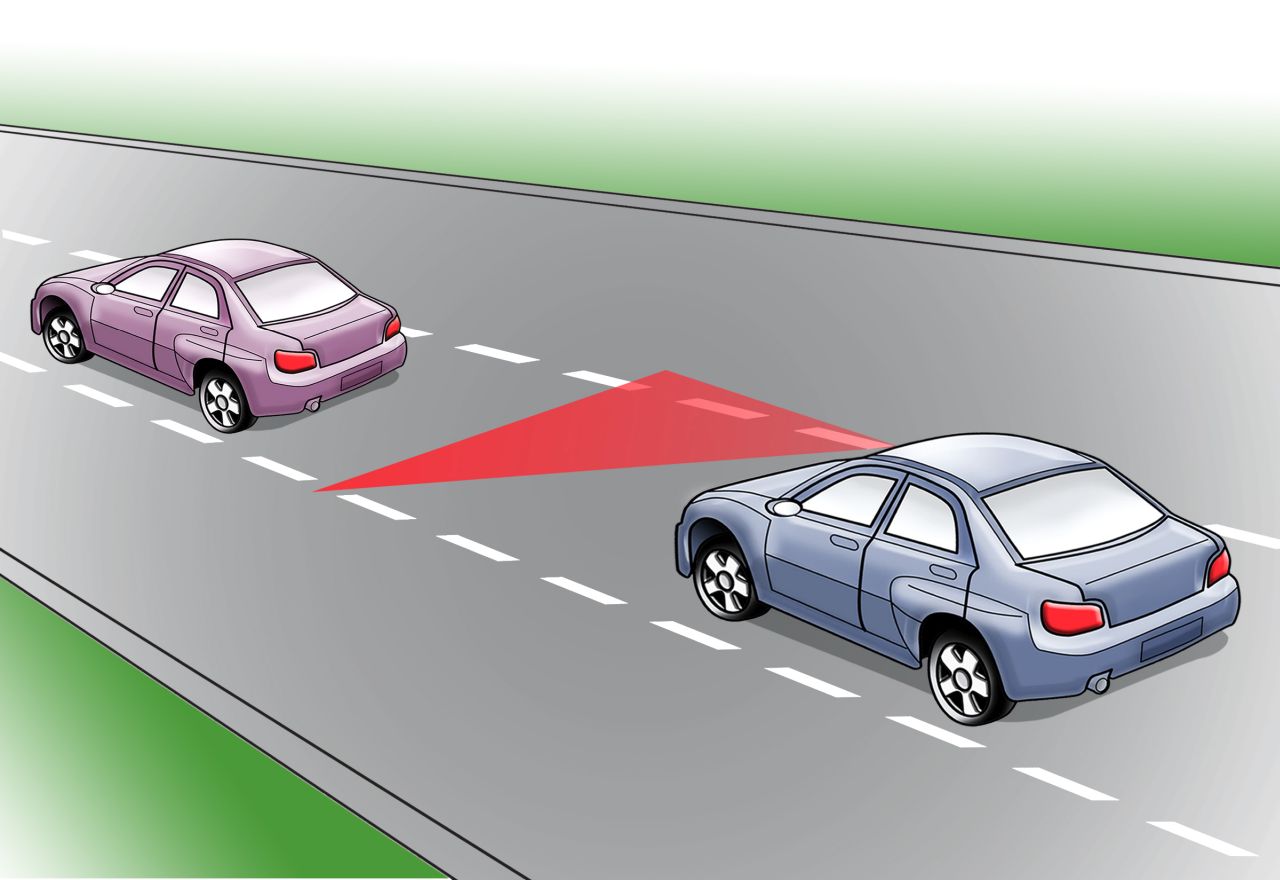
What Is a Lane Keeping System? What Are the Symptoms of Lane Keeping System Failure?
A Lane Keeping System (LKS) is an advanced driver assistance system designed to help prevent a vehicle from unintentionally leaving its lane. It monitors the road markings, determines the vehicle's position within the lane, and can warn the driver or, in more advanced systems, make small steering corrections to keep the vehicle within the lane.
Lane keeping technology is now common in modern vehicles. Depending on the manufacturer, it may be called Lane Keeping Assist (LKA), Lane Departure Warning (LDW), Lane Centering Assist, Lane Assist, or another similar name.
Although these systems are designed to improve safety, they depend on cameras, steering systems, vehicle-speed information, electronic control modules, and other sensors. A problem with any of these components can cause the system to become unavailable or operate incorrectly.
What Is the Purpose of a Lane Keeping System?
The primary purpose of a lane keeping system is to reduce the risk of unintentional lane departure.
For example, if a driver becomes distracted or loses concentration and the vehicle begins drifting toward a lane marking without the turn signal being used, the system may detect the movement.
Depending on the vehicle, it may then:
-
Warn the driver
-
Display a warning on the instrument cluster
-
Vibrate the steering wheel
-
Apply a small steering correction
-
Help keep the vehicle centered in the lane
The system is not designed to replace the driver. It is an assistance system intended to reduce the consequences of unintended lane departure.
How Does a Lane Keeping System Work?
Most modern lane keeping systems rely primarily on a forward-facing camera.
The camera is generally mounted near the top of the windshield, often around the area behind the rear-view mirror.
The camera continuously observes the road ahead and attempts to identify lane markings.
The system then combines this information with other vehicle data, such as:
-
Vehicle speed
-
Steering angle
-
Steering movement
-
Yaw rate
-
Wheel speed
-
Turn signal status
-
Vehicle position
-
Road curvature
The electronic control system analyzes these inputs to determine whether the vehicle is moving toward a lane boundary unintentionally.
If the system determines that intervention is appropriate, it can issue a warning or request steering assistance.
What Is the Difference Between Lane Departure Warning and Lane Keeping Assist?
These systems are related but not identical.
Lane Departure Warning (LDW) primarily warns the driver when the vehicle unintentionally approaches or crosses a lane marking.
The warning may be:
-
Visual
-
Audible
-
Steering-wheel vibration
Lane Keeping Assist (LKA) can go one step further by applying a steering correction.
The system may gently adjust the steering direction to help the vehicle remain within the lane.
The exact behavior depends on the vehicle.
What Is Lane Centering Assist?
Lane centering is generally more advanced than basic lane departure prevention.
Instead of simply reacting when the vehicle approaches a lane boundary, lane centering systems attempt to keep the vehicle closer to the center of the lane.
The system continuously estimates:
-
Left lane boundary
-
Right lane boundary
-
Vehicle position
-
Road curvature
-
Steering requirements
It can then make continuous, small steering adjustments.
Some vehicles combine lane centering with adaptive cruise control to provide a more comprehensive highway driving assistance function.
What Are the Main Components of a Lane Keeping System?
A modern lane keeping system can involve several components.
The main components may include:
-
Forward-facing camera
-
Camera control module
-
Windshield
-
Steering angle sensor
-
Steering system
-
Electric power steering
-
Wheel-speed sensors
-
Yaw rate sensor
-
ABS/ESC module
-
Turn signal switch
-
Vehicle speed information
-
Body control module
-
ADAS control module
-
CAN communication network
Not every vehicle uses exactly the same architecture.
What Is the Lane Keeping Camera?
The forward-facing camera is usually the most important component of a conventional lane keeping system.
It analyzes the road ahead and looks for visual characteristics such as:
-
Lane lines
-
Road edges
-
Road curvature
-
Lane boundaries
-
Other visual features used by the vehicle's driver-assistance algorithms
The camera needs a relatively clear view of the road.
Anything that interferes with its field of view can reduce system performance.
Where Is the Lane Keeping Camera Located?
In many vehicles, the camera is mounted behind the windshield near the rear-view mirror.
This location provides a relatively high and central view of the road.
Depending on the vehicle, the camera may be integrated into a larger windshield-mounted camera module that also supports other ADAS functions.
For example, the same camera system may support:
-
Lane departure warning
-
Lane keeping assist
-
Traffic sign recognition
-
Automatic high beam
-
Forward collision warning
-
Automatic emergency braking
Therefore, a camera problem can affect several driver-assistance functions simultaneously.
What Are the Symptoms of Lane Keeping System Failure?
A lane keeping system failure can appear in several different ways.
Common symptoms include:
-
Lane keeping assist does not activate
-
Lane departure warning does not work
-
Lane keeping system becomes unavailable
-
Warning message appears on the dashboard
-
Lane markings are not detected
-
Steering assistance does not operate
-
System works intermittently
-
System switches off unexpectedly
-
Lane keeping warning appears in clear conditions
-
Camera warning appears
-
Several ADAS functions stop working simultaneously
-
Steering assistance feels different when the system is active
The exact symptom can provide important information about the source of the problem.
Lane Keeping System Is Not Available
One of the most common messages is something similar to:
Lane Keeping Assist Unavailable
This does not necessarily mean that the lane keeping camera has failed.
The system may intentionally become unavailable because:
-
Lane markings cannot be detected
-
Camera visibility is poor
-
Windshield is dirty
-
Camera calibration is incorrect
-
Weather conditions are unsuitable
-
Vehicle speed is outside the operating range
-
Steering system has a fault
-
ABS/ESC system has a fault
-
Battery voltage is too low
-
Another ADAS fault has been detected
Temporary unavailability is therefore different from a permanent hardware failure.
Lane Keeping System Works Intermittently
Intermittent operation is common in camera-based ADAS systems because their performance depends heavily on environmental conditions.
The system may work normally on a clear road but stop operating when:
-
It starts raining
-
The sun is low on the horizon
-
Lane markings become faded
-
Snow covers the road
-
The windshield becomes dirty
-
The camera becomes fogged
-
Road markings disappear
If the system repeatedly becomes unavailable in otherwise good conditions, however, a camera, calibration, wiring, or electronic problem should be investigated.
Why Does Lane Keeping Assist Stop Working in Rain?
Heavy rain can make lane markings more difficult for the camera to recognize.
Water on the windshield can also distort the camera's view.
The system may therefore temporarily reduce its functionality or deactivate.
This behavior does not automatically indicate a malfunction.
However, if the system remains unavailable after the windshield and camera area are clean and visibility is good, further diagnosis may be necessary.
Why Does Lane Keeping Assist Stop Working in Snow?
Snow can affect lane keeping systems in several ways.
Snow can:
-
Cover lane markings
-
Cover the windshield
-
Obstruct the camera
-
Reduce contrast between the road and markings
The system may therefore display a warning and temporarily disable itself.
Snow and ice should be removed from the windshield and camera viewing area before diagnosing a possible hardware failure.
Can a Dirty Windshield Cause Lane Keeping Failure?
Yes.
The camera needs a clear view through the windshield.
A dirty windshield can cause:
-
Lane detection problems
-
False warnings
-
Intermittent operation
-
Reduced detection range
-
Temporary system deactivation
The area directly in front of the camera should be kept clean.
Can Windshield Replacement Cause Lane Keeping Problems?
Yes.
This is one of the most important issues to consider after windshield replacement.
The camera is often mounted in a specific position relative to the windshield.
If the windshield is replaced with an incorrect specification or the camera is not correctly positioned, the system may not operate properly.
Depending on the vehicle, camera calibration may be required after windshield replacement.
If lane keeping, traffic sign recognition, or automatic emergency braking starts malfunctioning immediately after a windshield replacement, calibration and camera positioning should be checked.
What Is Lane Keeping Camera Calibration?
Camera calibration ensures that the ADAS camera knows its correct position and viewing geometry relative to the vehicle.
The calibration process can involve:
-
Specialized targets
-
Diagnostic equipment
-
Precise vehicle positioning
-
Wheel alignment information
-
Software procedures
Depending on the manufacturer, calibration may be static, dynamic, or a combination of procedures.
Calibration requirements vary considerably between vehicles.
What Happens If the Lane Keeping Camera Is Misaligned?
A misaligned camera may still produce an image, but the system may incorrectly interpret the vehicle's position relative to the road.
Possible symptoms include:
-
Lane markings detected incorrectly
-
Lane keeping warnings at the wrong time
-
Steering corrections that seem unusual
-
System unavailable
-
Lane centering that does not keep the vehicle centered
-
Other camera-based ADAS warnings
A camera that physically works is not necessarily a correctly calibrated camera.
Can a Cracked Windshield Cause Lane Keeping Failure?
Yes.
If the crack is located within or near the camera's field of view, it can interfere with the camera's image.
Even if the camera itself is functioning electrically, the optical path may be compromised.
A windshield crack can therefore affect:
-
Lane keeping
-
Lane departure warning
-
Traffic sign recognition
-
Forward collision warning
-
Automatic emergency braking
The effect depends on the location and severity of the damage.
Why Does Lane Keeping Assist Not Detect Lane Lines?
There are many possible reasons.
The road markings may be:
-
Faded
-
Covered
-
Wet
-
Dirty
-
Interrupted
-
Very narrow
-
Poorly contrasted
Environmental conditions can also interfere with detection.
Possible technical causes include:
-
Dirty camera
-
Camera misalignment
-
Calibration problem
-
Camera failure
-
Software problem
-
Wiring or communication fault
If lane markings are clearly visible but the system consistently fails to recognize them, technical diagnosis becomes more important.
Why Does Lane Keeping Assist Pull the Steering Wheel?
A steering correction can feel noticeable when the system determines that the vehicle is moving toward a lane boundary.
However, unusual or excessive steering intervention should not be ignored.
Possible causes include:
-
Incorrect camera calibration
-
Misaligned camera
-
Poor wheel alignment
-
Steering angle sensor problem
-
Incorrect tire pressures
-
Road surface conditions
-
Strong crosswind
-
Poorly detected lane markings
-
Steering system problem
The driver should always remain in control of the vehicle.
Can Wheel Alignment Affect Lane Keeping Assist?
Yes.
Wheel alignment and ADAS calibration are different procedures, but they can influence each other.
If the vehicle has incorrect toe, camber, or other alignment geometry, it may not travel as expected when the steering wheel is centered.
This can affect how the lane keeping system interprets vehicle movement.
A vehicle with alignment problems should therefore be corrected before performing certain ADAS calibration procedures.
Can Tire Pressure Affect Lane Keeping Assist?
Incorrect tire pressure can influence vehicle behavior.
For example, if one tire is significantly underinflated, the vehicle may pull slightly to one side.
The lane keeping system may then need to make more corrections.
Low tire pressure is not usually a direct cause of a camera failure, but it can influence vehicle behavior and should be corrected before diagnosing steering-related complaints.
Can the Steering Angle Sensor Cause Lane Keeping Failure?
Yes.
The steering angle sensor provides important information about steering-wheel position.
The lane keeping system can use this information to understand the driver's steering input and compare it with the vehicle's actual movement.
A steering angle sensor problem can also trigger other systems, including:
-
ABS
-
ESC
-
Traction control
-
Electric power steering
-
Lane keeping assist
If multiple systems report faults at the same time, the steering angle sensor and related calibration should be considered.
Can the Yaw Rate Sensor Affect Lane Keeping?
Yes.
The yaw rate sensor measures the vehicle's rotational movement around its vertical axis.
This information helps the vehicle understand how it is moving through a turn.
If the yaw rate information is incorrect, systems that depend on vehicle dynamics may become unavailable or behave unexpectedly.
A yaw rate sensor problem may also trigger ABS/ESC-related warnings.
Can ABS Failure Disable Lane Keeping Assist?
Yes.
Lane keeping systems can depend on information supplied by the ABS/ESC system.
Wheel-speed and vehicle-dynamics information may be necessary for accurate operation.
If the ABS or ESC system has a significant fault, the vehicle may disable certain ADAS functions as a precaution.
Therefore, a lane keeping warning does not necessarily mean that the camera is defective.
Can Electric Power Steering Failure Affect Lane Keeping Assist?
Absolutely.
A system that automatically applies steering corrections needs a steering system capable of executing those commands.
If the electric power steering system detects a fault, the lane keeping system may be disabled.
Possible related symptoms include:
-
Heavy steering
-
Steering warning light
-
Lane keeping unavailable
-
ESC warning
-
Multiple ADAS warnings
In this situation, repairing the steering system may be necessary before lane keeping functionality can return.
Can a Weak Battery Cause Lane Keeping Problems?
Yes.
ADAS systems contain electronic cameras, control modules, sensors, and communication networks that require stable electrical power.
A weak battery or unstable charging system can cause:
-
ADAS warnings
-
Camera errors
-
Lane keeping unavailable messages
-
Multiple communication faults
-
Intermittent operation
If several electronic systems start reporting faults after a low-voltage event or battery replacement, battery and charging-system testing is worthwhile.
Can a Blown Fuse Cause Lane Keeping Failure?
Yes.
The camera, ADAS module, steering system, or related control unit may have dedicated electrical protection.
A blown fuse can interrupt power to one or more components.
However, the reason why the fuse failed should be investigated.
Replacing the fuse without determining why it blew can result in repeated failure.
Can Wiring Problems Cause Lane Keeping Failure?
Yes.
Modern ADAS systems depend on wiring and communication networks.
Potential problems include:
-
Broken wires
-
Loose connectors
-
Corroded terminals
-
Water intrusion
-
Damaged harnesses
-
Poor electrical connections
-
CAN communication faults
A wiring problem can produce symptoms that resemble a failed camera or control module.
Can a Bumper Accident Cause Lane Keeping Problems?
It can, although the forward camera is generally mounted near the windshield rather than the bumper.
A collision can affect other systems that the lane keeping system depends on.
For example:
-
Steering geometry may change
-
Wheel alignment may be affected
-
Sensors may be damaged
-
Wiring may be damaged
-
Vehicle body geometry may change
-
ADAS calibration may become incorrect
After an accident, ADAS calibration and related sensor alignment may need to be checked.
Can a Suspension Repair Affect Lane Keeping?
Potentially.
Major suspension or steering work can change vehicle geometry.
If the vehicle's alignment is significantly different from the expected specification, the behavior of lane keeping and other ADAS systems can be affected.
After major steering or suspension repairs, alignment should be checked before diagnosing an ADAS system based only on its steering behavior.
What Happens If Lane Markings Are Poor?
Lane keeping systems have limitations.
They may struggle when markings are:
-
Faded
-
Covered by snow
-
Covered by mud
-
Very narrow
-
Damaged
-
Missing
-
Heavily worn
-
Obscured by standing water
Construction zones can also be particularly difficult because temporary markings may conflict with old road markings.
A system that does not respond perfectly to poor lane markings is not necessarily defective.
Why Does Lane Keeping Work on One Road but Not Another?
The quality of lane markings can vary significantly between roads.
A system may work very well on a modern highway with clear markings but struggle on:
-
Rural roads
-
Poorly maintained roads
-
Construction zones
-
Narrow roads
-
Roads with unusual markings
-
Roads with heavy shadows
The system's operating limitations should always be considered before assuming a fault.
Can Strong Sunlight Affect Lane Keeping?
Yes.
Low-angle sunlight can enter the camera's field of view and reduce the contrast between lane markings and the road.
Possible conditions include:
-
Sunrise
-
Sunset
-
Strong reflections
-
Bright glare
-
Snow reflection
Temporary loss of lane detection under these conditions can be normal.
Can Fog Affect Lane Keeping?
Yes.
Fog reduces visibility and can make lane markings difficult for the camera to recognize.
The system may therefore become temporarily unavailable.
This is one of the reasons why driver-assistance systems should not be treated as replacements for attentive driving.
What Are Common Lane Keeping System Warning Messages?
Depending on the manufacturer, messages may include variations of:
-
Lane Keeping Assist Unavailable
-
Lane Departure Warning Unavailable
-
Camera Obstructed
-
Front Camera Unavailable
-
Driver Assistance System Fault
-
Lane Assist Fault
-
Check Driver Assistance System
-
Front Camera Service Required
The exact wording varies between manufacturers.
Can an OBD Scanner Detect Lane Keeping Problems?
A basic OBD-II scanner may not be sufficient.
Lane keeping faults are often stored in modules other than the engine control module.
A manufacturer-capable diagnostic scanner may access:
-
ADAS Control Module
-
Camera Module
-
Body Control Module
-
ABS/ESC Module
-
Electric Power Steering Module
-
Gateway Module
Diagnostic trouble codes can help identify whether the problem involves the camera, communication, steering, calibration, or another related system.
What Should Be Checked First When Lane Keeping Stops Working?
A simple inspection should come before expensive component replacement.
Check the windshield around the camera.
Make sure:
-
The glass is clean
-
The camera area is unobstructed
-
There is no condensation
-
There is no sticker or accessory blocking the camera
-
The windshield is not cracked in the camera's field of view
Then consider:
-
Battery voltage
-
Tire pressure
-
Wheel alignment
-
Dashboard warnings
-
ABS/ESC warnings
-
Steering warnings
-
Recent windshield replacement
-
Recent accident or suspension work
If the problem remains, a diagnostic scan and ADAS inspection should be performed.
Can a Lane Keeping Camera Be Replaced?
Yes, but replacement may not be the end of the repair.
After replacing an ADAS camera, the vehicle may require:
-
Calibration
-
Configuration
-
Coding
-
Initialization
-
Software procedures
The exact requirements depend on the manufacturer and vehicle.
Installing a camera and simply plugging it in may not restore the system.
Can a Lane Keeping System Be Repaired?
In many cases, yes.
The repair depends on the actual cause.
Possible repairs include:
-
Cleaning the camera area
-
Repairing wiring
-
Replacing a fuse
-
Repairing connectors
-
Replacing the camera
-
Performing camera calibration
-
Correcting wheel alignment
-
Repairing the steering system
-
Replacing a faulty sensor
-
Updating or configuring software
-
Repairing a control module
The most important step is identifying the cause before replacing expensive ADAS components.
Should Lane Keeping Assist Be Used on Every Road?
No.
The system is designed within specific operating conditions.
Its performance can be reduced by:
-
Poor weather
-
Poor lane markings
-
Construction
-
Sharp curves
-
Narrow roads
-
Dirty windshield
-
Obstructed camera
-
Extreme sunlight
The driver must remain responsible for steering and continuously monitor the road.
Is Lane Keeping Assist a Self-Driving System?
No.
Lane keeping assistance is a driver-assistance technology, not a guarantee of autonomous driving.
Even when the vehicle can provide continuous steering assistance, the driver must remain attentive and ready to take control.
The system can fail to recognize lane boundaries or misinterpret road conditions.
Common Mistakes When Diagnosing Lane Keeping Problems
Immediately replacing the camera
The problem may be a dirty windshield, calibration issue, fuse, wiring problem, or another vehicle system.
Ignoring wheel alignment
Incorrect alignment can affect vehicle behavior and ADAS calibration.
Ignoring ABS or ESC warnings
The lane keeping system may depend on these systems.
Skipping camera calibration after windshield replacement
A physically functioning camera can still provide incorrect information if it is not properly calibrated.
Assuming every warning means a permanent failure
Weather, dirt, snow, and poor lane markings can temporarily disable the system.
Relying only on a generic OBD scanner
The relevant fault may be stored in an ADAS, ABS, steering, or body module that a basic scanner cannot access.
How Can Lane Keeping System Problems Be Prevented?
Although electronic failures cannot always be prevented, several practices can help maintain the system.
Keep the windshield clean, particularly around the camera.
Avoid placing stickers, tinted material, or accessories in the camera's viewing area.
After windshield replacement, follow the manufacturer's ADAS calibration requirements.
Maintain correct tire pressures and wheel alignment.
If the vehicle is involved in an accident or undergoes major steering or suspension work, check whether ADAS calibration is required.
Do not ignore repeated ADAS warnings.
Final Thoughts
A Lane Keeping System is a sophisticated driver-assistance technology that combines camera data, steering information, vehicle-speed data, wheel-speed sensors, yaw-rate information, ABS/ESC systems, electronic steering, and control modules to help prevent unintended lane departure.
The most common symptoms of lane keeping system problems include system unavailability, lane markings not being detected, intermittent operation, warning messages, abnormal steering intervention, camera obstruction warnings, and simultaneous failure of other ADAS functions.
One important point is that a lane keeping warning does not automatically mean the forward camera has failed. A dirty windshield, poor weather, faded lane markings, incorrect wheel alignment, steering-angle sensor problem, ABS/ESC fault, low battery voltage, wiring issue, or calibration error can produce similar symptoms.
Windshield replacement is particularly important because the camera's position and optical geometry can affect the accuracy of the entire ADAS system. Depending on the vehicle, calibration may be necessary after the windshield or camera is replaced.
The safest approach is to treat lane keeping assistance as an additional safety layer rather than as an autonomous driving system. The driver must always remain attentive, keep their hands and attention appropriately engaged with driving, and be prepared to take full control whenever the system cannot correctly interpret the road.