TR
TR EN
EN

What Is a Parking Assist System? How Does It Work? What Are the Symptoms of Parking Assist Failure?
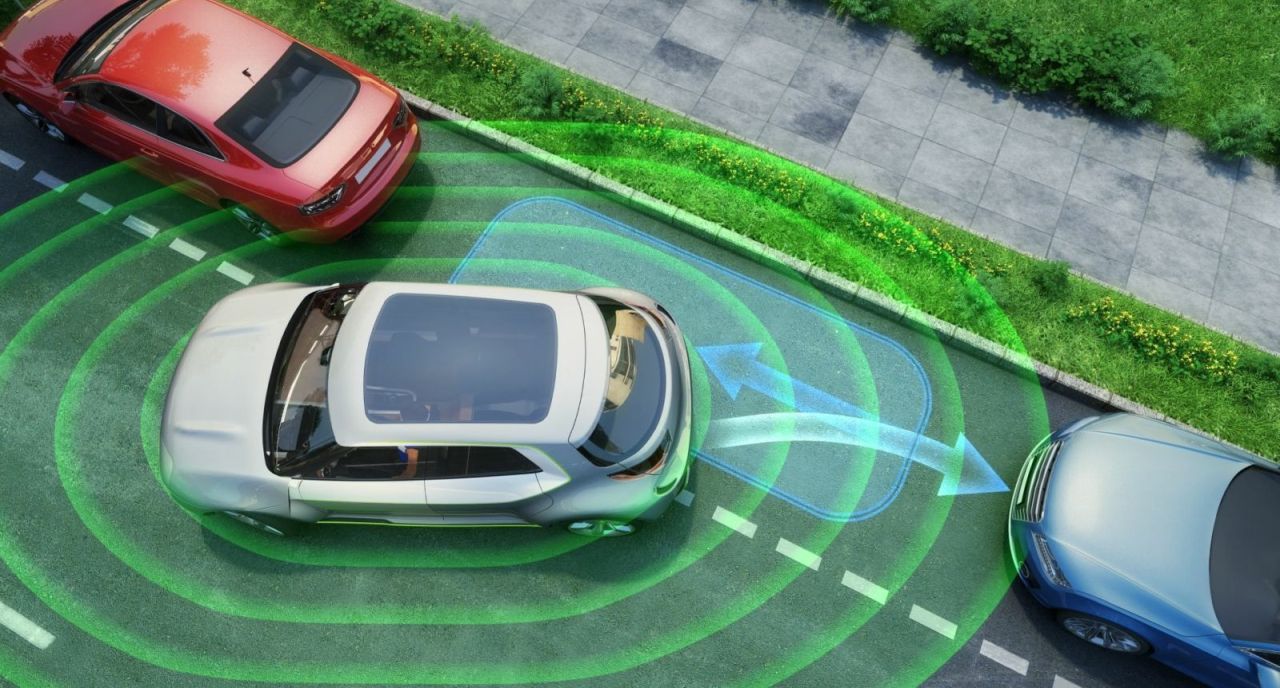
A Parking Assist System is a driver-assistance technology designed to make parking easier and safer. Depending on the vehicle, the system can detect obstacles around the car, calculate available parking spaces, warn the driver about nearby objects, and in more advanced systems, automatically control the steering while the driver manages the accelerator and brake.
Parking assistance is not a single standardized system. Different manufacturers use different names and technologies, including Park Assist, Active Park Assist, Intelligent Parking Assist, Automated Parking System, Parking Pilot, and similar terms.
Some systems only provide audible and visual warnings, while others can actively steer the vehicle into a parking space.
What Does a Parking Assist System Do?
The basic purpose of parking assistance is to reduce the difficulty of maneuvering in tight spaces.
Depending on the vehicle, it can:
-
Detect obstacles around the vehicle
-
Measure the distance to nearby objects
-
Warn the driver when an object is approaching
-
Display a visual parking-distance indicator
-
Detect suitable parallel or perpendicular parking spaces
-
Calculate a parking trajectory
-
Automatically control the steering wheel
-
Assist with reversing
-
Monitor the surroundings using cameras
-
Help prevent low-speed collisions
The exact capabilities depend on the vehicle's equipment level and model year.
A basic parking sensor system is very different from a fully automated parking system.
How Does Parking Assist Work?
A modern parking assist system usually combines information from several sensors.
The most common components include:
-
Ultrasonic parking sensors
-
Parking cameras
-
Steering angle sensor
-
Wheel-speed sensors
-
Brake system information
-
Accelerator information
-
Gear-position information
-
Electronic parking brake
-
Body control module
-
Parking assist control module
-
Vehicle network communication
The system processes information from these components and determines the vehicle's position relative to nearby obstacles.
In an automatic parking system, the vehicle may also calculate the steering angle required to follow a suitable parking trajectory.
What Are Parking Sensors?
Parking sensors are one of the most important parts of a parking assistance system.
Most conventional parking sensors use ultrasonic technology.
The sensor sends an ultrasonic signal and measures the returning signal after it reflects from an object.
The system uses this information to estimate the distance between the vehicle and the obstacle.
Parking sensors are usually installed in the:
-
Front bumper
-
Rear bumper
-
Sometimes side areas of the vehicle
Depending on the vehicle, there may be several sensors covering different areas around the car.
How Do Ultrasonic Parking Sensors Work?
An ultrasonic sensor acts somewhat like a small transmitter and receiver.
When activated, it sends an ultrasonic pulse.
The pulse travels through the air, reaches an object, and reflects back toward the sensor.
The system measures the time required for the signal to return and uses this information to estimate the distance.
As the vehicle gets closer to an obstacle, the warning may become more frequent.
At very short distances, some systems produce a continuous warning tone.
What Is the Difference Between Parking Sensors and Parking Cameras?
Parking sensors primarily provide distance information, while cameras provide visual information.
A parking sensor can tell the system that an object is very close, but it cannot provide the same visual detail as a camera.
A camera can show:
-
Curbs
-
Vehicles
-
Pedestrians
-
Parking lines
-
Posts
-
Walls
-
Other objects
Modern vehicles may combine both technologies.
This combination gives the driver or parking system more information than either technology alone.
What Is an Automatic Parking Assist System?
An automatic parking system goes beyond simple obstacle detection.
When the system is designed for automated parking, it can identify a suitable parking space and calculate how the vehicle should enter it.
Depending on the system, the vehicle may automatically control:
-
Steering
-
Gear selection
-
Acceleration
-
Braking
Some systems only automate steering and require the driver to control the accelerator, brake, and gear selector.
Others can perform much more of the maneuver automatically.
The driver must still monitor the vehicle and surroundings.
What Is the Difference Between Parking Assist and Parking Sensors?
These terms are sometimes used interchangeably, but they are not necessarily the same thing.
Parking sensors detect nearby obstacles and provide warnings.
Parking assist can refer to a broader system that may include sensors, cameras, parking-space detection, trajectory calculation, and automatic steering.
Therefore, a vehicle can have parking sensors without having an automatic parking function.
What Are the Symptoms of Parking Assist Failure?
A parking assist problem can appear in many different ways.
Common symptoms include:
-
Parking sensors do not work
-
Parking assist system becomes unavailable
-
Parking sensors work intermittently
-
False obstacle warnings appear
-
One sensor constantly reports an obstacle
-
No warning sound is produced
-
Parking sensor warning appears on the dashboard
-
Parking camera does not activate
-
Automatic parking cannot find a parking space
-
System stops during a parking maneuver
-
Steering assistance does not operate
-
Parking assist switches off unexpectedly
-
Front sensors work but rear sensors do not
-
Rear sensors work but front sensors do not
-
Parking assist warning appears after starting the engine
The symptom often provides a useful clue about which part of the system needs to be inspected.
One Parking Sensor Is Not Working
If only one sensor has failed, the problem is often localized.
Possible causes include:
-
Failed ultrasonic sensor
-
Damaged connector
-
Corroded terminals
-
Broken wiring
-
Water intrusion
-
Physical damage
-
Sensor incorrectly installed
-
Parking module fault
A single failed sensor can sometimes cause the entire parking sensor system to be disabled.
This is why a warning such as Parking Sensors Unavailable does not necessarily mean that all sensors are defective.
All Parking Sensors Stop Working
If the entire system stops working simultaneously, a common power supply, communication, or control problem becomes more likely.
Possible causes include:
-
Blown fuse
-
Low battery voltage
-
Parking assist control module fault
-
Wiring problem
-
CAN communication problem
-
Faulty parking sensor switch
-
Configuration problem
-
System deactivation
-
Severe fault detected by the control module
If every sensor fails at once, replacing individual sensors without diagnosis is unlikely to be the best approach.
Why Does the Parking Sensor Give a Constant Warning?
A sensor that constantly reports an obstacle even when nothing is present is a common complaint.
Possible causes include:
-
Dirty sensor
-
Ice or snow covering the sensor
-
Water contamination
-
Damaged sensor
-
Sensor installed incorrectly
-
Sensor detecting its own mounting area
-
Wiring problem
-
Internal sensor failure
The first step is to clean the sensor surface and check for physical damage.
If the warning remains, the sensor and its electrical circuit should be tested.
Can Dirt Cause Parking Sensor Failure?
Yes.
Ultrasonic sensors need to transmit and receive signals correctly.
Mud, dust, snow, ice, road salt, or thick contamination can interfere with sensor operation.
This is especially common during:
-
Winter
-
Heavy rain
-
Snowfall
-
Off-road driving
-
Driving on muddy roads
-
After road construction
Cleaning the sensor gently can sometimes restore normal operation.
Can a Pressure Washer Damage Parking Sensors?
It can.
Parking sensors are designed to withstand normal environmental exposure, but very high-pressure water directed at close range can potentially damage seals, connectors, or sensor surfaces.
Avoid holding a pressure washer nozzle extremely close to the sensors.
If a parking sensor problem appears immediately after aggressive washing, water intrusion should be considered.
Why Does Parking Assist Stop Working in Rain?
Rain can affect parking assistance, particularly systems based heavily on ultrasonic sensors and cameras.
Water droplets can alter sensor behavior, while heavy rain can reduce camera visibility.
Possible effects include:
-
Reduced detection range
-
False warnings
-
Temporary system deactivation
-
Camera image degradation
-
Parking-space detection problems
A temporary warning that disappears when the sensors dry does not necessarily mean that a permanent component failure exists.
Why Does Parking Assist Stop Working in Snow?
Snow and ice can cover ultrasonic sensors and cameras.
This can prevent the system from receiving reliable information.
The system may therefore disable itself or display a warning.
Cleaning snow and ice from the relevant sensors and cameras may restore normal operation.
Never scrape camera lenses or sensor surfaces aggressively.
Why Does Parking Assist Give False Warnings?
False warnings can occur when the system incorrectly interprets an object or receives an abnormal sensor signal.
Possible causes include:
-
Dirt
-
Water
-
Snow
-
Damaged sensor
-
Loose sensor
-
Incorrect sensor position
-
Aftermarket bumper modification
-
Trailer equipment
-
Wiring problem
-
Electromagnetic interference in unusual circumstances
-
Control module fault
If the same sensor repeatedly produces a warning in an empty area, that sensor should be investigated.
Can a Damaged Bumper Cause Parking Sensor Problems?
Absolutely.
Parking sensors are usually mounted directly into the bumper.
After a minor collision, the bumper may appear acceptable from the outside while the sensor or mounting bracket has moved.
A damaged mounting point can change the sensor's orientation.
This may cause:
-
False warnings
-
Reduced detection range
-
One-sided detection
-
Intermittent operation
A parking sensor that starts behaving strangely after a bumper impact should be inspected together with its mounting bracket and wiring.
Parking Assist Problems After Bumper Replacement
This is a common situation.
During bumper removal and installation, the sensor harness may be disconnected.
Possible problems include:
-
Connector left unplugged
-
Sensor installed in the wrong position
-
Wiring pinched
-
Sensor mounting bracket damaged
-
Incorrect sensor installed
-
Wiring harness damaged
-
Sensor not configured correctly
If the parking system worked before the bumper repair and immediately stopped afterward, the bumper and sensor installation should be checked first.
Why Does One Parking Sensor Keep Beeping?
If one sensor constantly reports an obstacle, it may be defective.
However, the sensor itself is not the only possibility.
Check:
-
Sensor surface
-
Sensor mounting
-
Connector
-
Wiring
-
Nearby bumper damage
-
Sensor alignment
A diagnostic scan can often identify which sensor is reporting an abnormal signal.
What Causes Parking Camera Failure?
Parking cameras can fail for electrical, mechanical, or environmental reasons.
Possible causes include:
-
Camera failure
-
Damaged wiring
-
Loose connector
-
Water intrusion
-
Camera lens contamination
-
Fuse failure
-
Control module fault
-
Communication problem
-
Damaged camera mounting
-
Software or configuration issue
If the camera screen is completely black, the power supply and communication circuit should be checked.
Parking Camera Is Blurry
A blurry parking camera does not necessarily have an electronic fault.
The camera lens may simply be:
-
Dirty
-
Wet
-
Covered with road film
-
Scratched
-
Fogged internally
Cleaning the lens is the simplest first step.
If the image remains blurry, the camera itself may be damaged.
Parking Camera Shows a Black Screen
A black screen can indicate a loss of power, communication, or camera operation.
Possible causes include:
-
Failed camera
-
Fuse
-
Wiring fault
-
Connector problem
-
Control module failure
-
Communication issue
-
Software problem
If the display switches to the camera view but shows no image, the problem may be different from a situation where the camera view never activates.
Can a Weak Battery Cause Parking Assist Problems?
Yes.
Modern parking assistance systems rely on electronic control modules, sensors, cameras, and vehicle network communication.
Low system voltage can cause temporary or intermittent electronic problems.
Possible symptoms include:
-
Parking assist unavailable
-
Sensor errors
-
Camera problems
-
Multiple warning messages
-
Automatic parking disabled
-
System resets
If several unrelated electronic systems develop problems at the same time, the battery and charging system should be checked.
Can the ABS System Affect Parking Assist?
Yes, particularly on vehicles where the parking system uses information from the ABS/ESC system.
The parking system may need information such as:
-
Wheel speed
-
Vehicle movement
-
Steering angle
-
Braking status
If the ABS or ESC system has a significant fault, some parking assistance functions may be disabled.
This is one reason why a parking assist warning does not always mean that the parking sensors themselves are defective.
Can a Steering Angle Sensor Cause Parking Assist Problems?
Yes.
Automatic parking systems need to know the position of the steering wheel and, in some systems, the actual steering angle.
If the steering angle sensor provides incorrect information, the vehicle may be unable to calculate or execute the expected parking maneuver.
A steering angle sensor problem may also cause other warnings involving:
-
ABS
-
ESC
-
Stability control
-
Steering
-
Lane assistance
Can Wheel-Speed Sensors Affect Parking Assist?
They can.
Automatic parking systems may use wheel-speed information to determine vehicle movement and position.
A faulty wheel-speed sensor can therefore cause certain parking functions to become unavailable.
If the parking warning appears together with an ABS or ESC warning, the wheel-speed sensor system should be considered during diagnosis.
What Happens When the Electronic Parking Brake Has a Problem?
Some automated parking systems interact with the electronic parking brake.
Depending on the vehicle, an electronic parking brake problem can prevent certain automated parking functions from operating.
The system may disable itself because it cannot reliably control or monitor the vehicle's braking state.
Can Low Tire Pressure Affect Parking Assist?
In some vehicles, tire condition can indirectly affect automated parking behavior.
The parking system calculates vehicle movement based on its sensors and control logic.
Significant differences in tire size, pressure, or condition can affect vehicle dynamics.
However, low tire pressure is not normally the first cause to suspect when basic parking sensors stop working.
Can a Faulty Parking Sensor Drain the Battery?
A parking sensor itself is not normally expected to drain the battery.
However, an electrical fault, short circuit, control module problem, or system that remains awake can potentially create abnormal battery consumption.
If the battery repeatedly becomes weak after the vehicle is parked and there is also a parking system malfunction, parasitic-current testing may be appropriate.
Can Parking Assist Be Affected by Aftermarket Accessories?
Yes.
Changes around the bumpers can interfere with sensors.
Examples include:
-
Non-original bumpers
-
Thick protective coatings
-
Incorrect sensor covers
-
Decorative bumper elements
-
Tow bars
-
Some license-plate mounting arrangements
-
Improperly installed body kits
The sensor must be installed in the correct position and orientation.
How Is a Parking Assist System Diagnosed?
A systematic diagnostic procedure is important because replacing multiple sensors can become expensive.
Start with a visual inspection.
Check:
-
Sensor condition
-
Camera lens
-
Bumper condition
-
Connectors
-
Wiring
-
Water contamination
-
Snow, ice, or dirt
Then check the relevant fuses and electrical supply.
If the system remains faulty, use a diagnostic scanner capable of accessing the vehicle's body and parking-related modules.
Depending on the vehicle, live data may show the individual sensor readings.
Can an OBD Scanner Detect Parking Sensor Problems?
A basic OBD-II scanner may not be able to access the parking assistance system.
Many parking faults are stored in body electronics rather than the engine control module.
A more advanced diagnostic scanner may communicate with:
-
Parking Assist Module
-
Body Control Module
-
ABS/ESC Module
-
Camera Module
-
Steering Module
-
Gateway Module
This can help identify whether the problem is related to a particular sensor, communication line, control module, or another vehicle system.
What Is a Parking Sensor Diagnostic Test?
A technician can use diagnostic equipment and electrical measurements to determine whether a sensor is functioning correctly.
Depending on the vehicle, the technician may check:
-
Sensor communication
-
Sensor supply voltage
-
Ground
-
Signal
-
Individual sensor distance readings
-
Control module faults
-
CAN communication
On some conventional ultrasonic systems, a functioning sensor may produce a faint clicking or ticking sensation when active. This can sometimes be used as a basic preliminary check, but it is not a substitute for proper electrical or diagnostic testing.
How Do You Find Which Parking Sensor Is Faulty?
If the vehicle has multiple sensors, diagnostic equipment can sometimes identify the specific sensor reporting a fault.
A technician can also compare the behavior of individual sensors.
The important point is to identify the faulty circuit before replacing components.
A parking system with six or eight sensors does not necessarily require multiple replacements simply because the system has stopped working.
Can a Parking Sensor Be Repaired?
Sometimes.
If the problem is caused by:
-
Wiring
-
Connector
-
Terminal corrosion
-
Mounting
-
Water intrusion
the original sensor may still be usable.
If the internal electronics of the sensor have failed, replacement is usually more practical.
The same principle applies to parking cameras and control modules.
Should Parking Sensors Be Replaced in Pairs?
Not necessarily.
Unlike some wear components, parking sensors do not normally need to be replaced as a pair.
If one sensor has failed and the others are operating normally, replacing the defective sensor may be sufficient.
However, the replacement part should have the correct specification and be compatible with the vehicle's system.
Why Does Automatic Parking Stop During the Maneuver?
If an automated parking system begins a maneuver and then stops, it may have detected a condition outside its operating parameters.
Possible causes include:
-
Unexpected obstacle
-
Sensor signal problem
-
Driver intervention
-
Excessive steering resistance
-
Incorrect vehicle position
-
Brake intervention
-
Sensor contamination
-
Communication problem
-
System fault
Automated parking systems are designed to stop when they cannot confidently continue.
The system should not be forced to continue when a warning is displayed.
Why Can't Parking Assist Find a Parking Space?
An automatic parking system may fail to identify a suitable space even when the space appears large enough to the driver.
Possible reasons include:
-
Space is too small
-
Parking lines are unclear
-
Poor sensor visibility
-
Nearby obstacles
-
Unusual road layout
-
Incorrect vehicle position
-
Speed outside the system's operating range
-
Dirty sensors
-
System limitations
Not every parking space is compatible with every automated parking system.
Does Parking Assist Steer the Car Automatically?
Some systems do.
However, the degree of automation varies.
A basic system may only provide warnings.
A semi-automatic system may control the steering while the driver controls the accelerator, brake, and gear selector.
A more advanced system may control several vehicle functions during the maneuver.
The driver must remain attentive and be prepared to intervene.
Is Automatic Parking Completely Autonomous?
No.
Even highly advanced parking systems have operating limitations.
The driver remains responsible for monitoring the vehicle and its surroundings unless the vehicle's specific system and legal framework explicitly provide otherwise.
Sensors can fail to detect certain objects, particularly objects that are:
-
Very thin
-
Very low
-
Very high
-
Outside the sensor's field of view
-
Made from unusual materials
-
Obscured by another object
A parking assist system should therefore be considered an assistance technology, not a replacement for the driver's attention.
Can Parking Assist Detect Pedestrians?
Some modern systems can detect pedestrians using cameras, radar, or other sensors, but capability varies considerably.
Conventional ultrasonic parking sensors are primarily designed for nearby obstacle detection and are not equivalent to a pedestrian detection system.
A driver should never assume that a parking sensor will detect every person or object around the vehicle.
Why Does Parking Assist Turn Off Automatically?
The system may intentionally deactivate when certain conditions are present.
Examples include:
-
Vehicle speed too high
-
Gear position not suitable
-
Door or trunk open
-
Trailer detected
-
Sensor obstruction
-
Fault detected
-
Low voltage
-
Driver intervention
-
Steering input
-
Brake intervention
-
System temperature or operating limits
Therefore, automatic deactivation is not always a component failure.
How Can Parking Assist Problems Be Prevented?
Regular maintenance and simple precautions can reduce many problems.
Keep parking sensors and camera lenses clean.
After washing the vehicle, check whether water or dirt has accumulated around the sensors.
After a bumper impact, inspect the sensors and their mounting positions even if the bumper appears intact.
Avoid installing accessories directly in front of sensors.
If a warning appears, investigate it rather than repeatedly resetting the system.
Common Mistakes When Diagnosing Parking Assist Problems
Replacing all sensors immediately
A single faulty connector or wire can disable the system.
Ignoring the bumper
A minor impact can change sensor positioning.
Assuming the camera is defective because the screen is black
Power, wiring, communication, and control-module faults can produce the same symptom.
Ignoring ABS or ESC warnings
Parking assistance can depend on information from other vehicle systems.
Using a basic OBD scanner only
A generic scanner may not access body or parking modules.
Ignoring dirt and water
Environmental contamination can temporarily interfere with sensors.
Final Thoughts
A parking assist system is much more than a set of beeping sensors. Modern systems can combine ultrasonic sensors, cameras, steering-angle information, wheel-speed data, ABS/ESC information, electronic braking systems, control modules, and vehicle communication networks.
The most common parking assist problems include sensor failure, constant warnings, intermittent operation, false obstacle detection, camera problems, wiring faults, water intrusion, low voltage, bumper damage, and control-module faults.
One particularly important point is that a complete parking-system failure does not automatically mean that all parking sensors are defective. A single faulty sensor, damaged connector, blown fuse, communication problem, or related ABS/ESC fault can cause the system to deactivate.
The best diagnostic approach is to first determine whether the problem affects one sensor, several sensors, the camera, or the entire system. Then the relevant power supply, wiring, connectors, sensors, control modules, and diagnostic codes can be checked systematically.
Parking assistance is a useful safety and convenience feature, but it should always be treated as a driver-assistance system. Clean sensors, properly maintained cameras, correct bumper installation, and timely diagnosis can help keep the system working reliably.