TR
TR EN
EN

Brake Hold: What Is It, How Does It Work, and What Are Its Failures and Solutions?
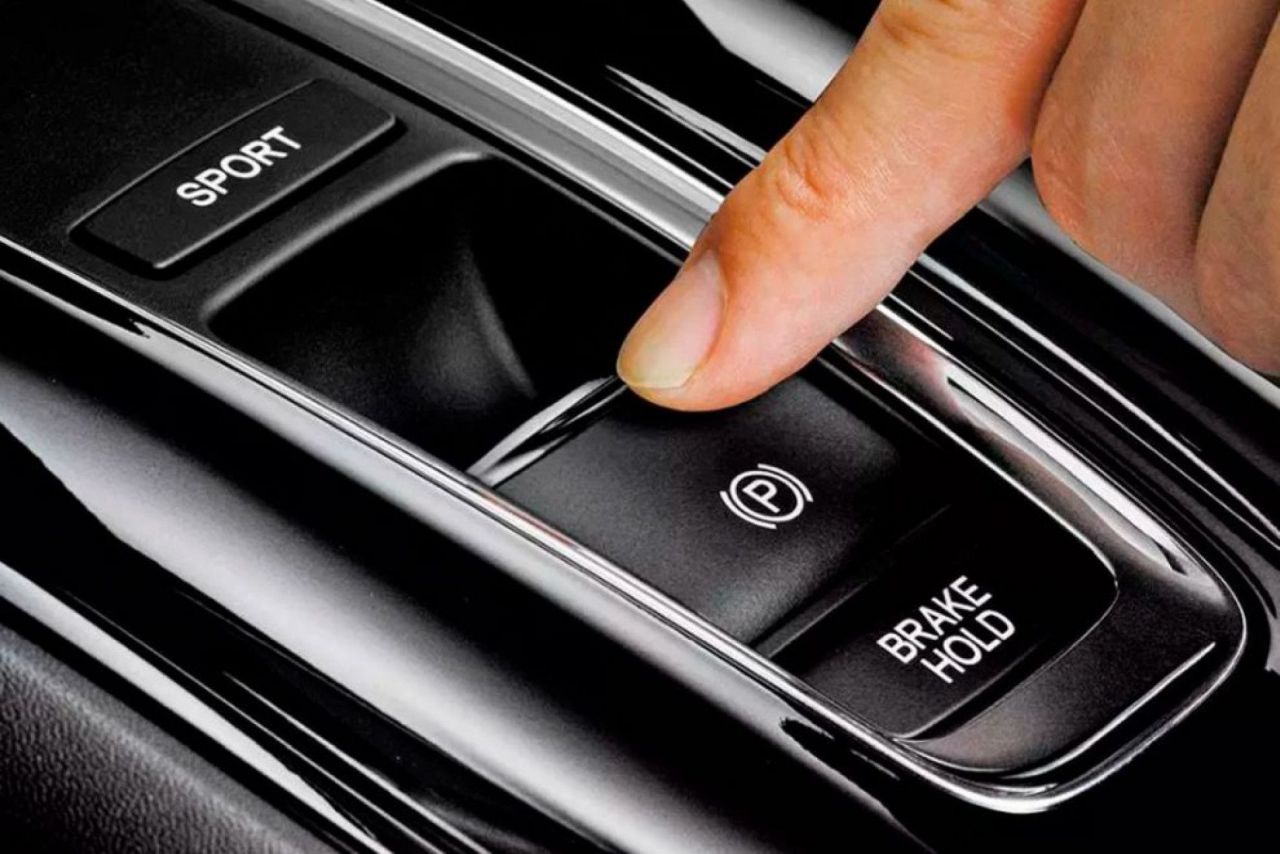
Brake Hold is an electronic driver-assistance function found on many modern vehicles. Its main purpose is to keep the vehicle stationary after the driver has come to a complete stop, without requiring continuous pressure on the brake pedal.
It is particularly useful in heavy traffic, at traffic lights, on inclines, and during frequent stop-and-go driving.
When Brake Hold is active, the driver can stop the vehicle, release the brake pedal, and allow the system to maintain braking force automatically. When the driver presses the accelerator, the system releases the brakes and allows the vehicle to move.
Although the feature may appear simple from the driver's perspective, it depends on several electronic and hydraulic systems working together.
Why Is Brake Hold Useful?
Driving in heavy traffic often requires the driver to repeatedly press and release the brake pedal.
For example, imagine waiting at a red light for several minutes. Without Brake Hold, the driver must keep their foot on the brake pedal throughout the stop.
With Brake Hold activated, the driver can release the pedal after the vehicle has stopped. The system maintains the required brake pressure and prevents the vehicle from moving.
This can provide several benefits:
-
Reduces driver fatigue in stop-and-go traffic
-
Makes waiting at traffic lights more comfortable
-
Helps prevent unwanted vehicle movement
-
Makes hill stops easier
-
Reduces the need to continuously hold the brake pedal
-
Works conveniently with automatic and automated manual transmissions
-
Can improve overall driving comfort
Brake Hold is especially useful for drivers who spend a significant amount of time in urban traffic.
How Does Brake Hold Work?
Brake Hold generally works through the vehicle's electronically controlled braking system.
When the driver presses the brake pedal and brings the vehicle to a complete stop, the control system receives information from several sensors.
The system can monitor:
-
Vehicle speed
-
Brake pedal operation
-
Brake pressure
-
Accelerator pedal position
-
Wheel speed
-
Steering information
-
Engine and transmission status
-
Vehicle inclination
-
Electronic stability control status
Once the system determines that the vehicle is stationary and the conditions for Brake Hold are satisfied, it maintains braking pressure.
The driver can then remove their foot from the brake pedal.
The hydraulic brake pressure required to keep the vehicle stationary is maintained electronically through the brake control system.
When the driver intends to move, the system detects accelerator pedal input and other relevant conditions. Brake pressure is then released progressively so that the vehicle can move.
The exact operating strategy varies between manufacturers and vehicle models.
What Systems Are Involved in Brake Hold?
Brake Hold is not usually a completely independent braking mechanism.
It commonly works together with the vehicle's ABS and electronic stability control system.
The ABS hydraulic unit is particularly important because modern electronically controlled braking systems can use valves and a pump to regulate brake pressure at individual wheels.
The Brake Hold function may also communicate with:
-
ABS/ESC control module
-
Electronic parking brake
-
Brake pedal switch or brake pedal position sensor
-
Wheel speed sensors
-
Accelerator pedal position sensor
-
Engine control module
-
Transmission control module
-
Steering angle sensor
-
Vehicle body control module
Because of this integration, a fault in another related system can sometimes disable Brake Hold even when the Brake Hold function itself is not mechanically defective.
Brake Hold vs. Electronic Parking Brake
Brake Hold and the electronic parking brake are related but serve different purposes.
Brake Hold is primarily designed for temporary stops.
For example, when waiting at a traffic light, Brake Hold can keep the vehicle stationary until the driver accelerates.
The electronic parking brake is designed to secure the vehicle when it is parked.
In some vehicles, Brake Hold can automatically transfer control to the electronic parking brake under certain conditions. However, this behavior depends on the vehicle manufacturer and software strategy.
Therefore, Brake Hold should not simply be considered another name for an electronic parking brake.
What Happens When Brake Hold Is Activated?
The typical sequence is relatively simple.
The driver activates Brake Hold using the dedicated button or vehicle settings.
The system indicates that Brake Hold is available.
The driver applies the brake and brings the vehicle to a complete stop.
Once the system confirms the required conditions, it maintains braking force.
The driver can release the brake pedal.
The vehicle remains stationary.
When the driver presses the accelerator, the system releases the brake and the vehicle starts moving.
The transition should normally be smooth. If the vehicle jerks, rolls backward unexpectedly, or releases the brakes too aggressively, further diagnosis may be necessary.
Common Brake Hold Failure Symptoms
Brake Hold problems can appear in several different ways.
One of the most common symptoms is that Brake Hold simply refuses to activate.
The indicator may remain unavailable even when the driver presses the Brake Hold button.
Other possible symptoms include:
-
Brake Hold warning message
-
Brake Hold system unavailable message
-
Brake Hold indicator flashing
-
Brake Hold turns off unexpectedly
-
Brake Hold works intermittently
-
Vehicle moves after the brake pedal is released
-
Brake Hold does not release when accelerating
-
Electronic parking brake warning appears at the same time
-
ABS or ESC warning light illuminates
-
Multiple braking-related warning messages appear
-
Brake Hold becomes unavailable after starting the vehicle
-
Brake Hold stops working after a battery problem
These symptoms do not necessarily mean that the Brake Hold system itself has failed.
A sensor, low battery voltage, ABS fault, wiring problem, or electronic parking brake issue can also cause the function to be disabled.
Why Does Brake Hold Stop Working?
There are several possible causes.
Low battery voltage
Modern vehicles depend heavily on stable electrical voltage.
If the battery is weak or the charging system has a problem, various electronic systems may become unavailable.
Brake Hold can be disabled when the vehicle detects insufficient voltage or an electrical system problem.
This is particularly common after:
-
A weak battery
-
Battery replacement
-
Jump-starting the vehicle
-
Long periods without driving
-
Alternator problems
-
Poor battery connections
If Brake Hold stopped working immediately after a battery problem, checking the vehicle's charging and battery condition is a sensible first step.
ABS or ESC fault
Brake Hold often depends on the ABS/ESC system.
If the ABS control module detects a significant fault, Brake Hold may be disabled as a safety precaution.
An ABS warning light together with a Brake Hold warning is therefore important diagnostic information.
Wheel speed sensor failure
Wheel speed sensors provide information about the rotational speed of each wheel.
The vehicle needs accurate wheel-speed information to determine whether the vehicle is stationary and to control braking safely.
A defective, dirty, damaged, or incorrectly installed wheel speed sensor can therefore cause Brake Hold to become unavailable.
Possible causes include:
-
Damaged sensor
-
Broken wiring
-
Corroded connector
-
Damaged reluctor/tone ring
-
Incorrect sensor installation
-
Excessive contamination
Brake pedal switch or position sensor problem
The vehicle needs to know when and how the brake pedal is being operated.
A faulty brake pedal switch or brake pedal position sensor can cause incorrect brake status information.
Depending on the vehicle, this can interfere with Brake Hold operation.
Electronic parking brake fault
Brake Hold and the electronic parking brake may share information and control components.
If the electronic parking brake develops a fault, Brake Hold may also be disabled.
A warning related to the parking brake should therefore not be ignored when investigating a Brake Hold problem.
Accelerator pedal sensor problem
Brake Hold needs to know when the driver intends to move.
If the accelerator pedal position signal is incorrect, the system may not release the brakes as expected or may disable itself.
Steering angle sensor problems
Some vehicles use steering angle information as part of their stability and braking control strategy.
If the steering angle sensor requires calibration or produces an implausible signal, ABS/ESC-related functions can be affected.
Brake Hold may consequently become unavailable.
Wiring or connector problems
Electronic braking systems contain many sensors, control modules, connectors, and wiring harnesses.
Corrosion, water intrusion, damaged wires, loose connectors, or poor electrical connections can create intermittent faults.
Intermittent wiring problems can be particularly difficult because Brake Hold may work normally one day and become unavailable the next.
Can Brake Hold Fail Because of Brake Pads?
Worn brake pads do not normally cause Brake Hold to fail simply because they are worn.
However, problems elsewhere in the braking system can affect the function.
For example, a hydraulic brake problem, brake fluid issue, sensor fault, or ABS malfunction can cause Brake Hold to be disabled.
Some vehicles can also monitor brake pad wear electronically, depending on their equipment.
Therefore, it is important to distinguish normal brake-pad wear from an actual electronically detected braking-system fault.
Can Low Brake Fluid Disable Brake Hold?
It can, depending on the vehicle.
If brake fluid is below the manufacturer's specified level, the vehicle may detect a braking-system problem and disable certain functions.
Low brake fluid should never be treated as a minor Brake Hold problem.
The reason for the low level should be investigated because it can indicate:
-
Brake pad wear
-
A hydraulic leak
-
Brake caliper problems
-
Master cylinder problems
-
Other braking-system faults
If the brake fluid level is significantly low, the vehicle should not simply be driven after topping it up without determining why the level dropped.
Brake Hold Works Sometimes and Sometimes Does Not
Intermittent operation is an important clue.
If Brake Hold works normally under some conditions but not others, the problem may be related to a sensor, wiring connection, battery voltage, operating conditions, or system logic rather than a permanently failed component.
For example, Brake Hold may be unavailable when:
-
The driver's door is open
-
The driver's seat belt is not fastened
-
The hood or trunk is open, depending on the vehicle
-
The vehicle is not completely stopped
-
A related ABS/ESC fault is present
-
The transmission is in an unsuitable operating mode
-
The battery voltage is too low
-
A parking brake fault has been detected
-
The system has not been activated
-
The vehicle detects another condition that makes Brake Hold unsafe
The exact conditions vary considerably between manufacturers.
Brake Hold Does Not Release When Pressing the Accelerator
This symptom deserves special attention.
Normally, Brake Hold should release when the system determines that the driver wants to move.
If the brakes remain applied, possible causes include:
-
Accelerator pedal sensor problem
-
Brake pedal sensor problem
-
ABS/ESC control problem
-
Electronic parking brake malfunction
-
Communication problem between control modules
-
Software or calibration issue
-
Hydraulic control problem
The driver should not repeatedly press the accelerator aggressively in an attempt to overcome a brake that remains applied.
If the system does not release normally, the vehicle should be inspected.
Brake Hold Releases Too Early
The opposite problem can also occur.
If the vehicle starts moving immediately after the driver releases the brake pedal, the system may not be maintaining braking pressure correctly.
Possible causes include:
-
Brake pressure control problem
-
ABS hydraulic unit issue
-
Sensor malfunction
-
Control module fault
-
Incorrect system status information
-
Software or calibration problem
This can be particularly dangerous on an incline.
A vehicle that unexpectedly rolls backward or forward should be inspected rather than relying on Brake Hold until the problem is resolved.
How Is a Brake Hold Problem Diagnosed?
The most effective approach is to diagnose the complete electronic braking system rather than replacing parts based only on the warning message.
A professional diagnostic scan should normally include the relevant modules, especially:
-
ABS/ESC
-
Electronic parking brake
-
Body control module
-
Engine control module
-
Transmission control module
The technician should check stored and current fault codes.
Live data can be particularly useful.
For example, a diagnostic tool may allow the technician to observe:
-
Individual wheel speeds
-
Brake pedal status
-
Brake pressure
-
Accelerator pedal position
-
Parking brake status
-
Battery voltage
-
Steering angle
-
ABS/ESC status
-
Brake Hold request
-
Brake Hold active status
This can help identify whether the problem is caused by an input signal, control module, hydraulic system, or communication problem.
Brake Hold Fault Codes
There is no single universal OBD-II fault code that means "Brake Hold failure."
The actual code depends on the component and vehicle manufacturer.
Possible faults may be associated with:
-
Wheel speed sensors
-
ABS/ESC
-
Brake pedal switches
-
Electronic parking brake
-
Brake pressure sensors
-
CAN communication
-
Low system voltage
-
Steering angle sensor
-
Accelerator pedal position
-
Control module internal faults
This is why simply searching for a generic "Brake Hold code" may not provide the correct diagnosis.
The actual vehicle-specific DTC and its associated live data are much more useful.
How to Fix Brake Hold Problems
The correct repair depends entirely on the cause.
If the battery is weak, the battery and charging system should be tested and repaired as necessary.
If a wheel speed sensor is defective, the sensor, wiring, and tone ring should be inspected before replacement.
If a brake pedal switch is faulty, the switch or sensor may need to be replaced and correctly adjusted.
If an electronic parking brake fault is present, the parking brake system must be diagnosed separately.
If the ABS hydraulic unit or control module has a problem, specialized testing may be required.
If wiring is damaged, the wiring and connectors should be repaired properly rather than simply clearing the fault code.
In some cases, a sensor or control module may also require calibration after replacement.
Does Disconnecting the Battery Fix Brake Hold?
Disconnecting the battery may temporarily clear certain electronic symptoms, but it should not be considered a real repair.
If Brake Hold stopped working because of a temporary low-voltage event, restoring a healthy battery and clearing the resulting fault may return the system to normal.
However, if there is an underlying sensor, wiring, ABS, or electronic parking brake problem, disconnecting the battery will not repair it.
In some vehicles, disconnecting the battery can also cause certain systems to require relearning or calibration.
Therefore, the correct approach is to diagnose the fault rather than repeatedly disconnecting the battery.
Can Brake Hold Be Used on a Hill?
Yes. One of the useful applications of Brake Hold is keeping the vehicle stationary on an incline.
The system can maintain braking force after the vehicle has stopped, allowing the driver to move their foot from the brake pedal to the accelerator.
However, Brake Hold should not be treated as a substitute for understanding the vehicle's behavior on steep slopes.
If the system reports a malfunction or becomes unavailable, the driver should use the normal brake pedal and, when appropriate, the parking brake.
Is It Safe to Drive With a Brake Hold Warning?
It depends on what caused the warning.
If Brake Hold is simply unavailable but the conventional braking system, ABS, and other relevant systems are operating normally, the vehicle may still have normal braking capability.
However, if the warning is accompanied by:
-
Red brake warning light
-
ABS warning
-
ESC warning
-
Electronic parking brake warning
-
Abnormal brake pedal behavior
-
Reduced braking performance
-
Brake fluid leakage
-
Unusual brake noises
-
Vehicle pulling during braking
the situation should be treated much more seriously.
A problem involving the vehicle's primary braking system should never be ignored simply because the vehicle still appears to stop normally.
Brake Hold vs. Hill Start Assist
Brake Hold and Hill Start Assist are sometimes confused because both can prevent unwanted vehicle movement.
They are not exactly the same.
Hill Start Assist is primarily designed to prevent the vehicle from rolling backward when moving away from a stop on an incline.
Brake Hold is intended to keep the vehicle stationary after a stop, including on level roads and in traffic.
Some modern vehicles have both systems and may use similar braking hardware and electronic control systems.
Does Every Car Have Brake Hold?
No.
Brake Hold is not standard equipment on every vehicle.
It is more common on newer vehicles equipped with advanced electronic braking systems, electronic parking brakes, and automatic or automated transmissions.
The name can also differ between manufacturers.
A manufacturer may use terms such as:
-
Brake Hold
-
Auto Hold
-
Auto Brake Hold
-
Automatic Hold
-
Hold Assist
The exact operation and activation conditions can vary between models.
Common Mistakes When Brake Hold Stops Working
One common mistake is immediately replacing the brake switch or ABS sensor without reading the fault codes.
Another is assuming that the Brake Hold button itself is defective.
In reality, the system may intentionally disable itself because another component has reported a problem.
Another common mistake is repeatedly clearing fault codes without diagnosing their cause.
A code that returns after being cleared is valuable diagnostic information. It should be investigated rather than continuously erased.
Brake Hold Maintenance
Brake Hold itself generally does not require a separate maintenance schedule.
However, maintaining the systems it depends on is important.
Regular maintenance should include:
-
Checking brake fluid level and condition
-
Inspecting brake components
-
Checking battery condition
-
Checking charging voltage
-
Inspecting wheel speed sensor wiring
-
Checking ABS/ESC warning lights
-
Monitoring electronic parking brake operation
-
Scanning the vehicle when warning messages appear
-
Following the manufacturer's brake system maintenance recommendations
Keeping the conventional braking system in good condition also helps the electronic functions operate correctly.
Final Thoughts
Brake Hold is a practical electronic braking feature that makes modern driving much easier, especially in traffic and on hills. It allows the vehicle to remain stationary after the driver releases the brake pedal and automatically releases the braking force when the driver intends to move.
However, Brake Hold depends on a network of sensors, control modules, ABS/ESC hardware, brake hydraulics, electronic parking brake components, and vehicle communication systems.
For this reason, a Brake Hold warning does not automatically mean that the Brake Hold button or braking mechanism itself is defective.
If Brake Hold stops working, the best solution is to scan the vehicle, identify the stored fault codes, examine live data, and diagnose the related braking and electronic systems before replacing parts.
Most importantly, any warning accompanied by abnormal braking behavior should be treated as a safety issue. Brake Hold is a convenience feature, but the vehicle's primary braking system is critical to safe driving.