TR
TR EN
EN

LPG Tanks and Their Installation
LPG tanks are one of the most important components of an automotive LPG system because they store LPG under pressure and provide the fuel supply for the entire system.
Unlike an ordinary gasoline fuel tank, an LPG tank is a pressure-rated component specifically designed to store liquefied petroleum gas. Its design, installation position, mounting method, valve assembly, piping, and protection are therefore critical for both normal operation and safety.
An LPG tank should never be selected or installed only according to its physical size. The tank must be suitable for the vehicle, compatible with the LPG system, correctly mounted, and installed according to the applicable technical requirements.
How Is LPG Stored Inside the Tank?
LPG is stored inside the tank primarily as a liquid under pressure.
The pressure inside the tank depends on factors such as:
-
LPG composition
-
Ambient temperature
-
Fuel temperature
-
Amount of LPG in the tank
As temperature increases, LPG expands and the pressure inside the tank rises.
For this reason, an automotive LPG tank is not designed to be completely filled with liquid LPG. A vapor space must remain available to accommodate thermal expansion.
The tank's filling and safety systems are designed around this principle.
What Types of LPG Tanks Are Used in Vehicles?
Automotive LPG tanks are generally available in several different shapes.
The two most common configurations are:
Cylindrical LPG tanks
These are long, cylindrical tanks. They are commonly installed in areas where sufficient length is available, such as certain commercial vehicles, vans, or vehicles with suitable trunk space.
Toroidal LPG tanks
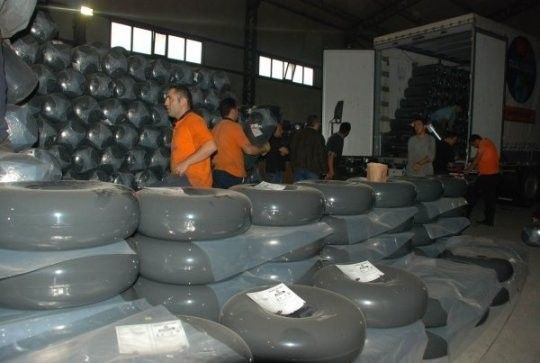
These tanks have a doughnut-like shape and are designed to fit into the spare-wheel well.
Toroidal tanks are particularly popular in passenger cars because they can preserve more usable luggage space.
The correct tank type depends on the vehicle's structure, available installation area, permitted mounting position, and applicable regulations.
What Is the Difference Between a Cylindrical and Toroidal LPG Tank?
The main difference is the shape and installation arrangement.
A cylindrical tank generally offers a straightforward installation where sufficient space is available, but it can occupy useful luggage or cargo space.
A toroidal tank can make better use of the spare-wheel well and often provides a cleaner installation in passenger cars.
However, neither shape is universally better.
The correct choice depends on:
-
Vehicle structure
-
Available space
-
Required LPG capacity
-
Tank dimensions
-
Ground clearance
-
Mounting points
-
Vehicle weight limits
-
Applicable installation requirements
What Is the Capacity of an LPG Tank?
Automotive LPG tanks are available in different capacities.
For example, passenger cars may use tanks with capacities such as:
-
35 liters
-
40 liters
-
42 liters
-
47 liters
-
50 liters
-
55 liters
-
60 liters
-
65 liters
-
70 liters
The available sizes vary according to the tank manufacturer and vehicle application.
It is important to distinguish between tank water capacity and the amount of LPG that can normally be filled.
An LPG tank is not normally filled to its total physical capacity. The filling system limits the amount of liquid LPG to leave sufficient expansion space.
Why Can't an LPG Tank Be Filled 100%?
This is one of the most important characteristics of an LPG fuel system.
LPG expands as its temperature rises. If a tank were filled completely with liquid LPG and the fuel subsequently expanded, the pressure could increase significantly because there would be insufficient space for expansion.
The LPG tank therefore needs a vapor space.
The multivalve and filling system are designed to limit the maximum filling level.
For this reason, a tank advertised as having a particular nominal capacity does not mean that the same number of liters can always be added during every refueling.
What Is the LPG Multivalve?
The multivalve is mounted on the LPG tank and combines several fuel-control and safety functions.
Depending on the system, it can include mechanisms for:
-
LPG filling
-
LPG outlet
-
Fuel-level measurement
-
LPG shut-off
-
Overfilling limitation
-
Pressure-related safety functions
The multivalve is therefore an essential part of the tank installation.
The tank and multivalve must be compatible with each other.
How Is an LPG Tank Installed?
LPG tank installation is not simply a matter of placing the tank in an available space and tightening a few bolts.
The installation must take into account:
-
Tank orientation
-
Mounting position
-
Vehicle structure
-
Tank mounting points
-
Brackets and straps
-
Clearance from surrounding components
-
Ground clearance
-
Exhaust system
-
Suspension movement
-
Fuel lines
-
Electrical wiring
-
Multivalve position
-
Protective housing
-
Ventilation requirements
The tank must be firmly secured so that it cannot move, rotate, or shift during normal driving or an impact.
Installation of a Toroidal LPG Tank
Toroidal tanks are commonly installed in the spare-wheel well.
Before installation, the installer must check whether the tank physically fits the available space without interfering with the vehicle structure.
The installation should provide adequate clearance around the tank and its fittings.
The tank must also be securely mounted to the vehicle structure using appropriate mounting hardware.
The position of the multivalve and its protective housing must also be considered.
The trunk floor may need to be modified to accommodate the tank or its fittings, but such modifications should not compromise structural integrity or create unsafe mounting conditions.
Installation of a Cylindrical LPG Tank
Cylindrical tanks require more installation space and are often mounted using dedicated brackets or straps.
The mounting system must prevent the tank from moving longitudinally or laterally.
The installer must consider:
-
Tank weight
-
Vehicle structure
-
Bracket strength
-
Strap positioning
-
Distance from the exhaust
-
Ground clearance
-
Suspension movement
-
Access to the multivalve
-
LPG pipe routing
A cylindrical tank should never be secured using improvised brackets or unsuitable hardware.
Why Is Tank Mounting So Important?
An LPG tank is a heavy pressure vessel.
When the tank is full, its weight increases significantly. During acceleration, braking, cornering, or an impact, this mass can generate substantial forces on the mounting system.
If the tank is poorly secured, it can move or become detached.
Therefore, the mounting system is just as important as the tank itself.
A high-quality tank installed with inadequate mounting hardware is still an unsafe installation.
LPG Tank Mounting Hardware
Depending on the installation design, LPG tanks can be secured using dedicated brackets, straps, bolts, and mounting components.
The mounting hardware must be suitable for the tank and vehicle structure.
The installation should not rely on:
-
Thin improvised sheet metal
-
Weak universal brackets
-
Incorrect bolts
-
Inadequate straps
-
Makeshift supports
-
Corroded mounting hardware
The mounting points should also be inspected periodically for corrosion, looseness, deformation, or physical damage.
LPG Tank and Exhaust System Clearance
The LPG tank and LPG lines must be installed with appropriate clearance from hot components.
The exhaust system can reach very high temperatures.
Direct or excessive heat exposure can increase the temperature of the LPG tank and fuel lines and can negatively affect components such as hoses, seals, and wiring.
Therefore, tank positioning should take the exhaust system, heat shields, and exhaust movement into account.
LPG Tank Ground Clearance
The tank should not be installed in a position where it can easily contact the road surface.
This is particularly important with installations underneath the vehicle.
Road debris, speed bumps, potholes, ramps, and uneven surfaces can create a risk of physical impact.
The tank, multivalve, fuel lines, and protective components should have appropriate clearance and protection according to the installation requirements.
LPG Fuel Lines and Tank Installation
The tank installation is closely connected to the routing of the LPG fuel line.
The line should be routed so that it is protected against:
-
Road debris
-
Heat
-
Abrasion
-
Corrosion
-
Sharp edges
-
Suspension movement
-
Exhaust components
-
Mechanical impact
It should not be allowed to rub against the body or suspension components.
The routing should also avoid creating unnecessary bends or stress on the connections.
What Is the Purpose of the Multivalve Housing?
Many LPG installations use a protective housing around the multivalve.
Its purpose can include protecting the multivalve and its connections from external damage and, depending on the tank and installation design, supporting the required ventilation arrangement.
The housing should be suitable for the specific LPG tank and multivalve.
It should not be removed or replaced with an unsuitable enclosure simply because it appears unnecessary.
LPG Tank Installation and Ventilation
Ventilation is an important consideration around LPG tank and multivalve installations.
LPG is heavier than air. If released in a confined space, it can collect in low areas.
For this reason, tank and multivalve installations must be designed so that any leaked gas can be safely directed away from enclosed passenger or luggage compartments according to the applicable installation requirements.
This is particularly important for tanks installed inside or near the luggage compartment.
Can an LPG Tank Be Installed in Any Position?
No.
The installation position depends on the tank design and the manufacturer's specifications.
The multivalve must also be positioned correctly.
A toroidal tank, for example, is not simply a doughnut-shaped tank that can be rotated into any position without considering the orientation of its internal and external components.
The tank, multivalve, float mechanism, fuel outlet, and protective housing must all be installed according to the approved configuration.
LPG Tank Installation in the Spare-Wheel Well
A toroidal LPG tank often replaces the spare wheel.
This can provide a significant advantage because the tank uses space that would otherwise be occupied by the spare tire.
However, this creates another issue: the vehicle may no longer have its original spare wheel.
The driver should therefore consider alternatives such as:
-
Tire repair kit
-
Compressor
-
Sealant
-
Run-flat tires, where applicable
-
Roadside assistance
The decision should also consider the vehicle's original equipment and local inspection requirements.
How Does LPG Tank Size Affect Vehicle Performance?
The tank itself does not normally make the engine more powerful or less powerful simply because it is larger.
However, a larger tank adds more weight.
The additional weight can slightly affect:
-
Fuel consumption
-
Acceleration
-
Suspension load
-
Vehicle payload
-
Handling
The effect is generally modest, but it becomes more relevant when an unnecessarily large tank is installed.
Tank capacity should therefore be selected according to the vehicle and intended usage rather than simply choosing the largest possible tank.
How Long Does an LPG Tank Last?
An LPG tank is a pressure vessel and should not be treated as a permanent component that can be used indefinitely without inspection.
Its service life and inspection requirements depend on:
-
Tank manufacturer
-
Manufacturing date
-
Applicable regulations
-
Certification
-
Physical condition
-
Corrosion
-
Installation environment
The tank's identification plate or markings should be checked to determine its specifications and relevant service information.
A damaged, heavily corroded, deformed, or otherwise compromised tank should be professionally evaluated.
Can a Damaged LPG Tank Be Repaired?
A damaged LPG tank should not be repaired with improvised welding, heating, drilling, or similar methods.
Because the tank is a pressure vessel designed specifically for LPG storage, structural damage can affect its safety characteristics.
If the tank has suffered:
-
Severe corrosion
-
Deformation
-
Impact damage
-
Cracks
-
Damage around mounting points
-
Damage to the multivalve mounting area
it should be inspected by an appropriately qualified professional.
In many cases, replacement is safer and more appropriate than attempting a structural repair.
LPG Tank Corrosion
Corrosion is particularly important for tanks installed underneath vehicles.
Road salt, moisture, mud, stones, and chemicals can gradually damage the external surface.
Corrosion around mounting brackets and tank attachment points is especially important because it can affect the structural security of the installation.
A tank should be inspected for:
-
Surface corrosion
-
Deep rust
-
Paint deterioration
-
Deformation
-
Damaged mounting points
-
Damaged straps
-
Corrosion around fittings
Minor surface discoloration is not necessarily equivalent to structural corrosion, but significant corrosion requires professional evaluation.
LPG Tank Installation and Vehicle Weight
An LPG conversion adds weight to the vehicle.
The tank, multivalve, reducer, fuel lines, LPG injectors, brackets, and other components all contribute to the additional mass.
A larger tank also means greater fuel weight when full.
The installation should therefore consider the vehicle's permitted axle loads and overall weight limits.
This is particularly important for vehicles that already operate near their maximum payload.
LPG Tank and Vehicle Safety
The LPG tank is designed to safely contain pressurized fuel, but correct installation is essential.
Safety depends on the complete system:
Tank + multivalve + mounting + fuel lines + protective housing + electrical control + reducer + LPG ECU
A high-quality tank cannot compensate for poor installation.
Likewise, a correctly installed tank can still become unsafe if it is later damaged, corroded, improperly modified, or subjected to an accident.
What Should Be Checked After an LPG Tank Installation?
After installation, the entire system should be inspected rather than checking only whether the engine runs.
Important checks include:
-
Tank mounting security
-
Multivalve installation
-
LPG filling operation
-
LPG fuel outlet
-
Fuel-line routing
-
Connections and fittings
-
LPG leak testing
-
Electrical connections
-
LPG pressure
-
Reducer operation
-
LPG injector operation
-
Fuel-level indication
-
Protective housing
-
Ground clearance
-
Exhaust clearance
-
Suspension clearance
The vehicle should also be checked according to the applicable inspection and certification requirements in the country where it is registered.
LPG Tank Installation After an Accident
An LPG tank that has been involved in a significant collision should be professionally inspected.
Even if there is no obvious LPG leak, the tank, mounting brackets, multivalve, fuel lines, and connections may have suffered damage.
Particular attention should be paid to:
-
Tank deformation
-
Mounting damage
-
Bracket movement
-
Multivalve damage
-
Fuel-line damage
-
Leakage
-
Corrosion or cracks
-
Damage around the tank mounting area
The absence of a warning light does not prove that the tank installation is safe after an accident.
Common Mistakes During LPG Tank Installation
Some installation mistakes can create long-term problems.
Examples include:
-
Choosing an unnecessarily large tank
-
Using unsuitable mounting hardware
-
Poor tank positioning
-
Incorrect multivalve orientation
-
Insufficient exhaust clearance
-
Poor fuel-line routing
-
Allowing the LPG line to rub against the chassis
-
Ignoring corrosion around mounting points
-
Removing the protective housing
-
Leaving electrical connections exposed
-
Ignoring ventilation requirements
-
Failing to perform a proper leak test
A professional installation should prioritize both fuel-system operation and mechanical safety.
Choosing the Right LPG Tank
The right LPG tank is not necessarily the largest tank that fits inside the vehicle.
Selection should consider:
-
Vehicle model and structure
-
Available installation space
-
Required driving range
-
Tank shape
-
Tank dimensions
-
Vehicle weight
-
Mounting configuration
-
Multivalve compatibility
-
Applicable certification
-
Local inspection requirements
A smaller, correctly installed tank can be a better choice than a larger tank installed with poor clearances or excessive weight.
LPG Tank Installation Should Be Treated as a Safety Job
An LPG tank is a pressurized fuel container, not simply an additional fuel storage box.
Its installation affects fuel safety, vehicle weight, fuel-line routing, exhaust clearance, luggage-space design, and the overall operation of the LPG system.
For this reason, the most important principle is not simply “Does the tank fit?”
The correct question is:
“Is the tank, multivalve, mounting system, fuel piping, ventilation, and protective arrangement correctly matched to the vehicle and LPG system?”
When these elements are installed correctly and periodically inspected, the LPG tank can provide a practical and reliable fuel-storage solution for an LPG-converted vehicle.