TR
TR EN
EN

What Is an LPG Multivalve and How Does It Work?
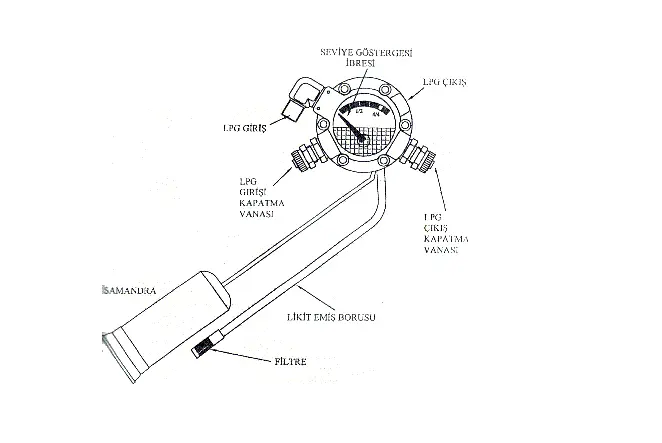
An LPG multivalve is a multifunctional control and safety assembly installed directly on an LPG tank. It manages several important functions, including LPG filling, fuel withdrawal from the tank, fuel-level measurement, and safety-related control of LPG flow.
The LPG tank itself is mainly a storage vessel. The multivalve provides the controlled connection between the tank and the rest of the LPG system.
Depending on the system design, the multivalve can incorporate several mechanisms in a single assembly, including a filling mechanism, fuel outlet, level sender/float, shut-off valve, and safety devices.
Where Is the LPG Multivalve Located?
The multivalve is mounted directly to the LPG tank.
Its exact position depends on the tank design.
On cylindrical LPG tanks, it is generally installed at one end of the tank.
On toroidal or spare-wheel-well tanks, the multivalve is normally located on the upper section of the tank.
The multivalve is connected to the LPG filling line, LPG outlet line, electrical wiring, and, depending on the system, additional safety and control components.
It is commonly covered by a protective housing.
What Does an LPG Multivalve Do?
The name "multivalve" comes from the fact that several functions are combined in one assembly.
Its main functions can include:
-
Controlling LPG filling
-
Controlling LPG withdrawal from the tank
-
Measuring the approximate LPG level
-
Limiting the maximum filling level
-
Controlling or shutting off LPG flow
-
Providing safety functions related to tank pressure
-
Connecting the LPG tank to the fuel supply system
The exact functions incorporated into the multivalve depend on the LPG tank and system design.
How Does an LPG Multivalve Work?
LPG is stored in the tank under pressure and is primarily stored in liquid form.
As the tank is filled, the liquid LPG level rises while a vapor space remains above the liquid.
The multivalve provides the controlled interface between the tank and the external LPG system.
During refueling, LPG enters the tank through the filling circuit.
When the engine operates on LPG, fuel leaves the tank through the appropriate outlet and travels toward the LPG reducer/regulator.
The simplified flow is:
LPG filling nozzle → Filling line → Multivalve → LPG tank
During engine operation:
LPG tank → Multivalve → LPG fuel line → Reducer/regulator → LPG injectors → Engine
How Does the Multivalve Prevent Overfilling?
One of the most important functions of an LPG multivalve is helping prevent the tank from being completely filled with liquid LPG.
LPG expands when its temperature increases. Therefore, a tank needs a vapor space to accommodate thermal expansion.
The filling mechanism in the multivalve limits the amount of LPG that can enter the tank.
When the predetermined filling level is reached, the mechanism restricts or stops further filling.
This is why an LPG tank does not normally fill to 100% of its physical volume.
The remaining space provides room for thermal expansion.
How Is LPG Level Measured?
The multivalve assembly commonly incorporates a float mechanism for measuring the approximate amount of LPG inside the tank.
As the liquid level changes, the float moves.
This movement is transferred to a level sensor or gauge mechanism, and the resulting signal is used by the LPG system to display the approximate fuel level to the driver.
However, an LPG gauge should not be considered a highly precise measurement of the remaining fuel volume.
The displayed level can be affected by:
-
Tank shape
-
Float position
-
Installation angle
-
Sensor calibration
-
LPG temperature
-
Tank geometry
-
Electrical calibration
Therefore, it is normal for an LPG gauge to remain at one level for some time and then drop more quickly.
LPG Multivalve and Solenoid Valve
Depending on the LPG system, the multivalve may incorporate an electrically controlled LPG solenoid valve.
The solenoid valve can control LPG flow from the tank.
When the LPG system authorizes LPG operation, the solenoid valve can open and allow fuel to reach the rest of the system.
When the engine is switched off or LPG operation is disabled, the valve closes and helps stop LPG flow.
This is an important part of the LPG fuel-control and safety system.
However, not every LPG multivalve has exactly the same internal configuration.
How Does LPG Leave the Tank?
When the engine is running on LPG, pressure inside the tank pushes the fuel toward the outlet circuit.
The multivalve controls the connection between the tank and the LPG outlet line.
In many systems, liquid LPG then travels through the fuel line toward the reducer/regulator.
The reducer lowers the relatively high tank pressure to a pressure suitable for the engine's LPG fuel system.
After pressure regulation, the LPG can be supplied to the injectors.
The injectors then meter the fuel according to engine operating conditions.
LPG Multivalve vs. LPG Reducer
These two components have very different jobs.
The multivalve is primarily associated with the LPG tank, filling, fuel withdrawal, level measurement, and safety functions.
The LPG reducer/regulator reduces and regulates LPG pressure before the fuel is supplied to the engine.
In simple terms:
Multivalve = tank-side control and safety
Reducer/regulator = LPG pressure regulation
A reducer problem can cause unstable LPG pressure, poor performance, stalling, or incorrect fueling.
A multivalve-related problem can affect filling, fuel withdrawal, level indication, or the ability to control LPG flow from the tank.
What Are the Symptoms of an LPG Multivalve Problem?
Because the multivalve contains several functions, symptoms can vary considerably.
Possible signs include:
-
LPG cannot be filled normally
-
The filling nozzle shuts off unusually quickly
-
The LPG level is displayed incorrectly
-
LPG does not reach the engine
-
The vehicle cannot switch to LPG
-
LPG pressure is abnormal
-
LPG odor is noticed around the tank or multivalve
-
A leak is suspected around the multivalve connections
-
The fuel-level gauge behaves abnormally
-
LPG flow from the tank is restricted
-
The solenoid valve does not operate
These symptoms do not automatically mean that the complete multivalve needs to be replaced.
For example, failure to switch to LPG could be caused by the solenoid valve, fuse, relay, wiring, LPG ECU, pressure sensor, or reducer rather than the multivalve assembly itself.
What If the LPG Tank Cannot Be Filled?
A filling problem does not automatically mean that the multivalve is defective.
Possible causes include:
-
Filling mechanism inside the multivalve
-
Filling line restriction
-
Filling connection
-
Check valve
-
Tank already being near its maximum filling level
-
Problem with the LPG station's filling equipment
-
Installation problems
If the tank is already close to its permitted filling level, the system may correctly stop accepting additional LPG.
Therefore, the entire filling circuit should be checked before replacing the multivalve.
Can an LPG Multivalve Leak?
Yes, leakage can occur around the multivalve or its connections.
Potential leak points include:
-
Seals
-
Pipe connections
-
Multivalve fittings
-
Solenoid valve area
-
Filling-line connection
-
Fuel outlet connection
-
Multivalve housing
An LPG odor should never be considered normal.
If a persistent LPG smell is noticed around the tank, inside the vehicle, or near the engine compartment, the LPG system should be professionally inspected.
What Happens If the Multivalve Float Fails?
A faulty float mechanism can cause inaccurate fuel-level readings.
For example:
-
The gauge may show full when the tank is not full.
-
The gauge may show empty even though LPG remains.
-
The gauge may remain at the same level for an unusually long time.
-
The displayed level may suddenly drop several segments.
-
The gauge may behave inconsistently.
However, an inaccurate LPG gauge does not automatically mean that the mechanical float is defective.
The level sensor, electrical connections, LPG ECU, and calibration should also be considered.
Why Does an LPG Multivalve Fail?
Multivalves are generally durable, but several problems can develop over time.
Mechanical wear
Moving components can wear after long-term use.
Seal deterioration
Seals and O-rings can age and eventually develop leakage.
Electrical problems
The solenoid coil, connector, or wiring can fail.
Contamination
Contamination within the fuel system can interfere with some valve mechanisms.
Incorrect installation
Improper tank or multivalve installation can affect the operation and safety of the system.
Physical damage
Damage to the tank or multivalve area can compromise the fuel system and should be taken seriously.
Does an LPG Multivalve Require Regular Maintenance?
The multivalve is not normally a component that is replaced at a fixed mileage interval like engine oil or an air filter.
However, it should be inspected as part of the LPG system.
A professional inspection can include:
-
LPG leak testing
-
Pipe and fitting inspection
-
Solenoid valve operation
-
Fuel-level indication
-
Filling system operation
-
Tank mounting
-
Multivalve connections
-
Protective housing
-
Signs of physical damage
Regular inspection is particularly important after LPG system repairs, tank replacement, or work around the fuel lines.
Can an LPG Multivalve Be Replaced?
Yes, but the procedure is considerably more important than replacing an ordinary engine component.
Depending on the design, certain parts of the multivalve may be serviceable separately. In other cases, the complete assembly may need to be replaced.
The correct replacement must be compatible with:
-
The LPG tank
-
Tank design
-
LPG system
-
Operating pressure
-
Filling system
-
Fuel outlet configuration
-
Safety requirements
Because the multivalve is mounted directly to a pressurized LPG tank, removal and replacement should be performed by a qualified LPG technician.
Is the LPG Multivalve a Safety-Critical Component?
Yes.
The multivalve is positioned at one of the most important points in the LPG system: the connection between the pressurized fuel tank and the rest of the vehicle's LPG system.
It contributes to:
-
Safe LPG filling
-
Controlled fuel withdrawal
-
Fuel shut-off
-
Overfilling protection
-
Fuel-level monitoring
-
Pressure-related safety functions
For this reason, modifying, bypassing, or incorrectly servicing a multivalve can create significant safety risks.
LPG Multivalve and Protective Housing Are Not the Same
The multivalve and its protective housing should not be confused.
The multivalve is the actual mechanical and electrical control assembly attached to the LPG tank.
The protective housing surrounds the multivalve and its connections and helps protect them from external damage.
Depending on the installation, the housing and its ventilation arrangement can also be part of the LPG system's safety design.
For this reason, the protective cover should not simply be removed, drilled, or replaced with an unsuitable enclosure.
How Is an LPG Multivalve Problem Diagnosed?
The most important point is to identify which function has actually failed.
If the vehicle does not switch to LPG, the technician can investigate:
Solenoid valve → electrical supply → LPG pressure → reducer → sensors → LPG ECU
If the fuel-level gauge is inaccurate, the diagnostic path may be:
Float → level sensor → wiring → LPG ECU → gauge
If the tank cannot be filled correctly:
Filling connection → filling line → check/filling mechanism → multivalve → tank
This approach is much more useful than immediately replacing the entire multivalve.
Important Safety Considerations
LPG is stored under pressure, and the tank and multivalve should not be treated like an ordinary fuel-system component.
Do not attempt to remove the multivalve yourself simply because the vehicle has a filling or fuel-level problem.
Do not intentionally bypass the solenoid valve or other safety mechanisms.
If there is a strong LPG smell, suspected leakage, physical damage to the tank or multivalve, or abnormal behavior during refueling, the system should be inspected by a qualified LPG professional.
The LPG multivalve is much more than a simple tank valve. It is a multifunctional tank-side control and safety assembly that connects the LPG tank with the vehicle's fuel system.
When an LPG vehicle has filling problems, incorrect fuel-level readings, LPG supply problems, or difficulty switching to LPG, the multivalve should be considered as one possible cause, but the solenoid valve, wiring, sensors, fuel lines, reducer, LPG ECU, and other components should be tested before the multivalve is replaced.