TR
TR EN
EN

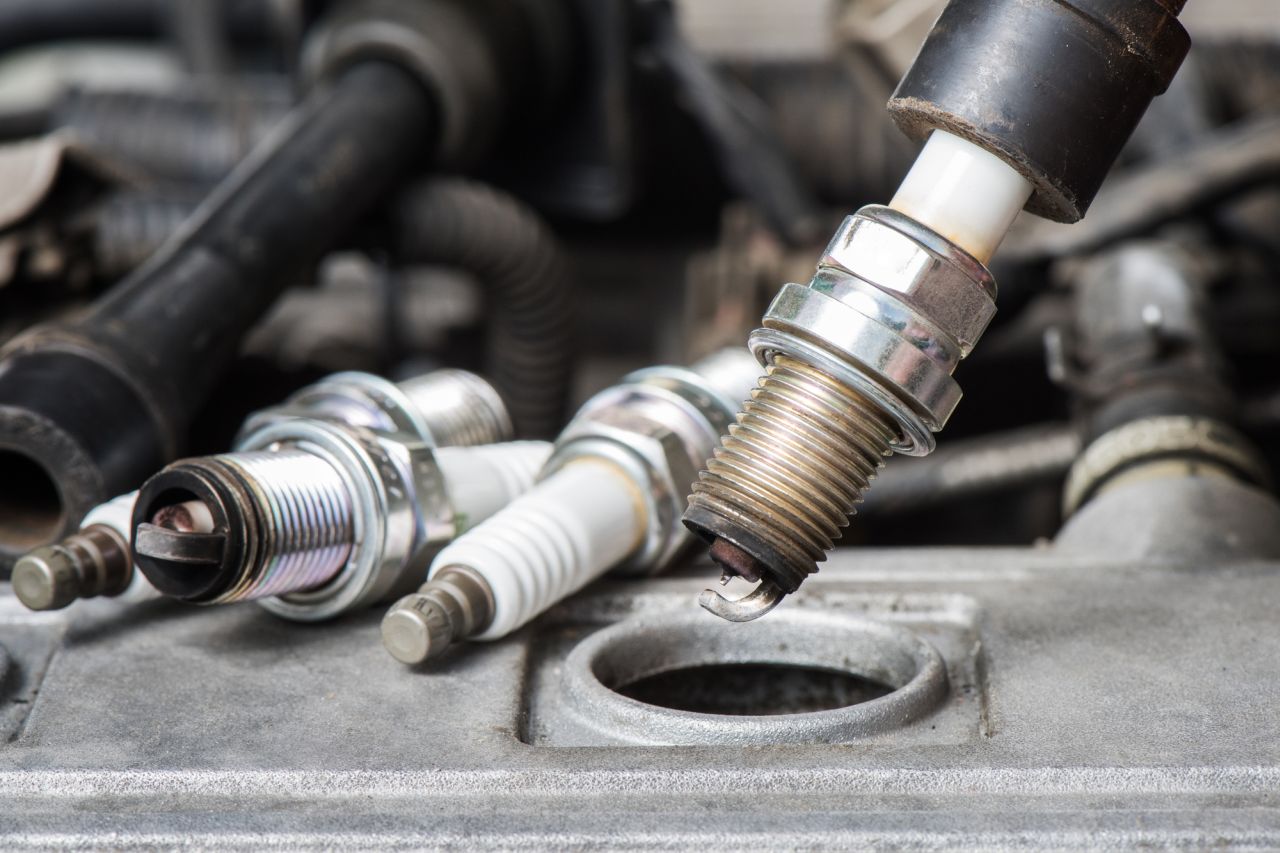
What Is a Spark Plug? Types, Replacement Intervals, and Failure Symptoms
A spark plug is one of the most important ignition components in a gasoline engine. Its primary function is to ignite the compressed air-fuel mixture inside the combustion chamber by producing a controlled electrical spark.
The spark plug is installed in the cylinder head, and its lower end extends into the combustion chamber. When the ignition coil sends a high-voltage electrical pulse to the spark plug, the voltage jumps across the small gap between the center electrode and the ground electrode.
This creates an electrical spark that ignites the air-fuel mixture.
The resulting combustion produces pressure inside the cylinder, forcing the piston downward and ultimately producing engine power.
Although a spark plug is a relatively small component, it operates under extremely demanding conditions. It must withstand high temperatures, high cylinder pressures, rapid temperature changes, electrical voltage, vibration, and exposure to combustion gases.
A correctly selected and properly functioning spark plug is therefore essential for:
-
Reliable engine starting
-
Smooth idle
-
Proper combustion
-
Good acceleration
-
Fuel efficiency
-
Low emissions
-
Stable engine performance
How Does a Spark Plug Work?
The working principle of a spark plug is based on creating a high-voltage electrical arc across a controlled gap.
The ignition coil converts the vehicle's relatively low electrical voltage into a much higher voltage.
This high voltage is delivered to the spark plug.
The voltage reaches the center electrode and attempts to travel to the ground electrode. Because there is an air gap between the two electrodes, the voltage must become sufficiently high to overcome the electrical resistance of the gap.
Once the voltage becomes high enough, the gas between the electrodes becomes ionized and an electrical arc forms.
This arc produces the spark required to ignite the air-fuel mixture.
The process takes place extremely quickly and is repeated continuously while the engine is operating.
In a four-stroke gasoline engine, each cylinder generally requires one ignition event during each combustion cycle.
What Are the Main Parts of a Spark Plug?
A spark plug contains several components, and each has a specific function.
Terminal
The terminal connects the spark plug to the ignition coil or ignition system.
Insulator
The insulator is normally made from a high-strength ceramic material. It prevents the high-voltage electrical energy from escaping through the spark plug body.
Center Electrode
The center electrode carries the high-voltage electrical energy toward the combustion chamber.
Depending on the spark plug design, the center electrode may use materials such as nickel alloy, platinum, or iridium.
Ground Electrode
The ground electrode is connected electrically to the metal shell of the spark plug and ultimately to the engine ground.
The spark jumps between the center electrode and ground electrode.
Metal Shell
The metal shell contains the spark plug structure and provides the threaded connection to the cylinder head.
Sealing Washer or Seat
Depending on the spark plug design, sealing may be provided by a crush washer or a tapered seat.
Why Is the Spark Plug Gap Important?
The distance between the center electrode and ground electrode is called the spark plug gap.
This gap is critical because it directly affects the voltage required to produce a spark.
If the gap is too small, the ignition characteristics may not be optimal.
If the gap is too large, the ignition system must generate more voltage to jump the gap.
An excessive gap can cause:
-
Misfires
-
Hard starting
-
Poor acceleration
-
Rough idle
-
Increased ignition coil stress
-
Reduced performance under load
A gap that is too small can also affect combustion and ignition performance.
The correct gap should always be based on the engine and spark plug manufacturer's specifications.
It is not advisable to increase the gap simply because a larger gap is sometimes associated with a stronger spark.
What Types of Spark Plugs Are There?
Spark plugs can be classified according to electrode material, construction, heat range, dimensions, and intended application.
The most common electrode-material categories are:
-
Copper or nickel-alloy spark plugs
-
Platinum spark plugs
-
Double-platinum spark plugs
-
Iridium spark plugs
-
Iridium-platinum spark plugs
The names can vary between manufacturers, and some modern spark plugs combine different electrode materials.
Copper Spark Plugs
Copper spark plugs are often described as conventional spark plugs.
Despite the name, the electrode itself is generally not made entirely from copper. Copper is commonly used as a conductive core inside an electrode made from a suitable nickel-based alloy.
These spark plugs are relatively inexpensive and can provide excellent ignition performance when used in an appropriate application.
Their main disadvantage is shorter electrode life compared with precious-metal spark plugs.
They are commonly found in older engines and certain applications where frequent replacement is acceptable.
Platinum Spark Plugs
Platinum spark plugs use platinum on one or more electrode surfaces.
Platinum has better resistance to erosion and high-temperature wear than conventional nickel-alloy electrode materials.
This allows platinum spark plugs to maintain their electrode shape and gap for longer periods.
Advantages can include:
-
Longer service life
-
Better resistance to electrode wear
-
More stable spark performance over time
-
Reduced maintenance requirements
Double Platinum Spark Plugs
Double-platinum spark plugs use platinum on both the center and ground electrodes.
This design provides improved resistance to electrode erosion on both sides of the spark gap.
Double-platinum plugs are particularly useful in ignition systems where the spark polarity or ignition arrangement creates specific electrode-wear patterns.
They should not automatically be considered superior for every engine, however.
The correct spark plug is the one specified for the particular engine.
Iridium Spark Plugs
Iridium is extremely hard and has a very high melting point.
This allows manufacturers to produce very fine center electrodes while maintaining good durability.
A fine electrode can help the spark form more easily because it requires less energy to initiate the spark under appropriate conditions.
Iridium spark plugs commonly provide:
-
Long service life
-
Excellent electrode durability
-
Stable ignition performance
-
Good resistance to erosion
-
Reliable operation under demanding conditions
They are widely used in modern gasoline engines.
Iridium-Platinum Spark Plugs
Some modern spark plugs combine iridium and platinum in different parts of the electrode design.
The purpose is to combine the excellent wear resistance of precious metals with a design optimized for long service life and stable ignition.
The exact construction differs between manufacturers.
What Is Spark Plug Heat Range?
Spark plug heat range describes how quickly the spark plug transfers heat away from its firing end into the cylinder head.
This is an important concept because the spark plug tip must operate within an appropriate temperature range.
If the spark plug runs too cold, deposits can accumulate more easily.
If it runs too hot, the electrode and insulator may become excessively hot, increasing the risk of pre-ignition or other combustion problems.
A hotter or colder spark plug does not simply mean better or worse quality.
The correct heat range must match the engine.
Installing the wrong heat range can create serious problems.
What Is a Hot Spark Plug?
A hot spark plug retains more heat at the firing end and transfers heat away more slowly.
This can help the plug maintain a temperature high enough to reduce deposit formation in applications where a colder plug might foul more easily.
However, excessive heat retention can be dangerous if the engine requires a colder plug.
What Is a Cold Spark Plug?
A cold spark plug transfers heat away from the firing end more quickly.
This can be useful in engines operating under high loads or high combustion temperatures.
Performance engines, turbocharged engines, and engines with modified combustion characteristics may require specific colder heat ranges.
The correct selection must always follow the engine manufacturer's specifications.
What Are the Symptoms of a Bad Spark Plug?
A worn or defective spark plug can produce a variety of engine symptoms.
Common signs include:
-
Difficult starting
-
Rough idle
-
Engine misfire
-
Engine hesitation
-
Poor acceleration
-
Reduced engine power
-
Increased fuel consumption
-
Engine vibration
-
Check Engine Light
-
Poor cold-start performance
-
Increased exhaust emissions
-
Intermittent misfires under load
The symptoms can vary depending on whether one spark plug or several spark plugs are affected.
Rough Idle
A worn or fouled spark plug can cause incomplete combustion in one cylinder.
At idle, the engine has relatively little rotational momentum and even a small combustion imbalance can become noticeable.
The driver may feel:
-
Engine shaking
-
Uneven idle speed
-
Vibrations through the steering wheel
-
Occasional RPM fluctuations
If the engine becomes smoother when the RPM increases, an ignition problem is one of the possibilities that should be investigated.
Engine Misfire
A spark plug can fail to ignite the air-fuel mixture correctly.
This is known as a misfire.
A misfire may occur:
-
At idle
-
During acceleration
-
Under heavy load
-
At high RPM
-
During cold starts
-
Intermittently
OBD-II diagnostic codes such as P0300, P0301, P0302, P0303, and P0304 may appear when the engine control module detects misfires.
However, a misfire code does not automatically mean the spark plug is defective.
Possible causes also include:
-
Ignition coil failure
-
Fuel injector problems
-
Vacuum leaks
-
Low compression
-
Valve problems
-
Fuel-pressure problems
-
Air-fuel mixture issues
Difficult Engine Starting
Worn spark plugs may make an engine harder to start, particularly during cold conditions.
As the electrodes wear, the spark gap can increase.
The ignition system then requires more voltage to produce a reliable spark.
If the ignition system cannot provide sufficient voltage under certain conditions, ignition may become inconsistent.
A badly fouled spark plug can also prevent reliable spark formation.
Poor Acceleration
If one or more cylinders are not producing consistent combustion, engine power can decrease.
The driver may notice hesitation when pressing the accelerator.
The problem may become more obvious during:
-
Hard acceleration
-
Uphill driving
-
High engine load
-
High RPM
-
Turbocharger boost
A spark plug problem is only one possible cause, so proper diagnosis is important.
Increased Fuel Consumption
A worn or fouled spark plug can contribute to inefficient combustion.
The engine may compensate for certain operating conditions by adjusting fuel delivery, but it cannot always compensate for an ignition problem.
Repeated misfires can increase fuel consumption and emissions.
If fuel consumption suddenly increases, the spark plugs should be inspected along with the ignition, fuel, and emissions systems.
Check Engine Light
A spark plug problem can trigger the Check Engine Light if it causes a detectable misfire or combustion problem.
Depending on the vehicle, the ECU may store:
-
P0300 — Random or Multiple Cylinder Misfire
-
P0301 — Cylinder 1 Misfire
-
P0302 — Cylinder 2 Misfire
-
P0303 — Cylinder 3 Misfire
-
P0304 — Cylinder 4 Misfire
Higher-cylinder-count engines can generate corresponding codes for additional cylinders.
A flashing Check Engine Light can indicate an active severe misfire that may damage the catalytic converter.
If the Check Engine Light is flashing and the engine is running very roughly, continued driving should generally be avoided until the cause is diagnosed.
What Causes Spark Plug Failure?
Spark plugs gradually wear during normal operation.
However, several conditions can accelerate their deterioration.
Common causes include:
-
Normal electrode wear
-
Incorrect spark plug gap
-
Carbon deposits
-
Oil contamination
-
Fuel fouling
-
Coolant contamination
-
Excessive engine temperature
-
Detonation
-
Pre-ignition
-
Incorrect spark plug heat range
-
Incorrect spark plug type
-
Poor-quality fuel
-
Excessive oil consumption
-
Worn ignition components
Normal Electrode Wear
Every time the spark jumps between the electrodes, a very small amount of electrode material can be lost.
Over thousands or millions of ignition events, this gradually changes the shape of the electrodes.
The spark gap may increase.
Eventually, the ignition system may struggle to maintain reliable ignition, particularly under high load.
Carbon Fouling
Carbon deposits can accumulate on the spark plug.
This is known as carbon fouling.
Possible causes include:
-
Rich air-fuel mixture
-
Excessive idling
-
Frequent short trips
-
Poor combustion
-
Incorrect spark plug heat range
-
Certain engine-control problems
A heavily carbon-fouled spark plug may produce weak or intermittent ignition.
Oil Fouling
If engine oil enters the combustion chamber, it can contaminate the spark plug.
Possible causes include:
-
Worn piston rings
-
Valve stem seal problems
-
Excessive cylinder wear
-
Turbocharger oil leakage
-
Other internal engine problems
Oil-fouled spark plugs should not simply be replaced without investigating why oil is reaching the combustion chamber.
Otherwise, the replacement plugs may become contaminated again.
Fuel Fouling
Excess fuel can wet the spark plug and interfere with ignition.
This can happen after repeated unsuccessful starting attempts, injector problems, ignition failures, or excessively rich operation.
A fuel-fouled plug may appear dark or wet.
The underlying fuel or ignition problem should be identified before installing new plugs.
Coolant Contamination
Coolant entering the combustion chamber can affect the appearance and operation of the spark plug.
Possible causes include:
-
Head gasket failure
-
Cracked cylinder head
-
Cracked engine block
If one spark plug looks dramatically different from the others, it can provide an important diagnostic clue.
What Does Spark Plug Color Tell You?
Spark plug appearance can provide useful information about combustion conditions.
However, modern fuel-injected engines can produce different plug appearances from older carbureted engines, and a plug should not be diagnosed based solely on color.
Possible observations include:
Light deposits
A relatively clean electrode and insulator may indicate normal operation, depending on the engine and operating conditions.
Black dry deposits
May be associated with rich operation, incomplete combustion, excessive idling, or an unsuitable heat range.
Wet fuel
May indicate fuel fouling or a cylinder that is not firing correctly.
Wet oil
May indicate oil entering the combustion chamber.
Unusually clean plug
Can sometimes indicate coolant entering that cylinder.
White or overheated appearance
Can be associated with excessive combustion temperature, an unsuitable heat range, lean operation, or other engine problems.
Spark plug reading should always be combined with other diagnostic information.
When Should Spark Plugs Be Replaced?
There is no single replacement interval that applies to every vehicle.
The correct interval depends on:
-
Spark plug material
-
Engine design
-
Manufacturer recommendations
-
Driving conditions
-
Fuel system
-
Engine operating temperature
-
Vehicle usage
Conventional nickel-alloy plugs generally have shorter service intervals than platinum or iridium plugs.
Some modern iridium and platinum spark plugs are designed to last significantly longer.
However, a long-life spark plug does not mean it should be used indefinitely.
The manufacturer's replacement schedule should be followed.
How Many Miles Do Spark Plugs Last?
Spark plug life varies considerably.
As a general principle, conventional spark plugs may require replacement after a relatively shorter service interval, while platinum and iridium plugs can often last much longer.
However, exact mileage should always be taken from the vehicle manufacturer's maintenance schedule.
A spark plug operating in a healthy engine may last much longer than one exposed to oil consumption, overheating, excessive fuel, or repeated misfires.
Should Spark Plugs Be Replaced All at Once?
In most cases, replacing the complete set is preferable when the plugs have reached their scheduled replacement interval.
Installing one new plug alongside several heavily worn plugs can result in differences in ignition performance between cylinders.
Replacing the complete set also makes it easier to maintain consistent ignition characteristics.
If only one plug has failed prematurely because of a specific problem, the cause should be identified before simply replacing all the plugs.
Can Spark Plugs Be Cleaned?
Some spark plugs can be cleaned under certain circumstances, but cleaning is generally not a substitute for replacing worn plugs.
If the electrodes are heavily worn or damaged, cleaning will not restore the original electrode shape or gap.
Modern fine-wire iridium and platinum plugs can also be damaged by aggressive cleaning methods.
For many modern vehicles, replacing a contaminated or worn plug is safer and more reliable than attempting to restore it.
Can You Adjust a Spark Plug Gap?
Some spark plugs can be adjusted within the manufacturer's specified limits.
However, not every modern spark plug should be aggressively bent or adjusted.
Fine-wire precious-metal electrodes can be delicate.
The correct procedure depends on the specific spark plug.
Always check whether the manufacturer allows gap adjustment and use the appropriate tool.
What Happens If the Wrong Spark Plug Is Installed?
Using the wrong spark plug can cause serious engine-performance problems.
Possible issues include:
-
Misfires
-
Difficult starting
-
Poor fuel economy
-
Incorrect heat range
-
Pre-ignition
-
Detonation-related problems
-
Excessive deposits
-
Electrode damage
-
Thread or reach problems
-
Piston or valve damage in severe cases
One particularly important specification is the spark plug reach.
A spark plug that is too long can extend too far into the combustion chamber and potentially contact the piston or valves.
A plug with an incorrect thread specification can also damage the cylinder head.
Can a Spark Plug Cause Engine Damage?
Yes, although a spark plug itself is usually not the original cause of major engine damage.
An incorrect or severely damaged plug can create dangerous combustion conditions.
For example, an inappropriate heat range or incorrect plug specification may contribute to pre-ignition under certain circumstances.
A physically damaged spark plug can also cause problems if an electrode breaks and enters the combustion chamber.
For this reason, the correct spark plug specification is extremely important.
Spark Plug vs. Ignition Coil
Spark plugs and ignition coils work together, but they perform different functions.
The ignition coil generates the high voltage required for the spark.
The spark plug uses that voltage to create the spark inside the combustion chamber.
A faulty ignition coil can therefore produce symptoms that look very similar to a bad spark plug.
If an engine develops a misfire, both components should be considered during diagnosis.
One useful diagnostic technique is to move a suspected ignition coil to another cylinder and observe whether the misfire follows the coil.
This should only be done when appropriate for the vehicle and with proper diagnostic procedures.
Spark Plug vs. Fuel Injector
A fuel injector controls the amount of fuel entering the cylinder.
A spark plug ignites the air-fuel mixture.
A faulty injector can therefore create symptoms that resemble a spark plug problem.
For example, both a bad injector and a bad spark plug can cause:
-
Misfire
-
Rough idle
-
Poor acceleration
-
Increased fuel consumption
-
Check Engine Light
This is why replacing spark plugs without diagnosing the actual cause of a misfire can sometimes fail to solve the problem.
Can LPG Vehicles Use Spark Plugs?
Yes.
LPG-powered gasoline engines still use spark plugs because LPG is ignited by a spark.
In some LPG applications, spark plug condition becomes particularly important because the fuel characteristics and combustion conditions can differ from gasoline operation.
Depending on the engine and LPG system, the appropriate spark plug type and gap may differ from the gasoline specification.
The correct specification should always be determined according to the engine and LPG conversion system.
Spark Plugs in Turbocharged Engines
Turbocharged gasoline engines can place additional demands on the ignition system.
Under boost, cylinder pressure increases.
A higher cylinder pressure can make it more difficult for the spark to jump the electrode gap.
This means that spark plug condition, gap, heat range, and ignition-system performance can become particularly important in turbocharged engines.
A worn plug that performs acceptably during light driving may begin to misfire during high boost or heavy acceleration.
Why Do Spark Plugs Fail More Quickly in Some Engines?
Spark plug life can vary significantly between vehicles.
Factors that can shorten service life include:
-
Frequent short trips
-
Heavy traffic
-
Excessive idling
-
High engine temperatures
-
Turbocharging
-
Rich fuel mixture
-
Oil consumption
-
Coolant leakage
-
Ignition-system problems
-
Poor fuel quality
-
Aggressive driving
-
Incorrect spark plug selection
An engine with an underlying mechanical or fuel-system problem can destroy spark plugs much faster than normal.
How Should Spark Plugs Be Replaced?
Spark plug replacement should be performed carefully.
The general process involves:
-
Allowing the engine to cool
-
Removing the ignition coil or plug wire
-
Cleaning dirt around the spark plug
-
Removing the old spark plug with the correct socket
-
Comparing the old plug with the new specification
-
Checking the gap if required
-
Installing the new plug carefully
-
Tightening it to the manufacturer's specified torque
-
Reinstalling the ignition coil or plug wire
-
Starting the engine and checking for proper operation
Spark plug threads should not be overtightened.
Excessive tightening can damage the cylinder head or spark plug.
Insufficient tightening can also create sealing and heat-transfer problems.
Why Is Spark Plug Torque Important?
Spark plug torque is more important than many people realize.
If a spark plug is overtightened, it can:
-
Damage the cylinder head threads
-
Distort the spark plug
-
Make future removal difficult
-
Affect the spark plug's heat transfer
If it is undertightened, it may not seal correctly and may not transfer heat properly to the cylinder head.
The correct torque depends on the specific spark plug, thread size, seat design, and cylinder-head material.
Always use the manufacturer's specified torque rather than relying on guesswork.
What Should You Check When a Spark Plug Fails?
If a spark plug fails unusually quickly, do not assume the replacement plug will solve the problem permanently.
Check for:
-
Ignition coil problems
-
Fuel injector problems
-
Excessive fuel delivery
-
Oil consumption
-
Coolant leakage
-
Low compression
-
Vacuum leaks
-
Incorrect air-fuel mixture
-
Engine overheating
-
Incorrect spark plug specification
A spark plug is often a symptom indicator as well as an ignition component.
Its condition can provide valuable information about what is happening inside the cylinder.
Can a Bad Spark Plug Increase Emissions?
Yes.
Incomplete combustion caused by ignition problems can increase unburned hydrocarbons in the exhaust.
Severe misfires can also send unburned fuel into the catalytic converter.
This can cause the catalytic converter to overheat and potentially become damaged.
Therefore, spark plug problems should be repaired promptly, particularly when the engine is experiencing persistent misfires.
How Can Spark Plug Life Be Extended?
The best way to extend spark plug life is to maintain the engine correctly.
Important practices include:
-
Use the correct spark plug
-
Follow the manufacturer's replacement interval
-
Maintain the correct spark plug gap
-
Repair ignition problems promptly
-
Keep the fuel system in good condition
-
Address oil consumption
-
Repair coolant leaks
-
Maintain the correct engine temperature
-
Use appropriate fuel
-
Avoid prolonged operation with active misfires
-
Follow the manufacturer's maintenance schedule
A healthy engine creates the best environment for long spark plug life.
Final Thoughts
Spark plugs may be small, but they play a critical role in gasoline-engine operation.
They provide the spark required to ignite the air-fuel mixture and begin the combustion process that produces engine power.
Modern spark plugs are available in several designs and materials, including conventional nickel-alloy, platinum, double-platinum, and iridium types.
The correct spark plug is not necessarily the most expensive one. It is the plug that matches the engine manufacturer's specifications for electrode design, heat range, thread size, reach, seat type, and gap.
Common symptoms of spark plug problems include rough idle, misfires, difficult starting, hesitation, poor acceleration, reduced fuel economy, engine vibration, and Check Engine Light illumination.
However, these symptoms can also be caused by ignition coils, fuel injectors, vacuum leaks, compression problems, fuel-pressure issues, or other engine faults.
For this reason, spark plugs should be diagnosed as part of the complete ignition and combustion system rather than being replaced based on symptoms alone.
Following the correct replacement interval and using the correct spark plug specification can help maintain reliable ignition, smooth engine operation, good fuel economy, and lower emissions.