TR
TR EN
EN

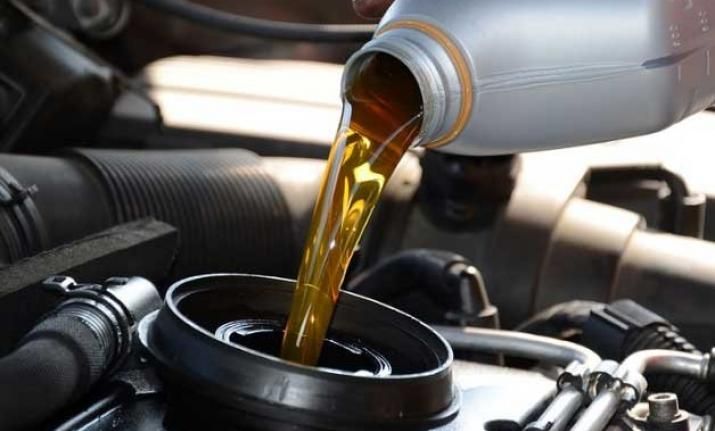
8 Myths About Engine Oil Changes
Knowing how and when to change your car's engine oil is one of the first things most drivers learn about vehicle maintenance. Regular oil changes are essential for protecting the engine and maintaining its long-term reliability, but there are also many myths surrounding engine oil that can lead to unnecessary maintenance or, in some cases, improper oil selection.
Modern engines and motor oils have changed significantly over the years. Oil change intervals, oil specifications, and maintenance requirements now vary considerably between vehicles.
Let's take a look at eight common engine oil change myths and what you should actually know.
Myth 1 - You Must Change the Engine Oil Every 5,000 Kilometers
The idea that every vehicle needs an oil change every 5,000 kilometers comes largely from older vehicles and older oil technologies.
Today, many manufacturers specify significantly longer service intervals. Depending on the vehicle, engine, oil specification, and operating conditions, an oil change interval may be 10,000, 15,000, 20,000 kilometers or more.
However, this does not mean that every modern vehicle should automatically use a long oil change interval.
Frequent short trips, heavy traffic, repeated stop-and-go driving, prolonged idling, towing, dusty conditions, extreme temperatures, and demanding driving can cause engine oil to deteriorate more quickly.
The correct approach is therefore not to follow a universal 5,000-kilometer rule. Follow the manufacturer's recommended maintenance interval and take the vehicle's actual operating conditions into account.
Myth 2 - If You Have Not Reached the Mileage, You Do Not Need an Oil Change
Engine oil does not deteriorate only because of mileage.
Even when a vehicle is driven very little, the oil can age over time. Moisture from condensation can accumulate, additives can gradually lose effectiveness, and fuel dilution can occur, particularly when the vehicle is frequently used for short trips.
For this reason, manufacturers commonly specify both a mileage interval and a time interval, with whichever comes first determining when maintenance is due.
For example, if the maintenance schedule specifies 15,000 kilometers or one year, the oil should be changed when either limit is reached, even if the vehicle has traveled only a fraction of the mileage.
The exact time limit varies between manufacturers, so there is no universal rule that every vehicle must receive an oil change exactly once a year.
Myth 3 - The "W" in 5W-30 Means the Oil Is "Heavy"
There is considerable confusion about the numbers and the letter used in engine oil viscosity ratings.
In an oil such as 5W-30, the W stands for Winter. It refers to the oil's viscosity behavior at low temperatures.
The number before the W represents the oil's low-temperature viscosity grade. Generally, a lower number indicates that the oil can flow more easily during cold-start conditions.
The number after the W represents the oil's high-temperature viscosity grade.
These numbers are SAE viscosity classifications. They should not simply be interpreted as "thin oil" or "thick oil" under all conditions.
For example, choosing 5W-40 instead of 5W-30 simply because you believe the thicker oil is better for a hot climate is not necessarily correct.
The vehicle manufacturer's specified viscosity grade and oil specification should be followed.
Myth 4 - Once You Use Synthetic Oil, You Can Never Go Back
This is another common misconception.
If the replacement oil meets the specifications required by the vehicle manufacturer, switching between suitable synthetic and other types of engine oil does not automatically cause a problem.
The important issue is not simply whether the oil is labeled "synthetic." The oil must meet the required:
-
SAE viscosity grade
-
Performance standard
-
Manufacturer approval
-
Emission-system requirements
-
Engine-specific requirements
For example, simply choosing any 5W-30 oil because the viscosity is correct may not be enough. Two 5W-30 oils can have different specifications and manufacturer approvals.
This is particularly important for modern turbocharged engines, diesel engines, and vehicles equipped with particulate filters.
Myth 5 - You Must Have Your Oil Changed at the Dealership
Some vehicle owners believe that using an independent repair shop instead of an authorized dealership automatically creates warranty problems.
That is not necessarily the case. What matters is that the required maintenance is performed correctly and that the appropriate parts, fluids, and procedures are used.
For a vehicle that is still under warranty, it is particularly important to keep records showing:
-
The date of the service
-
Vehicle mileage
-
Engine oil specification
-
Amount of oil used
-
Oil filter used
-
Other maintenance performed
Using an oil with the correct specification is more important than simply having a particular logo on the workshop sign.
For this reason, the important question is not simply "Where was the oil changed?" but rather "Was the correct oil and correct maintenance procedure used?"
Keeping invoices and service records is also useful if a warranty or maintenance dispute occurs later.
Myth 6 - If the Engine Oil Turns Black, It Must Be Changed Immediately
Fresh engine oil is often amber or golden in color, but it can become darker relatively quickly after entering a working engine.
Dark oil does not automatically mean that the oil has failed.
Engine oil comes into contact with combustion by-products, soot, contaminants, and deposits while circulating through the engine. Diesel engine oil, in particular, can become dark relatively quickly.
Oil also contains detergent and dispersant additives that help keep contaminants suspended rather than allowing them to form harmful deposits.
Therefore, judging oil condition solely by its color is not a reliable method.
Instead, consider:
-
The manufacturer's oil change interval
-
The vehicle's operating conditions
-
Oil level
-
Engine condition
-
Possible fuel dilution
-
Possible coolant contamination
-
Unusual oil pressure warnings
-
Abnormal smells or changes in oil consistency
A milky or creamy appearance, excessive foaming, a strong fuel smell, or an unusually high or low oil level can indicate a problem that requires further investigation.
Myth 7 - Synthetic Oil Is Always Better and Guarantees Better Fuel Economy
Synthetic oils can provide important technical advantages.
Depending on the formulation, they can offer good low-temperature flow characteristics, resistance to oxidation, thermal stability, and the ability to meet demanding modern engine and emissions-system requirements.
However, saying that synthetic oil is always better for every engine or will definitely reduce fuel consumption is too simplistic.
Engine oil can influence fuel efficiency, particularly through viscosity and friction characteristics, but it is only one of many factors affecting fuel consumption.
Real-world fuel economy is also influenced by:
-
Driving style
-
Traffic conditions
-
Tire pressure
-
Vehicle load
-
Outside temperature
-
Air conditioning use
-
Tire type
-
Engine condition
-
Road conditions
Therefore, paying more for a synthetic oil does not automatically guarantee a noticeable reduction in fuel consumption.
The priority should be to use an oil that meets the specifications required by the vehicle manufacturer. If the manufacturer requires a particular synthetic oil specification or approval, using a cheaper oil that does not meet those requirements is not a sensible way to save money.
Myth 8 - You Should Always Change the Oil Before a Long Road Trip
Checking the engine oil level before a long journey is a very good habit. However, that does not mean the oil must automatically be replaced before every road trip.
If the oil is still within the manufacturer's recommended service interval and the oil level is correct, there is normally no reason to change it simply because you are about to travel a long distance.
However, if the vehicle is approaching its scheduled oil change, performing the service before the trip can be a sensible choice.
A long-distance trip is also a good opportunity to check other important items, including:
-
Engine oil level
-
Coolant level
-
Brake fluid
-
Tire pressures
-
Tire condition
-
Battery condition
-
Windshield washer fluid
-
Wipers
-
Exterior lights
-
Brake system
-
Visible fluid leaks
If an oil change is due, having it done several days before the trip can also give you time to check for leaks or other problems after the service.
What Really Matters When Changing Engine Oil?
The biggest mistake with engine oil is assuming that one rule applies to every vehicle.
Statements such as "change it every 5,000 kilometers," "black oil must be replaced immediately," or "you can never switch back from synthetic oil" oversimplify a subject that depends heavily on the vehicle and its operating conditions.
Modern engines can have very specific oil requirements. Viscosity is only one part of the specification. The required performance standard and manufacturer approval can be equally important.
When changing the oil, the oil filter should normally be replaced as part of the service, the correct quantity of oil should be added, and the final oil level should be checked properly.
Ultimately, the best approach is simple: follow the manufacturer's specified oil type and service interval, consider how the vehicle is actually used, and do not rely on outdated oil-change myths.