TR
TR EN
EN

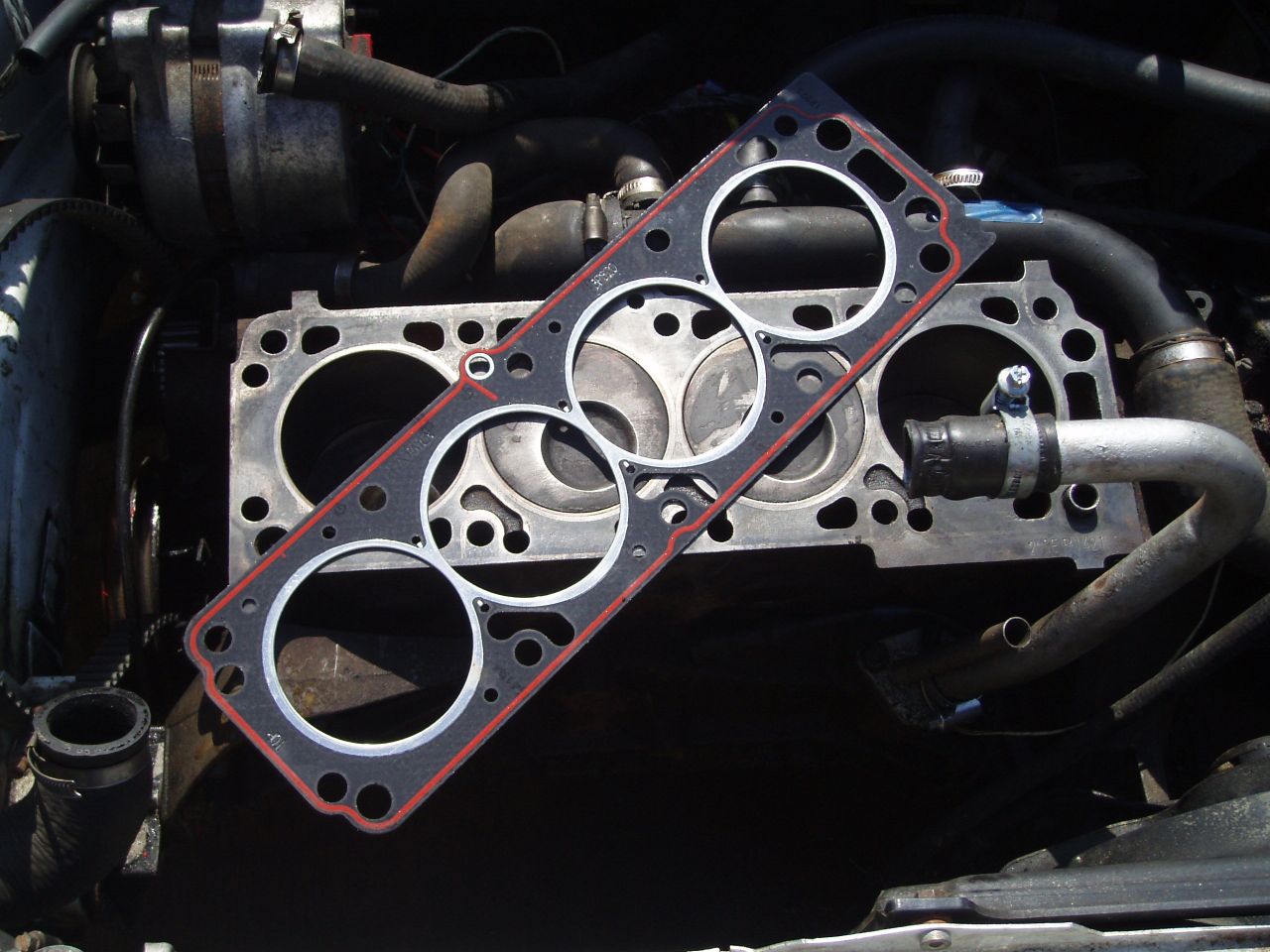
What Is a Head Gasket? What Are the Symptoms of Failure?
The head gasket is one of the most important sealing components inside an internal combustion engine. It is installed between the engine block and the cylinder head and creates a seal between these two major engine components.
Although the head gasket is relatively thin compared with the engine block or cylinder head, its job is extremely demanding.
It must seal several different areas at the same time, including:
-
Combustion chambers
-
Engine oil passages
-
Coolant passages
-
Cylinder sealing surfaces
The head gasket must prevent combustion pressure, engine oil, and coolant from mixing or escaping into areas where they do not belong.
At the same time, it must withstand extreme temperatures, high combustion pressures, repeated heating and cooling cycles, and significant mechanical stress.
When the head gasket is healthy, the combustion chamber remains sealed and the engine's cooling and lubrication systems remain separated.
When it fails, however, several different problems can occur depending on where the sealing surface has been damaged.
Where Is the Head Gasket Located?
The head gasket sits between the cylinder head and the engine block.
The engine block contains the cylinders, pistons, crankshaft, and other major components. The cylinder head is mounted on top of the block and contains components such as the intake and exhaust ports, valves, camshaft components on many engine designs, and coolant and oil passages.
The head gasket is compressed between these two surfaces when the cylinder head bolts are tightened.
This creates a seal around each cylinder and around the oil and coolant passages.
The gasket must maintain this seal even when the cylinder pressure changes thousands of times during engine operation.
What Does a Head Gasket Do?
The head gasket performs several critical functions simultaneously.
It seals the combustion chamber
During combustion, cylinder pressure can become extremely high. The gasket prevents this pressure from escaping between the cylinder head and engine block.
It separates coolant from combustion gases
Coolant flows through passages in the engine block and cylinder head to remove heat. The gasket prevents coolant from entering the cylinders.
It separates engine oil from coolant
Oil and coolant travel through different passages. The gasket helps keep these fluids separated.
It prevents external leaks
The gasket also helps prevent oil and coolant from leaking externally at the joint between the cylinder head and engine block.
Why Is the Head Gasket So Important?
An engine depends on three basic conditions to operate correctly:
-
Compression
-
Correct fuel and air mixture
-
Controlled ignition or combustion
The head gasket plays a major role in maintaining compression.
If combustion pressure escapes through a damaged gasket, the affected cylinder may lose compression.
This can cause:
-
Misfires
-
Rough idle
-
Loss of power
-
Hard starting
-
Poor fuel economy
-
Increased emissions
A serious head gasket failure can also allow coolant or oil to enter the combustion chamber, creating much more severe engine problems.
How Does a Head Gasket Work?
The head gasket does not work like a simple rubber seal.
It is specifically engineered to withstand the operating conditions of a particular engine.
When the cylinder head is installed, head bolts apply a carefully specified clamping force.
This force compresses the gasket between the cylinder head and engine block.
The gasket must maintain sufficient sealing pressure around the combustion chambers while also sealing the smaller oil and coolant passages.
Modern engines can use different gasket designs and materials depending on the engine architecture.
What Are Head Gaskets Made Of?
Head gasket construction varies depending on the engine.
Common designs include:
Multi-Layer Steel (MLS)
MLS gaskets are widely used in modern engines.
They consist of multiple layers of specially formed steel and are designed to maintain reliable sealing under high temperatures and cylinder pressures.
Composite gaskets
Older engines and certain applications may use composite gasket materials.
These can contain materials such as graphite and other sealing compounds.
Copper and specialized materials
Certain high-performance or specialized engines may use different materials depending on the application.
The gasket material must be compatible with the cylinder head, engine block, coolant, oil, temperature, pressure, and manufacturing tolerances.
What Are the Symptoms of Head Gasket Failure?
Head gasket failure can produce a wide range of symptoms.
The symptoms depend heavily on where the gasket has failed.
A small leak between a combustion chamber and coolant passage may produce completely different symptoms from an external oil leak.
Common symptoms include:
-
Engine overheating
-
Coolant loss
-
White exhaust smoke
-
Bubbles in the coolant reservoir
-
Milky or contaminated engine oil
-
Rough engine operation
-
Misfires
-
Hard starting
-
Loss of engine power
-
Low compression
-
Unexplained coolant pressure
-
Coolant entering a cylinder
-
Oil leaking externally
-
Coolant leaking externally
-
Check Engine Light
-
Repeated overheating
Not every failed head gasket produces all of these symptoms.
White Smoke From the Exhaust
One of the best-known signs of head gasket failure is persistent white smoke from the exhaust.
However, it is important to distinguish normal water vapor from genuine coolant burning.
When an engine is cold, condensation inside the exhaust system can produce white vapor.
This is usually normal and should disappear as the exhaust system reaches operating temperature.
A head gasket problem may produce persistent white exhaust smoke because coolant is entering the combustion chamber and being burned during combustion.
This may be accompanied by:
-
Coolant level dropping
-
Sweet-smelling exhaust
-
Engine misfire
-
Rough starting
-
Overheating
White smoke alone does not prove that the head gasket has failed, but persistent white smoke combined with unexplained coolant loss is a strong reason for further diagnosis.
Engine Overheating
Overheating is another major warning sign.
A failed head gasket can cause overheating in several ways.
For example, combustion gases may enter the cooling system and create excessive pressure.
This can interfere with normal coolant circulation.
A damaged gasket can also allow coolant to enter the combustion chamber, reducing the amount of coolant available to properly cool the engine.
In some cases, the original cause is actually overheating itself.
Once an engine becomes severely overheated, the cylinder head may warp, which can damage the head gasket or prevent it from sealing properly.
This creates a dangerous cycle:
Overheating can cause gasket failure, and gasket failure can cause further overheating.
Coolant Loss Without an Obvious Leak
If the coolant level keeps dropping but there is no visible external leak, an internal coolant leak should be considered.
A damaged head gasket can allow coolant to enter:
-
A combustion chamber
-
An oil passage
-
Another coolant passage
Coolant entering the combustion chamber may eventually leave through the exhaust.
This is one reason why some head gasket failures do not produce a visible puddle under the vehicle.
Bubbles in the Coolant Reservoir
Combustion gases entering the cooling system can cause bubbles in the coolant reservoir or expansion tank.
If combustion pressure is leaking through the head gasket into a coolant passage, exhaust gases can enter the cooling system.
This may cause:
-
Continuous bubbling
-
Excessive cooling-system pressure
-
Coolant being pushed out of the reservoir
-
Overflow
-
Repeated coolant loss
However, occasional movement or small bubbles during normal warm-up should not automatically be interpreted as head gasket failure.
A proper combustion-gas test is more reliable than visual inspection alone.
Milky Engine Oil
Another well-known symptom is oil contamination.
If coolant enters the engine oil, the oil can become cloudy, creamy, or milky.
This is sometimes visible underneath the oil filler cap or on the dipstick.
However, a small amount of creamy residue underneath the oil cap can also occur because of condensation, particularly when a vehicle is used for many short trips.
Therefore, the appearance of the oil should be considered together with:
-
Coolant loss
-
Engine temperature
-
Oil level
-
Exhaust smoke
-
Engine performance
-
Driving conditions
Coolant contamination throughout the engine oil is a serious problem because it can reduce lubrication and damage bearings and other internal components.
Rough Idle and Misfire
A head gasket failure can cause a cylinder to lose compression or allow coolant into the combustion chamber.
The affected cylinder may then fail to burn the air-fuel mixture correctly.
This can result in:
-
Rough idle
-
Engine shaking
-
Misfires
-
Poor acceleration
-
Check Engine Light
OBD-II misfire codes such as P0300, P0301, P0302, P0303, and P0304 may appear depending on the engine and the affected cylinder.
However, misfire codes do not specifically identify a head gasket problem.
Spark plugs, ignition coils, fuel injectors, compression, and other possible causes must also be checked.
Hard Starting
A leaking head gasket can make an engine difficult to start.
If coolant enters a cylinder while the engine is parked, the mixture inside that cylinder may no longer be suitable for normal combustion.
Compression may also be reduced.
In severe cases, a large amount of coolant can accumulate inside a cylinder.
This can create a condition known as hydrolock, because liquid cannot be compressed like the normal air-fuel mixture.
Hydrolock can cause serious mechanical damage if the engine is cranked under those conditions.
Loss of Engine Power
A damaged head gasket can reduce cylinder compression.
Since combustion depends on adequate compression, even one affected cylinder can cause noticeable performance loss.
The driver may notice:
-
Slower acceleration
-
Reduced engine power
-
Poor hill-climbing performance
-
Rough operation
-
Increased fuel consumption
Severe gasket failure can make the vehicle unsafe or unreliable to drive.
Can a Head Gasket Failure Cause a Check Engine Light?
Yes.
The Check Engine Light can illuminate when a head gasket failure causes secondary engine problems.
Possible diagnostic codes may include:
-
Cylinder misfire codes
-
Oxygen sensor-related codes
-
Catalyst efficiency codes
-
Fuel-trim-related codes
The exact codes depend on how the failure affects combustion and exhaust emissions.
There is generally no universal OBD-II code that simply means “head gasket failure.”
This is important because replacing components based solely on a fault code can lead to incorrect repairs.
Why Do Head Gaskets Fail?
Head gaskets usually fail because they are subjected to conditions beyond their design limits or because sealing conditions deteriorate.
Common causes include:
-
Engine overheating
-
Warped cylinder head
-
Warped engine block
-
Incorrect head bolt torque
-
Improper installation
-
Poor-quality gasket
-
Incorrect gasket selection
-
Detonation or abnormal combustion
-
Excessive cylinder pressure
-
Cooling-system problems
-
Corrosion
-
Age and repeated thermal cycling
In many cases, overheating is the primary trigger.
Engine Overheating as a Major Cause
A head gasket can tolerate substantial heat, but extreme overheating can distort engine components.
The cylinder head may expand or warp.
Once the cylinder head is no longer perfectly flat, the gasket may lose its ability to maintain a uniform seal.
This is particularly important with aluminum cylinder heads.
If the engine overheats severely, simply installing a new gasket may not solve the problem.
The cylinder head must be inspected for warpage and damage.
Can Low Coolant Cause Head Gasket Failure?
Low coolant can contribute to overheating.
If the cooling system does not contain enough coolant, the engine may not be able to remove heat effectively.
This can cause localized overheating and potentially damage the cylinder head or head gasket.
Therefore, a low coolant level should never be ignored.
The reason for coolant loss should always be identified.
Can a Bad Thermostat Cause Head Gasket Failure?
Yes, indirectly.
A thermostat that remains closed can restrict coolant circulation and cause the engine to overheat.
A thermostat that does not operate correctly can therefore contribute to overheating.
The same principle applies to other cooling-system components such as:
-
Water pump
-
Radiator
-
Cooling fan
-
Radiator cap
-
Coolant hoses
-
Expansion tank
-
Temperature sensor
When diagnosing a head gasket failure, the cooling system should be examined to determine why the engine overheated in the first place.
Can a Bad Water Pump Cause Head Gasket Failure?
Yes.
A failed or severely weakened water pump can reduce coolant circulation.
Insufficient circulation can cause overheating, particularly under heavy load.
If the engine repeatedly overheats because of poor coolant circulation, the cylinder head and head gasket may eventually be damaged.
Can a Head Gasket Fail Without Overheating?
Yes.
Although overheating is one of the most common causes, it is not the only one.
A gasket can fail because of:
-
Manufacturing defects
-
Incorrect installation
-
Incorrect bolt torque
-
Improper cylinder-head machining
-
Excessive combustion pressure
-
Detonation
-
Corrosion
-
Long-term thermal cycling
Therefore, the absence of a known overheating event does not completely rule out head gasket failure.
How Is a Head Gasket Diagnosed?
A proper diagnosis usually involves several tests rather than relying on one symptom.
Cooling System Pressure Test
A pressure tester can be used to pressurize the cooling system.
If the system loses pressure without an obvious external leak, an internal leak may be present.
This test can help identify coolant leaks, but it does not by itself prove that the head gasket is the cause.
Combustion Gas Test
A combustion leak tester can detect certain combustion gases entering the cooling system.
This is one of the useful tests for identifying a possible head gasket or cylinder-head sealing problem.
Compression Test
A compression test measures the compression pressure produced by each cylinder.
A significantly low cylinder can indicate:
-
Head gasket failure
-
Burned valve
-
Worn piston rings
-
Damaged piston
-
Valve-train problems
Comparing cylinders is important.
Leak-Down Test
A cylinder leak-down test is often more informative when diagnosing internal sealing problems.
Compressed air is introduced into a cylinder while the engine is positioned appropriately.
The technician then observes where the air escapes.
Air bubbles appearing in the cooling system can indicate a path between the cylinder and cooling system.
Air escaping through the intake or exhaust system can point toward valve problems, while air entering the crankcase can indicate piston-ring or cylinder-related leakage.
Inspecting the Spark Plugs
Spark plugs can sometimes provide useful clues.
A cylinder affected by coolant intrusion may have a spark plug that looks noticeably different from the others.
It may appear unusually clean compared with neighboring plugs because coolant can effectively “steam clean” the combustion chamber.
This is only a diagnostic clue, not definitive proof.
Checking Engine Oil
The engine oil should be inspected for:
-
Coolant contamination
-
Unusual color
-
Abnormal consistency
-
Increasing oil level
An increasing oil level can sometimes occur when another fluid enters the crankcase.
Using a Borescope
A borescope can be inserted through the spark plug hole on suitable engines.
This allows a technician to inspect the combustion chamber for abnormal deposits, coolant-related evidence, piston damage, or other irregularities.
Is Head Gasket Repair Expensive?
Head gasket replacement can be expensive because the repair usually requires significant engine disassembly.
The cost can include:
-
New head gasket
-
New cylinder-head bolts when required
-
Cylinder-head inspection
-
Cylinder-head resurfacing when necessary
-
Engine oil
-
Coolant
-
Intake and exhaust gaskets
-
Timing-system components or seals depending on the engine
-
Labor
The exact cost varies enormously between engines.
Some engines provide relatively easy access to the cylinder head, while others require extensive disassembly.
Does the Cylinder Head Need to Be Resurfaced?
Not always.
The cylinder head must first be inspected.
If it is warped or its sealing surface is damaged, machining may be required within the manufacturer's specifications.
However, removing material unnecessarily can create problems.
The cylinder head should therefore be measured and machined only according to the engine manufacturer's specifications.
Can a Head Gasket Be Replaced Without Machining the Head?
Sometimes.
If the cylinder head is within the manufacturer's flatness and surface-finish specifications, machining may not be necessary.
However, this must be determined through proper measurement and inspection.
Installing a new gasket on a distorted or damaged sealing surface can result in another failure.
Can You Drive With a Bad Head Gasket?
Driving with a suspected head gasket failure is generally not recommended.
A vehicle may continue running for some time, particularly if the leak is small.
However, the condition can deteriorate quickly.
Continuing to drive can result in:
-
Severe overheating
-
Engine seizure
-
Bearing damage
-
Catalytic converter damage
-
Cylinder damage
-
Warped cylinder head
-
Cracked cylinder head
-
Hydrolock
-
Complete engine failure
If the engine is losing coolant, overheating, producing persistent white exhaust smoke, or showing signs of serious internal leakage, continued driving should be avoided.
Can a Head Gasket Leak Fix Itself?
No.
A damaged head gasket does not normally repair itself.
Some minor leaks may temporarily appear less noticeable as operating conditions change, but this does not mean the gasket has healed.
If the underlying problem remains, the leak can return or become significantly worse.
Can Head Gasket Sealers Fix the Problem?
Chemical sealers are marketed as temporary or alternative solutions for certain cooling-system leaks.
Their effectiveness varies greatly depending on the type and location of the failure.
A sealer cannot restore a severely warped cylinder head, replace a damaged gasket properly, or repair major mechanical damage.
It can also create unwanted deposits in some cooling systems.
For a reliable long-term repair, proper mechanical diagnosis and gasket replacement are generally preferable when the head gasket has genuinely failed.
How Can Head Gasket Failure Be Prevented?
Preventing every head gasket failure is impossible, but proper maintenance can significantly reduce the risk.
Important practices include:
-
Keep the coolant at the correct level
-
Use the correct coolant specification
-
Replace coolant according to the manufacturer's recommendations
-
Repair coolant leaks immediately
-
Monitor engine temperature
-
Replace a defective thermostat
-
Maintain the cooling fan system
-
Keep the radiator in good condition
-
Maintain the water pump
-
Avoid driving an overheating engine
-
Use the correct engine oil
-
Address persistent misfires
-
Repair abnormal combustion or detonation
-
Follow the manufacturer's maintenance schedule
The most important rule is simple:
Never continue driving an engine that is seriously overheating.
Stopping early can prevent a cooling-system problem from becoming a major engine repair.
Head Gasket vs. Cylinder Head: What Is the Difference?
These two components are sometimes confused.
The cylinder head is a major metal engine component mounted on top of the engine block.
The head gasket is the sealing layer between the cylinder head and engine block.
A damaged head gasket does not necessarily mean the cylinder head itself is damaged.
However, severe overheating caused by or resulting from a gasket failure can warp or crack the cylinder head.
This is why both components must be inspected during a major head gasket repair.
Head Gasket vs. Valve Cover Gasket
The head gasket and valve cover gasket perform completely different jobs.
The head gasket seals the connection between the cylinder head and engine block.
The valve cover gasket seals the valve cover to the cylinder head.
A leaking valve cover gasket may cause engine oil to leak externally or enter spark plug wells on some engines.
It does not normally cause coolant to enter the cylinders or create the major compression-related problems associated with a failed head gasket.
Can a Head Gasket Cause Coolant to Enter the Oil?
Yes.
If the damaged area connects a coolant passage with an oil passage, coolant can enter the engine oil.
This can seriously reduce the oil's lubricating ability.
Coolant-contaminated oil can damage:
-
Main bearings
-
Connecting-rod bearings
-
Camshaft components
-
Turbocharger bearings
-
Other lubricated engine components
If coolant contamination is suspected, the vehicle should not continue operating unnecessarily.
Can a Head Gasket Cause Oil to Enter the Coolant?
Yes.
A damaged gasket can also allow engine oil to enter the cooling system.
This may produce an oily film or sludge in the expansion tank or radiator.
However, other problems can also cause oil and coolant contamination, depending on the engine design.
Some engines have additional components, such as oil coolers, that can create similar symptoms if they fail.
What Happens If Head Gasket Failure Is Ignored?
A small leak can become a major engine failure.
Initially, the driver may notice only:
-
Slight coolant loss
-
Occasional overheating
-
Rough starting
-
Small amounts of white smoke
If the vehicle continues to operate under these conditions, the damage can progress.
Coolant contamination can damage engine oil.
Overheating can warp the cylinder head.
A damaged catalytic converter can result from coolant or unburned fuel entering the exhaust.
Severe overheating can eventually damage pistons, valves, bearings, and other internal components.
A relatively manageable gasket repair can therefore turn into a complete engine rebuild or engine replacement if the problem is ignored.
Final Thoughts
The head gasket is a relatively small component with an extremely important responsibility.
It must maintain a reliable seal between the cylinder head and engine block while simultaneously keeping combustion pressure, coolant, and engine oil separated.
Because it operates under extreme pressure and temperature conditions, head gasket failure can have serious consequences.
The most common warning signs include unexplained coolant loss, persistent white exhaust smoke, engine overheating, combustion gases in the cooling system, coolant or oil contamination, rough running, misfires, low compression, and unexplained engine performance loss.
However, none of these symptoms alone automatically proves that the head gasket has failed.
A professional diagnosis should normally combine cooling-system pressure testing, combustion-gas testing, compression testing, leak-down testing, fluid inspection, and other checks as necessary.
Most importantly, the cause of the failure should be identified.
If overheating caused the gasket to fail, replacing only the gasket without repairing the cooling-system problem may result in another failure.
A healthy cooling system, correct coolant, proper engine maintenance, and immediate attention to overheating are among the best ways to protect the head gasket and prevent a relatively small problem from becoming a major engine repair.